|
Africa 2025 Journal Pages:
1
2
3
4
5
6
7
8
9
10
11
12
13
14
15
16
We reached the wild dog den and found ourselves the first
ones there, as we had hoped. Gee turned the Land Cruiser around so
it was pointing outward toward the road, and we had a good view of
the den. No dogs or pups yet - just cool dappled sunlight through
the trees, and the faint rustle of wind in the grass, and the
rhythmic chant of the Cape turtle doves. We settled in to wait.
We had no sooner gotten comfortable when the quiet of the
morning was disturbed by shouting, an engine revving hard, wheels
spinning, and then the unmistakable shriek of a furious elephant.
Several guides were trying to extricate that stuck vehicle, and
the bull elephant had taken serious offence. Moments later he came
storming through the trees, still enraged from the commotion - and
then he saw us.
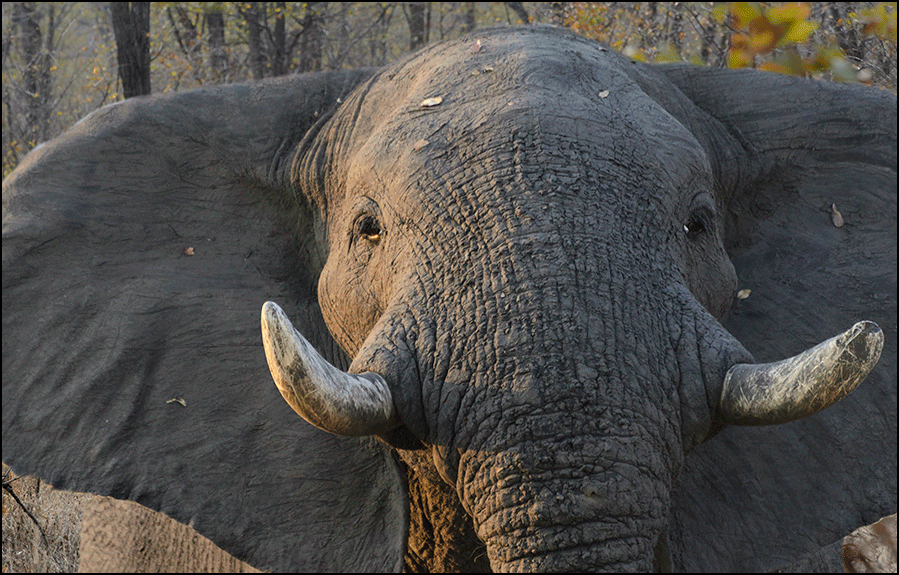
He flapped his ears, raised his trunk, trumpeted, and then
charged straight at us. Branches snapped beneath his feet as he
barreled through the trees, the ground seeming to vibrate under
his charge. Thank goodness Gee had parked our vehicle so we had a
clear escape route; he floored it and we shot forward, the
elephant chasing us for a short distance before veering off and
crashing away into the bush. It was our second elephant charge
before morning tea – not quite the morning we’d planned, but
exciting nonetheless. Moments like this make you feel vividly,
unmistakably alive. It’s one of the reasons we keep coming back.
Africa has a way of staying with you long after you’ve left it. Long after the dust is brushed from your boots and the last sunrise fades into memory, something of the place remains with you - the animals, the people, the light, the quiet truths you learn simply by being there.
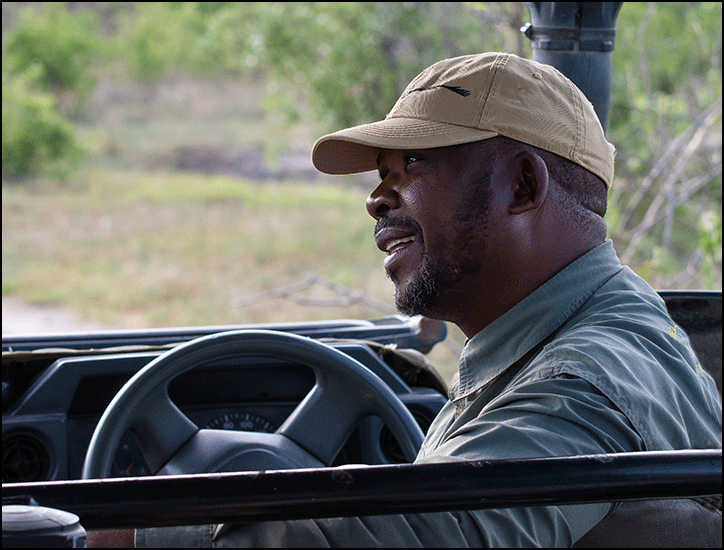
Photographic safaris in Africa are among my greatest passions. Over the years I’ve become good friends with Gee Mange, who owns and operates
Makomkom Safaris. Based in Maun, Botswana, his company specializes in customized mobile camping safaris. I’ve traveled with Gee on five trips in the past decade, and this would be my sixth. Gee’s friendship is one of the treasures I’ve gained from these journeys.
There were seven of us travelers, some returning and some seeing Africa for the first time. My best friend Jineen was with me again - we’ve shared so many adventures. Our friends Natalie and Paula joined us - longtime companions on our trips with Gee. New to our safari group were my niece Lindey and her wife Amber, along with our friend Amanda - three first‑timers about to experience Africa’s magic for themselves.
From the moment we met up with Gee and the staff, it felt like coming home. As we ventured out into the wild places on this safari, the bush worked its quiet magic on each of us. The rustle of movement through the grass, the glint of sun on a feathered wing, a glimpse of tawny hide through the trees, the quiet communication among animals who know far more than we give them credit for. We laughed often, marveled constantly, and settled easily into the rhythm of the bush.
This trip was too special to leave to fading recollection - writing this journal allows me to hold on to all the glorious details, and to share them, in some small way, with others who might find inspiration in the stories.
Jineen and I flew Ethiopian Air to Johannesburg, a route that has become familiar and comfortable. Using
frequent-flier miles to upgrade to Cloud Nine business class made the flight a pleasure instead of an ordeal, with excellent food and seats that could fold down flat into beds. The rest of our group was traveling in similar comfort on a United flight from Newark. My little stuffed cheetah Duma, my safari mascot, rode safely in my carry‑on this time. After he went missing with my suitcase for several days on the last trip, I wasn’t taking any chances.
|
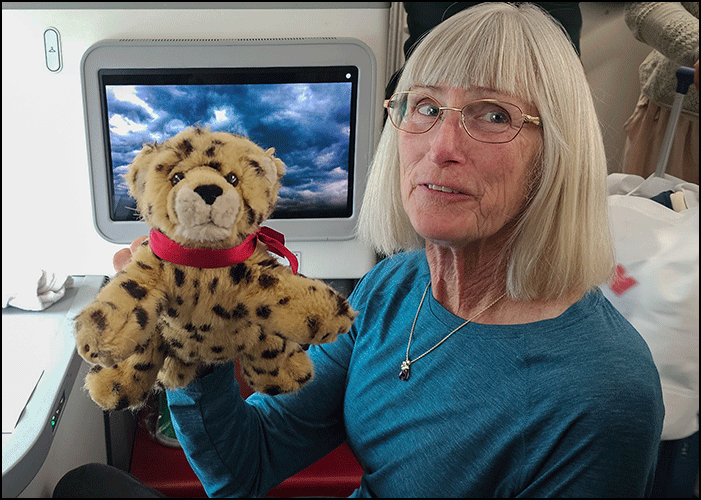
Jineen and Duma
|
We reached the Sunrock Guesthouse by mid‑afternoon, our usual Jo-berg accommodations. Tired but happy, we spent a while watching the birds and relaxing from the trip, then wandered to the bar for a drink. Before long we were joined by Natalie, Paula, Amanda, Lindey, and Amber - our full group finally gathered, just in time for dinner.
In the morning we would head to Victoria Falls for a brief visit, and then on to Botswana for our mobile safari with Makomkom - when the adventure would truly begin.
June 21
We arrived in Kasane, Botswana, just before nine. I felt a familiar flutter of anticipation as our shuttle dropped us off at the café where we were meeting Gee. And then there he was - standing by his vehicle with a big smile. He greeted us with hugs, and we introduced the new members of our group. It felt wonderful to be setting out with Gee again.
Gee had arranged for us to begin our safari with a private boat trip on the Chobe River, in the capable hands of a river guide. We piled into the small boat - just big enough to accommodate our group - and headed out, while Gee stayed behind to pack the vehicle and get everything ready for the mobile safari ahead.
The river was calm, the morning cool and sunny, the sky a brilliant blue. Almost as soon as we pushed off from the bank, the birds began to appear.
Cormorants perched on low branches, drying their outstretched wings. A small flock of trumpeter hornbills occupied a tree on a small island. Nearby a group of
yellow-billed storks were nesting in a clump of trees, their backs glowing pink in the sun, each wing edged with a strip of iridescent green. Wire‑tailed swallows swooped around the boat in quick, effortless arcs.
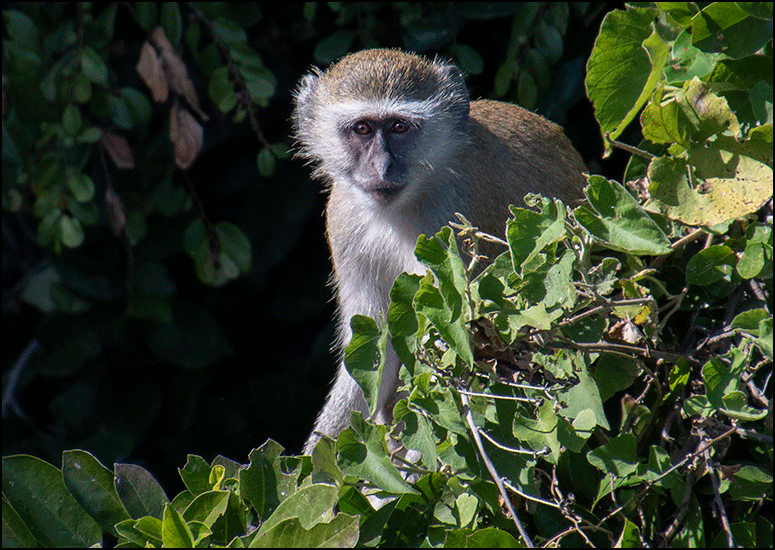
We paused to watch a troop of young vervet monkeys tumbling through the branches. They chased each other with quick, mischievous energy, scrambling up and down the trees in a blur of movement. One stopped to peer down at us with bright, curious eyes before leaping back into the fray, while an adult looked on from a higher perch. It was impossible not to smile at their easy, unselfconscious joy.
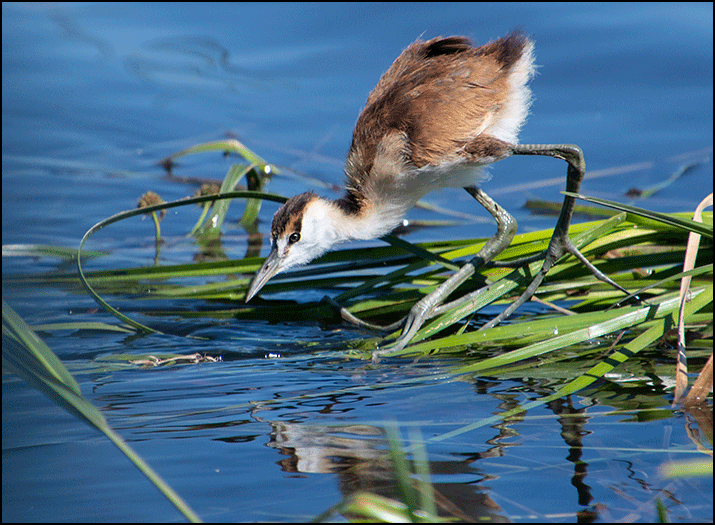
We spotted an African darter swimming with only its slender neck and head above the water - the classic ‘snake bird’ pose. A yellow‑billed egret worked the water’s edge, and a flock of collared pratincoles came sailing in, their wings whispering just above the sand. A dozen African skimmers flew just above the water, slicing the surface with the lower portion of their beaks, which were much longer than their upper bills. A jacana tiptoed across the lily pads with two small chicks following behind – we could see how they got the nickname ‘lily-trotters.’ There were many more birds along the river, far more than we could possibly name.
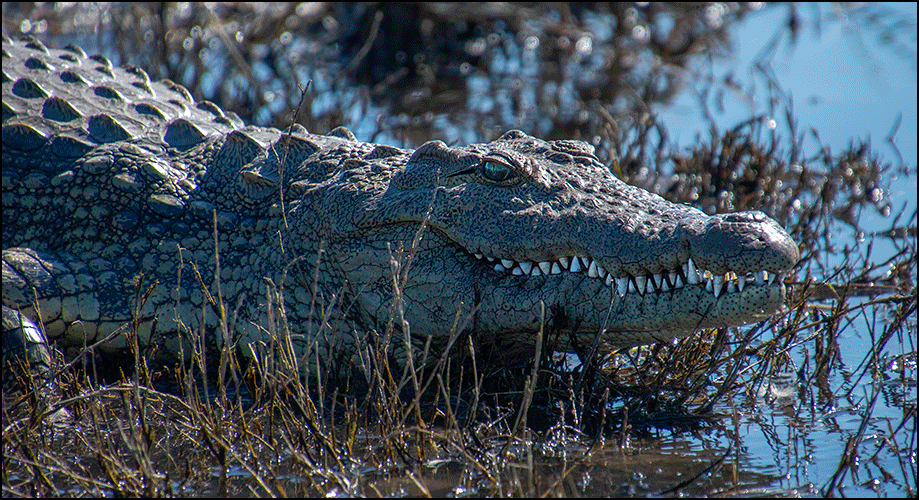
A large crocodile lay sunning himself on the bank; his jagged teeth showed in his sinister serpentine smile. Several hippos lay half-submerged in the shallows, snorting at us as we glided by. Soon we saw more crocodiles; there was one enormous old male about fifty years old - our river guide told us they can live to be a hundred.
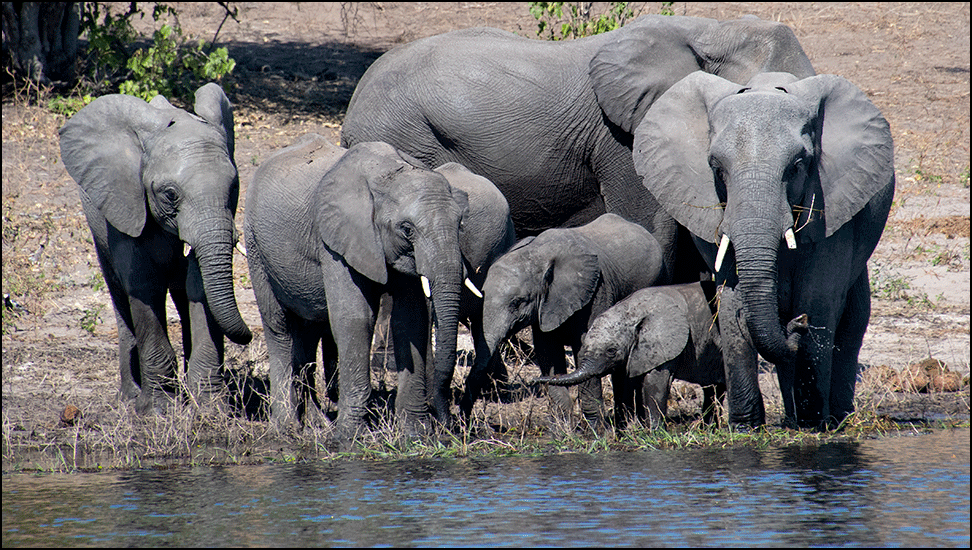
Elephants came down to drink; they wanted to cross the river but hesitated - there were too many boats. More elephants appeared, some with small calves tucked close to their sides. A small herd of impala grazed farther back from the shore. More hippos bobbed in the deeper channels of the river. At one point another tour boat got stuck on a sandbar, its engine revving loudly and disturbing the peace.
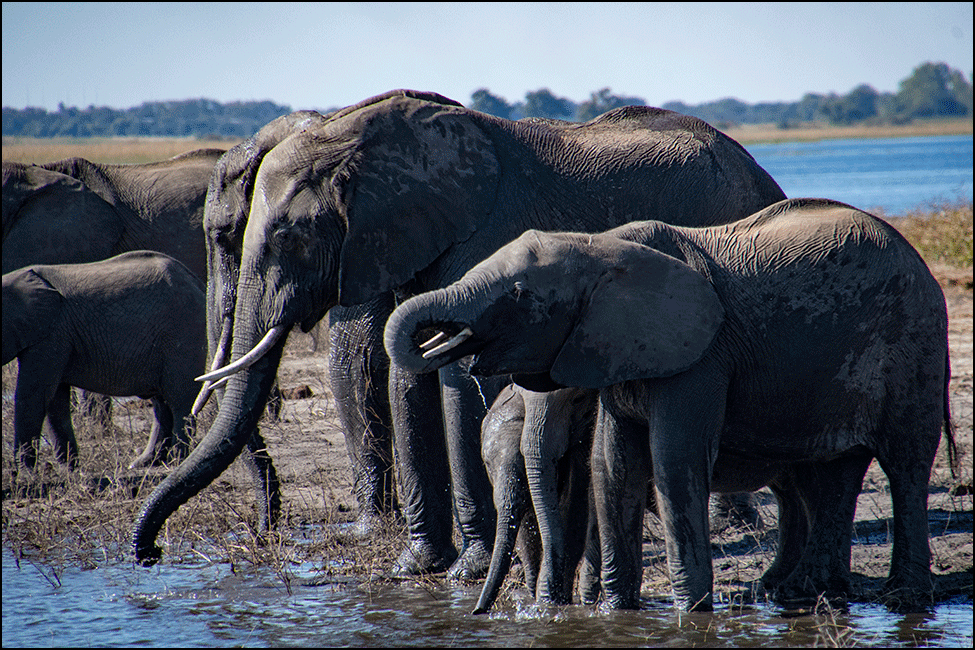
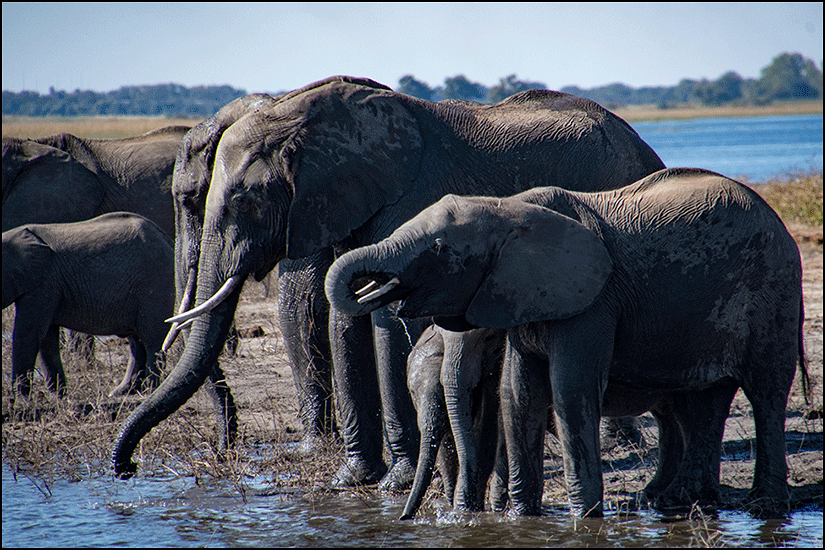
We drifted near the shore and watched a small herd of elephants at the water’s edge. A mother with a young calf stood drinking; the baby was hard to see, nearly shielded from view by the adults who surrounded and protected him.
It was a lovely trip down the river, each bend in the shoreline revealing something new. For the newcomers it was a perfect introduction to the birds and animals of Africa, and for the rest of us it was a peaceful way to unwind and settle back into the rhythm of safari life. Someone joked that we’d already seen enough for the whole trip - and we hadn’t even gotten into the safari vehicle yet.
The boat took us back to our starting point, where we met up with Gee and had a buffet lunch at the cafe. Gee had loaded our luggage in his vehicle - it was a Toyota Land Cruiser, set up for safari viewing, open-sided with three raised bench seats under a canvas roof, giving everyone a clear view in every direction. We all climbed in with excitement; it was finally time to head out into the bush with Gee, and for our real safari adventure to begin.
|
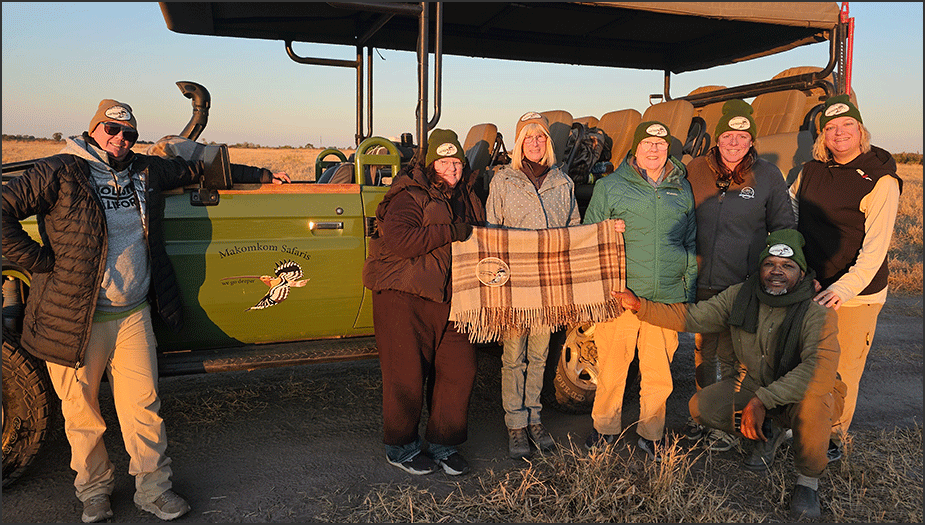
Left to right:
Amber, Amanda, Jineen, Paula, Natalie, Gee and Lindey.
|
We left town and headed toward our first camp. At first we were on a pavement, but we soon turned onto a small sand road. The farther we went the deeper the dry sand became. We were going through scrubby brush and trees, and there was not a lot to see in this stretch. As the river disappeared behind us, the world narrowed to sand tracks and thorn trees.
Gee said he wanted a break and asked me if I wanted to drive, and I took over the wheel for a while. I don’t know if he really wanted a rest or was just letting me have an adventure, but I suspect the latter. Driving the Land Cruiser through those deep sand roads is harder than it looks - it usually seemed that
second gear was too slow but third was too fast. Often the road split into several alternate lanes through the deepest sand pockets, leaving me to guess on the fly which one would have decent traction and which would be a bottomless pit. I guess I did all right, because we never got stuck – though it may have been touch-and-go a couple of times.
|
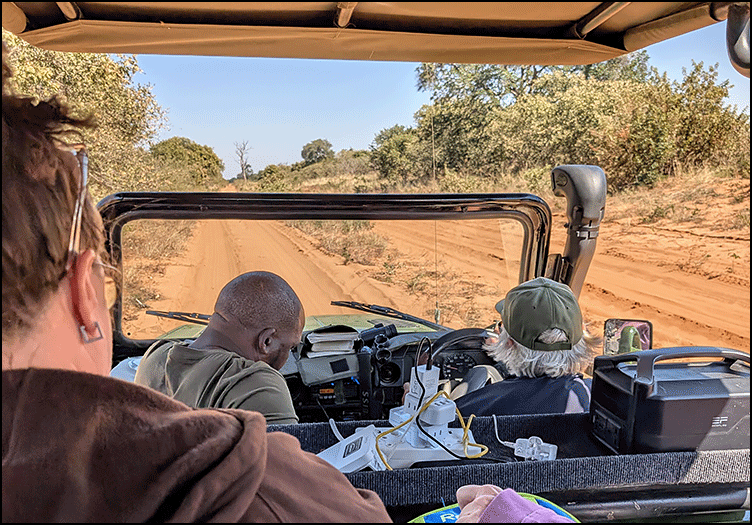
Look out - Phyllis is driving!
|
Gee took over driving again (to everyone’s relief) and we followed a long, linear stretch of road. There was a forested ridge on our left, and the Chobe River lay below us on the right, wide and shallow, with the far bank belonging to Namibia. We were in the bush proper now, the wild places unfolding ahead, and we were filled with anticipation of what we would see.
We were heading for the Chobe riverfront area, known as Ihaha - a part of the park we hadn’t visited on previous trips. This was a mobile safari, so we would be camping for 3 or 4 nights at each of four different camps, in different parks.
We have a longstanding tradition of making up bad limericks while on safari, and on the long drive I came up with the first one of the trip:
From the plains to the Delta we’ll drive
With Gee as our Friend and our Guide
Of hooves, claws and wings
We’ll see what each day brings
For what we see is up to Nature to decide
Impala and francolins were everywhere, of course - they’re generally the first and most common things we see on safari - but it didn’t take long before the drive became much more interesting.
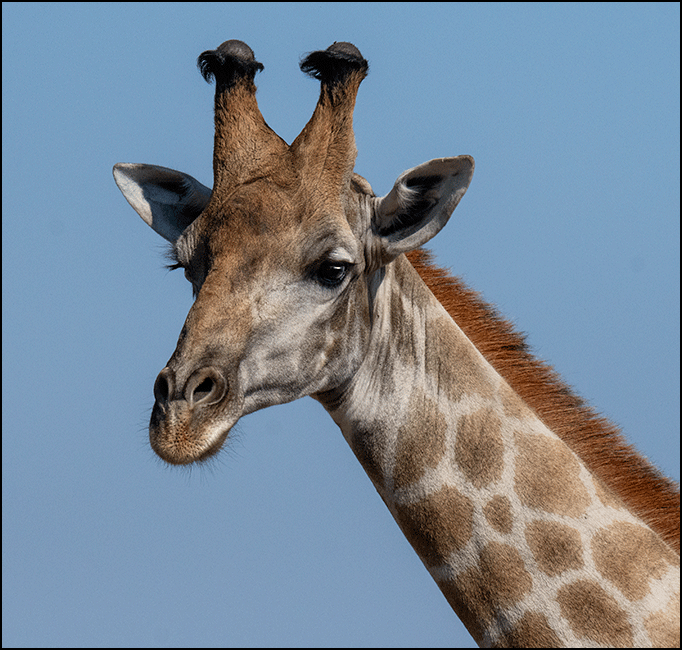
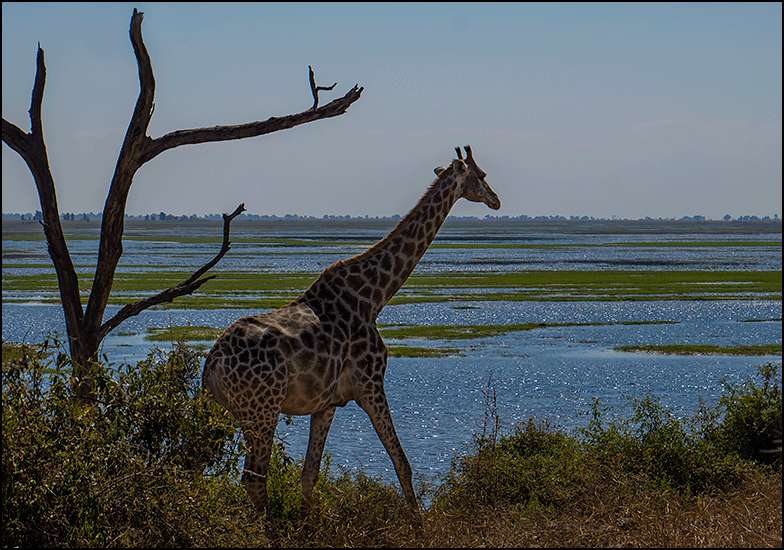
To our delight, two female giraffes stood right beside the road, calmly nibbling on some bushes. A third stood
a little farther away, this one a strikingly dark color, and a
large male wandered over to join them. They were close enough for us to see the fine details – big gentle eyes with luxurious long eyelashes, dark dexterous tongues, and their knobby round-topped horns called ossicones. Gee told us that female giraffes have hair on the top of these knobs, while males don’t because they wear the hair off when they fight.
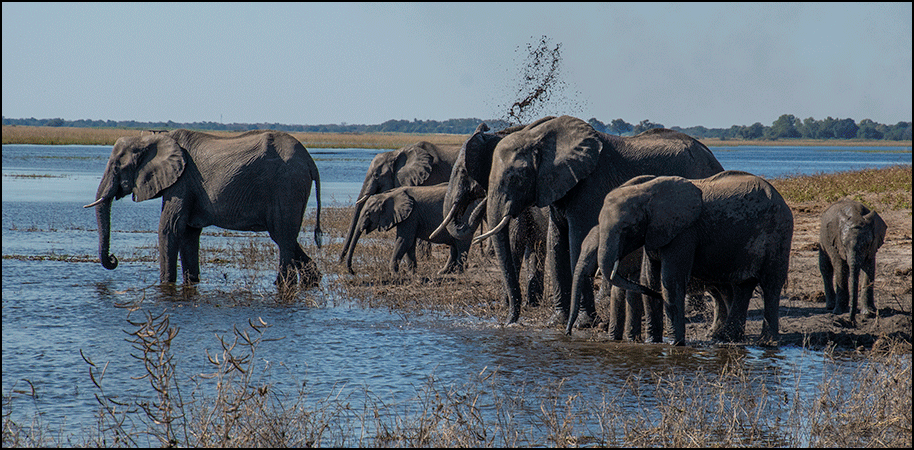
We drove down the slope toward the river and found a herd of elephants drinking right at the water’s edge. We watched them from close range - the kind of view that never gets old, no matter how many times you’ve seen it. The newcomers in our group were wide‑eyed, already falling under Africa’s spell.
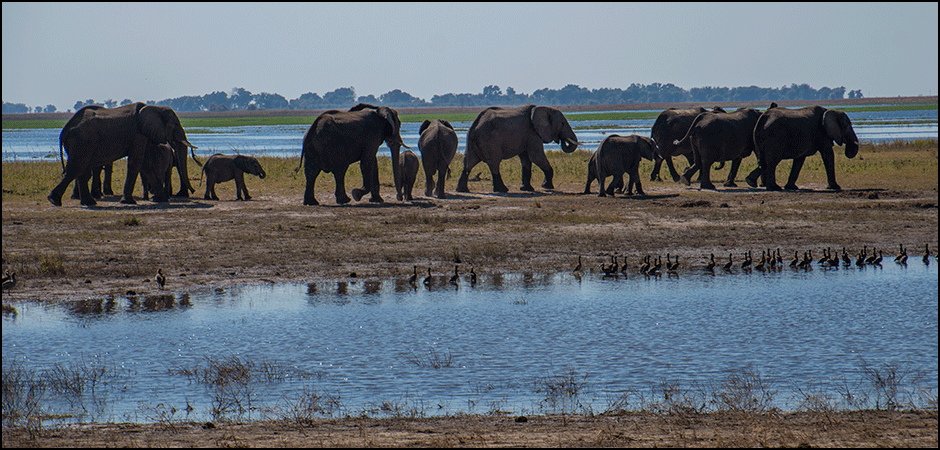
More elephants appeared up on the ridge to our left, not far from the road. They were silhouetted against the blue sky as they browsed with slow, deliberate movements. Before long they came down off the ridge to drink at the river. Looking across the river, we could see a long single‑file line of elephants making their way along a narrow spit of land out in the river as they made their way toward Namibia. So many elephants.
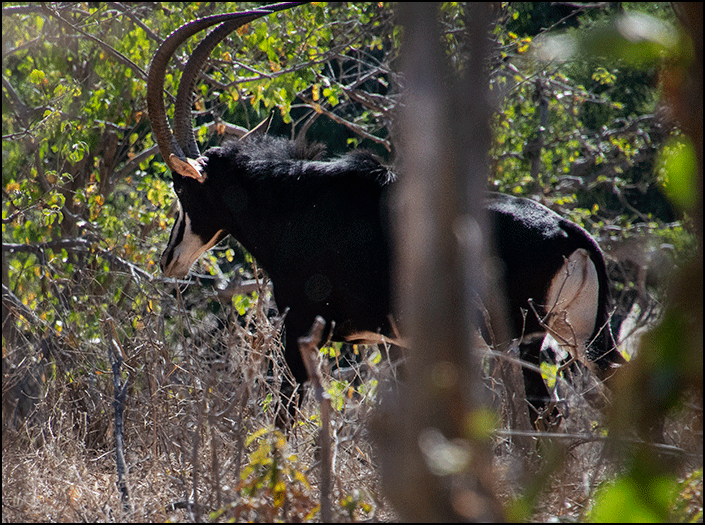
We drove on, back up the hill. To our delight, we came across a herd of sables - eight or ten of them, with babies. They are large handsome antelopes, dark brown or black, with white bellies and face markings, and long backward-curving horns. I had only ever seen a sable once before, also in Chobe with Gee, on our first trip together ten years ago, and that had been just a quick glimpse of one dashing across the road. This time we were lucky enough to watch them moving slowly through the trees. To see them at all is rare - to see them on our very first day was amazing.
Two young male giraffes stood at the edge of the trees, practicing their mock fighting, known as ‘necking.’ They stood side by side, swinging those impossibly long necks in wide, slow‑motion arcs, each trying to land a solid thump on the other’s neck or sides. From a distance it almost looked like a strange, slow dance, but you could hear the dull whack when a blow connected. They’d pause between swings to size each other up, and then go at it again, legs braced, necks swinging wildly as they tested their strength. This is how males fight for dominance, but these two were just teenagers mock fighting, practicing for the future.
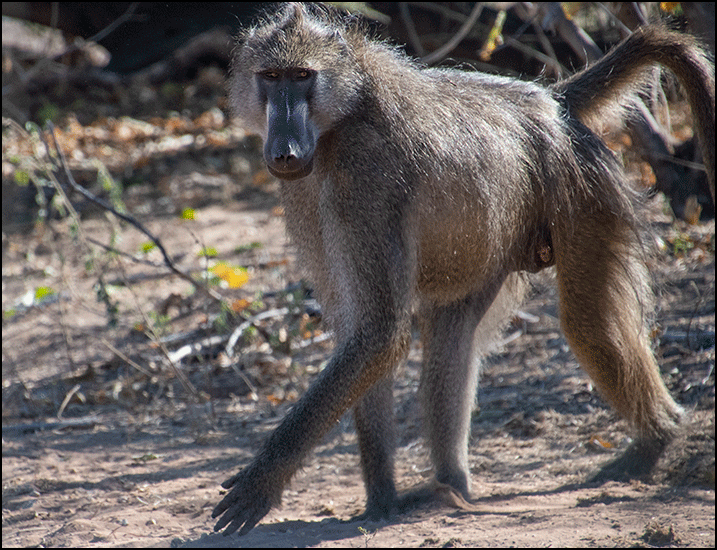
A group of baboons came sauntering down the road, full of their usual arrogant attitude. One big male sat down cross‑legged by the track, rummaging through elephant dung with great seriousness, while another gave us a disdainful look over his shoulder as he strolled past. Baboons are athletic and surprisingly graceful when they move, but it’s hard not to be distracted by their ugly bald butts and condescending expressions. They always look as if they’re judging your life choices, and finding you wanting.
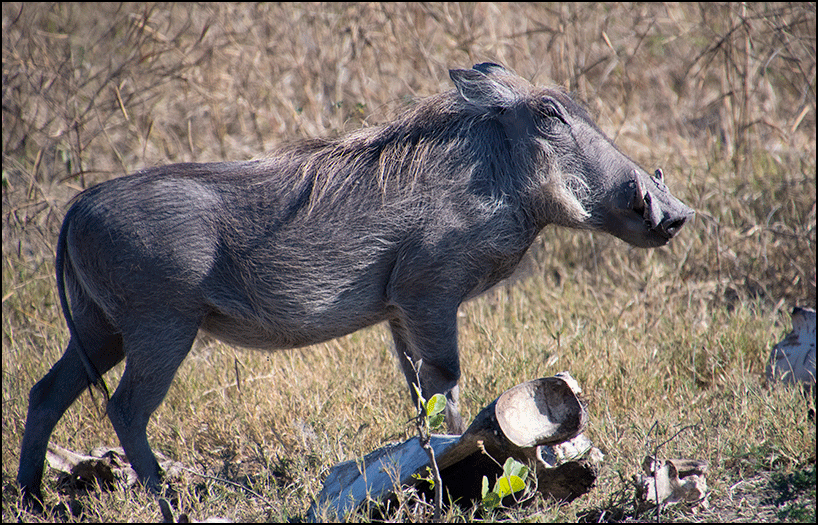
A
pair of warthogs rummaged among some old bones. Warthogs are
wonderfully comical creatures; built short and sturdy, they look
like miniature Humvees on hooves as they snuffle through the grass
with determined focus. They trot around with their tails sticking
straight up like antennas. Their faces are adorned with wart-like
bumps and bristly hair, and they always seem to wear earnest
expressions. One of them walked along on her calloused knees so
her short, thick neck could reach the ground to graze; she looked
both awkward and endearing. Despite their rough-and-tumble
appearance, there’s something irresistibly charming about
warthogs.
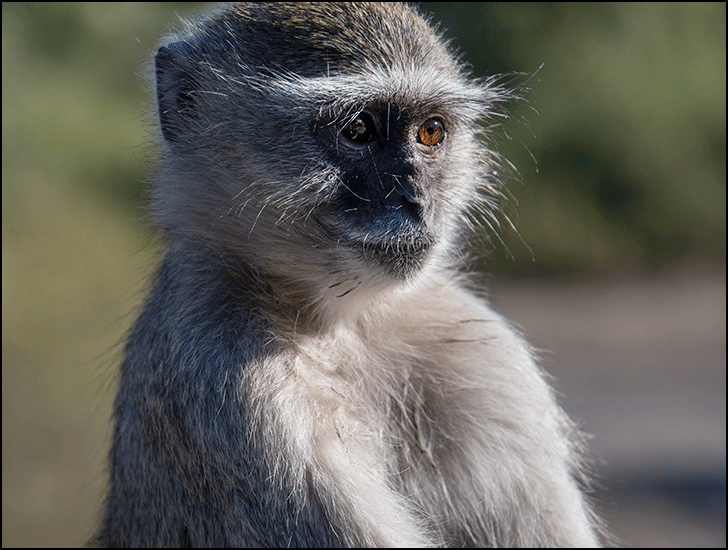
We
came across several vervet monkeys – or should I say they came
across us. They were athletic, long-limbed, bright-eyed, and much
more attractive than the baboons. One of them jumped right up onto
the hood of the Land Cruiser, and for a moment we thought he was
going to leap into Natalie’s lap.
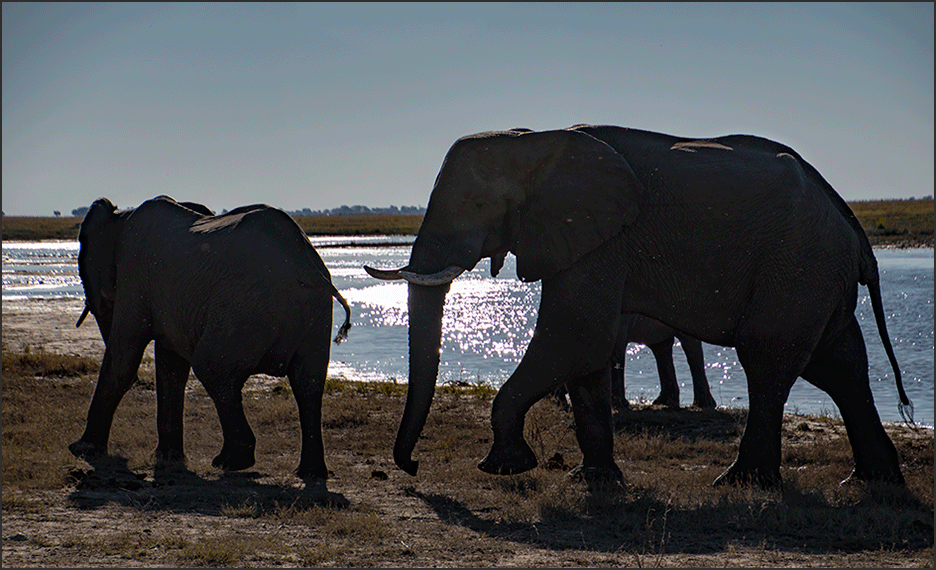
We went back down to the river; there were elephants everywhere. A long procession of them waded across the wide expanse of the Chobe River. It was a beautiful scene: elephants and giraffes were scattered along the riverbank, silhouetted against the fading afternoon light. One big elephant was wading through a deeper channel, only the top of his head and back visible above the water. Ihaha is known for having a lot of elephants, and it was certainly living up to this reputation.
We stood watching a family group drinking at the edge of the water, their dark shapes silhouetted against the river. There’s something about elephants that always feels a bit magical. They move with deliberate patience, as if carrying the weight of experience in every step. You see the wisdom in their eyes, hear the soft belly rumbles as they communicate. They sometimes seem almost human as a mother guides her calf with gentle certainty, or when one rests a trunk across a companion’s back in quiet reassurance. You can’t help but feel that these magnificent creatures are far wiser than we give them credit for.
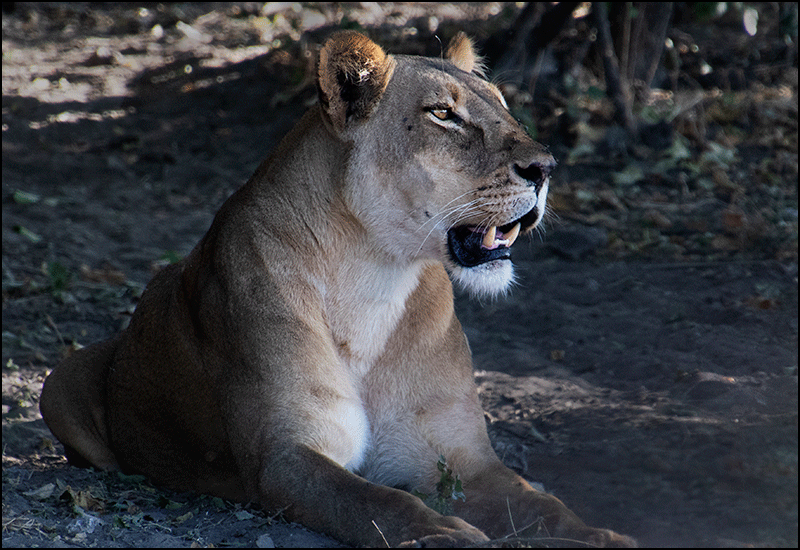
Then we found our first lion of the trip! Gee heard a call on the radio that a lioness with several half‑grown cubs had been feeding on a buffalo calf, and he tracked her down. There’s always a little jolt of excitement when you see a lioness, even when she’s lying still. You know she’s perfectly capable of exploding into motion, yet she carries herself with such calm poise.
The lioness lay in the shade, head up, watching us as we eased closer. After a moment she yawned extravagantly, as if to show us how unimpressed she was, and then bared her teeth briefly before settling back into a light doze. The youngsters were tucked away in the bushes, though we caught an occasional glimpse of movement. Gee had heard that the rest of her pride was nearby as well.
We encountered more giraffes; they gazed at us curiously before crossing the road in front of us. Nearby we watched another pair of young males mock-fighting, swinging their necks in great pendulous arcs to strike each other. The whole thing had a choreographed elegance, as if even their arguments had to be conducted with giraffe dignity.
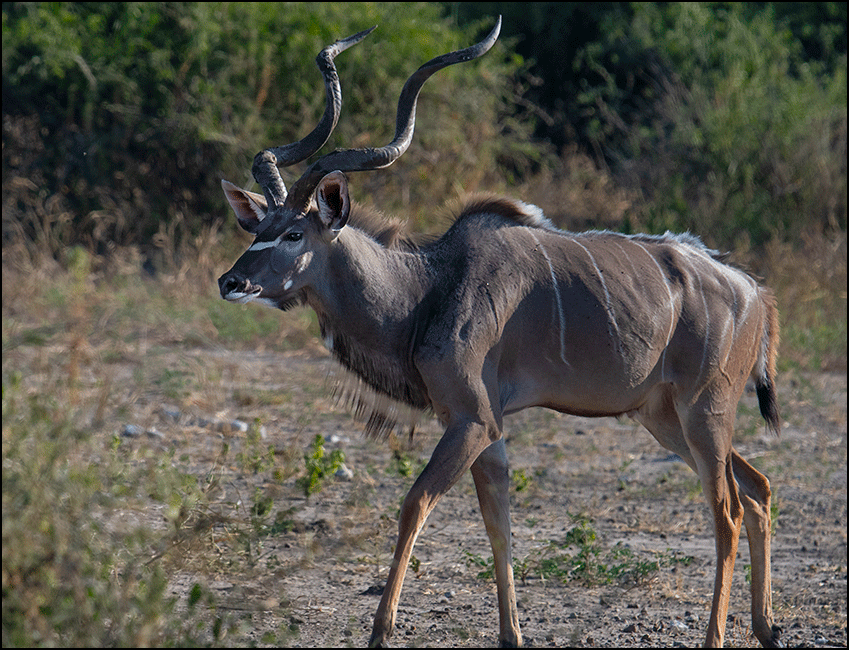
A little farther on, we came across a small family group of kudus, glowing in the golden light of the lowering sun. A majestic kudu bull strolled through the brush, and an exquisite female with refined features watched us calmly. Several adolescent youngsters followed behind them.
Kudus are one of the largest antelopes, and to me they’re absolutely among the most beautiful. The males carry huge, magnificent spiraling horns that give them an air of quiet command
- they look like something out of a fairy tale.
Gee was looking for the camp now as we passed through woodland that felt almost enchanted. The late‑day light filtered through the trees in soft golden shafts. It was quiet but not silent; we could hear the doves chanting and a multitude of other
birdsong. Eventually we came to a camp - but it wasn’t ours. About 200 impala were gathered there, but no sign of our guys, so we drove on.
The sunset over the river was a brilliant red; the old saying ‘Red sky at night, sailors’ delight’ came to mind. Here in Botswana, we had red skies almost every evening.
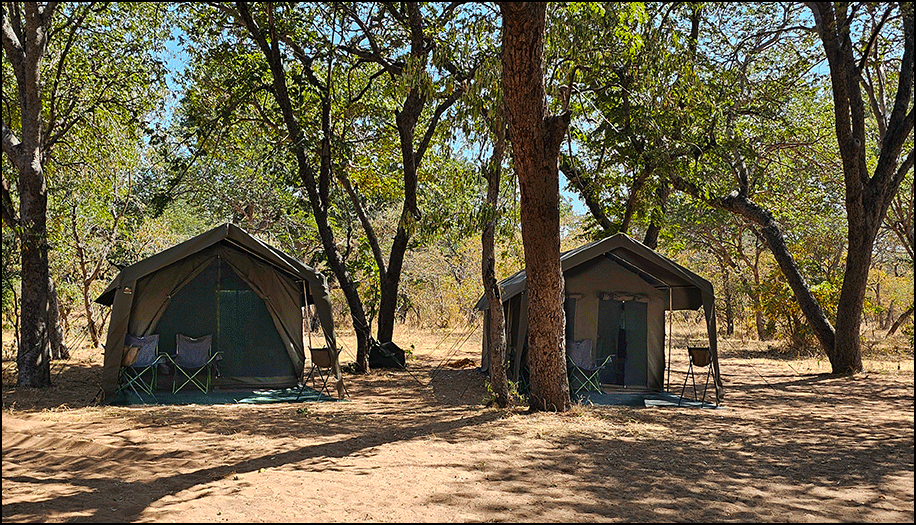
At last we found our camp, tucked into the trees, a very inviting spot. Each two‑person tent had cots, and we had little inflatable air mattresses to add to their comfort. Jineen and I shared a tent, as did Natalie and Amanda, and of course Lindey and Amber. Paula had a tent to herself.
June is winter in the southern hemisphere, and Africa can get much colder at night than most people expect. Our beds were made up with thick warm blankets, and knowing what to expect, we had brought warm long johns and polar-fleece to sleep in.
The bathroom/bucket‑shower enclosure was at the back of the tent, accessed by a zipped flap so we didn’t have to leave the tent at night. That’s the one thing they always tell you: no matter what you hear in the night, do not leave your tent. It’s a rule that might sound dramatic until you remember that lions, leopards, hyenas, and elephants all wander freely through camp after dark. It’s amazing how quickly that rule stops sounding dramatic and starts sounding like common sense.
Gee introduced us to the rest of the staff. Mosa (pronounced Moo-sa) was the chef, More was our waiter, and Chenaman helped with serving and setting up camp. In truth, it was a joint effort - all three of them, and Gee as well, did whatever needed doing.
For those of us who had been on multiple safaris with Gee before, it was so great to see him. We all count him as a good friend, and being back in Botswana with Gee felt like coming home. We gave him some gifts we had brought. Natalie and Paula had gotten some lovely merch made with the Makomkom logo; they had brought shirts and blankets for Gee and the guys, and hats for all of us. Jineen and I, along with our friend Janell who had been on the last trip, had gotten him a new camera and lens – his old one had finally given up on the previous safari.
We put our things in the tent and then settled into the camp chairs arranged in a semi‑circle around the fire. It was mesmerizing to sit there and stare into the flames, watching the charred logs and glowing embers shift and change shape - first looking like one animal, then another. Look, is that a warthog in the fire? No, it just turned into a crocodile with blazing red eyes. This is Bush TV at its finest.
|
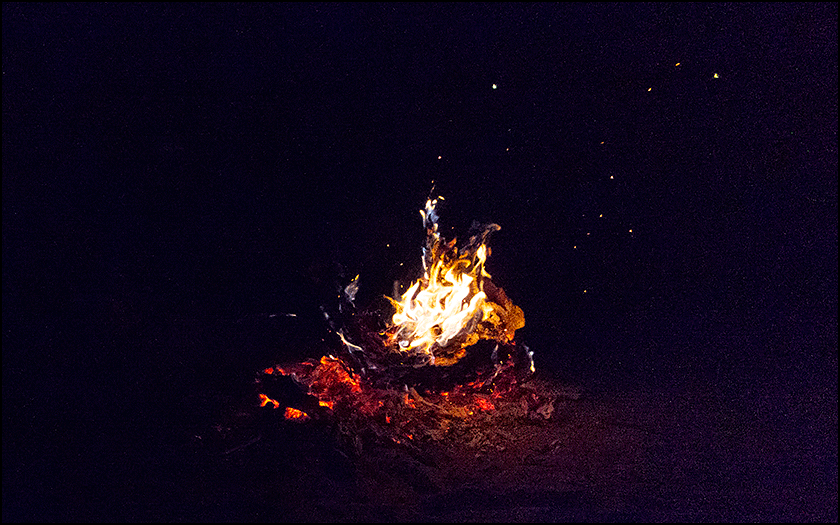
Bush TV |
After a while, Mosa came to announce dinner, describing each course a little shyly, hemming and hawing a bit, and finishing with his trademark muttered “yep, yep, yep,” letting us know our appetizers were ready. The food was very good, and all prepared right here, on a camp stove or open fire. We ate gratefully, replaying the lioness sighting and marveling at our elephant views.
After dinner we sat around the fire a while longer, looking up at the brilliant stars shining through the trees. The night sky in Africa is like nowhere else. The stars seem brighter here; there is no ambient light from cities, more constellations are visible in the southern hemisphere, and you can see right into the core of the Milky Way. It feels less like looking at the sky and more like being drawn into it.
Eventually the long day of travel and excitement caught up with us, and we were ready for bed - tired, but already eager for whatever the morning would bring. It felt like the perfect beginning - a day full of promise, laughter, and the first hints of the wildness to come.
~
Continued
on next page ~
Africa 2025 Journal Pages:
1
2
3
4
5
6
7
8
9
10
11
12
13
14
15
16
|