|
Africa 2025 Journal Pages:
1
2
3
4
5
6
7
8
9
10
11
12
13
14
15
16
June 28
The morning began with a sense of anticipation. The soft gold light slowly washed over the plains, and the air was charged with quiet expectation. Out here, you never know what the next hour will bring. Stillness or sudden motion, certainty or surprise – all this and more as we wait for the day to reveal what is hidden in the tall grass. And on this morning, the bush had plenty to share.
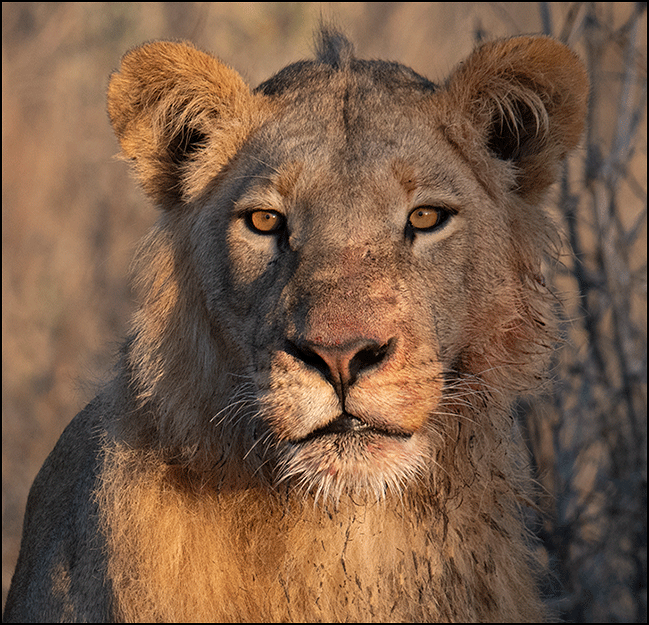
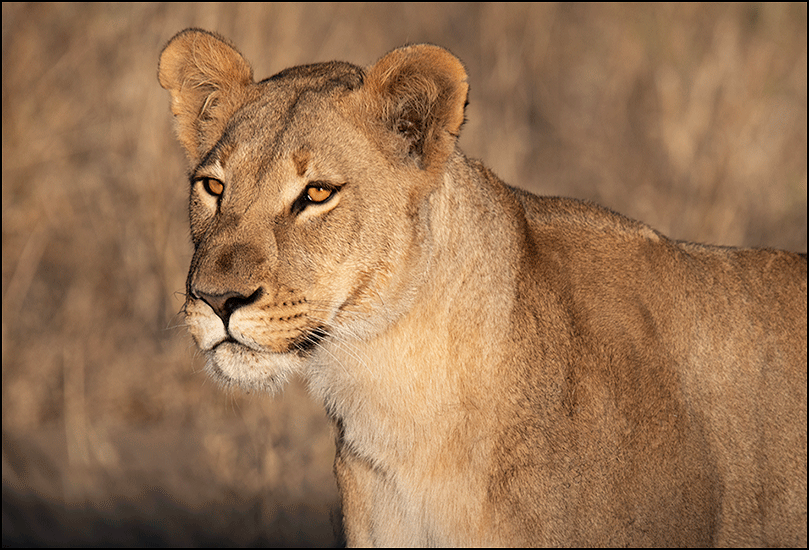
We reached the giraffe carcass almost before sunrise. The same three lions were there, and the hyenas were still lurking about as well. There was no lounging around on the kill this morning; the lioness stood alert, her coat gleaming in the early light, her amber eyes sharp and focused. The two young males were awake
and watching as well, but not exactly stepping up to help. Hyenas circled the meadow in growing numbers, biding their time. It felt like a standoff, and from the looks of things, the takeover attempt we had anticipated might be imminent.
Suddenly the lioness fixated on something across the clearing. A flash of
dark-and-white fur flickered in the underbrush. She moved forward stealthily, covering the ground silently but quickly. To our amazement, the creature she was stalking was a honey badger, but she went after it without much conviction - she knew better than to pick a real fight with one of Africa’s most famously fearless animals.
Leaving the carcass, we headed for the Savuti Marsh. An impala and a francolin posed together on top of a termite mound to bid us goodbye. We crossed through an area known as Warthog Valley, and then came out to a broad plain, bordered with woodland.
Gee suddenly braked and said, “What is that on the termite mound? It looks like a lion cub.” With binoculars we could just make out a tiny tawny shape perched on a mound far across the plain. Sure enough, as we got closer we could see it was a small lion cub. How Gee spotted it while driving remains a mystery.
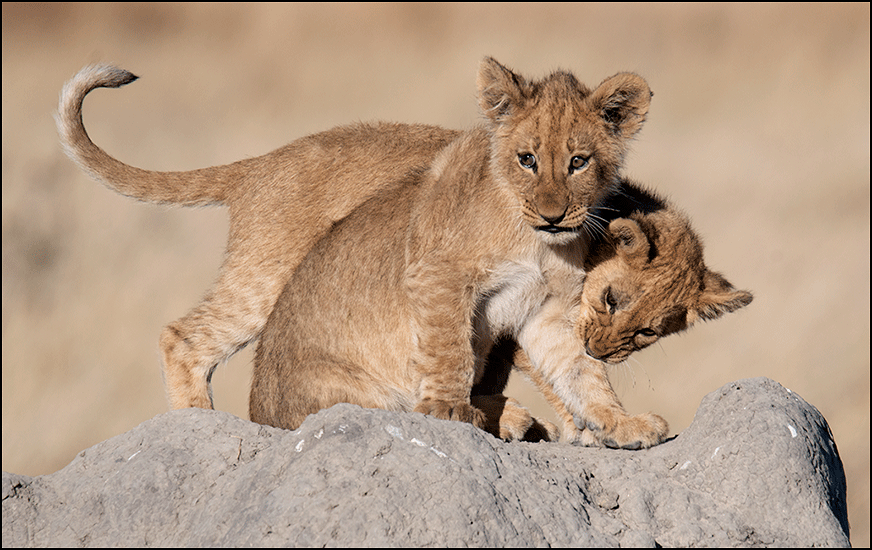
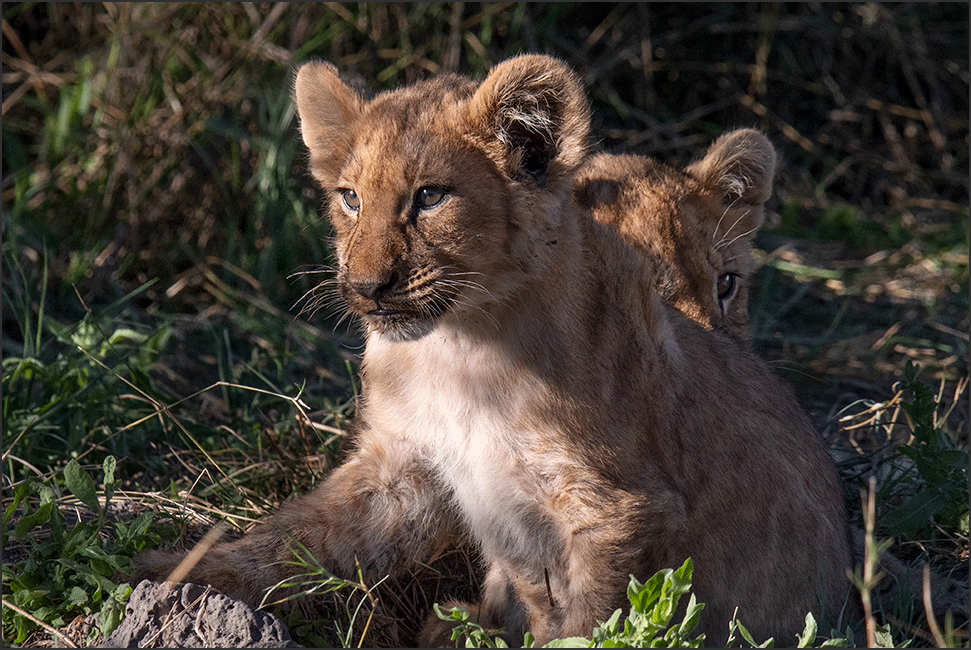
He found a narrow track leading in their direction, and soon we were sitting within twenty meters of the lions. We had found the Marsh Pride, or at least part of it. There was a mother lioness, six cubs, and a big male. These cubs were much younger than the ones we’d seen at Ihaha - small, fuzzy, and impossibly cute.
The male was showing interest in mating with the lioness, who was clearly nervous and unreceptive. Gee explained that her behavior suggested this male was not the father of the cubs. If he was a new male who had taken over the pride, he might try to kill the babies. This thought horrified us.
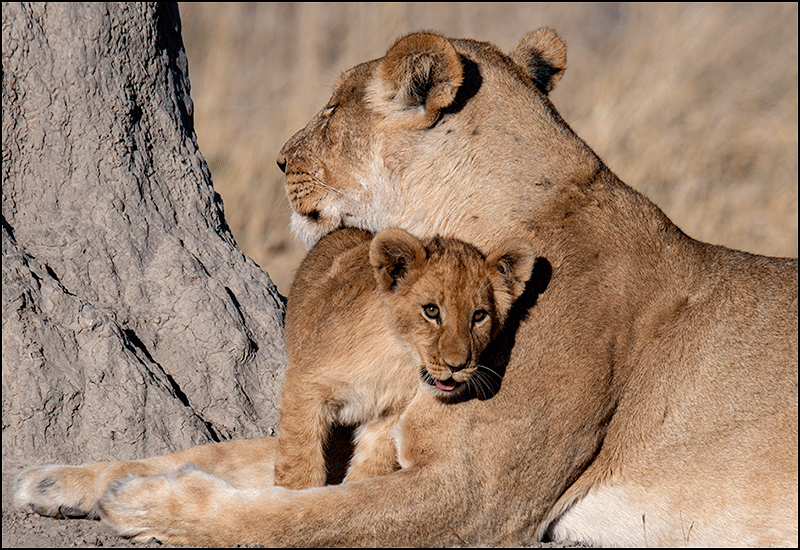
The mother lioness walked to the termite mound, and the big male followed her. She rubbed heads with the cub perched on top, and he scrambled down to nuzzle her. One by one, the other cubs emerged from the bushes and tumbled toward her, nuzzling her, and some of them nursing. Then another female appeared, and three cubs ran straight to her. Several tried to suckle as she stood patiently. It became clear there were two mothers and two litters, though all six cubs were roughly the same age, perhaps six or seven weeks old.
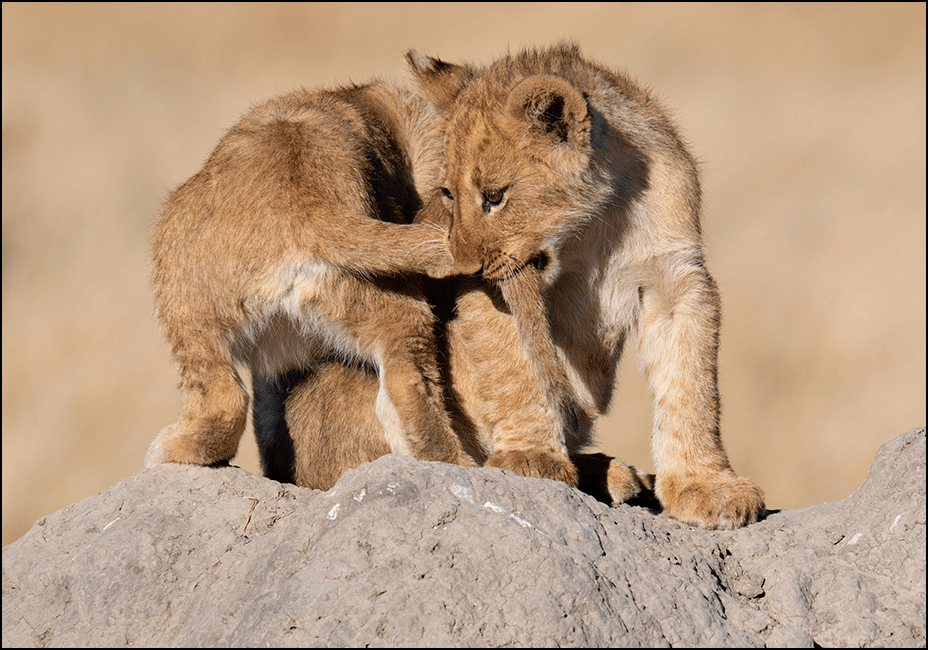
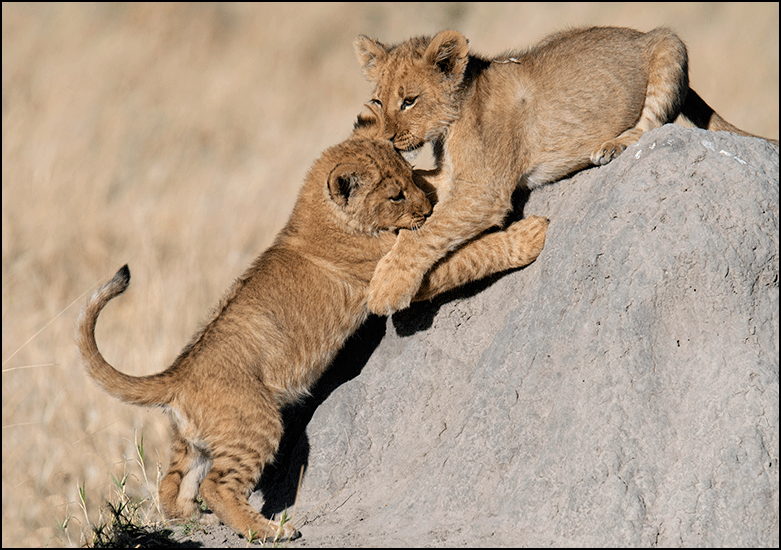
The cubs started to tussle and romp. The air was still, the only sound the soft rustle of cubs tumbling in the grass. They climbed up and down the termite mound, stalking one another, pouncing and wrestling, biting each other’s tails. It was one of the best
lion-cub sightings we’d ever had.
A few of the youngsters approached the male, but he was not friendly and swatted one of them. After that, they kept their distance. He continued to trail the lioness, who moved away nervously. With cubs this young, she would not be receptive to mating, Gee said.
Eventually the male lay down to rest, and the others settled too. We left them to their slumbers, though we couldn’t help worrying about the cubs. Gee said there were two possibilities: this male was an interloper and the Marsh Pride males would return soon to drive him off, or he was part of the pride but not one of the dominant males - in which case the cubs would be safe. We hoped for the latter.
We caught a glimpse of movement out in the tall grass and watched; a warthog came trotting jauntily across the plain, his tail straight up like a little flag. He rounded a bend, saw the lions lounging in the shade, and did a perfect double‑take. “Oh no!” he seemed to say, as he spun around and bolted off as fast as he could, little legs pumping, tail still straight in the air. “Whew, a very close call.”
Finally leaving the lions, we eased back on to the sandy track that skirts the edge of the plain. Later, when Gee radioed in the sighting, he learned that none of the other guides had seen these Marsh Pride cubs before - we were the first to find them.
The Savuti Marsh stretched ahead of us - a wide, flat, treeless expanse – and we set off across it. The distant
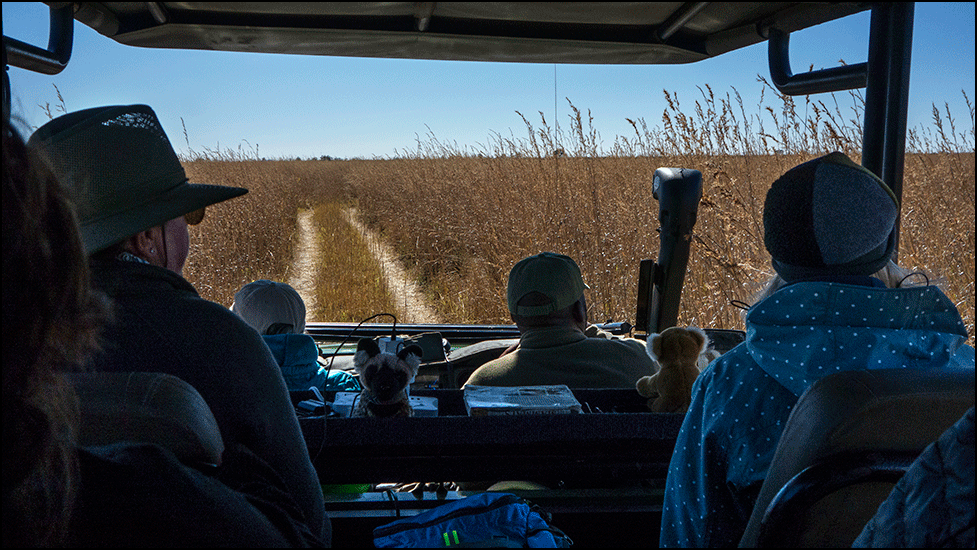
tree-line shimmered in the heat haze, barely visible at the far edge of the plain. The grass was astonishingly tall; we had never seen Savuti like this. Gee explained that they’d had a great deal of rain earlier in the year, and the herds were still grazing elsewhere. They would return soon to take advantage of all this lush grass.
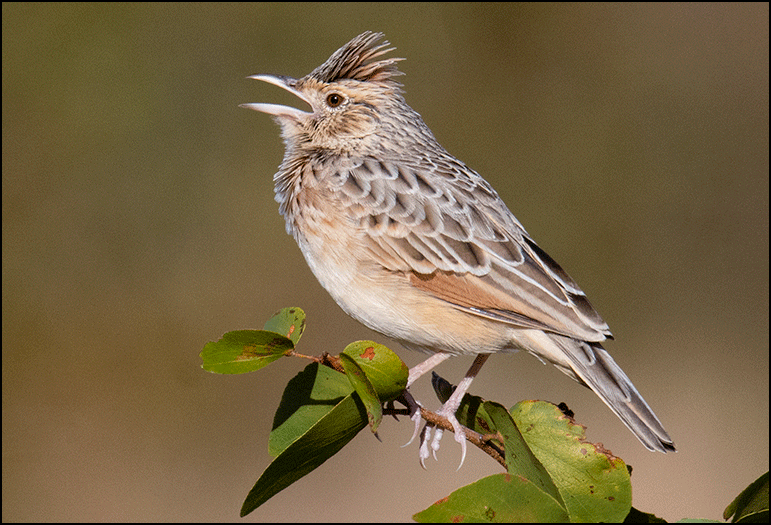
A tawny eagle lifted off as we approached, its wings catching the early light. A
rufous-naped lark serenaded us from a low bush, pouring its song into the quiet morning. Four kori bustards stalked through the tall grass with their slow, measured strides.
We stopped somewhere in the middle of the Savuti Marsh for the morning tea break. From there we could see the line of hills on the horizon, small and blue in the distance. From left to right: Leopard Rock, Twin Hills, Bushman’s Rock, Sable Hill, Kudu Hill, and Quarry Hill. I loved the way the whole landscape was laid out like a map.
After exploring the Marsh for a while, seeing many birds but few animals, we returned to the lions. The mood had shifted and they were far more relaxed now, and to our great relief another male lion was resting nearby. It was the dominant male, the father of the cubs, and he had clearly come back to put the amorous opportunist in his place. The cubs would be safe. We stayed for a long while, watching them tumbling and playing in the grass.
Unfortunately, our peaceful viewing didn’t last. Another vehicle arrived, and the driver rudely pulled around us, driving far too close to the lions and blocking our view. The lions grew visibly uneasy. Most guides are excellent, but every so often you encounter one who behaves like this. We decided to leave the Pride in peace, and come back later. We headed back to camp for lunch.
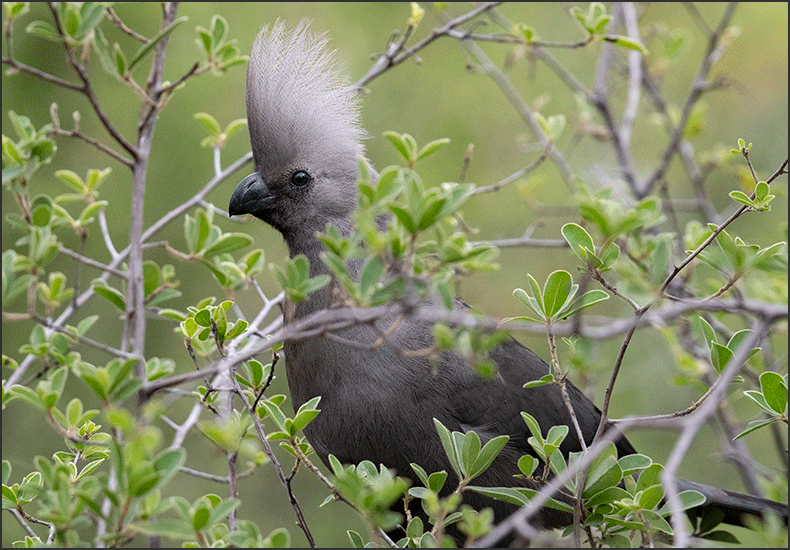
A grey go-away bird perched in a thorn bush as we headed back out for the afternoon drive. With their backswept crests, these attractive grey birds always remind me a bit of cockatoos. This one watched us with bright, curious eyes, then lifted his crest indignantly and delivered his famous alarm call in a nasal squawking tone - “Go
Awaaaaay!” He seemed genuinely offended by our presence.
We saw many of the usuals as we drove on. Impala grazed unconcerned as we passed close by. A warthog trundled along, tail flicking, and a steenbok watched us warily from the underbrush. A lone male ostrich made his way through the bush, dressed in bold black and white, looking stately and a little ridiculous.
A white-crowned shrike sat neatly on top of a scrubby tree. A snakeskin was hanging from a bush, left behind when it was shed by its former owner. A troop of banded mongooses crossed the roadway, one of them standing up tall like a meerkat to get a better look at us.
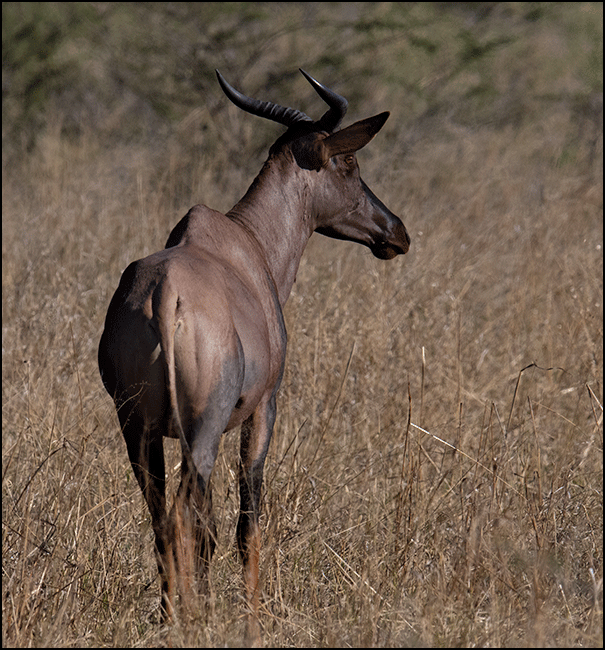
A lone tsessebe stood in the tall grass, his glossy coat catching the sun. He walked slowly away from us, glancing over his shoulder as we followed at a respectful distance. Before long he met up with another, probably his mate - this one was very muddy, and looked as though she had recently enjoyed an enthusiastic wallow.
The tsessebe is one of the more underrated antelopes. They are the fastest of all the antelopes, yet a strange mix of elegance and awkwardness. Built for speed across open plains, they stand ‘uphill,’ with front legs longer than the rear. Their coats are an almost purplish brown, with subtle darker patches on the shoulders and flanks. Their dark faces look refined and intelligent, and their eyes sit about two inches higher on their heads than seems natural. Their lyre‑shaped horns are fairly short compared to many other antelopes.
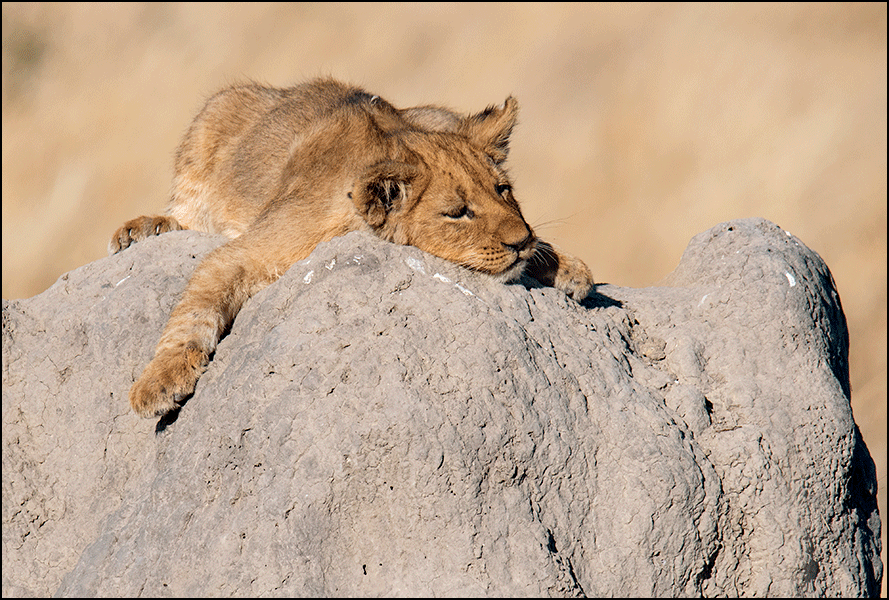
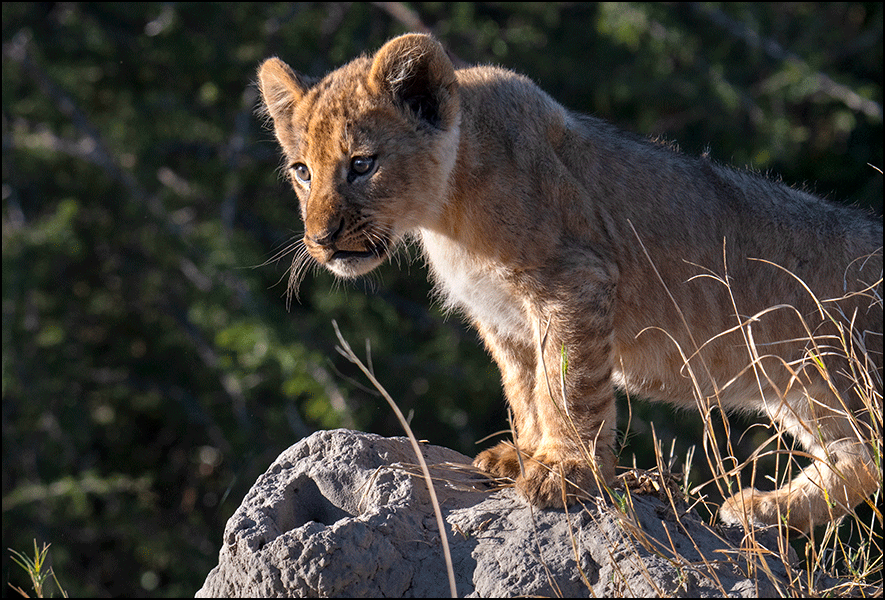
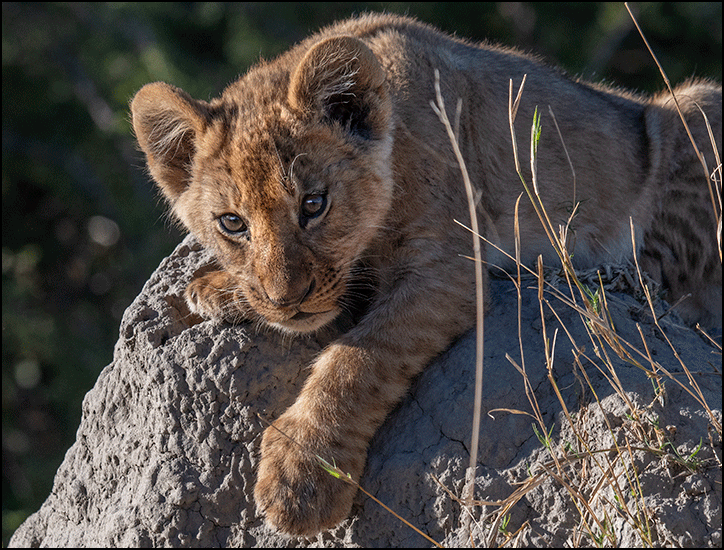
Returning to the Marsh Pride, we spent a long time watching the lion cubs. They were dozing gently under some bushes when we arrived, but soon they watched us with curiosity and began to come out to investigate. One precocious cub climbed up onto the termite mound and surveyed the plain like a tiny Simba on Pride Rock. Then he draped himself over the mound, front legs hanging down, looking around as if contemplating the kingdom that would one day be his.
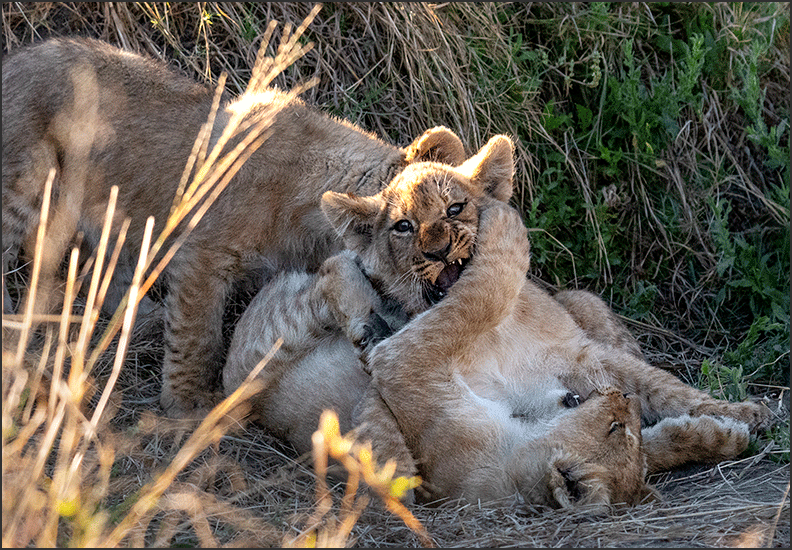
Gradually the youngsters became more active. Some snuggled with their mothers while others wrestled gently. They played on the mounds, disappearing from view for a few minutes and then popping up again - peeking over the top of a termite mound or over a mother’s back. Three of them tussled
good-naturedly, one cub lying upside down on his back, using all four feet and his teeth to fend off the other two as they pounced on him.
Eventually we left them, though I could easily have watched them all afternoon. Continuing along the edge of the Marsh, we saw a
black-shouldered kite and a black northern korhaan.
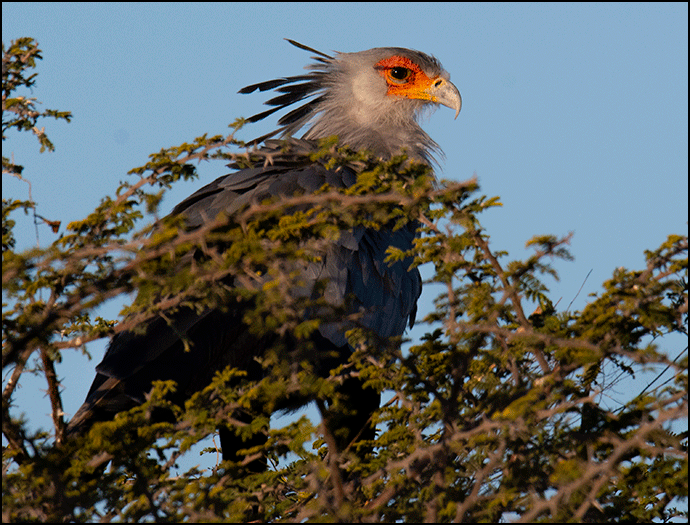
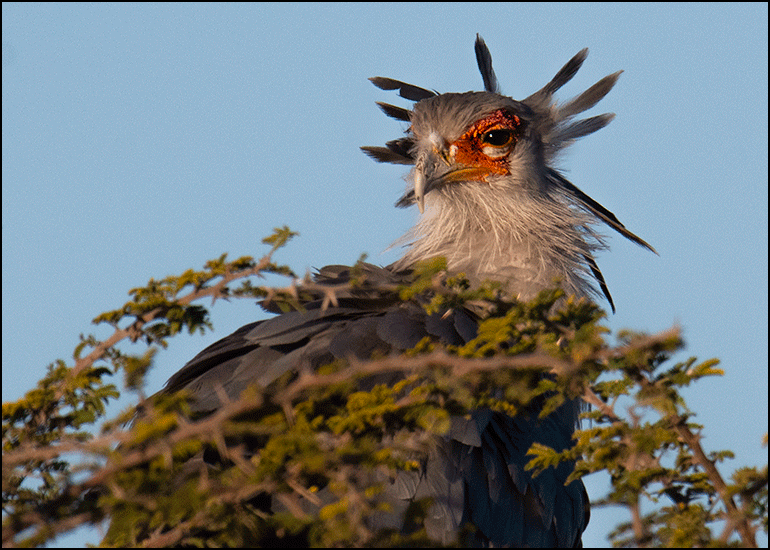
Then we got a real treat. A secretary bird perched at the very top of a tree, looking both regal and faintly improbable. His grey feathers were ruffled by the breeze, and his black
quill-like crest lifted as he surveyed the plains with sharp, deliberate focus. Once again, I was grateful for my new long lens; I managed to get some good close shots of his amazing feathered hairdo.
A secretary bird is one of the most striking and unmistakable birds on the African plains - a fierce, elegant raptor that looks as though it wandered out of a myth, part eagle and part runway model. Nearly four feet tall, they stride across the plain on crane‑like legs with long, deliberate steps. Their most remarkable feature is the crest of long black quills sticking out at the back of the head, said to resemble old‑fashioned writing pens - the origin of the name ‘secretary.’ The crest always reminds me of a Native American feather headdress. These fierce birds hunt on foot, preferring to walk rather than fly, striding through the grass and stomping their prey with rapid, powerful kicks. Their favorite food is snakes.
Driving on, several elephants suddenly appeared in the road ahead of us. “Elephants at twelve o’clock,” I quipped with a laugh, using our usual clock hand system for sightings. “Good spot, Phyllis,” Gee said.
Next we visited the pans. At the first waterhole we caught a glimpse of four bat‑eared foxes; they were shy and disappeared quickly. We didn’t get a very good look at them, but it was still amazing to find them here in Savuti at all.
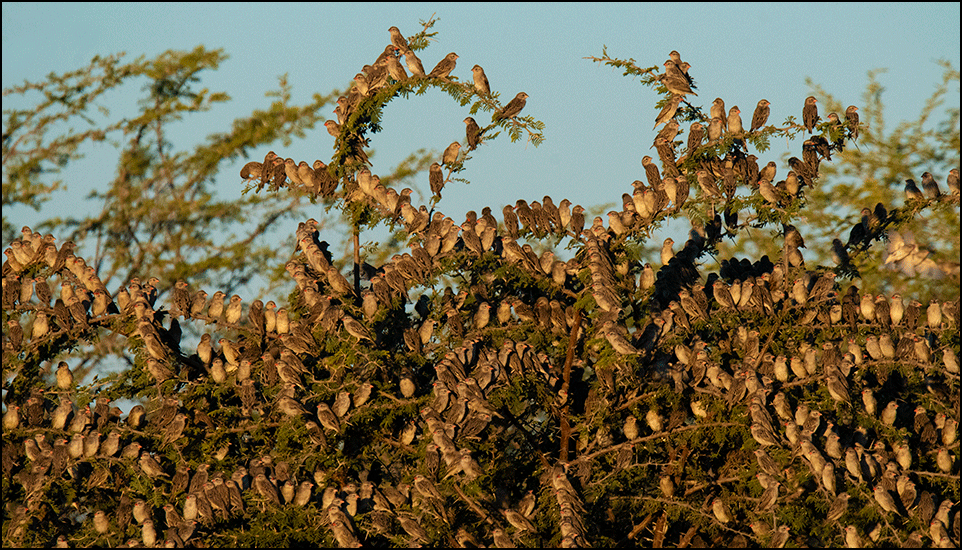
We drove on, not expecting anything dramatic - and then Savuti surprised us again. The next pan held the real prize. Red‑billed queleas - millions of them, it seemed. The branches of the thorn bushes were packed solid with these tiny birds, and the air was full of them. Their constant, high‑pitched chattering created a busy, overlapping roar of sound. The bushes seemed to tremble with their movement. Every few seconds the whole flock would shift, and as thousands of the birds flew upward the sound would swell into a sudden whoosh of wings - a brief fluttering roar - before settling back into that restless, babbling chorus. I could almost feel the noise reverberating in my chest.
As a group, thousands of birds would rise up suddenly as if pulled into the sky, and then settle back to earth just as quickly, completely covering a patch of grass or a thorn tree, before lifting off again. When they landed to feed, the ground rippled with motion, and when they took off the air filled with the soft roar of many wings. There was a joyful chaos to them, a restless energy that made the whole landscape feel alive.
Taken individually, each bird seems almost insignificant - but in these vast flocks they move together like a single, shimmering cloud, constantly changing shape as it sweeps above the pans. Hundreds of thousands of tiny bodies lifting and turning together with a rushing sound like wind through dry grass. It was an astonishing display. We stood there for a long time, letting the sound and motion wash over us - one of those rare moments when the bush feels bigger than your ability to take it in.
Apparently this was extremely rare - even Gee had never seen anything like it. He was mesmerized, as were we all. “My God,” he said, shaking his head in awe. “That was amazing!”
After watching the queleas for a long time, we headed back toward camp in the growing darkness. We spotted a great eagle owl sitting in a tree - too dark for a photo, but unmistakable in silhouette. Four elands dashed across the road, just a glimpse. I was really excited to see these huge cow-like antelopes, but wished I had gotten a better look.
As we drove back toward camp, the last of the light draining from the sky, we discussed our favorite sightings of the day. For me it was definitely the lion cubs, but Gee said the flock of queleas was the best to him. I reflected on how full the day had been - lions and cubs, secretary birds in treetops, elephants materializing in the road, and those astonishing clouds of queleas that seemed to lift the very air. Savuti, as usual, had shown us so many faces in a single afternoon: the tenderness of lion mothers, the restless shimmer of a million tiny wings, the quiet dignity of a lone tsessebe in tall grass.
|

The Southern Cross
|
By the time we reached camp, darkness had settled over the marsh. We sat under the stars around the fire,
watching the Southern Cross and listening to the night breathe around us, waiting to see who might wander past. And then, as if Savuti wanted to give us one last gift, two lion mothers with their babies drifted along the edge of camp, their shapes moving silently, barely seen in the shadows just outside of the firelight.
It felt like the perfect farewell - a reminder that out here life is always happening just beyond the circle of light, wild and unhurried and entirely itself. Our last night in Savuti, and the place had wrapped itself around us one more time, as unforgettable as ever. Savuti always leaves me with the sense that the world is bigger and wilder than I remembered.
~
Continued
on next page ~
Africa 2025 Journal Pages:
1
2
3
4
5
6
7
8
9
10
11
12
13
14
15
16
|