|
Africa 2025 Journal Pages:
1
2
3
4
5
6
7
8
9
10
11
12
13
14
15
16
June 23
Our wakeup call came at six again. After coffee by the fire and some jungle oats, we set off at seven. We were bundled up warm against the chilly morning breeze, though it wasn’t nearly as cold as some mornings on prior trips.
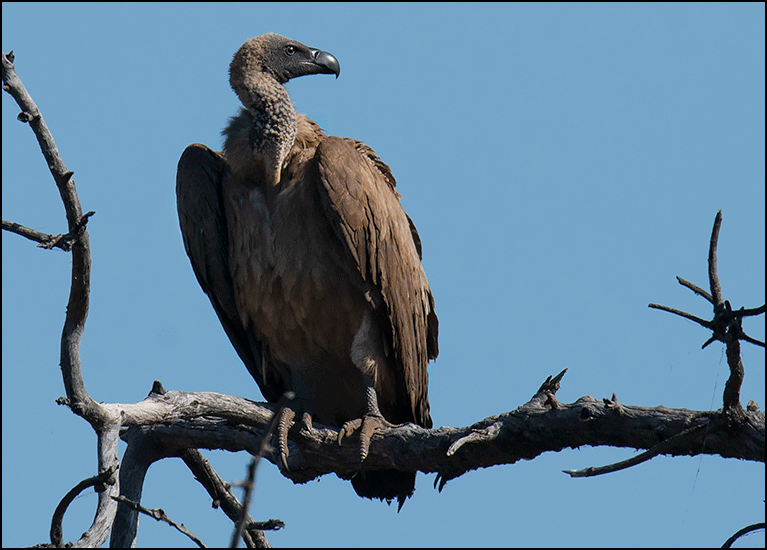
Two fish eagles sat in a distant tree; these striking dark birds with white heads feel like one of the true symbols of the African wetlands. We made a quick stop by yesterday’s giraffe carcass. There were still a few hyenas skulking about, and plenty of vultures keeping watch from the top of a dead tree.
Down near the river we spotted two pukus. I had never seen one of these elusive antelopes before, and
G ee had never seen one out of the water. They looked a bit like lechwes, only built less downhill and with much smaller horns. We were excited to see a new antelope, and Gee said they are very rare.
As we continued on, I found myself reflecting on the sheer volume and variety of wildlife we were seeing. I won’t attempt to record every bird we saw, nor mention each time we saw an impala or francolins; there were many animals and birds we saw on virtually every outing, including some of the big ones. But I am trying to recount the most interesting and memorable encounters here - both to share the experience with the readers, and to relive the memories in my own mind.
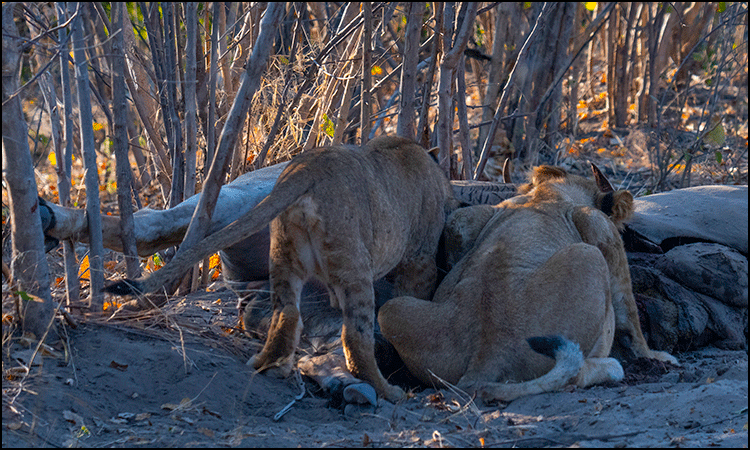
Gee was following tracks in the sand road; he said a pride of lions had passed this way. Then he heard on the radio that there was a lion kill near the road, so we headed toward it. When we got there, there were four adult lions and four cubs. They had killed an eland right by the road in the night, and quite a queue of vehicles had gathered. Once we were able to jockey into position, we had a good close view of them. The lions had obviously been feasting for quite a while, and by then they had eaten so much they were practically comatose.
Presently one big lioness decided she needed to drag the eland carcass farther from the road. But elands are big antelopes! She tried to pull it through a cluster of small trees, but it got stuck. It was comical watching her tug with all her strength on the eland’s head while the body was firmly wedged between two trunks. As she pulled, the bloated body would roll and heave, and a hind leg would stick straight up in the air. It was equal parts funny and disgusting. Still, it was interesting to watch her determination as she tried to shift that unwieldy carcass.
We didn’t stay long. The sighting felt too crowded to enjoy. This is one of the reasons we love safaris in Botswana: it’s generally not crowded, and on most of our drives we hardly saw any other vehicles. But Gee had warned us that Ihaha had a higher concentration of visitors than most areas we visit, so we weren’t surprised to see this queue. Truly, it was the only crowded moment of the entire trip.
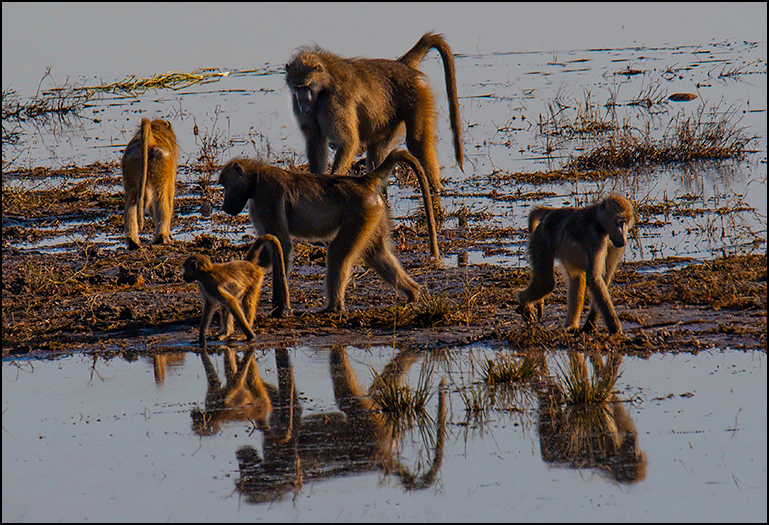
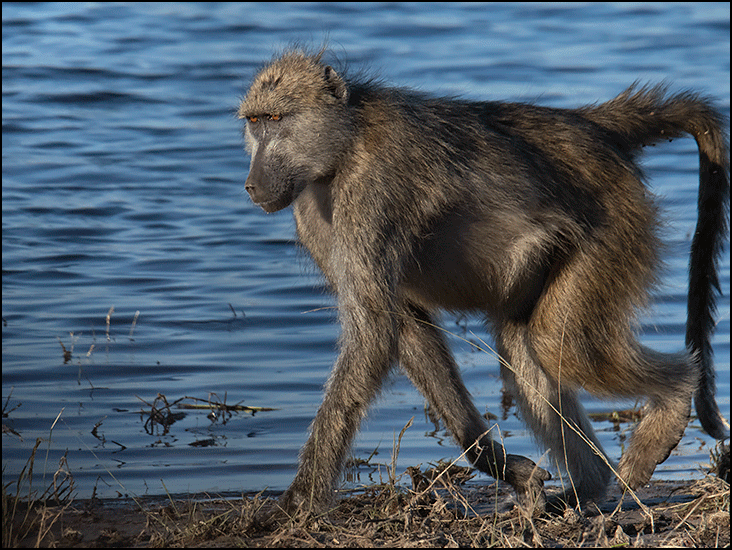
We took the sand road down to the river. Baboons were moving across the flat area by the water - fifty or more. Big males, mothers, babies, and youngsters of all ages. They were scattered over the sandbars, going to the water’s edge to drink and bathe. Their reflections glowed golden in the morning sun, shimmering in the quiet water. One was loping through the group with such carefree abandon that we realized he was practically skipping - like a dressage horse doing tempi changes.
The baboons swaggered around with arrogant confidence, like a gang of teenagers looking for trouble. There’s something endlessly entertaining about them - they’re full of attitude and the firm belief that the whole place belongs to them. And in a way, I guess it does.
Gee pointed out some fresh elephant tracks, so fresh you could see each wrinkle of the skin etched sharply in the sand. But for the second morning in a row, there seemed to be a scarcity of actual elephants. He also found some leopard prints, but we had no luck sighting the leopard who made them - they can be very elusive, and you have to be really lucky to see one.
A hippo was grazing beside the river - a nice chance to observe one close up, out of the water. They walk many kilometers at night to graze, but spend most of the day submerged.
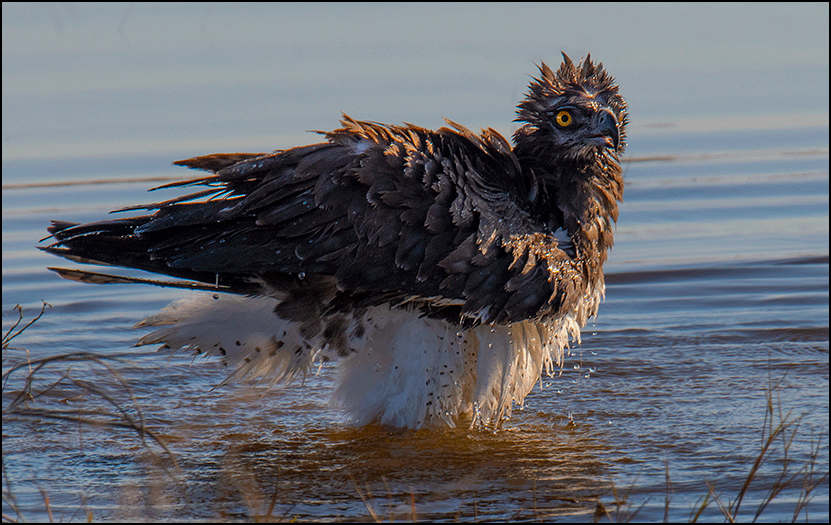
A Martial eagle was bathing at the water’s edge. We watched this normally fierce-looking bird dip its head and shake, droplets flying everywhere. His wet feathers stuck out in all directions, and he looked completely bedraggled. He glared at us with his fierce orange eyes, trying to appear intimidating, but mostly just looking mildly offended by the whole situation.
We asked Gee about the origin of the name Makomkom Safaris. He told us Makomkom means “Hurry up,” a phrase his father used constantly when they were kids - a habit he likely picked up during his time working in the mines.
We stopped for tea by the river; we could hear hippos honking and laughing in the distance. The Land Cruiser was equipped with thermoses of hot water, tea, coffee, cocoa, and rusks. The temperature was warming up nicely, and we started peeling off layers. This was also a good opportunity to ‘go behind a bush’ if needed.
On a previous safari with Gee, when he stopped in the mornings and told us he was checking the tires at first we thought this was odd, as they seemed perfectly all right to us – then we realized he was taking the opportunity to go behind a bush, so to speak. Ever since then, we have called this activity ‘Checking the tires.’
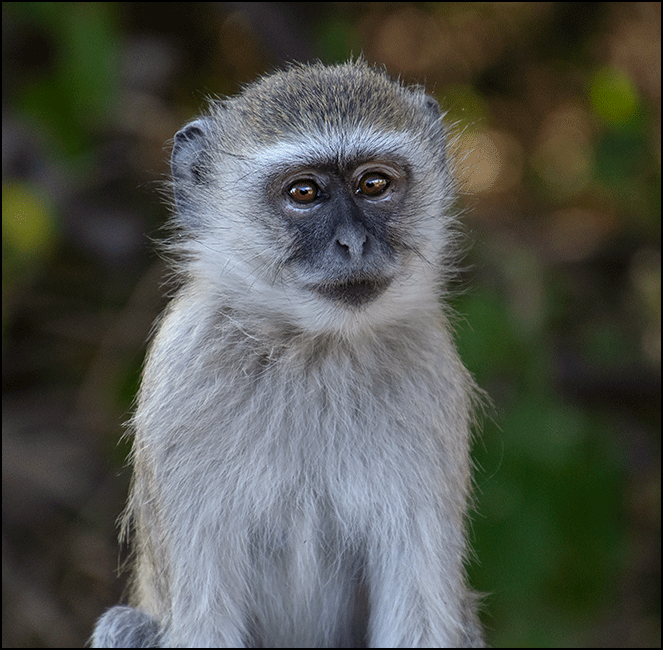
This was clearly a regular safari tea-break spot, and the monkeys knew it. Vervet monkeys are small, quick bundles of energy. They have brown-and-cream coats, and bright eyes that miss absolutely nothing. They move with casual athleticism, leaping from branch to branch as if gravity doesn’t apply to them. Their dark faces are wonderfully expressive - a mixture of innocence and mischief - though mischief usually wins out.
At regular rest‑stop spots, the monkeys become downright opportunistic, appearing the moment any sign of food comes out. They hang in the trees pretending to be innocent, inching closer the second someone looks away. Gee had warned us they were bold, and he wasn’t exaggerating. Several strolled right up, checking for unattended cookies. One daring little thief darted in, grabbed a rusk, and took off like he’d done it a hundred times - which he probably had. Another tried to bluff us by acting aggressive, hoping to scare us away from the snacks.
It didn’t work.
This morning tea break inspired Amanda to write her own dubious limerick:
Africa welcomes you
With zebras, lions and kudu
Watch your possessions for real
Or the monkeys will steal
And the hippos will just laugh at you
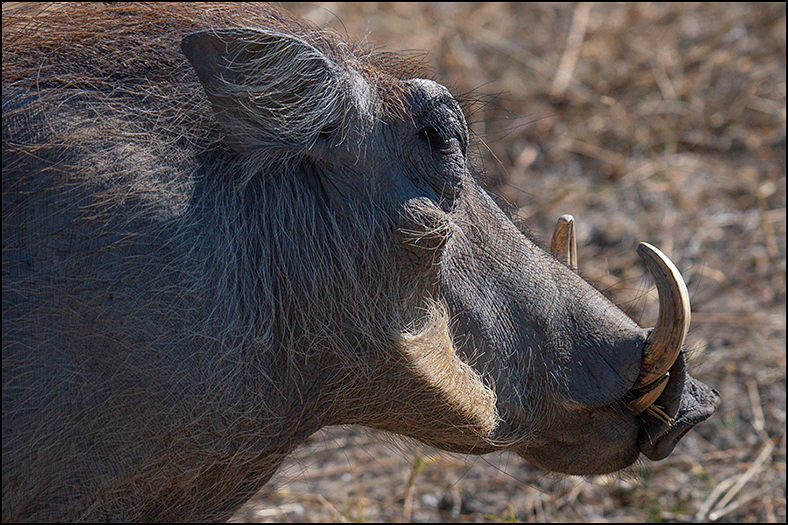
Just down the hill from our tea spot, a warthog was grazing. We watched him snuffle around, digging up tasty roots and dropping to his knees to graze. With the help of my 600 mm lens, I got detailed close-up shots of his impressive tusks and bristly facial hair.
We swung back by the eland carcass. There were fewer vehicles now, and the eland was even more bloated. Most of the lions seemed to have regained consciousness, though several were still in a food stupor. Amber added her contribution to the ever-growing bad limerick collection:
Leopards so far there are none
But the safari, so far, has been fun
For Gee as our guide
Found us a big lion pride
And an eland that bakes in the sun
And here was my own equally terrible attempt:
We saw lions gnawing on a tibia
And a giraffe carcass with nothing left but a
rib-i-a
Antelopes galore
And birds we adore
But the elephants have all gone to Namibia
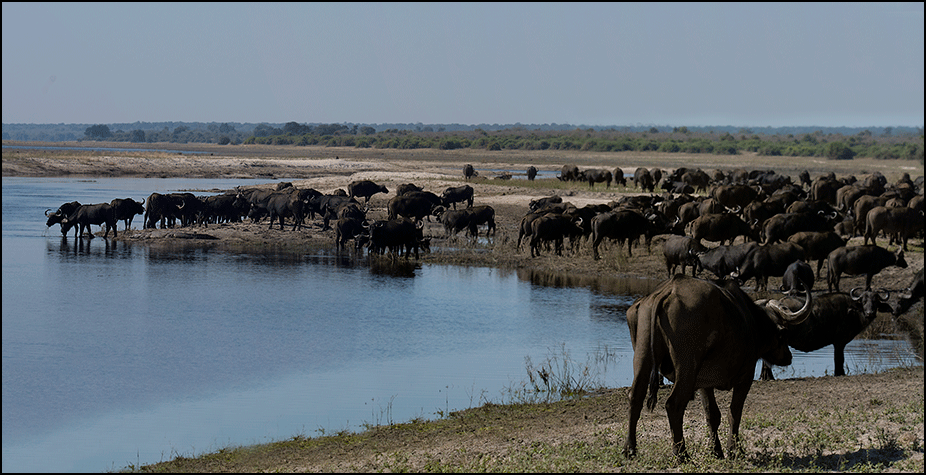
Moving on, we paused to watch a buffalo cross the road in front of us, then another, and another. It looked like many more were in the brush behind them. “They are going to the river to drink,” Gee told us. “Let’s go see.” He drove down the ridge and parked by the river.
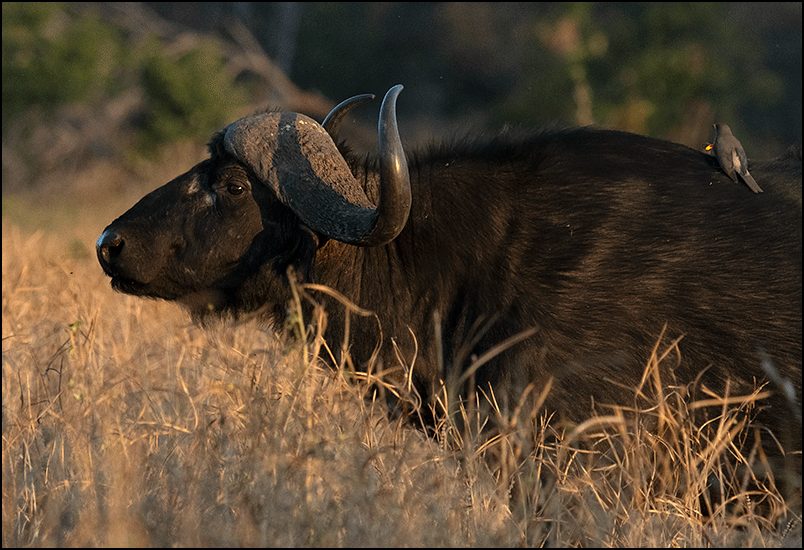
Soon the buffalos arrived. A huge herd - we estimated at least 300. They came down the slope and lined up along the shore, lowering their heads to the water. There was some pushing and shoving as they jostled for position, and a large group briefly stampeded along the river, kicking up huge clouds of dust. It was an impressive scene.
African buffalo are big, heavyset animals with a look that suggests they’ve seen everything and aren’t impressed by any of it. The bulls can be quite ill-tempered. Their coats are sparse and scruffy, dark brown or black, and their massive curved horns meet in the middle to form a solid boss like a built‑in helmet. They move in tight herds, sticking together as if joined at the hip. Buffalo have a reputation for being unpredictable and are considered among Africa’s most formidable animals. They’re not graceful or particularly attractive, but there is something endearing about their grumpy confidence.
Driving along the river, we came to a cove where a long peninsula stretched into the water, forming a
U-shaped lagoon. On the far side, about three dozen hippos were spread across a beach. Most were out of the water - a few wandering around with small babies at their sides, the rest sleeping on the sandy shore. We watched them for quite a while.
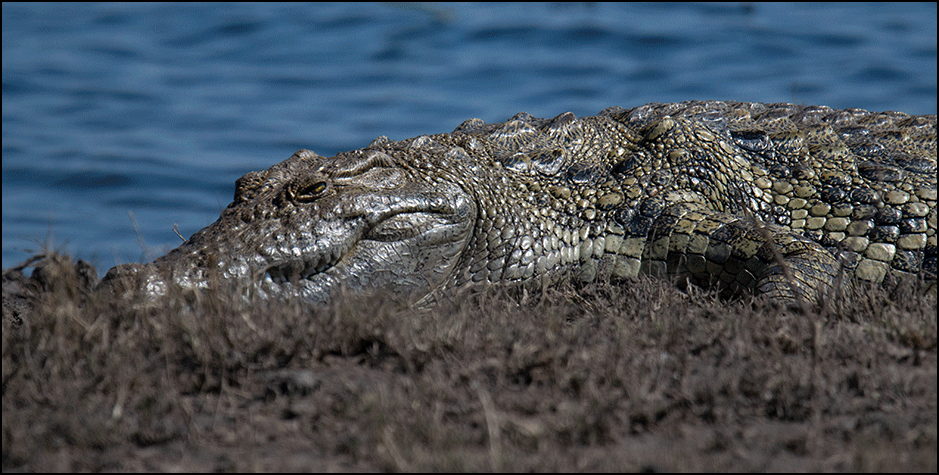
Continuing along the riverbank, we saw a few big crocodiles sunning themselves at the water’s edge, their shiny scales glinting in the sun. They look like creatures from another age. We were quite close to one; he had his eyes firmly shut and seemed sound asleep - until he opened one eye halfway and gave us a sly, sinister glare. It was the unmistakable look of a predator calculating possibilities – were we worth the effort?
Gee pointed out a male village indigo bird, a species we hadn't seen yet. About the size of a sparrow, he was black with a bluish sheen, bright red legs, and an orange beak. These birds are known for their parasitic child‑rearing habits: the females lay their eggs in the nests of
red-billed firefinches and let the unsuspecting foster parents do all the feeding.
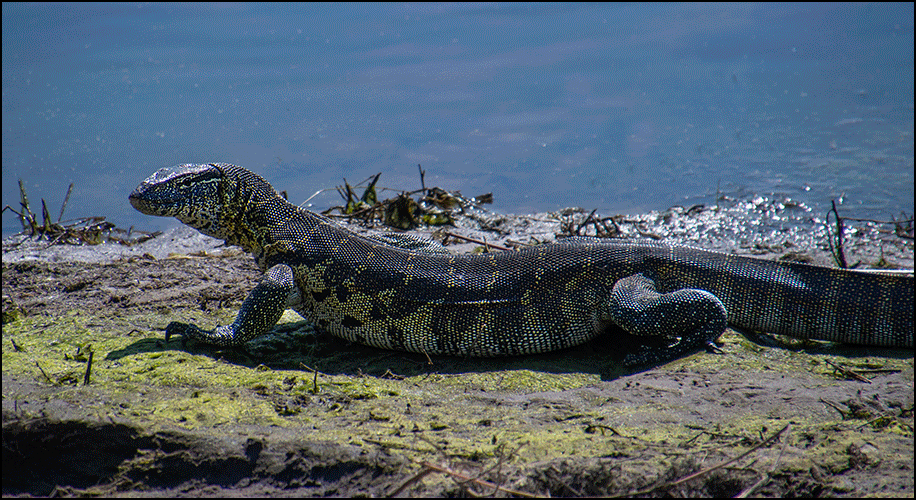
We encountered two more water monitor lizards - or maybe the same two from yesterday. These large reptiles have a steady, purposeful way of moving, and like the crocodiles they project an ancient presence. They’re strong swimmers, propelled by their powerful tails. One marched along the shoreline, tongue flicking as he took in his surroundings, alert but unhurried - then he paused and turned toward us, his proud profile framed against the blue water behind him.
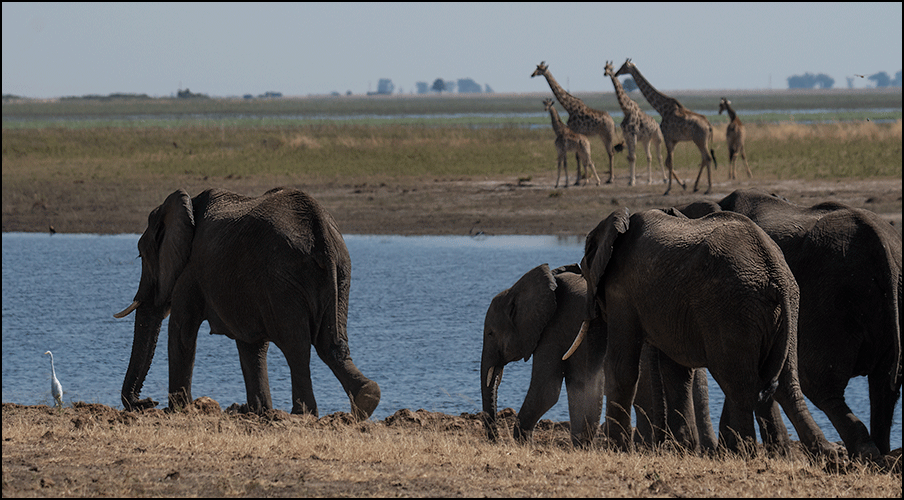
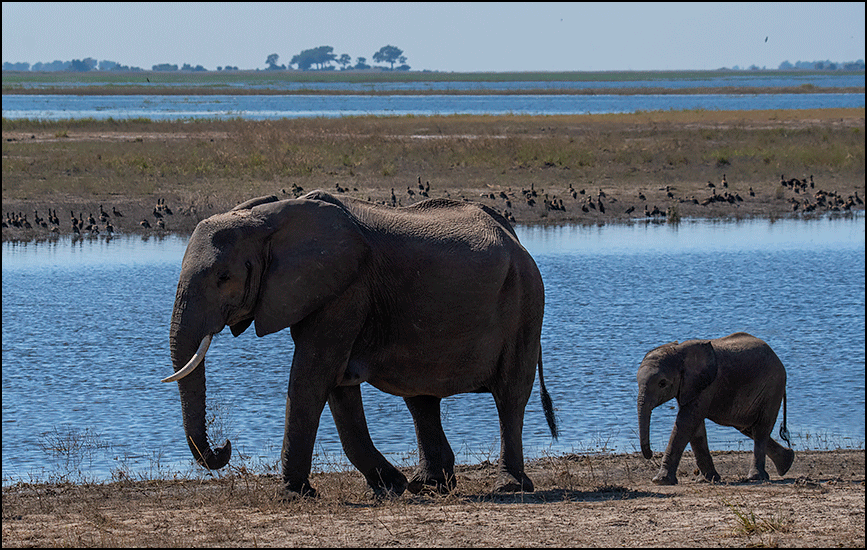
It was close to noon when we finally found the elephants. About eight of them, quietly pacing along the river’s edge, walking
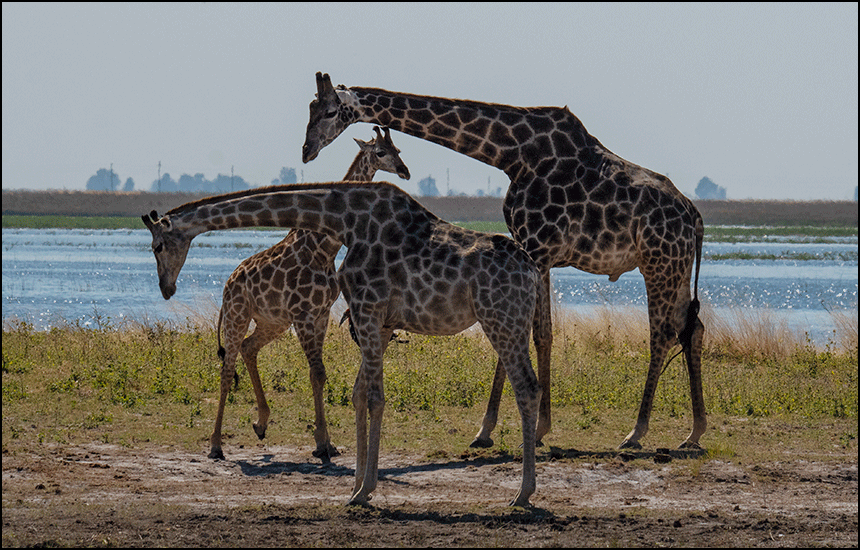
past us. Gee drove ahead to get in front of them so we could watch them approach. Beyond them, across a channel of water on a long peninsula, we saw a family of giraffes crisscrossing back and forth, arching and bowing their necks — more giraffe art.
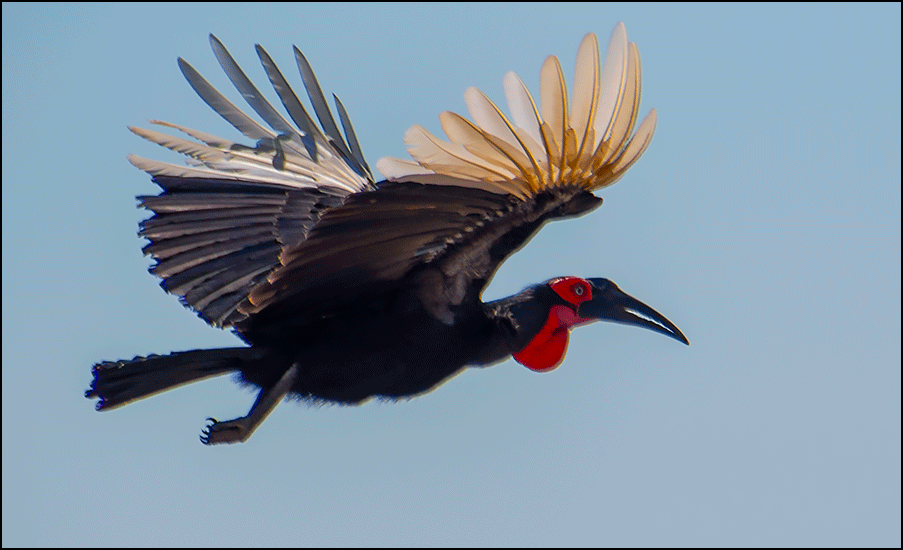
The elephants turned onto the peninsula, now striding to our right, while the giraffes crossed behind them to our left. It was an amazing scene, these large creatures silhouetted against the river and sky. And just when we thought it couldn’t get better, several ground hornbills flew across in front of the giraffes. These large, striking birds stand about a meter tall. Mostly black, they have bright red facial wattles and white wing tips visible only in flight. I’ve rarely actually seen one flying; I suppose they’re called ground hornbills for a reason. This made seeing them flying along the river all the more special.
We followed the riverfront back past Hippo Beach. Most of them were still lying in the sun, but quite a few were standing now, moving in and out of the water. We came to a large baobab tree with a pair of African fish eagles perched high in the branches like sentinels. These beautiful raptors look a lot like American bald eagles - dark bodies with
reddish-brown highlights when the sun hits them, brilliant white heads and necks, and a fierce expression belied by their
high-pitched, eerie call.
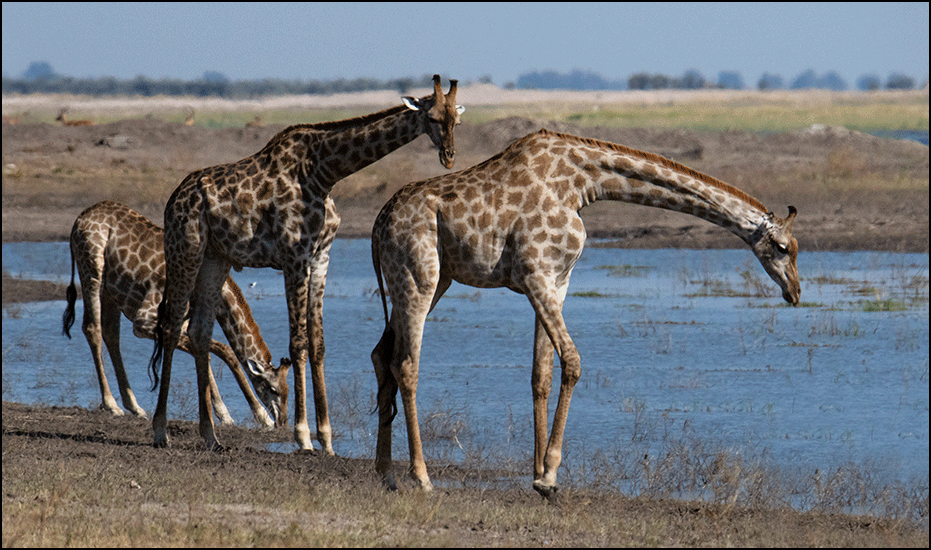
As we headed back to camp, we were treated to a great close-up view of three gorgeous female giraffes striding side by side
along the river, and then crossing the road in front of us. One had a
dark chestnut-brown pattern, and the other two were paler in
color. They were incredibly elegant.
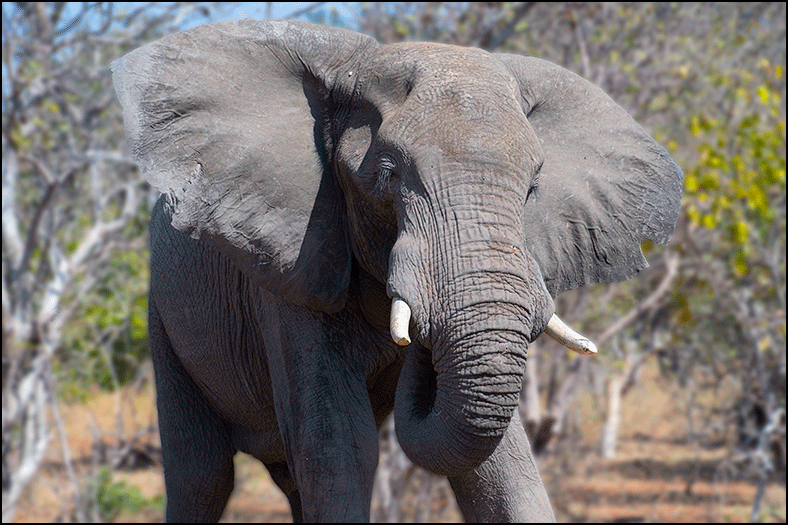
A large bull elephant was blocking the road. He seemed more interested in eating tree branches than in us, and he browsed his way quite close. It was amazing to be so near and see every detail: the wrinkled texture of his skin, the many tears along the edges of his ears, and his incredibly long, thick eyelashes. After a while he moved even closer and flapped his ears a little impatiently, so Gee promptly backed the Land Cruiser out of his way. Elephants always have the right of way - no exceptions.
Going through my notes to write this journal, I came across an appallingly bad limerick. I don’t remember who wrote it, though I suspect I may be the guilty party.
Just when we started to fear
That no large creatures were near
Buffalo came down to drink
And more hippos than you would think
And ellies and giraffes did appear
Oh well, safari limericks are supposed to be a little terrible - that’s half the charm.
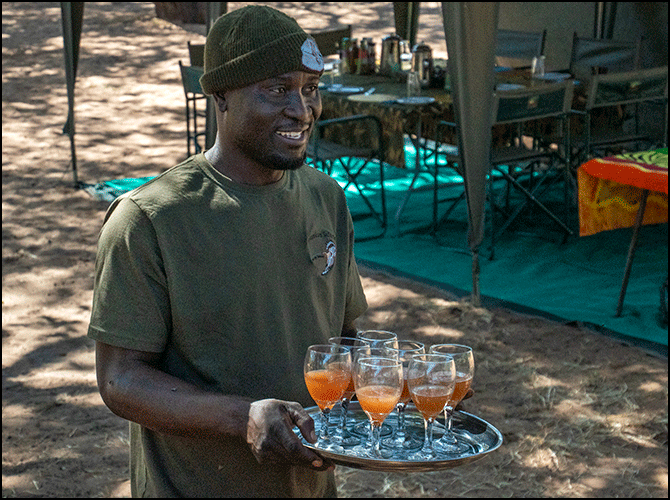
We were back in camp at one o'clock. As we climbed out of the Land Cruiser, our waiter More was waiting for us with a platter of fruity tea served in wine glasses, and Chenaman had refreshing moist washcloths for us to clean our hands and faces. It was a small gesture, but it made us feel wonderfully pampered.
Jineen made a centerpiece for the dining table out of feathers, pods, and plants she’d collected. We had a very nice lunch and a bit of time for showers. We did a little laundry in our canvas washbasins; Makomkom does a super job with most of our laundry, but we do our own socks and undergarments.
Then we had an emergency. Huge black beetles were scuttling around camp near the tents - for reasons unknown they seemed especially attracted to Amanda and Amber, and kept gravitating toward them. There was a fair bit of noisy excitement bordering on panic. Jineen saved the day by removing those beetles most determined to enter Amanda’s tent, though we were not entirely sure where she put them. Hopefully not in somebody’s bed.
Amber was inspired to compose the following:
Everyone needs a Jineen
She relocates bugs on the scene
Removal is free
But sometimes the fee
Is that she hides them somewhere unseen
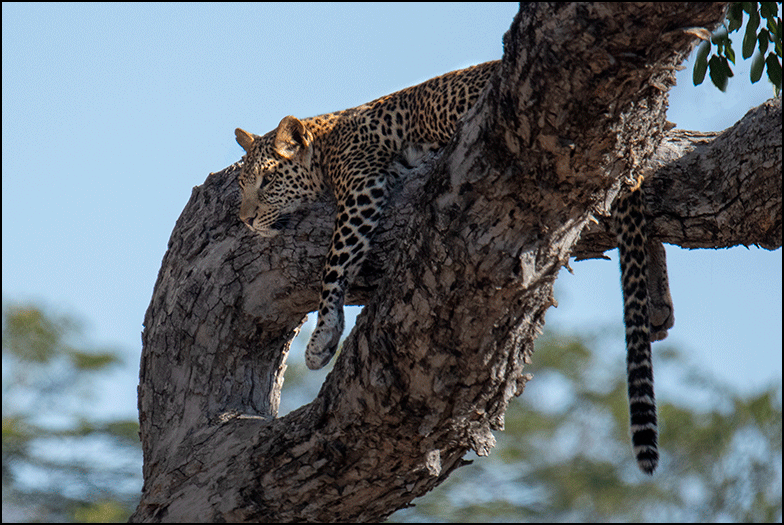
We went back out for the afternoon drive at 3:15. We had hardly left camp when we came across a female leopard in a tree. She was lying on a high branch, reclining comfortably with her tail hanging straight down. A
self-driving couple with a lot of safari experience had tipped us off; they told us they’d been scanning the trees for dangling leopard tails, and that was how they spotted her. The tree was back from the road a distance so we were not very close, but any leopard sighting is special.
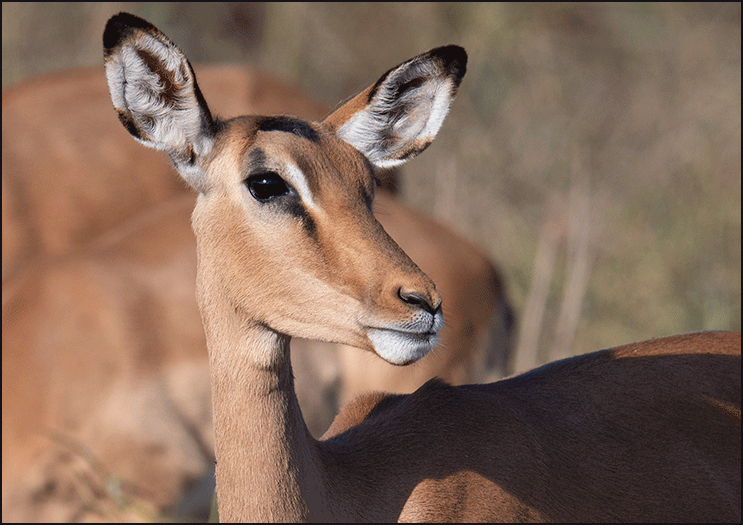
Leaving the leopard, we headed down toward the river, pausing to spend some time with a herd of impala. They are everywhere; we see them on every drive. Impalas are medium‑sized antelopes with
two-toned brown coats and distinctive black stripes down their rumps that form the letter M. The males have long, lyre‑shaped horns, and the females have delicately refined faces. These graceful antelopes are so common that it is easy to pass them by without a glance, but when you stop to really look at them, they’re quite splendid.
On the long spit of land out in the river were a lone male giraffe and a single bull elephant. The giraffe was very dark in color; he stood and gazed out across the water for a while, and then walked across in front of the grazing elephant. Finally the giraffe seemed satisfied that no lions lurked in the tall grass - he spread his legs out wide to lower himself to the ground, and put his head down to drink.
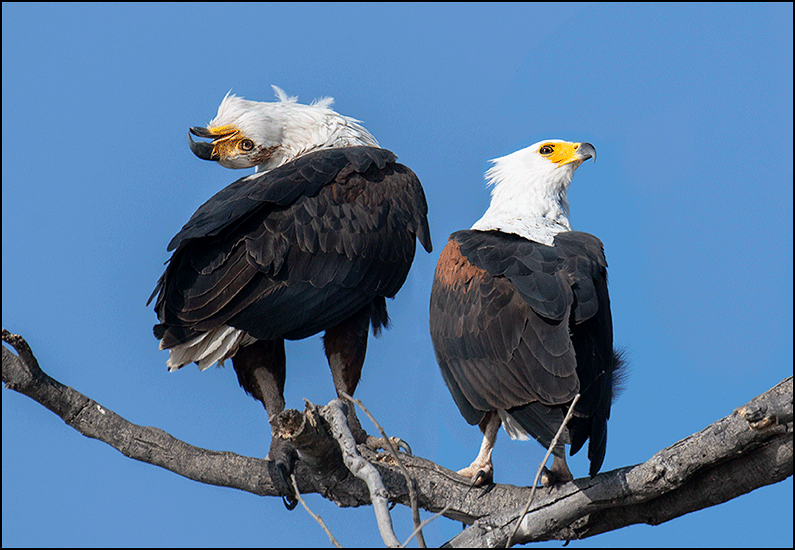
A pair of fish eagles perched in a dead tree, standing regally in the sunlight. They were feeling amorous, making soft calls to each other, and a mating ritual soon occurred. Afterward, the male tilted his head back over his shoulder at an impossible upside-down angle, his fierce pale eyes glaring at us as he let out a
high-pitched, piercing wail that echoed over the water. With that he took flight, tilting his head back and calling again with that eerie, plaintive cry as he winged away.
We spotted an odd‑looking apparition moving along a grassy spit of land - the top of an elephant’s head rising out of a floating island. It was as if an elephant were growing out of the ground. He was walking through the aquatic grasses with only his head above the surface, tusks held high and trunk waving, while the rest of his body stayed completely submerged.
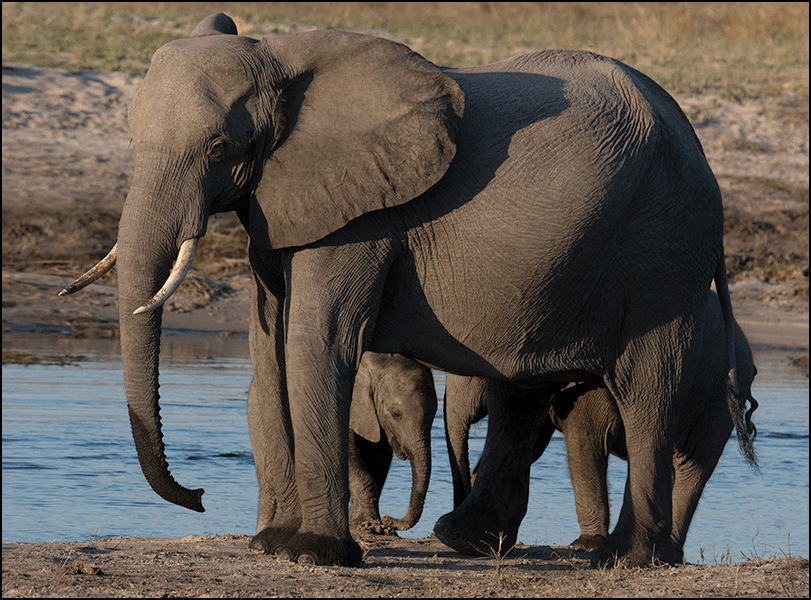
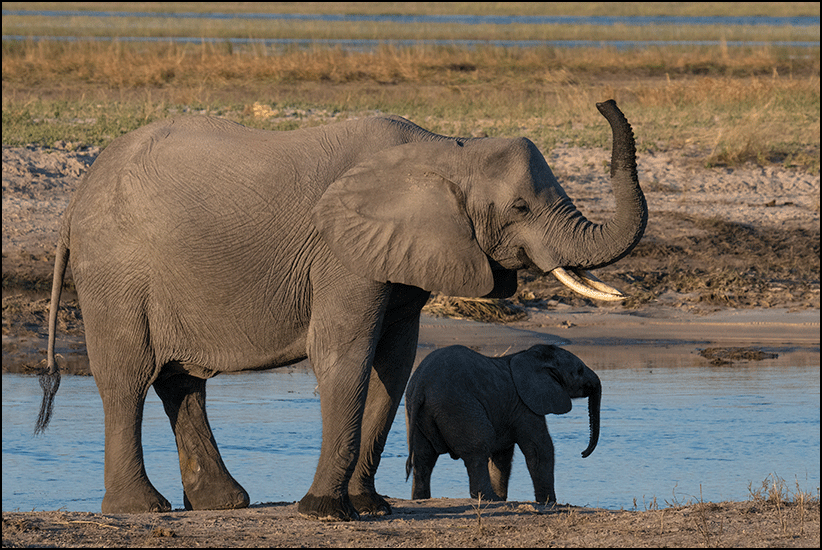
Across a narrow channel we saw more elephants - a family of five: two large females, two smaller ones about half‑grown, and one fairly small baby. A big male followed not far behind. They stood in the water for a while, drinking. The baby decided to take a short break; he lay down and flopped over on his side, his trunk swinging through the air as if he were showing off just how clever he was.
Later we watched the big female and her baby wade across a much deeper channel. The little one reached up with his trunk to touch his mother’s tail as they negotiated the deeper water, seeking reassurance in the simplest, sweetest way.
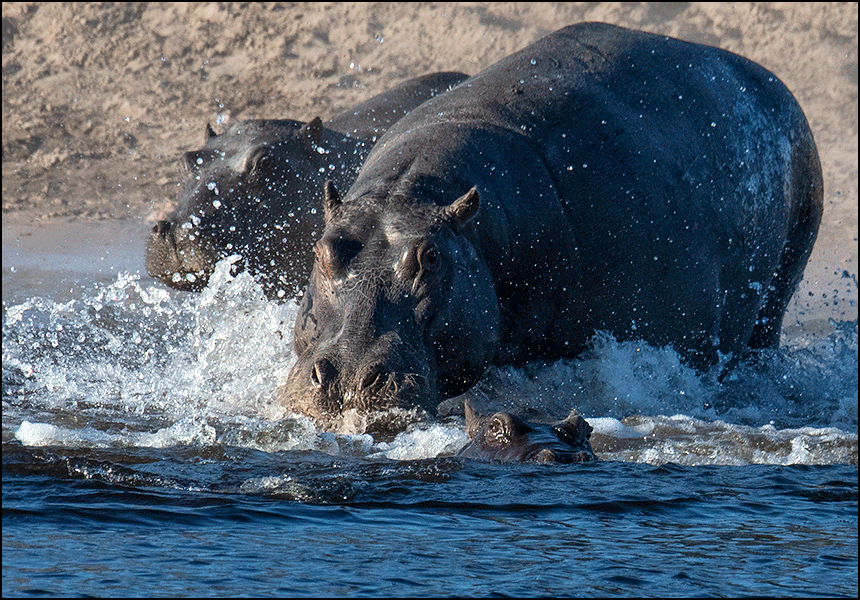
There was a large raft of hippos up on the shore on the other side of a channel. We arrived just in time to watch half a dozen of them launch themselves into the water, pushing and shoving and throwing up a spectacular cascade of spray as they plunged into the river. We watched them splash about for a while. Several hippos already in the water were grunting and bellowing; one very loud one sounded like a cartoon villain practicing his evil laugh.
Another troop of traveling baboons made their way along the beach. Several big males passed very close to our vehicle. They always seem to avert their eyes or glance away as they go by; only the babies look straight at us, their curious little faces unabashed. Since primates often take prolonged eye contact as a threat or challenge, we tried not to stare at them too boldly.
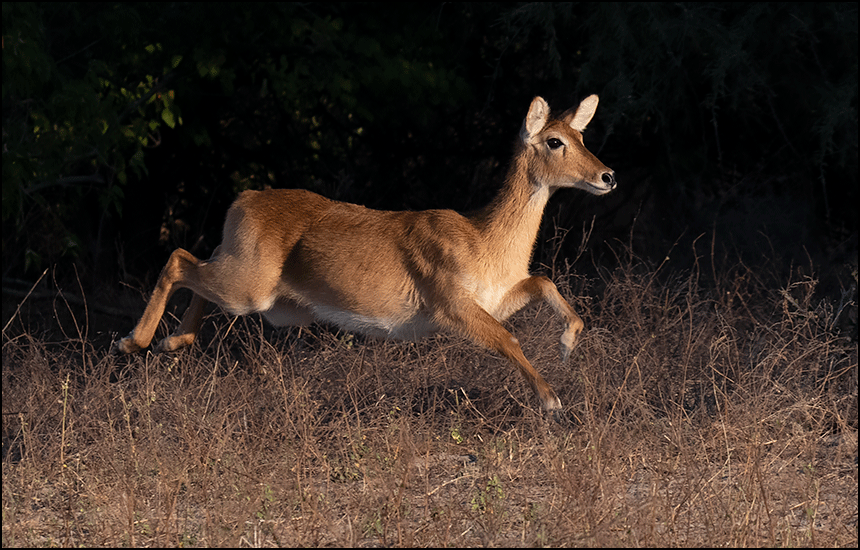
A sudden flash of movement in the trees caught our attention, and a puku burst out of the woods and sprinted past us, leaping through the tall grass and sailing over fallen branches with effortless grace. A few moments later a second one followed. We had been thrilled just to spot these rare antelopes earlier in the day; now watching them practically fly past us at full speed felt like an unexpected gift.
Even more elephants appeared - a big breeding herd by the river. They were feeding and drinking, quiet and content. Several very small babies were with them, and when the adults brought them down to the water, the older elephants closed ranks around the little ones, shielding them from our view with deliberate care.
The herd stood in the shallows for a long time, drinking and occasionally spraying themselves, but mostly just relaxing together peacefully. We watched them for ages; it was a great encounter. Elephants radiate a sense of wisdom and majesty, and it is humbling to spend time in their presence.
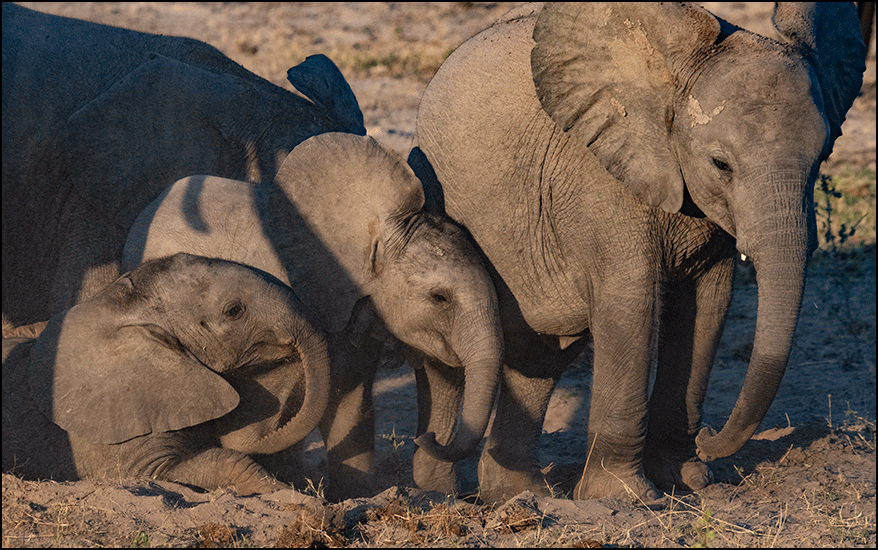
Off to one side, a big bull was trailing a female, intent
on mating. She led him on a merry chase across the wide
floodplain. Meanwhile, all the youngsters eventually snuggled
together on the ground and settled in for a quick nap.
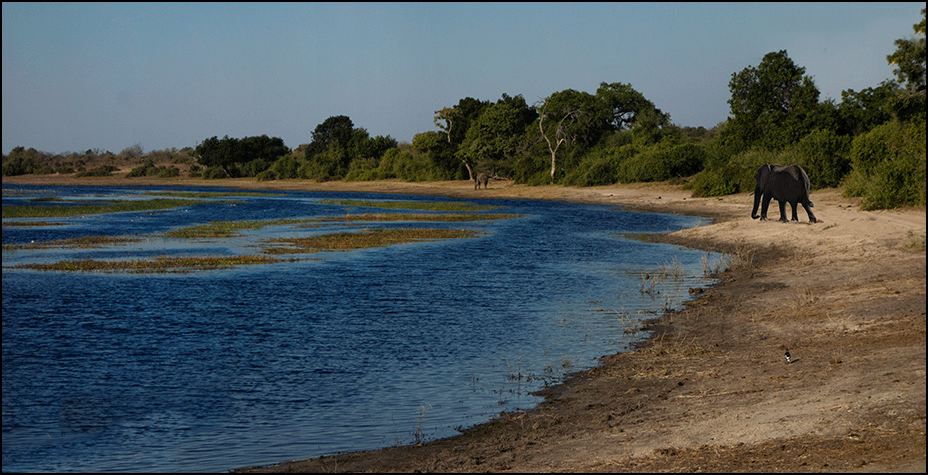
It was getting on toward dusk, so we left the elephant herd
and continued along the river. Ahead of us the shoreline curved in
a wide bend, and the lagoon took on a deep blue hue. Far ahead, a
lone elephant was slowly making his way along the sandy shore.
We headed up the ridge toward camp. At the top we paused as
about two hundred buffalo crossed the road in front of us - we sat
and watched the endless line of them filing past, single file. It
felt like watching a living river of horns and hooves.
We stopped at the tree where we had seen the leopardess
that morning, but she was gone. As we neared camp, though, we
found a giant eagle owl perched in a tree, silhouetted against the
fading colors of the sunset sky.
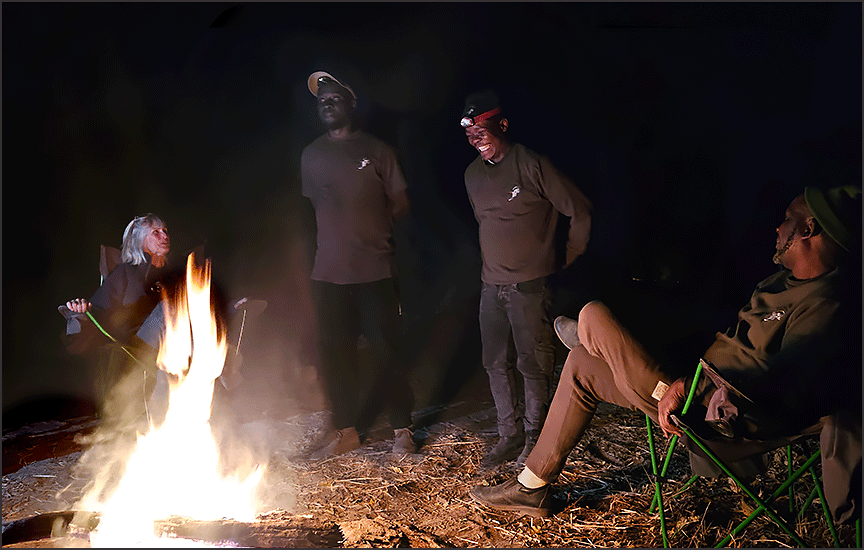
We sat around the campfire watching Bush TV, sipping a
glass of wine or a gin and tonic. By now our waiter More knew
exactly what each of us liked and would bring our drinks before we
even asked. He even remembered who preferred their G&T to be a
double - which, truth be told, was most of us.
Presently Mosa
announced dinner, describing each course as he always did. It was
another delicious meal. Mosa is a fabulous chef, but it still
amazes me how he manages to produce such excellent food on a
simple camp stove over a fire.
|
Mosa announces dinner
|
These guys were really taking great care of us. With Mosa preparing wonderful meals, More keeping our meals and drinks flowing, and Chenaman making sure the camp ran smoothly, we were in very good hands.
After dinner we lingered a while longer around the fire. The African darkness gives us the gift of the stars; they were scattered across the inky sky like diamonds strewn across the heavens. It was breathtaking. I gazed at the Southern Cross and Scorpius and followed the trail of the Milky Way across space. I tried a few night‑sky photos with my phone, but they didn’t begin to capture what we were seeing.
Chenaman came around with bush babies for each of us. Not the wide‑eyed live primate kind, of course, but the wonderful old‑fashioned hot‑water‑bottle type - flat rubber containers wrapped in flannel covers and filled with hot water. Slipped under your blankets, they radiate heat for hours. There’s something sinfully luxurious about climbing into bed after a long day in the bush and finding that soft warm baby waiting for you. My advice: if you’re ever in the African bush and someone offers you a bush baby, say yes - it might be the best decision you make all day.
~
Continued
on next page ~
Africa 2025 Journal Pages:
1
2
3
4
5
6
7
8
9
10
11
12
13
14
15
16
|