|
Africa 2025 Journal Pages:
1
2
3
4
5
6
7
8
9
10
11
12
13
14
15
16
June
25
Our wakeup call came extra early; it was moving day. We were up at 5:30, blinking into the dark, and after a quick coffee and some jungle oats we were on the road by 6:30. Today we were leaving Ihaha and heading for our next camp in Savuti. The air still held the chill of night, and the sky was just beginning to lighten. There’s always a little thrill on moving day - the sense that anything might happen.
Before setting out, we took a short game drive near camp. Gee told us that the lions we’d heard calling in the night had actually walked right through camp, and he immediately began tracking them. He showed us the prints in the sand: two large females and four cubs. A little farther on, he pointed out the spoor of a male lion by the road - the same one whose deep roars had kept us company in the darkness.
And then, just as the tracks suggested, there they
were. We found the mother and her cubs down near the river, right
in the road. The lioness was lying there serenely, completely
unbothered by our arrival, while the cubs peered at us from behind
tufts of grass, half hiding. They were still quite small, maybe a
couple of months old, and impossibly cute.
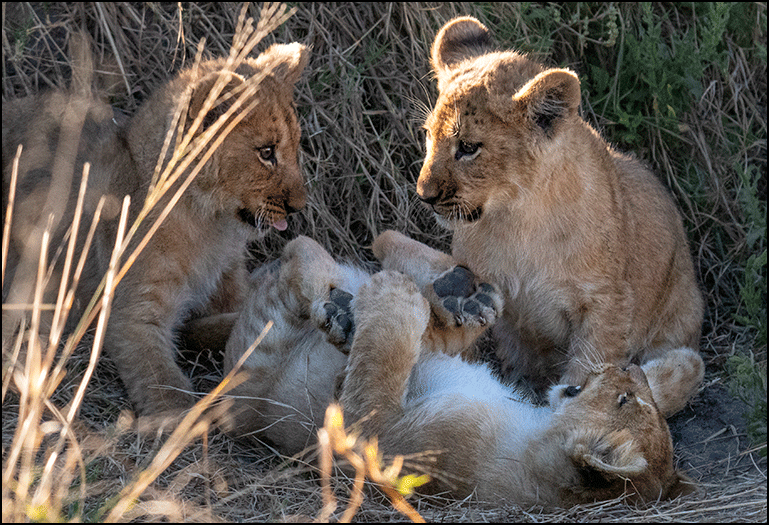
At first they watched us shyly, but once it became clear we weren’t a threat their confidence bloomed and their mischief began. Soon they were scampering around, pouncing on each other, wrestling, and playing their own version of
hide-and-seek. They tumbled down toward the water’s edge, then eventually worked their way back up the hill with much frolicking and pouncing. We sat watching them for a long time, completely enchanted. It felt like we’d been granted a private glimpse into their hidden world.
Eventually the mother gave a soft call, and the cubs immediately fell into line. Together they walked up the hill and disappeared into the brush. Gee explained that she was keeping them hidden from the big males so they’d have a better chance of getting enough to eat - and also because strange males sometimes try to kill cubs that aren’t their own. Spending time with these cubs was extraordinary, one of those sightings that imprints itself on your memory.
The morning light was soft and golden, making the giraffes look even more elegant than usual. Several stood browsing at the treetops, their coats glowing warmly in the early sun. Even the air seemed to glow around them. They moved with that unhurried grace that makes you feel as though the whole day has slowed down to match their pace.
Not far from camp we passed a buzzard perched in a tree, surveying the world with a steady, unhurried gaze. A little farther on, Gee pointed out a massive hamerkop nest - an untidy, oversized bundle of sticks wedged deep into the branches, clearly added to year after year. Nearby, a baobab held a whole cluster of buffalo weaver nests, big messy communal constructions that looked like armfuls of straw draped over the branches.
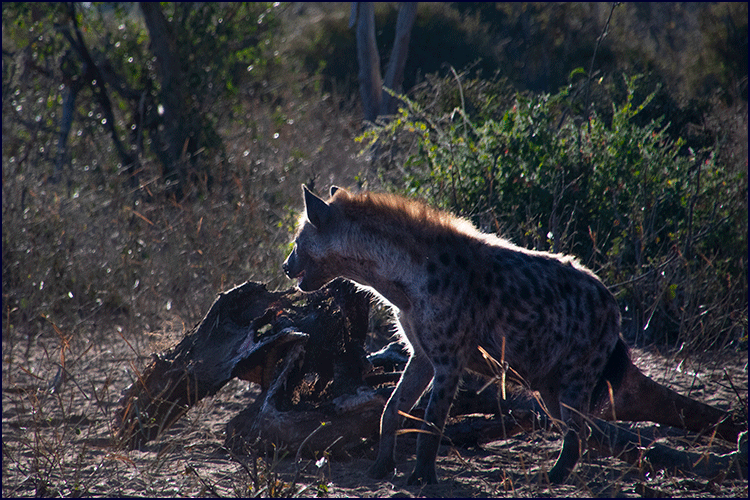
A few minutes later the mood shifted again when we made a stop at the giraffe carcass; three hyenas were there now, along with two jackals, all intent on their work. The hyenas gnawed at the bones with methodical determination, while the jackals darted in and out, snatching what they could between the larger animals’ movements. It was a little disgusting to watch, but also fascinating – nothing is wasted in the bush, and it is all part of the cycle of life.
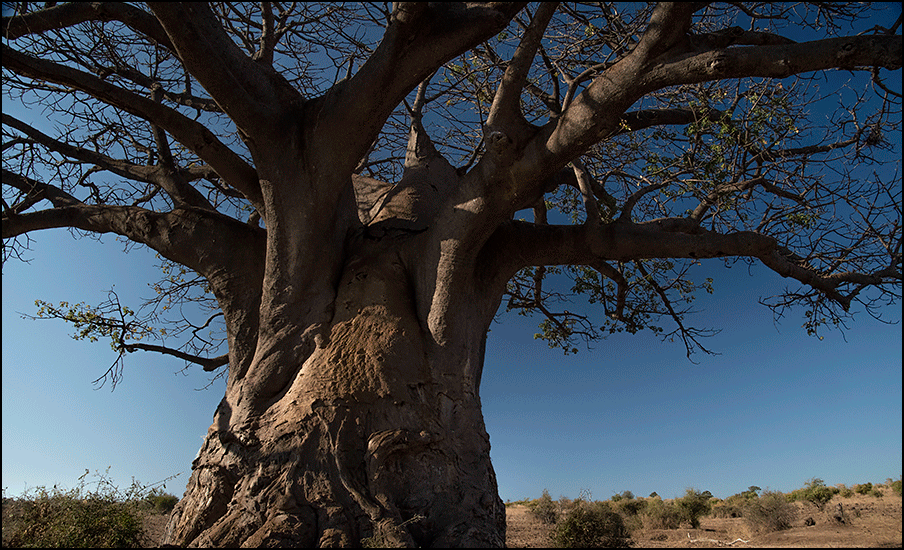
We took the main road - still just a sand track - heading toward Savuti. The road stretched ahead of us, quiet and pale in the morning light. We were continuing in the same direction we’d been traveling when we first arrived, so it was all new territory. The river ran alongside us on our right, and to the left the land rose into long rocky slopes scattered with massive baobab trees. Gee pointed out one particularly enormous one and said it was probably around 600 years old. I never tire of seeing these magnificent, distinctive trees.
A baobab rises out of the savanna like something out of a dream.
Its huge, smooth-skinned trunk swells upward into a crown of
thick, root-like branches. In winter, when the leaves are gone, it
looks like an upside‑down tree with its roots in the air.
Many are hollow, and you fantasize that you could step inside and
make a home there. They’ve stood here for centuries, storing
water in their vast trunks, offering shade, and feeding birds and
animals with their flowers and fruit. They watch over the
landscape like quiet, ancient guardians.
More
than just trees inhabited the area. Giraffes, zebra, and guineafowl seemed to own the place - they were everywhere. A family of warthogs sauntered along the road with their usual comic dignity, the youngsters trotting right behind their mother. A group of female waterbuck stood on a ridge, the first we’d seen on the trip, their soft shapes standing out against the sky.
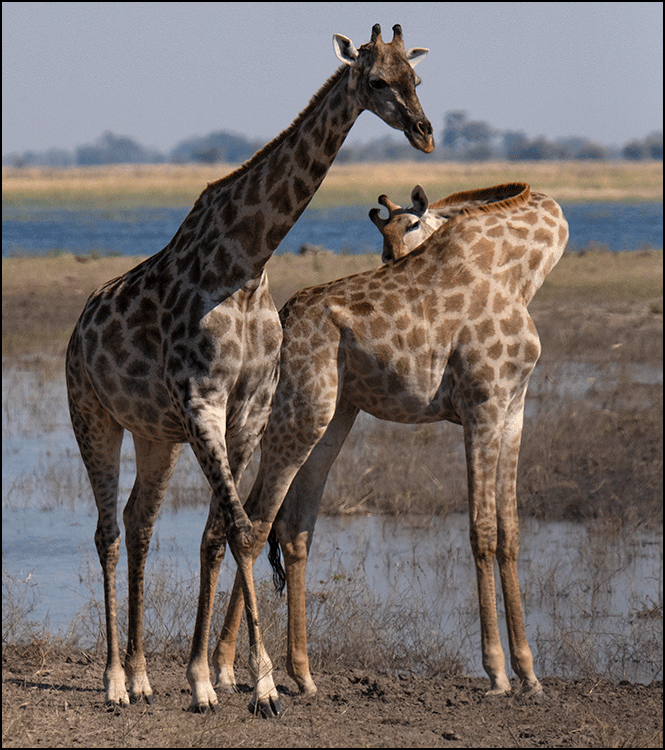
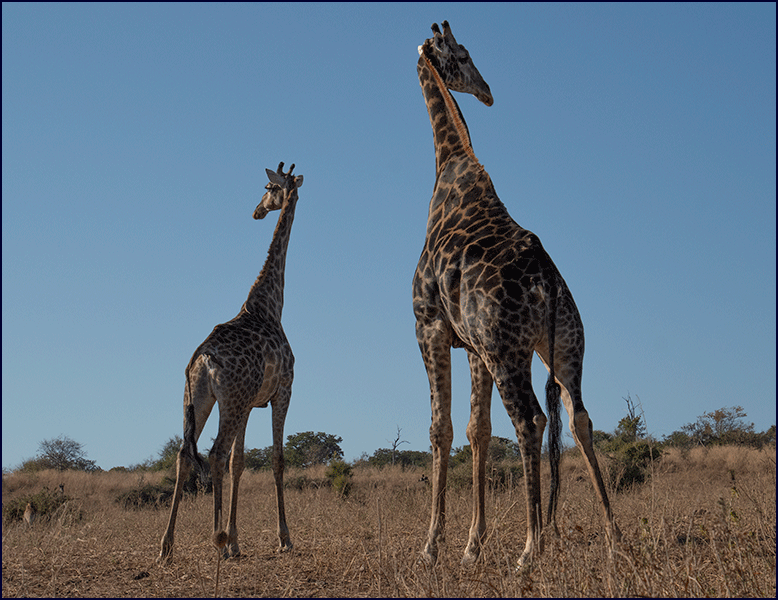
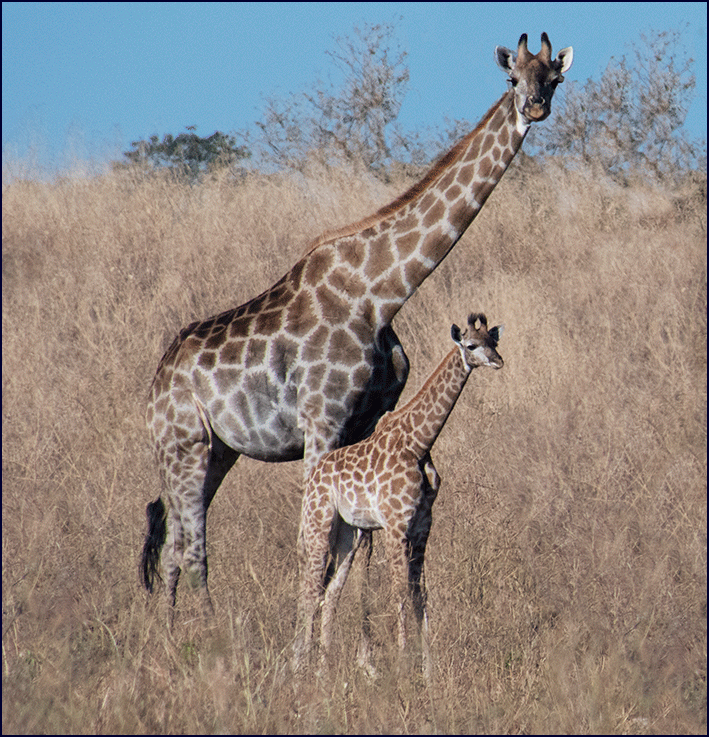
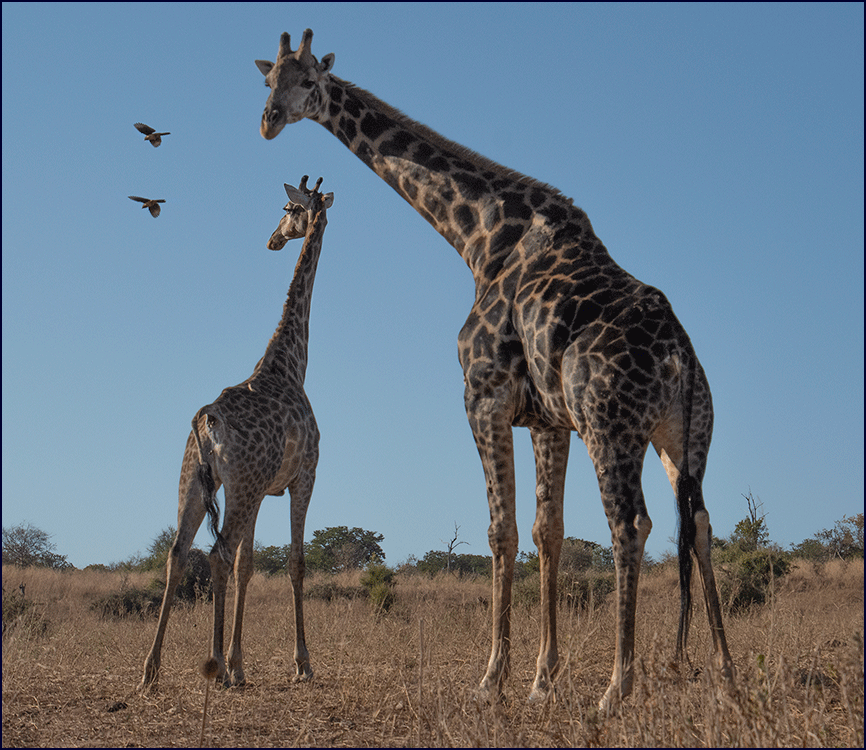
Then came more giraffes - a whole tower of them - the collective noun seemed very appropriate. Two stood on higher ground and literally towered above us, perfectly silhouetted against the brightening sky. There were three babies in the group, one of them quite small, staying close to his mother’s side as they moved with that elegant grace only giraffes have.
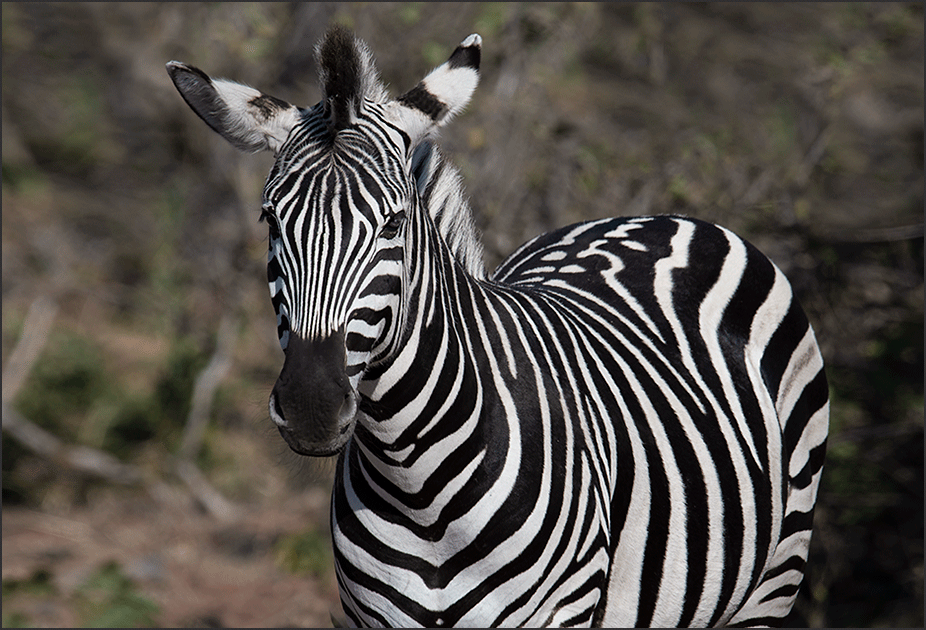
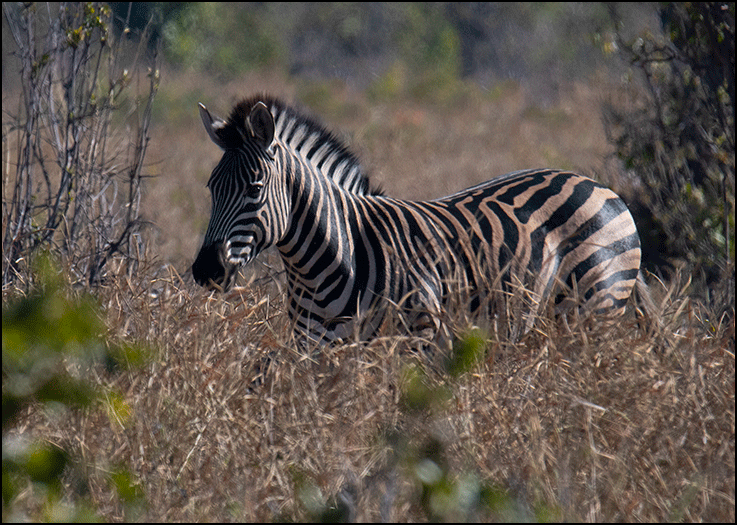
The zebras were especially striking in the morning sun, their stripes glowing with warm light as they grazed along the road. And there were zebras everywhere - more around every bend, grazing, crossing the track, or standing in tidy little groups flicking their tails. It felt like we were driving through their private kingdom. So many zebras - and each with their unique patterns shining vividly.
Gee always seemed almost as excited about watching the animals as we were; although he grew up in the Delta and guiding is his profession, he seems to really love the animals, and takes great pleasure in seeing them. When he sees an animal behavior or interaction that is particularly rare or special, he has been known to exclaim, “My God, that’s amazing!” Those are the moments we live for – the ones that even Gee finds remarkable.
Presently we left the park and found ourselves on a macadam road for the first time in days. We passed through a small village where Gee pulled over at a little store to look for a piece of cookware Mosa needed, a quick errand that offered a small glimpse into daily life here.
We stopped for lunch at a small picnic area by the road, under half a dozen spreading acacia trees. A glossy blue starling hopped around our feet, shamelessly begging for crumbs and looking far too pleased with himself.
We drove for quite a while before the pavement gave way to sand again. The track was wider than in the bush, and in many places the road split into alternate lanes where the sand was deep, as if it was a dual‑lane sand highway.
It was a long drive from Ihaha to Savuti, and we passed the time telling stories and inventing elaborate murder mysteries, customized for safari, involving poachers and guides. Gradually the road narrowed again, the trees thickened, and we found ourselves re-entering into Chobe, and back into the bush.
The track rose and fell over rolling hills. In places the sand was very deep and treacherous, but Gee handled it with practiced ease, steering us around the worst patches and keeping the Cruiser moving. We were grateful, once again, for the Land Cruiser - Toyota’s famously rugged, reliable workhorse. There is quite a rivalry in the bush between Land Cruisers and Land Rovers, and every guide has their preference. The Rover may have been the original luxury safari vehicle, but in recent years the Cruiser has become the favorite for its sturdiness and dependability. Gee had started his business with Rovers, but he now seemed firmly in the Land Cruiser camp. We were inclined to agree - especially on roads like these.
Eventually we came to a long ravine where the road dropped steeply down one side and climbed sharply up the other. The sand was deep, and getting stuck was a real possibility. A hand‑painted sign at the top of the descent offered its own brand of encouragement:
Deep Sand Ahead
Engage 2nd gear and put your foot down!
Gee, of course, negotiated the whole thing expertly. When we reached the top of the far slope, another sign greeted us:
You made it - well done.
Especially if you are driving a Land Rover!
It gave us all a good laugh - the bush rivalry was alive and well, even in the middle of nowhere.
It had been a long drive without much to see, but as we neared Savuti the landscape opened into wide country and plains, and soon the animals began to appear again. Impalas first, of course, and francolins - always the first and most common sightings. Then, almost without warning, the world opened up. It felt like the bush was waking up to greet us.
We entered the Savuti area around three o’clock. Tucked into a corner of Chobe National Park, Savuti is one of my favorite places in the world. It’s a landscape of wide grasslands punctuated by rocky outcropping hills that rise abruptly from the flat plain, with the ever‑changing Savuti Channel winding through it. The area is known for its striking scenery, large predators, huge elephant herds, and the kind of diverse, unpredictable wildlife encounters that make your heart beat faster. It is the Africa I had always imagined, even before I ever set foot here.
The vista that stretched before us was flat and wide open - you could practically see forever. The savannah grass glowed a warm golden brown. Several rocky hills stood in the distance, their familiar shapes rising cleanly out of the plain. A couple of giraffes meandered across the landscape, making the scene complete.
The sky was a brilliant blue, but around the horizon lay that purplish‑grey haze that always seems to hover in Savuti - a blend of fine dust and shimmering heat waves that creates a distinctive band of color along the skyline. Savuti Skies would be an apt name for it; the place seems to paint its own horizon.
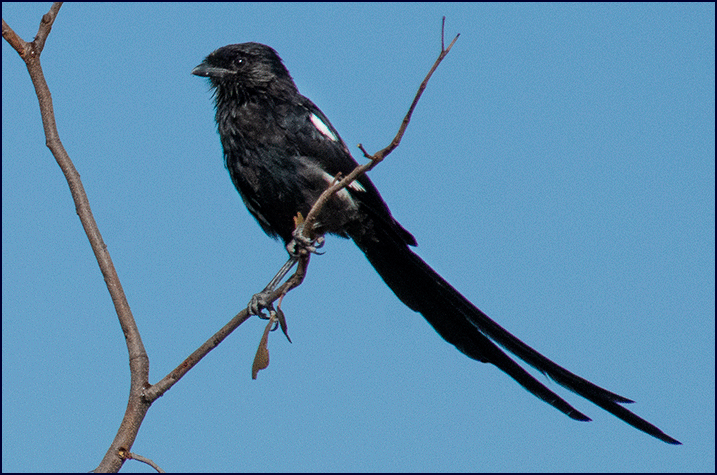
The birds greeted us as we drove on – there was an endless variety, though I will just name a few here. A
long-tailed magpie shrike perched elegantly on a twig, its tail streaming behind it like a ribbon. A whole flock of female village weavers bustled in a nearby bush, chattering and fluttering as if they were attending important business. A Burchell’s starling flashed its iridescent blue colors. Overhead, a bateleur eagle glided past, wing tips splayed, his short tail unmistakable against the sky.
We soon passed Quarry Hill, the first in a row of seven rocky outcrops that rise abruptly from the plain. When those hills appear, you know you are truly in Savuti. The landscape feels ancient, and the weathered shapes seem to hold the memory of a much older world. They have a presence - as if they’ve been watching travelers come and go for centuries. Which I suppose they have.
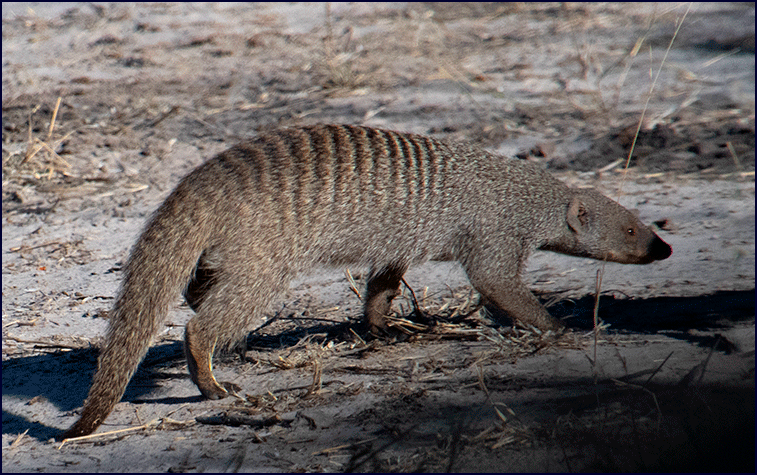
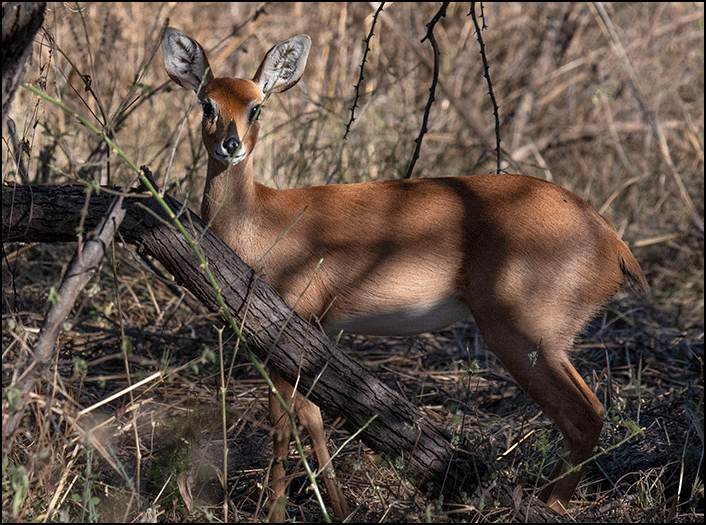
A dozen banded mongooses (mongeese?) scurried through the grass, busily hurrying from one place to another. However, two of them did pause for a moment - to mate in the middle of the road, with complete disregard for our presence. They clearly had no interest in privacy laws. A tiny steenbok watched us shyly from under a bush - a petite little antelope, scarcely larger than a newborn deer. His mate stood nearby; you almost always see them in pairs.
We scanned the plains for animals as we drove along, giving extra attention to the shady spots underneath bushes where a predator might nap. We spotted a couple of kudus and a herd of impala. A lone wildebeest grazed along the edge of a patch of woodland. Suddenly Paula spotted a lion in the distance – or so she thought. She saw a tawny flash and excitedly called out for Gee to stop while she pulled out the binoculars. But alas, it turned out to be just another impala! We assured her it happens to the best of us, and drove on.
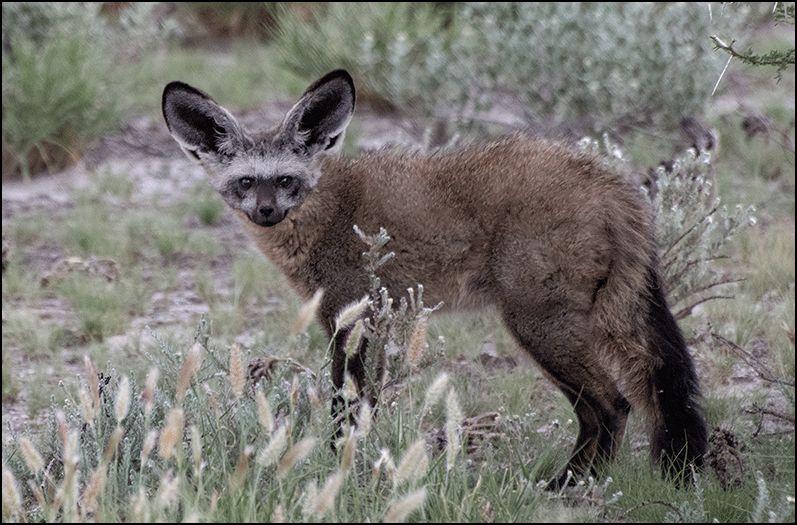
Then Gee stopped the Land Cruiser abruptly. He grabbed his binoculars and stared intently at something small beneath a cluster of shrubs, quite far from the road. “My God,” he muttered. “Amazing.” We scrambled for our own binoculars. At first I thought it might be a rabbit, but when it moved we saw the enormous ears. Gee had spotted a bat‑eared fox! These tiny foxes have delicate faces with black masks and those remarkable ears - and yes, they really do look a bit like bats. They’re often seen in the Kalahari Reserve, but I hadn’t even known they lived in Savuti. What a fantastic sighting - it felt like Savuti was welcoming us with a secret. And how Gee saw that tiny fox hidden in the shade so far away, while driving, remains one of life’s little mysteries.
Cave Hill was the next big outcrop, and we wondered whether there was truly a cave tucked somewhere in among the rocks. These rocky hills offer caves, ledges, shade, and thick vegetation - perfect cover for all sorts of animals. Some of them aren’t too steep and look as though you could hike up them, which I yearned to do, but it isn’t allowed. Probably just as well; who knows what might be up there waiting for you.
Even more birds appeared as the afternoon faded. A pair of crowned lapwings strutted across an open flat, and
black-and-white pied babblers hopped through the brush. An African
hawk-eagle perched at the very top of a tree, scanning his territory. As dusk approached, a francolin shepherded six tiny chicks across the road, each one barely bigger than a walnut.
A small flock of red-billed hornbills flapped past, their oversized beaks giving them a slightly comical air.
Feeling inspired - or perhaps overtired - I felt it was time for another awful limerick, and so came up with this:
On the plains the herd animals were grazing
And at them the predators were gazing
We had so much fun
As we searched for the one
That would make Gee say, “My God, that’s amazing!”
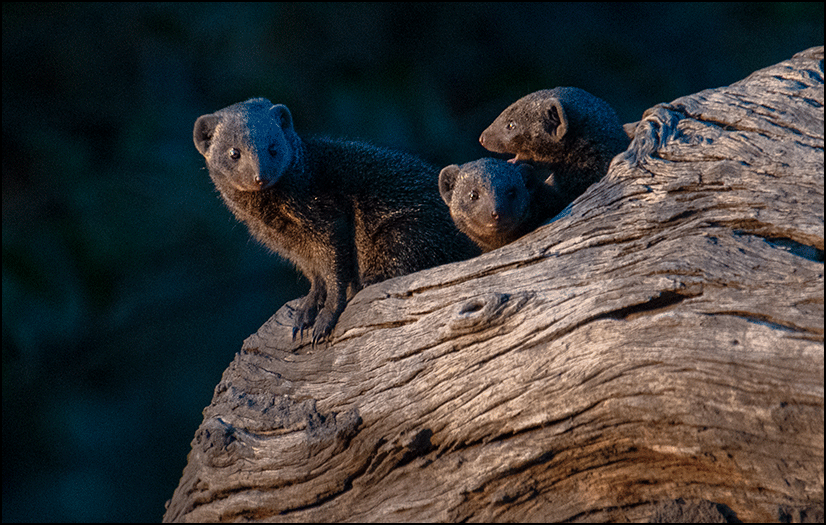
A charismatic little dwarf mongoose stood atop a fallen log, small, neat, and perfectly alert. She watched us with bright, intelligent eyes. Then a tiny head popped out of a hole beneath her… then another, and another, until her three babies had joined her. We sat quietly, delighted, as the youngsters tumbled and played, popping in and out of the crevices, full of mischief. They were utterly charming.
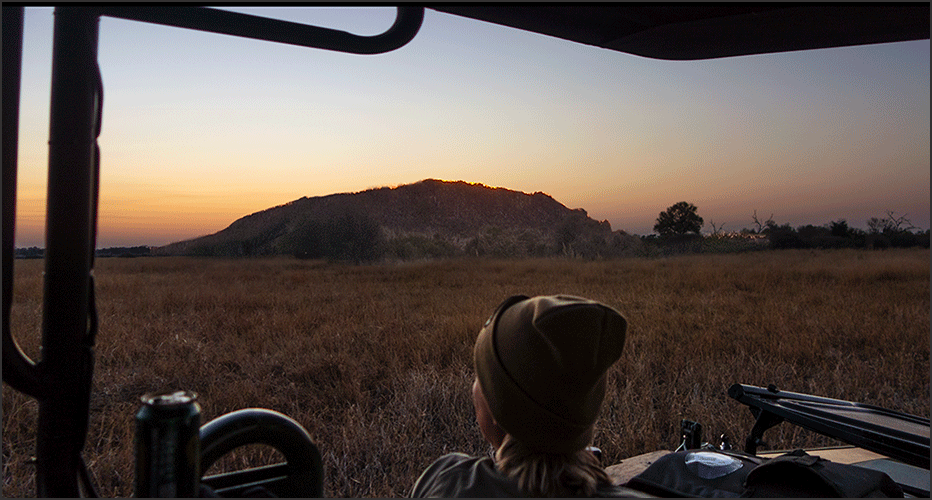
Suddenly Leopard Rock was towering in front of us, my favorite of all the Savuti hills. I’ve always been fascinated by this line of huge granite outcrops scattered across the plain; after so many visits they feel like old friends. Yet I can never quite keep straight which is which - we always seem to approach them from different directions, and each hill looks different depending on the angle and the light. I was forever asking Gee to remind me. But I could always recognize Leopard Rock.
Gee laid it out clearly: approaching from the north, the first one we come to is Quarry Hill, then Cave Hill, Kudu Hill, Sable Hill, Bushman’s Rock, Twin Hills, and finally - the southernmost - Leopard Rock. Coming from Khwai, of course, the order reverses itself.
|
Sunset at Leopard Rock |
We watched the sun setting over Leopard Rock. This huge, rugged outcrop stands alone, towering over the Savuti landscape, a dramatic presence in the wide, open sweep of plain and sky. The hill has an almost magical quality to it, a place of dreams. It is a natural fortress of stone and shadow - and perfect leopard territory. And indeed, I have many happy leopard memories from this place. As the sun slipped lower, the dusky sky faded into soft pastels. Around the horizon lay that unmistakable delicate band of greyish-blue I now thought of as Savuti Skies.
When we arrived at our new camp, we found the tents already set up, the dining table laid, and the fire waiting for us. We were tired after the long day of travel, but happy - and so glad to be here in Savuti.
Jineen had brought a trail camera, and she fastened it to a tree in hopes of catching whatever might pass by – it is always exciting to see who walks through the camp at night.
We slipped into our familiar routine: drinks by the fire, a wonderful dinner prepared and announced by Mosa, and then a return to the fire before bed. This camp was a bit more open to the sky, so I tried again to take star photos, but my attempts to capture the glory of the night sky with a phone camera remained elusive.
Lindey and Amber had taken on the task of writing some limericks, but instead of following our usual custom of writing bad ones, some of these were actually quite good. Lindey read them aloud to the group:
The Seven Sisters:
We’re glad to have made the guest list
Cause this trip has been simply the best
We will never forget
All these friends that we've met
When we leave to go home to our nests
The first friend we made was Natalie
As we sat in the back, just us three
We learned that she’s gonna
Move to Botswana
And join forces working with Gee
Though she may not be the best with directions
And forgets her own items’ locations
We love Amanda just the same
And we’re so glad that she came
To share in this African vacation
We cheered when we heard that Jineen
Would be joining as part of the team
And thank God that we had her
When we heard the patter
Of beetles arriving on scene
Our eagle‑eyed member is Paula
Who is an unparalleled spotter
She never does miss
Except for, I confess
That one time it was just an impala
Last is the group’s matriarch
The glue that keeps us from coming apart
My aunt Phyllis Dawson
She’s totally awesome
And I love her with all of my heart
Aww. I was touched - deeply. It was one of those moments that reminded me how lucky we were - not just to be here, but to be here together.
There was one more verse that I added to the collection after the fact:
Our guide Gee is truly the best
He can track with uncanny finesse
With a glance he will see
What’s invisible to me
And declare, “My God - that’s the best!”
~
Continued
on next page ~
Africa 2025 Journal Pages:
1
2
3
4
5
6
7
8
9
10
11
12
13
14
15
16
|