|
Africa 2025 Journal Pages:
1
2
3
4
5
6
7
8
9
10
11
12
13
14
15
16
June 29
We were on the road by 6:30, planning to game‑drive all day and give the camp crew time to get ahead of us and set up our new camp. ‘Chop-chop,’ they called as we drove out of camp, which means ‘goodbye,’ or ‘see you later.’ Gee responded,
‘Ee-ee,’ which seems to mean ‘OK.’ It felt a little sad to be leaving Savuti, but the road ahead promised a new kind of beauty.
The sunrise was soft and subtle - our last chance to savor those Savuti horizon colors. A purplish‑blue haze gave way to rose and pink, with a faint wash of gold before the sky folded into the clear blue of the coming morning. Leopard Rock stood dark and solid against the brightening sky.
The same three lions were still feeding at the giraffe carcass when we stopped for a final look; a kill that size would last them a long time. A couple of
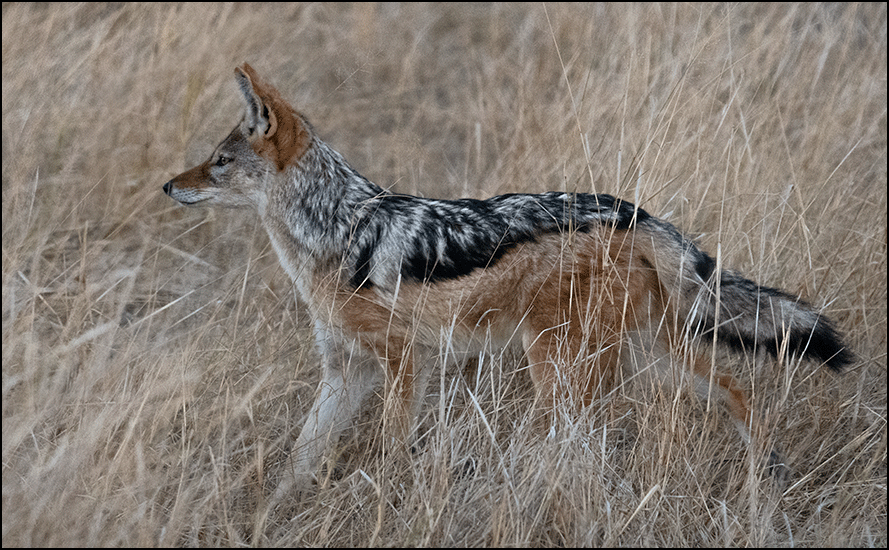
black-backed jackals hovered nearby, hoping for scraps. As one trotted through the dry grass, I marveled again at how beautiful these little scavengers are, all sharp faces and quick, fox‑like steps.
Then it was back to Marabou Pan, where the wildebeests had been two days earlier. This morning the pan was empty. We sat for a while, hoping for some action - maybe a big cat on the hunt. A crowned plover and a wattled plover wandered over the barren ground near us. Amber saw a hyena far in the distance, and we watched it gradually move closer. Good spot, Amber - the only creature stirring in all that open space.
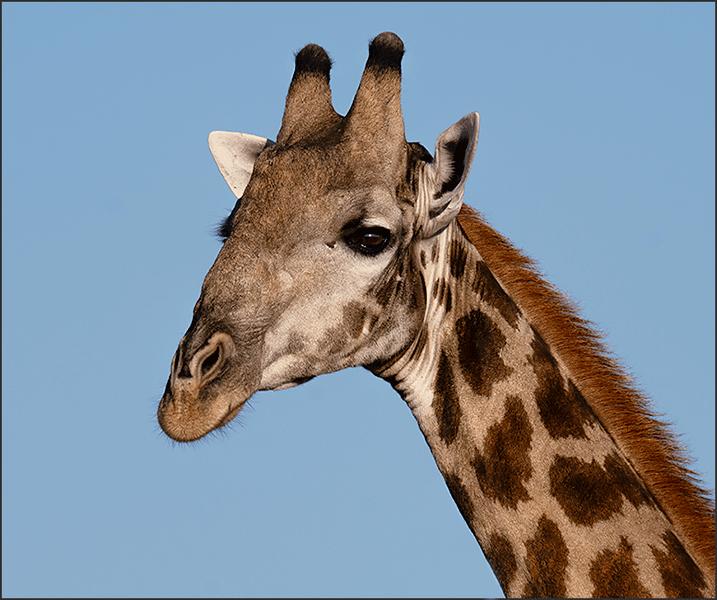
Then a large female giraffe wandered up, regarding us mildly. We watched her close up, admiring her
long-lashed, introspective eyes - she seemed curious, gentle, and quietly
self-possessed. When she finally moved off, we continued on.
We continued on. Several steenboks darted away before I could get a photo, giving us quick glimpses only. Zebras grazed in the distance, and a few kudus browsed among the bushes. Gee paused to study some tracks. “A leopard walked here,” he said. We scanned the thickets hopefully, but the cat had passed through hours earlier, leaving only its story in the sand.
With no sign of the cat, we carried on toward Khwai. Driving the long main road there was not much to see, so we passed the time working on more
Africa-themed murder mysteries. Then, at last, the landscape opened and we came out onto the Mababe Depression.
The Mababe Depression is a wide, ancient basin of seasonal marsh and sweeping grassland - the remnants of a vast prehistoric lake that once covered the whole area. It’s important grazing land, and at different times of year large herds of zebra, elephants, buffalo, and tsessebe move through it, followed of course by the predators.
At the edge of the plain we had lunch in the shade of what we called the ‘tsessebe trees,’ because a small herd had been in that exact spot on our first visit. Yellow‑billed hornbills gathered hopefully, begging for crumbs.
The view stretched across the vast, open grassland, and the sky seemed enormous. The Depression was flat and mostly treeless, too marshy at certain times of year for trees to take hold. Even though the air was cool, the distance shimmered with heat, the sun bright and the plains
bone-dry. We could just make out the faint shapes of trees in the distance, on the far side of the old lakebed.
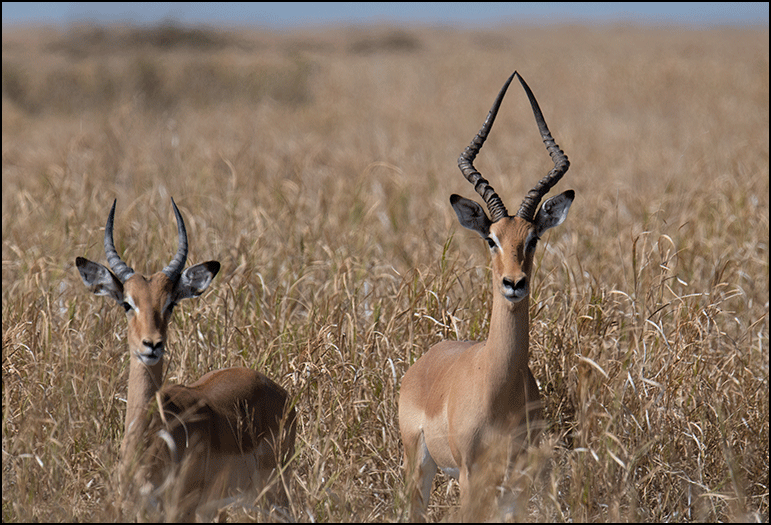
More and more animals began to appear. First there were impala of course, and then several small herds of wildebeests. One large male impala was especially striking - his curving horns actually touched at the tips. Warthogs bustled around the bush, always seeming in a hurry to get somewhere important.
Then giraffes - so many giraffes - moving with that slow, leisurely grace that makes them seem to float rather than walk. Their shapes drifted across the grassland like apparitions from a dream, unhurried and a little unreal.
We passed a self-driver coming the other way, an older British man who clearly knew his way around. He told us where he’d seen lions ahead, so we kept an eye out.
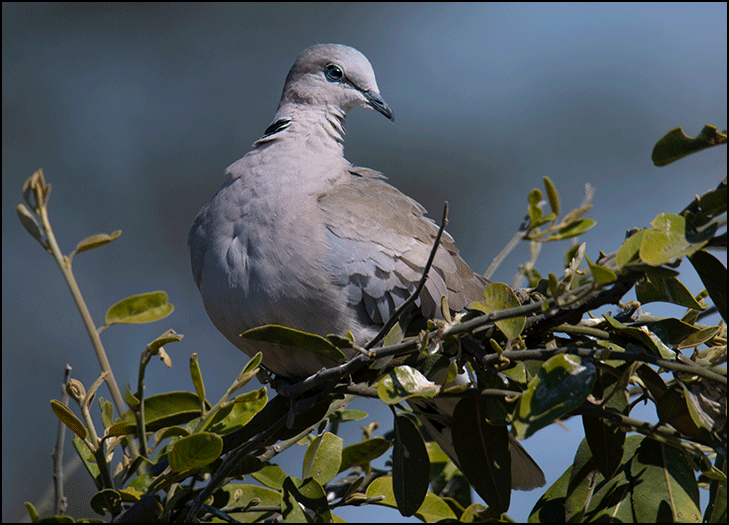
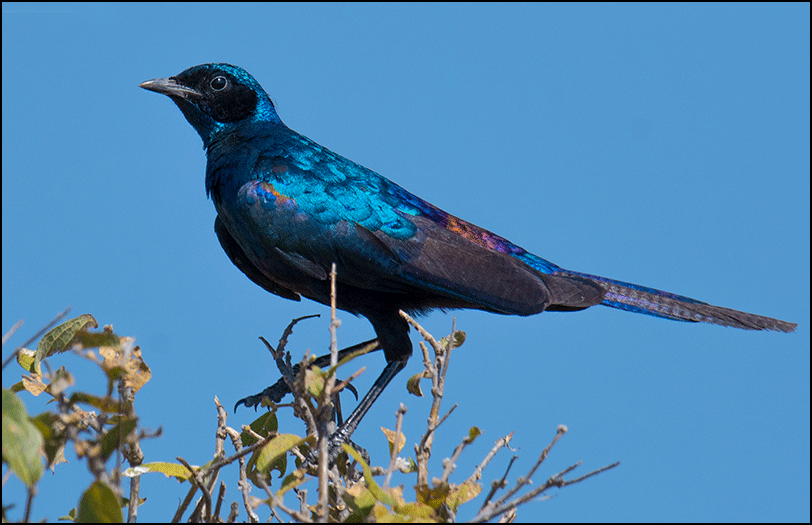
Birdlife was excellent. A Cape turtle dove perched close to the road, perfect for photos. A crimson-breasted shrike flashed across the path, its fiery red chest glowing against jet‑black wings. It paused just long enough to give us a quick, appraising look before vanishing into the thicket. A Burchell’s starling posed on a high twig, its dark blue plumage shimmering with hints of green and purple in the sunlight.
A tawny eagle, one of my favorite raptors, looked down on us from a nest. And then there were more eagles - a bateleur, a brown snake eagle, an African hawk eagle.
Two African Cape buffalo dagga boys stood off to the side of the track - old, battle‑scarred bulls who had left the main herd after losing dominance. Their hides were caked with dried mud, and they watched us with that unpredictable, wary intensity that makes dagga boys so respected in the bush - even lions often avoid them.
At the waterholes where the self-driver had seen lions, we soon spotted several tawny shapes. They weren’t close to the road, but with binoculars and long lenses we could pick out more and more - twelve altogether. Gee said this was the Mababe Pride. Our lion count was now up to forty‑six. Savuti had spoiled us, but even from a distance twelve lions still felt impressive.
Eventually we reached the Mababe Gate. I always enjoy the park gates - the big maps posted there help us piece together where we’ve been and where we’re headed next. And there’s usually just enough wifi to check messages from home. Then we crossed the main road and took a long track down toward the river, leaving the wide openness of the Depression behind us as we continued our journey to Khwai.
As we approached the Khwai Concession, the landscape shifted around us. After the dry Savuti and the stark riverfront at Ihaha, this felt like entering another world entirely - greener, softer, more tropical. Water pooled in shallow pans and channels, grasses grew tall and lush, and even the air itself seemed different. Here everything smelled of water and green things growing, and the breezes carried the faint scent of reeds and damp earth. We were in the Okavango Delta now. A fish eagle wheeled overhead, calling once as if to welcome us. After days of dust and dry grass, the sudden greenness felt like a gift.
The Okavango Delta is a vast oasis in the middle of the Kalahari Desert. Summer rains falling in the highlands of Angola travel hundreds of miles south via the Okavango River, taking months to reach Botswana. They arrive during the dry winter season, flooding the great inland basin and fanning out into a maze of channels and lagoons. Riverbeds that lie dry for much of the year suddenly fill with water just when everything else around them is parched, turning the Delta into a living mosaic of water, reeds, and lush green grass. The result is a wildlife paradise – and one of Africa’s most extraordinary ecosystems.
We drove through beautiful, lush areas where the seasonal floodwaters had spread across the fields, forming marshes and shallow lagoons among scattered trees. In some places, forests of dead trunks stood stark and pale - woodlands that had grown during dry years and then drowned when the waters returned.
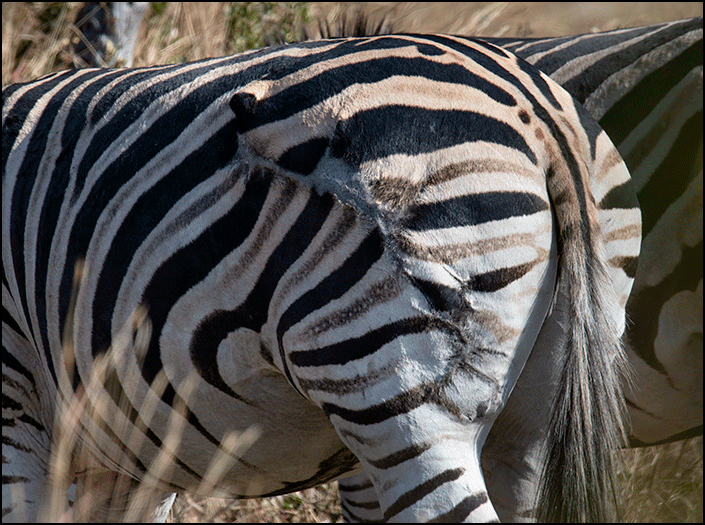
A small group of zebras grazed nearby. One mare had a horrendous jagged scar across her hindquarters - old and well healed, but clearly the result of a brutal encounter, most likely with a lion. Her stripes no longer lined up properly. She was very lucky to have survived.
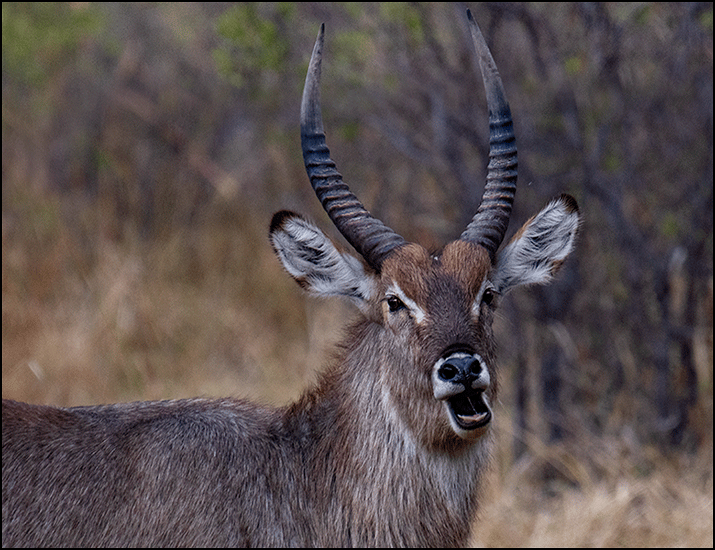
A female waterbuck stood at the edge of the marsh, her shaggy grey‑brown coat catching the light and the white ring on her rump glowing like a target. She looked regal, but also somewhat cuddly.
Waterbucks are wonderfully distinctive antelopes - large,
long-coated, and instantly recognizable. Their soft, fluffy brown coats and bold white rump rings stand out even at a distance. Males carry long, sweeping horns that give them a quiet, dignified presence. They live near rivers, floodplains, and marshes, and are strong swimmers, plunging into water to escape predators. Their meat is famously gamey and not considered good eating by people, but the lions, leopards, and hyenas certainly don’t complain.
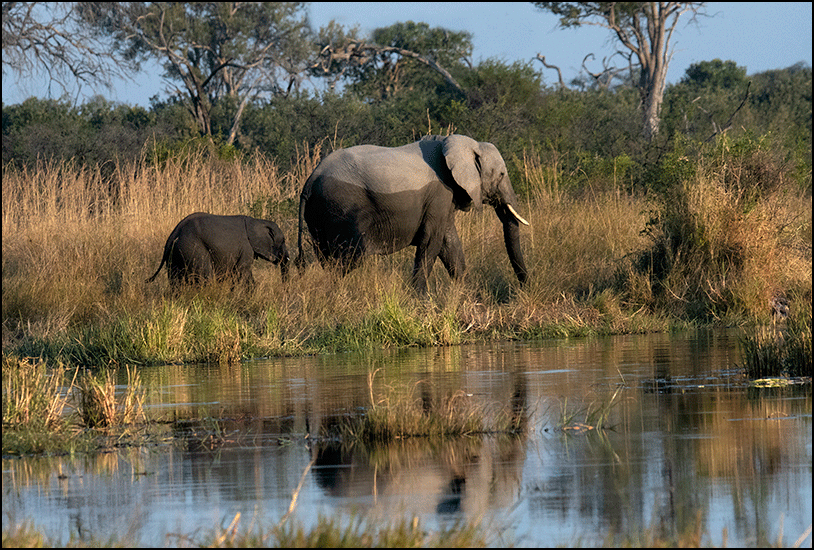
A big female elephant approached, walking sedately through sparse trees and shallow
water, a baby following close behind her. A dark horizontal line across
her side showed where she had recently waded a deeper channel. The elephants here were definitely wetter than the ones in Savuti, and looked as though they lived half their lives in water.
An Egyptian goose stood at the edge of a flooded field, and a hippo stood mostly submerged nearby, only his back visible above what looked like grass, but must have been floating vegetation.
We had lunch under a tree by the river. From our shady spot we could see giraffes, waterbuck, impala, a fish eagle, and a bateleur circling overhead. Another big bull elephant strolled past as if he owned the place.
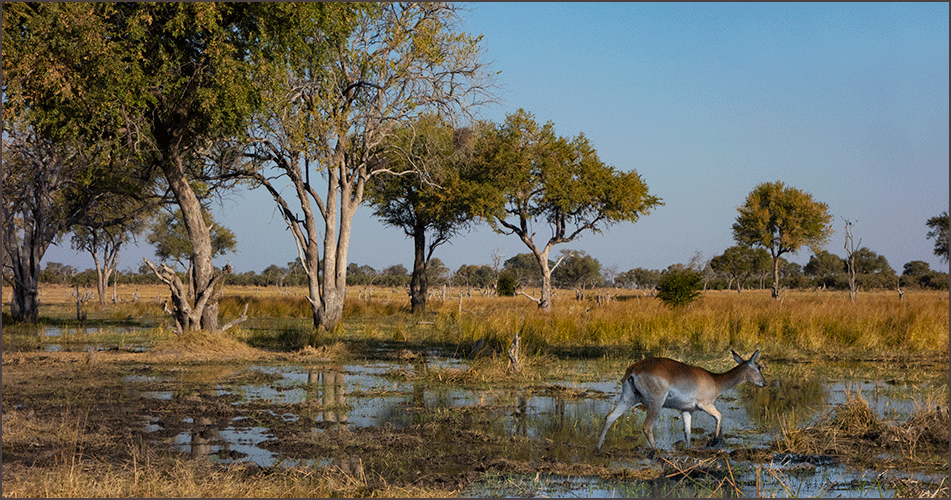
After lunch we continued on, passing flooded fields and marshes dotted with islands of trees. Red lechwes were everywhere - in the Delta they seem even more numerous than impala. Their slightly splayed hooves help them bound effortlessly through the water. Khwai was already revealing itself as a place shaped by water - and we hadn’t even reached camp yet.
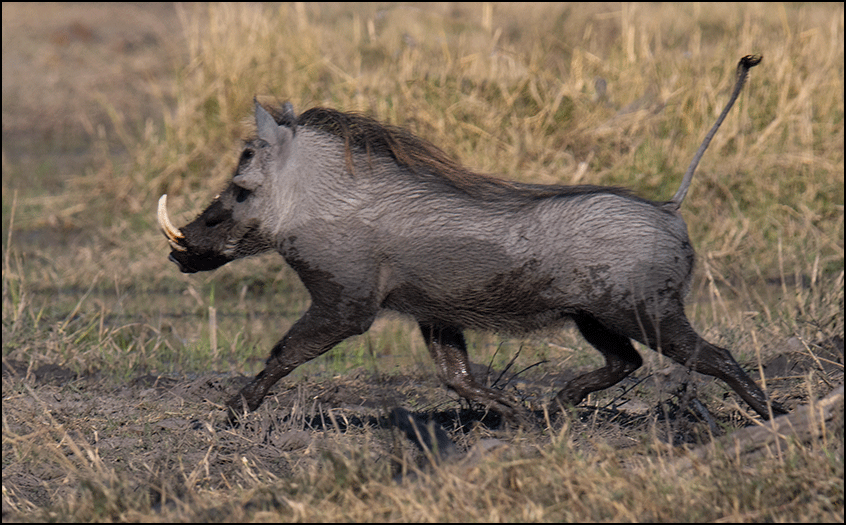
A family of warthogs trotted past us - tails straight up, little legs pumping, the youngsters hustling to keep up. They are surprisingly good movers when they get going in a strong trot. They always make me smile - so earnest and determined, their soft grunts fading as they trot away.
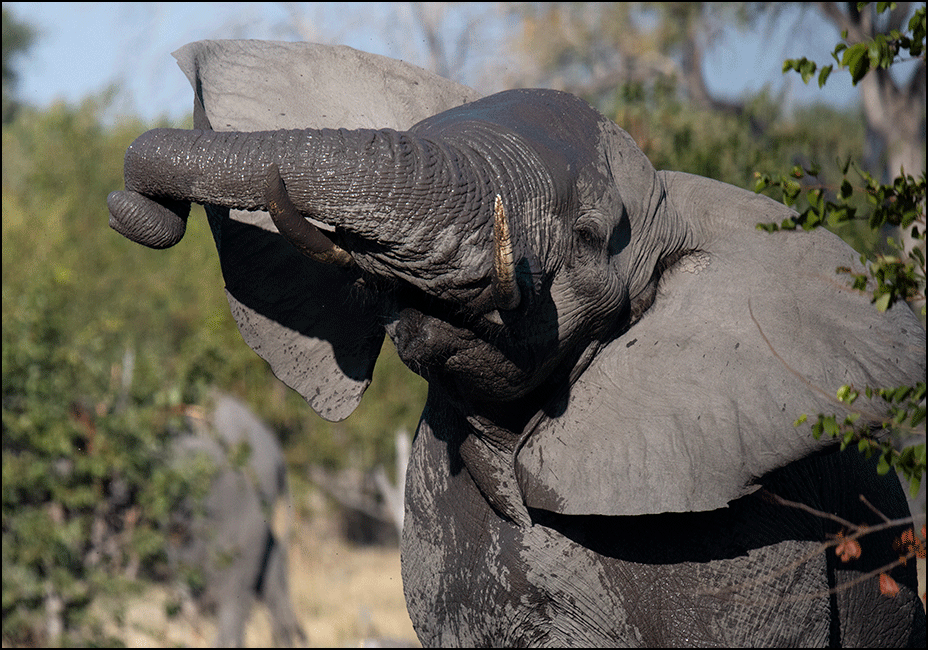
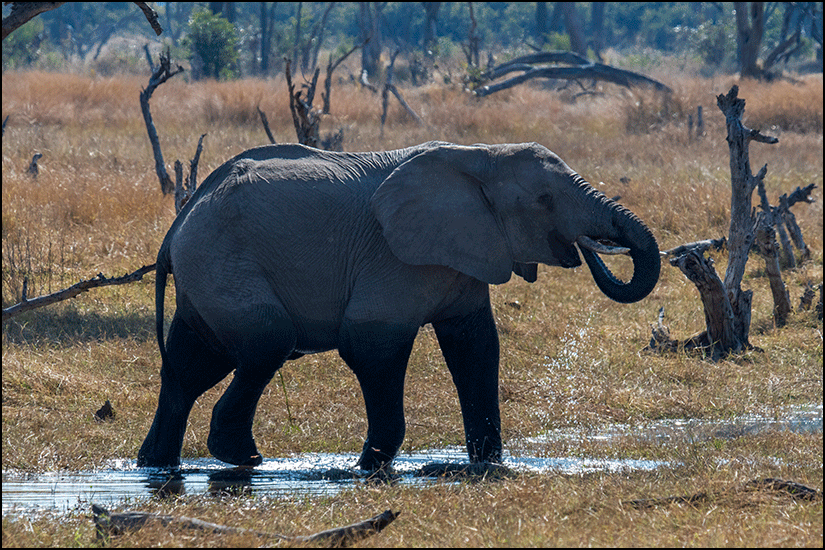
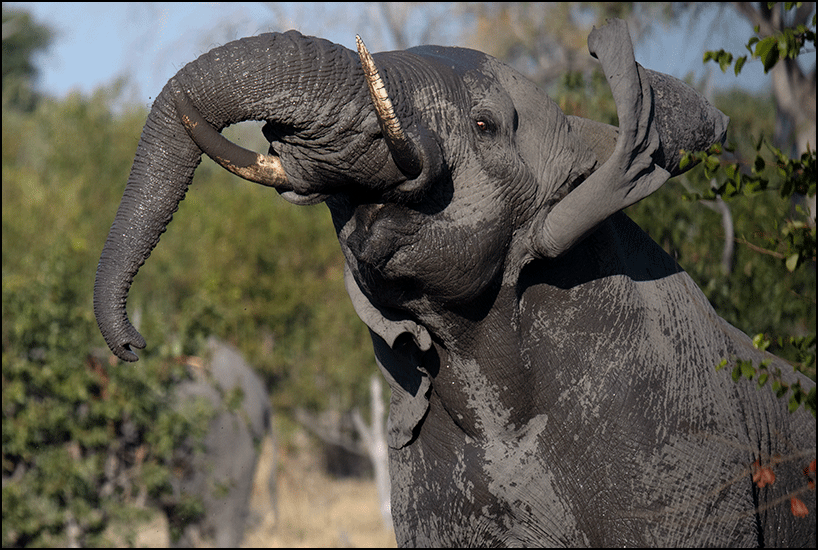
A herd of elephants came to the river to drink. One big bull took a mud bath right in front of us. We watched in awe as he contorted his trunk, shook his massive head, and flapped his ears wildly while dousing himself in wet mud - all the while keeping one suspicious eye fixed on us. The smell of wet earth drifted over us as he flung mud up in great arcs. He looked utterly blissful, but also as if he’d happily chase us off if we interrupted his spa treatment.
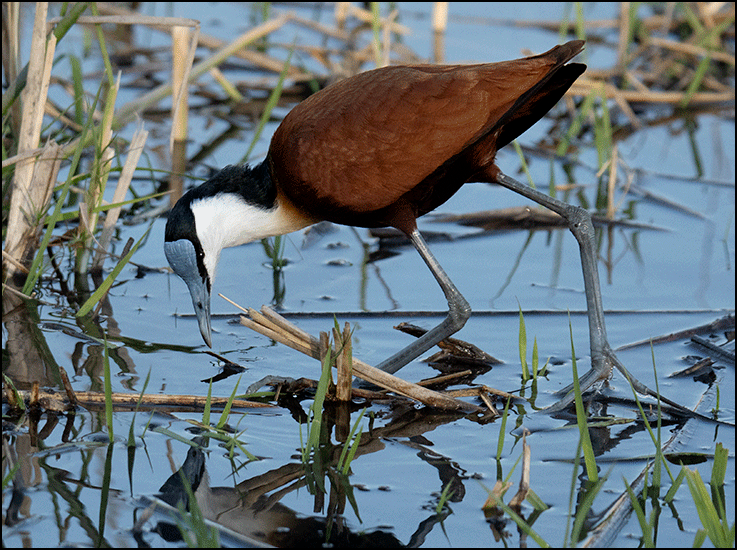
Waterfowl were everywhere. We saw an Egyptian goose with tiny, newly hatched babies. A jacana waded through the shallows, then stepped lightly across the tops of lily pads. These
long-legged birds are quite striking, with deep chestnut bodies, black‑and‑white heads and necks, and a sky‑blue patch on the front of their faces. A hadeda ibis picked his way through the edge of the water, a fat frog clutched in his beak. Egrets, a squacco heron, and a family of
spur-winged geese with half-grown young completed the scene. The whole marsh felt busy and alive, with every bird intent on its own morning errands.
Then came the spider incident.
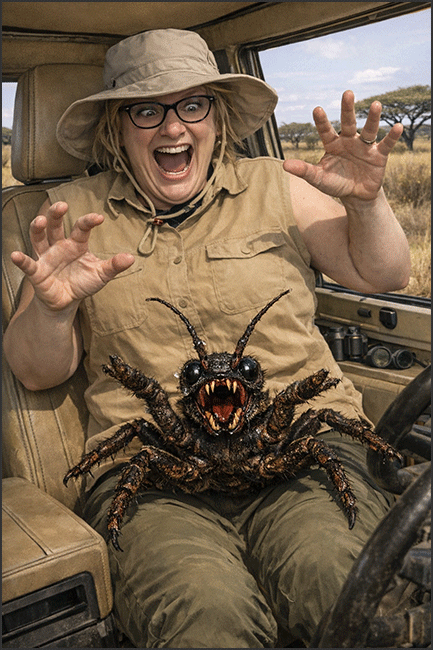
A spider apparently fell from a tree branch into the front seat, landing squarely in Lindey’s lap. Lindey is very afraid of spiders, but she handled it with admirable courage and practicality - only a small scream - even as it hopped from thigh to thigh. Gee stopped the vehicle and gently removed the intruder, placing it back outside as Lindey, trembling slightly, sighed in relief. Gee turned to her and asked curiously, “Is this considered a big spider where you come from?” We all burst out laughing.
I was sitting directly behind her. After Gee removed the spider, I said mildly, “Oh, there it is again,” and lightly touched the back of Lindey’s neck with spiderlike fingers. She screamed and practically levitated about three feet out of her seat. I felt a little guilty
. . . but only after I stopped laughing.
From Lindey's description of this arachnid instigator,
it was evident that it had been a particularly large spider, at
least to her eyes, and exceedingly vicious.
Upon returning from Africa, and after conducting a thorough review of witness statements and collaborating closely with a police sketch artist, we were able to assemble this visual reconstruction of the spider incident. Experts agree it reflects the events with unfortunate accuracy.**
The area seemed to have an abundance of spur-winged geese and waterbucks – we saw them at every turn. Termite mounds dotted the landscape; Gee told us they always lean to the west. Two jackals trotted nearby - one circled and twice gave an alarm call, a sharp, raspy bark that echoed across the floodplain.
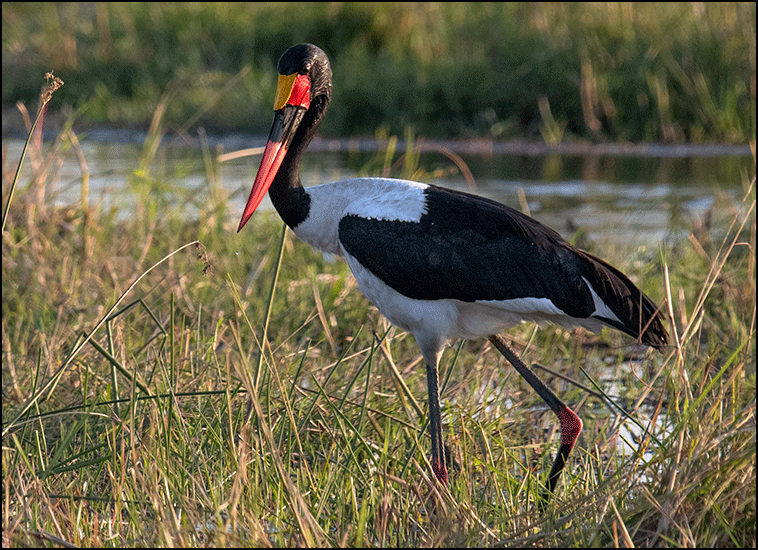
A saddle---billed stork stood tall at the water’s edge, brilliant in black and white with its boldly marked bill of red, black, and yellow. These statuesque birds are nearly five feet tall with a nine‑foot wingspan. We could tell this one was a male by his dark eyes; females have bright yellow ones.
A fish eagle stood on the ground beside a marshy pond, and four wet elephants waded through a channel and walked past within feet of him. He barely twitched - the undisputed king of that little patch of marsh.
Driving along the river as the sun lowered, we passed many busy campsites - Khwai has a higher density of campers than the national parks. We were eagerly anticipating seeing our own camp. After so many hours on the move, the thought of settling in with a G&T by the campfire was a much anticipated pleasure.
As the light faded and the fish eagle’s call drifted over the flooded lagoons, I felt the quiet thrill of being in a completely different world. Khwai felt lush and alive, with water everywhere. Shining grasses, dripping elephants, and birds wading across lilies as if it were the most natural thing in the world. The shift from Savuti’s dryness to this watery world felt almost dreamlike. The Delta has a lush softness to it, a sense of abundance. Even the air felt different - softer somehow, touched by water. It is a magical place.
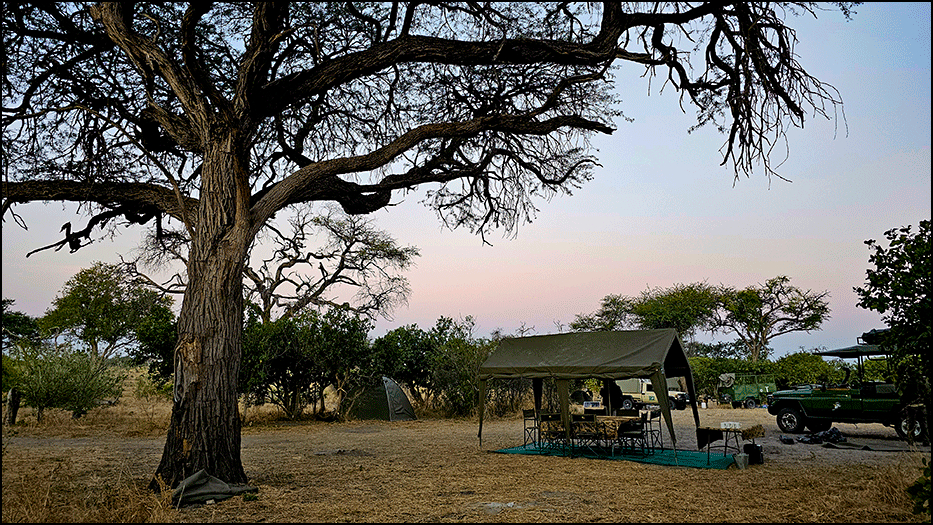
At last we reached our camp - a lovely site with our tents tucked under the trees, but the dining tent and campfire set out in the open. We went to the fire; the sky was deepening into indigo and the Milky Way was beginning to spill across it. It felt like the perfect welcome to our new home.
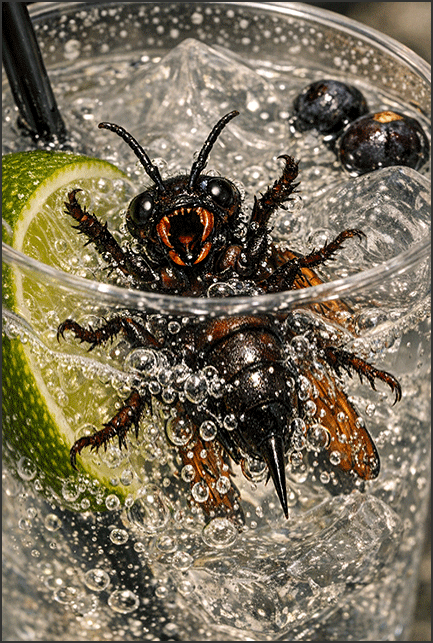
During dinner, a large bug flew into Amanda’s gin and tonic and promptly drowned. It was a driver ant, Gee said, and a sizable one at that. Amanda was not stoic about this.
Upon returning from Africa, and following a detailed review of forensic materials in consultation with a police sketch artist, we were able to generate this visual reconstruction of the
infamous driver ant incident:**
Much lively discussion followed about the merits and dangers of various insects, accompanied by lots of laughter and a few small shrieks - we were having a raucous good time. The episode of Lindey and the spider was thoroughly revisited.
“Is this considered a big spider where you come from?”
After dinner we settled around the fire again, still laughing about spiders and driver ants and the general madness of seven
strong-willed women traveling together. Poor Gee - he must have thought we were completely mad.
Later, lying in my tent, I listened to the whoop-whoop of hyenas echoing through the night. It felt like a welcome of sorts – Khwai’s own greeting. The promise of more water, more wildlife, and more stories waiting for us in the days ahead. I drifted off with the sense that I was already falling under the magic spell of the Delta.
**
No insects were harmed during the making
or reenactment of this safari experience. Their reputations,
however, may never fully recover.
~
Continued
on next page ~
Africa 2025 Journal Pages:
1
2
3
4
5
6
7
8
9
10
11
12
13
14
15
16
|