|
Africa 2025 Journal Pages:
1
2
3
4
5
6
7
8
9
10
11
12
13
14
15
16
June 30
Morning came softly in Khwai, with pale gold light spreading across the flooded plains and the air cool and still. The night sounds faded one by one; the last whoop of a hyena gave way to the chanting calls of doves and the distant cry of a fish eagle. A faint mist hovered over the water, catching the first hints of sun.
As we stepped out of our tents, the Delta was already stirring. A few impala grazed near camp, and somewhere close by an elephant splashed through a channel. The whistling call of a pearl spotted owlet wafted through the camp. Even the air felt expectant, as if the whole landscape were waking up with us. It was the kind of morning that made you feel the day could hold anything.
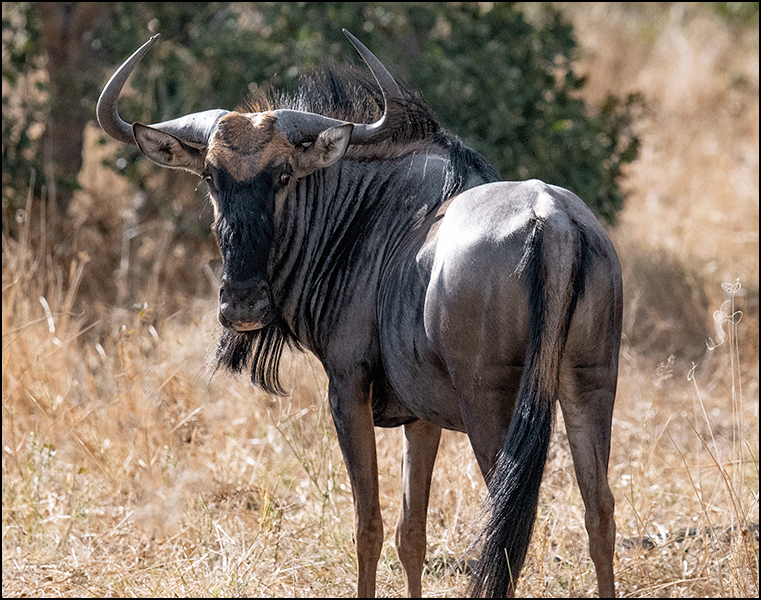
Driving out, we passed wildebeests and zebras moving through the
half---light, with giraffes standing farther off like quiet sentinels. We continued along the flooded fields, the Khwai River winding through them in silver curves. We went by a ‘dead tree forest,’ the stark remains of woodlands stripped of bark and pushed over by elephants. Elephants are magnificent, but they are undeniably poor conservationists. The pale tree trunks stood like ghostly reminders of seasons past.
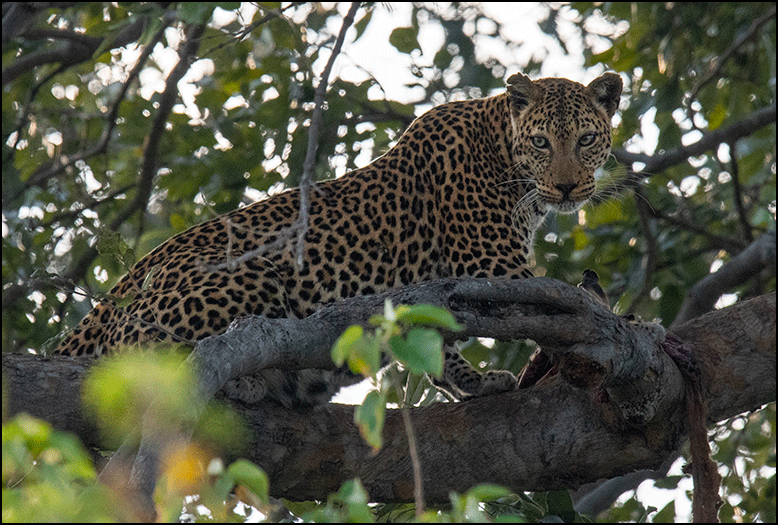
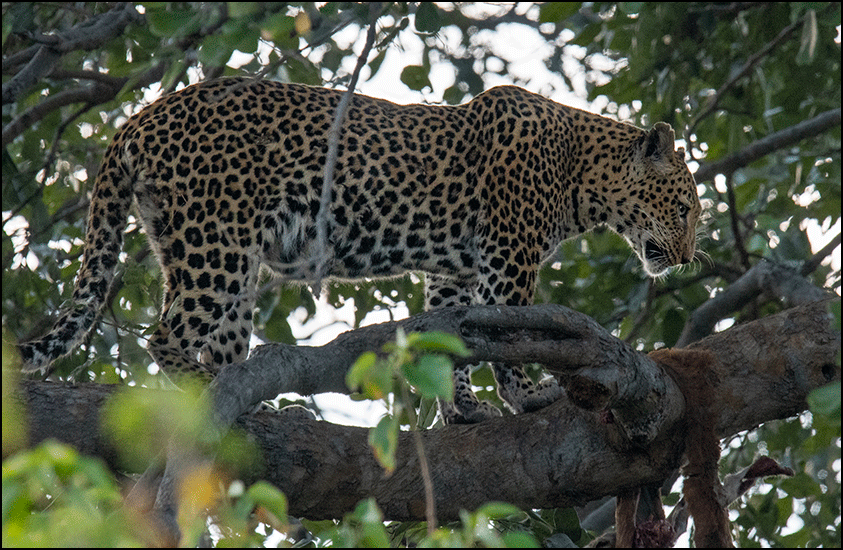
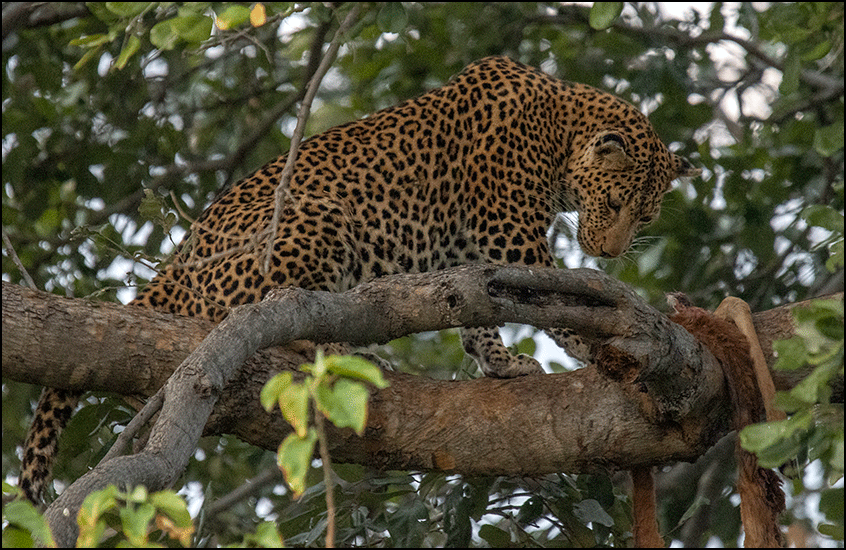
The day began with a leopard in a tree. Gee had heard about her on the radio - a big female with a young impala she had killed. We first saw her from a distance, then maneuvered around to catch a different angle. The light wasn’t ideal for photography, but we still had a clear view of her draped over the branch, powerful and self‑possessed, beginning her morning meal. She glanced down at us once, completely unbothered, then returned to eating her impala.
As we drove through Khwai, we found ourselves revisiting the saga of the driver ant in Amanda’s G&T the night before. Lindey, ever the mischief‑maker, pretended to consult her guidebook and then read aloud in her most authoritative voice:
“Driver ants are brown or black, with narrow bodies, oversized heads, and powerful mandibles. They live in colonies, and they eat insects, small reptiles and birds, and rodents. The local people use them to flavor drinks and cocktails.”
This sent us into hysterics, of course. But when I later researched driver ants for this journal after returning home, I discovered a lot more alarming information:
Driver ants are among the most formidable insects in Africa — fierce little creatures, fast and determined, armed with jaws that clamp down like tiny steel traps. They travel in huge, coordinated armies and are capable of overwhelming, and eating, anything in their path. Using their powerful mandibles, they devour insects and earthworms, but will also consume small reptiles, birds, mammals, and any animal unable to move out of their way.
I’m fairly sure I saw something like this once, in an Indiana Jones movie. The research info continued.
Colonies can contain up to fifty million individuals, making them one of the largest insect societies on Earth. They conduct sweeping, systematic raids across the forest floor and even climb into trees and shrubs in search of prey.
Dear God - we had not realized what a close call we’d had. Amanda is lucky to have escaped with her life.
Fun Fact: While they don’t seek out humans, driver ants will bite fiercely if disturbed. Their mandibles lock on so tightly that they were once used as makeshift sutures - soldiers would let the ants bite a wound closed, then twist off the bodies, leaving the jaws clamped shut.
Clearly, the real apex predator of the Delta was floating in Amanda’s drink. We teased her mercilessly, of course - it was too good a story to waste.
To our delight, Gee took us to the wild dog den. We arrived a little before nine o’clock, but several vehicles were already there, and at least one was not very considerate about letting everyone have a look. Still, the excitement of seeing a den made it easy to ignore the pushy driver.
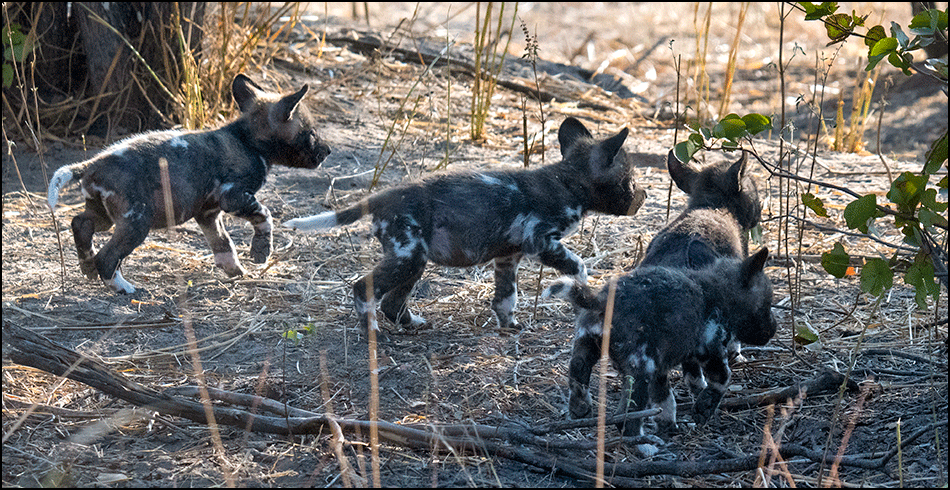
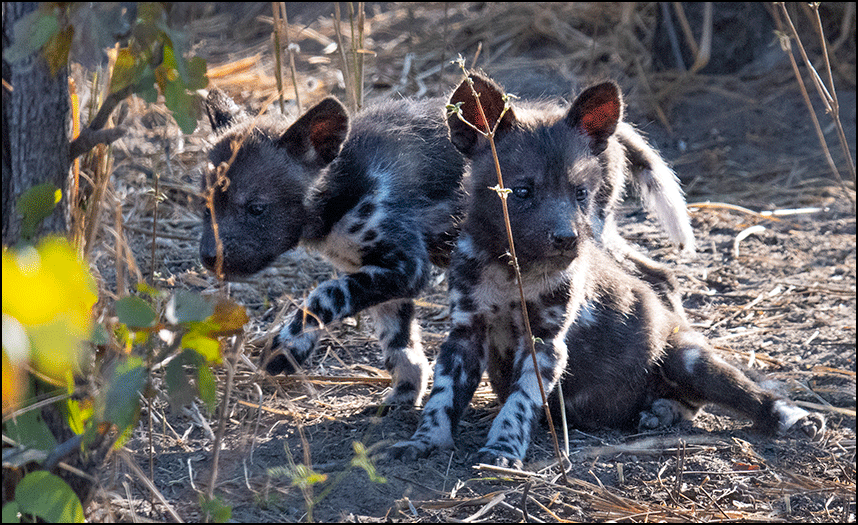
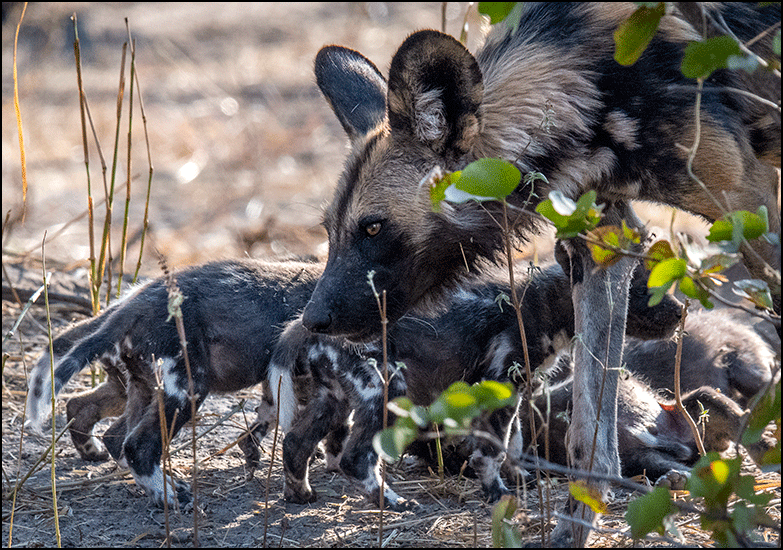
Several adult dogs were sleeping in the woods nearby. At first we could only make out the shapes of puppies moving behind the bushes, but then they started moving out into a small open area where we could see them clearly. About a month old, Gee said - six or seven of them. So cute. Tiny,
round-bellied, their coats still mostly black with splashes of white and the faintest hints of tan beginning to show. Their ears looked far too big for their heads - but then again that’s true of the adults as well.
The pups moved about, exploring the little clearing. After a while they started to play quietly, climbing over one another, romping and tussling. When a big male returned to the den, all the pups - and the other adults - rushed to greet him. I love this about the dogs: every homecoming is a celebration. The entire pack helps care for the puppies. Each time another adult came back from the hunt, the pups greeted them with the same wild enthusiasm, chittering and chirping, their little tails wagging furiously. Adults returning from the hunt regurgitate meat for the pups, who consumed it eagerly, all frantic squeaks and wiggling bodies. It felt like watching pure joy in motion.
Eventually the puppies went back down in their den, and it was time to move on. We spent some time watching a big elephant in the river having a leisurely drink. A cute little dwarf mongoose peered at us from a crevice in a dead tree. He blinked at us with bright curiosity before vanishing again.
We stopped for tea by the river. Another vehicle was getting ready to cross, and we watched it ford the channel, water almost up over the bonnet of their vehicle.
A pair of mokoros glided past, the polers propelling them with long, sinuous, deliberate strokes, as it has been done in the Delta since time immemorial.
These simple, elegant dugout canoes were traditionally made by hollowing out the trunk of a sausage tree, though now they are usually made from fiberglass. They are propelled by a poler standing at the back with a long wooden pole, pushing the mokoro forward. They are used to travel through the shallow floodplains, gliding along channels that are too shallow or choked with reeds for motorboats. In many villages around the Okavango, people still use mokoros for fishing, checking cattle, gathering reeds, visiting neighbors, and moving through floodplains just as their parents and grandparents did. Watching them felt like glimpsing a thread of the Delta’s oldest rhythms.
We came to another
dead-tree forest - but this one was created by flooding rather than by elephants. The trunks stood pale and skeletal, a drowned woodland frozen in time.
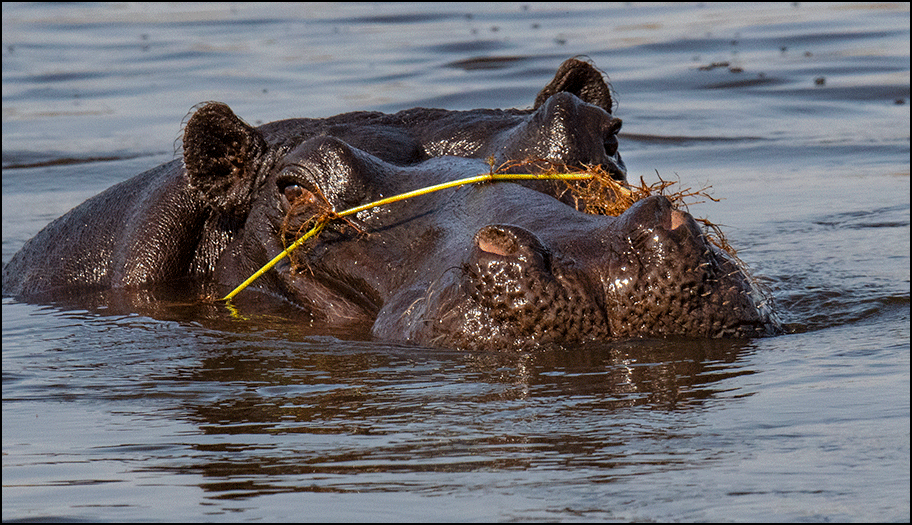
Hippos were in the river, quite close to us, and we watched them with delight. Some of them were out of the water, dozing, their big fat pink bottoms on full display. Others floated - or more likely walked along the bottom - with just ears, eyes, and sometimes nostrils showing above the surface.
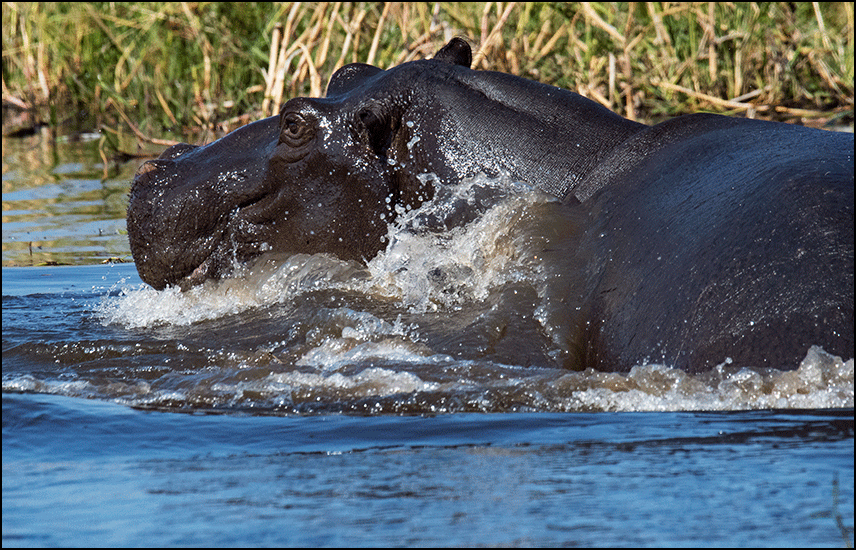
One big bull pushed up great waves of frothy water in front of him, clearly unimpressed by our presence. Then he gave a classic big yawn, opening his mouth impossibly wide to intimidate us and show off his massive teeth. Then, as if satisfied that he’d made his point, he taunted us a little - letting loose a series of loud honking chortles and belly laughs that echoed across the water. It was clear that this bull hippo throwing his weight around in the river was insisting on respect - and possibly tribute. We paid both, in the form of admiration and a very respectful distance.
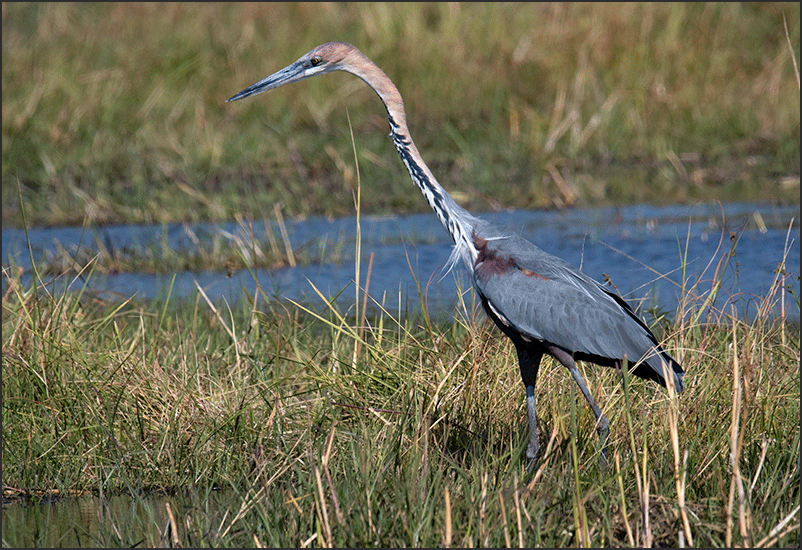
We were greeted by many of the regular inhabitants of the Khwai River. A Goliath Heron - the largest of all herons - stood in the shallows. He was grey with markings of white, dark charcoal, and a deep purplish russet - and absolutely beautiful. Some red lechwe grazed nearby. A huge crocodile lay on the bank, looking prehistoric and entirely unbothered. He didn’t so much as blink as we passed.
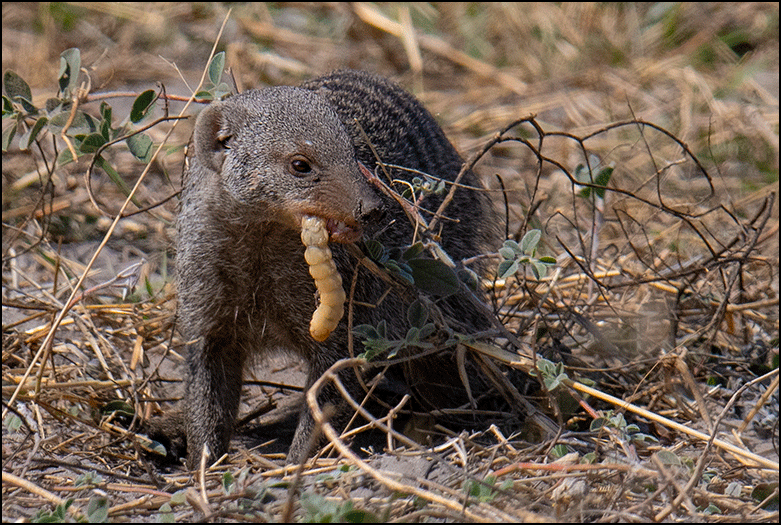
A banded mongoose was scuffling around, close to the road. He was digging with frantic, determined energy, completely absorbed in whatever he was after – then he popped up triumphantly with a fat worm in his mouth, looking quite proud of his success. He posed for us for just a moment, and then darted back into the bushes with his prize in tow.
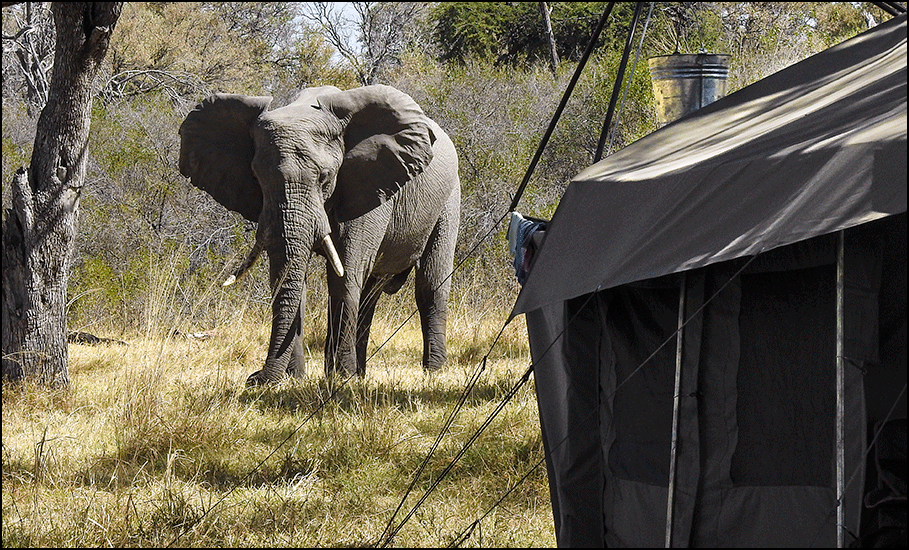
Back at camp, Jineen and I were sitting on the verandah of our tent after lunch when we heard a noise behind the trees. Jineen got up to look - a big male elephant was about twenty meters away, turning a nearby tree into his own lunch. We watched his trunk snake up into the branches, and he was so close we could hear him breathing and chewing. His slow, steady exhalations sounded almost like sighs. After a while he stepped out, walked slowly across camp, and disappeared into the bushes by the kitchen.
We were ready for our afternoon drive at three. Not long after leaving camp we spotted an African Hawk‑Eagle perched in a tree; he looked darker than usual, his plumage almost black in the angled afternoon light.
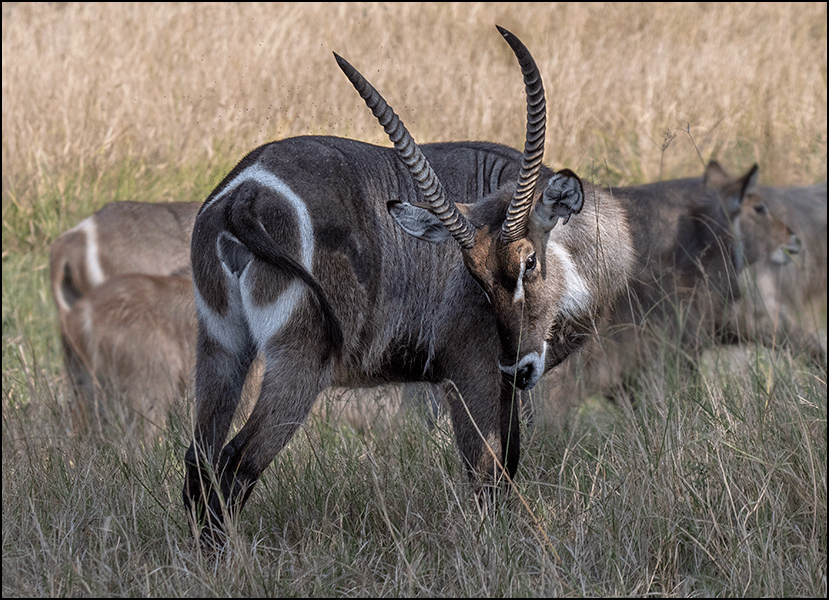
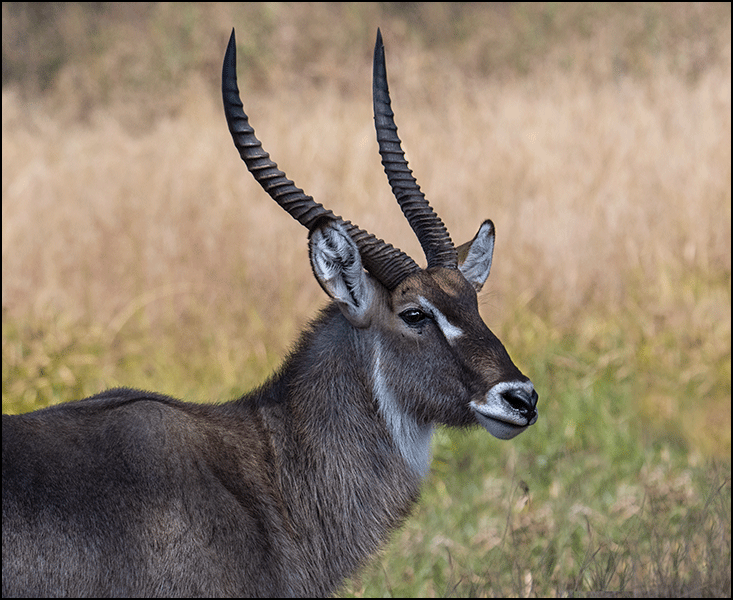
A herd of waterbucks were grazing near the water, the white targets on their rumps glowing softly in the afternoon light. With their long, wooly coats, these lovely antelopes always seem to me as if they belong in a much colder climate than Botswana.
The big male stood calmly, chewing and watching us with those soft, dark eyes, the picture of quiet dignity wrapped in a very shaggy coat. He was especially beautiful, his ridged horns sweeping up in elegant curves.
Following the river, we saw many of the Khwai regulars: elephants browsing along the banks, hippos half‑submerged, a giraffe stretching up into the treetops, and spur‑winged geese leading their youngsters through the shallows. We stopped to spend time with a few zebra grazing close to the road. A fish eagle surveyed it all from his perch in a tall tree. We felt relaxed and unhurried, as if the afternoon itself had slowed down.
The skies, usually bright and clear, now had some gathering clouds. Stray sunbeams slanted down in dramatic shafts - God’s rays spilling across the landscape. The light felt theatrical, as if the Delta were staging its own performance.
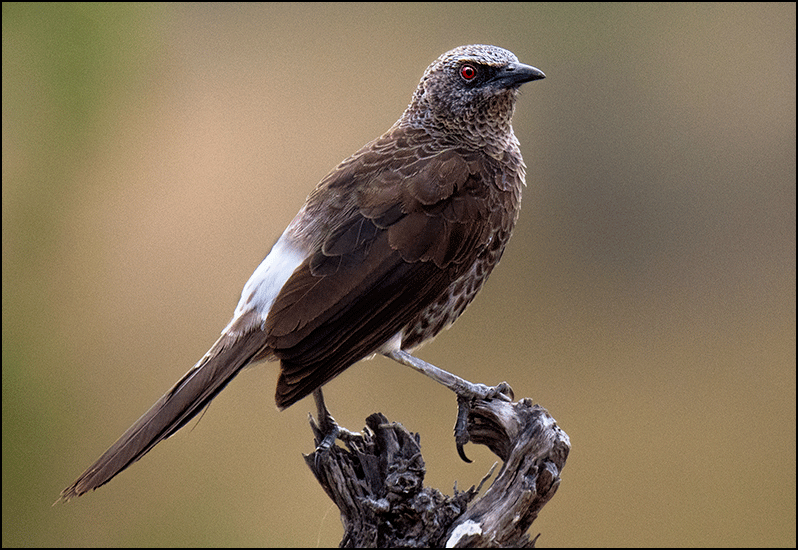
A pretty brown bird with a white patch on its back and a red eye - a Hartlaub’s babbler - posed obligingly on a twig. By the river we found a large black
open-billed stork and a green-backed heron hunting quietly along the edge.
A big male kudu strolled along with a proprietary confidence, and a few wildebeests looked on, probably suffering from horn envy. Two francolins were having a noisy, running argument in the middle of the road, squabbling back and forth, neither wanting to concede the right-of-way. Their bickering sounded like a feathery domestic dispute.
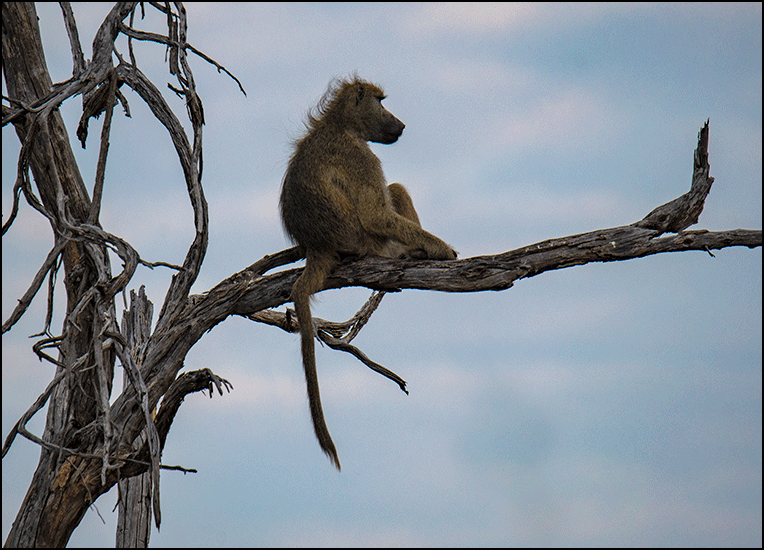
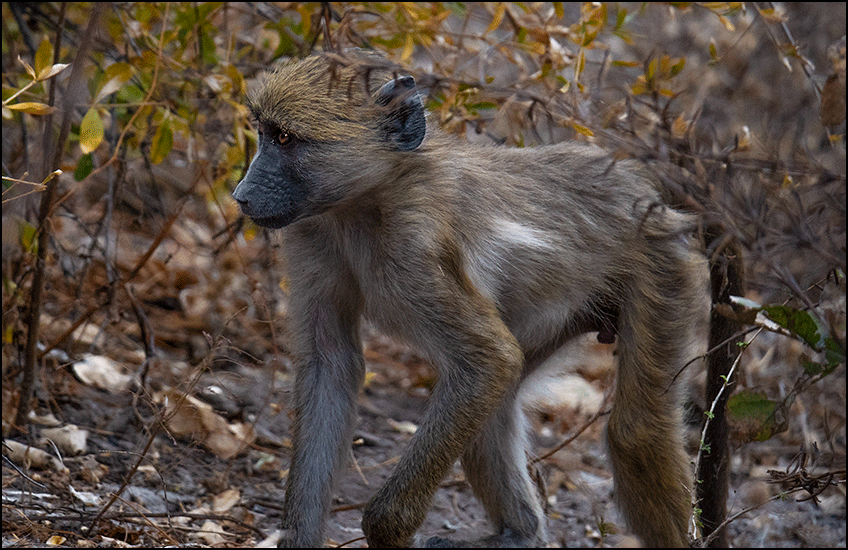
A troop of baboons came by, foraging around through the tall grass and bushes. We could see a big male sitting in a high tree, silhouetted against the sky, clearly keeping watch. As usual, the baboons didn’t quite meet our eyes as they passed close by. Some of them gave us the distinct impression that they considered us trespassers. They are fascinating to watch, but they always creep me out just a little. We heard their harsh alarm bark - Gee said that to him, it always sounds like they are shouting “John! John!” Once he said it, we couldn’t
un-hear it.
At one point a bull elephant blocked our crossing, so we waited patiently for him to decide he was ready to move. He took his time, of course - a creature that size doesn’t hurry for anyone, least of all a safari vehicle. He finally shifted aside with the air of someone granting a favor.
We returned to the leopard tree as the sun was setting, and she was still there. With fewer cars now, the scene felt calmer, almost private. She remained in dim light at first, her spotted coat blending into the shadows, but then a shaft of sunlight broke through the clouds and blanketed her in gold. For a few seconds she remained motionless, looking almost as if she were sculpted from light. Then she climbed down with effortless feline grace and slipped silently into the underbrush, vanishing as if the bush had simply closed around her. It felt like watching a secret moment we weren’t entirely meant to see.
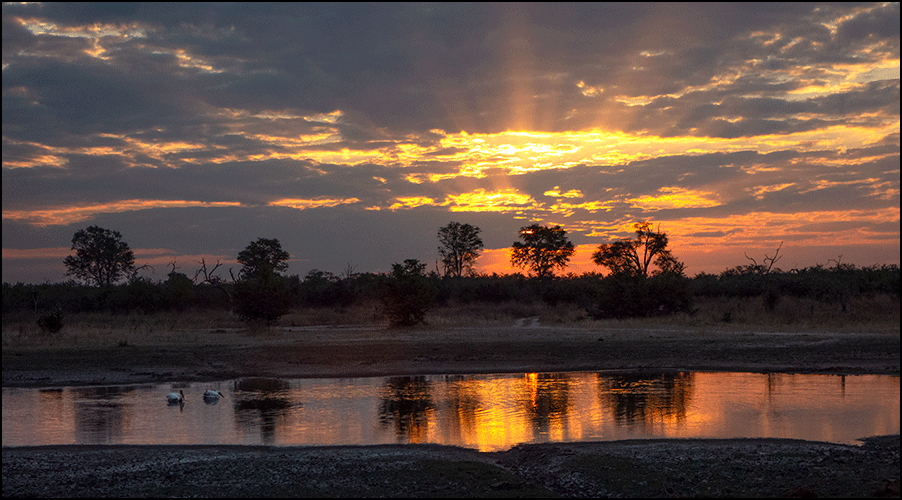
Unlike in the national parks, you are allowed to night‑drive in Khwai, so we didn’t have to rush back to camp before dark. We stopped for sundowners at a large waterhole where several pelicans were swimming around like oversized ducks. Gee served us wine and we watched a magnificent sunset - brilliant colors and dramatic clouds reflected in the still water, as the sky seemed to melt into the lagoon.
There were a few other vehicles there. While I was behind a bush ‘checking the tires,’ several ladies from Japan strolled right around to where I was and proceeded to observe the activity, offering far less privacy than I would have preferred. Perhaps they follow different customs - or perhaps they simply wanted to confirm what
tire-checking looks like in the wild. Either way, it was not my finest moment.
After sundowners, we set off on our night drive - always one of my favorite parts of safari. Gee used the spotlight with great care, never shining it into an animal’s eyes and never holding it on them for more than a few seconds. He’s meticulous about not altering their behavior. His quiet respect for the animals always feels like part of the magic.
We saw several spotted thick-knees - pretty birds with big eyes, though I’ve always thought their name is rather ridiculous. Impalas appeared like ghosts in the dark, their eyes glowing green in the beam of the spotlight.
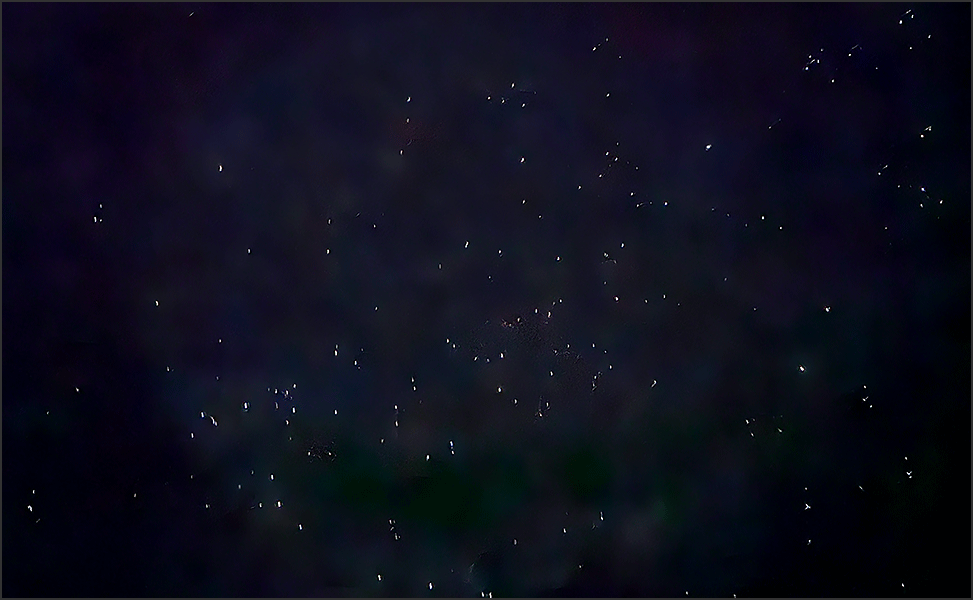
We stopped to listen to the frogs. Gee turned off the engine and the lights, and we sat in complete darkness, illuminated only by the stars and a sliver of the waxing moon. The frog chorus was astonishing - layers of sound rising and falling, echoing across the water in an ancient harmony. The Delta’s own symphony, played just for those willing to sit still long enough to hear it.
As we sat there in the darkness, Gee told us one of those bush stories that seems to belong only to the nighttime. It was about a man walking home after dusk with his wife, carrying his baby in his arms. Arriving home, after his wife had prepared the crib, he handed the baby to her – or at least he thought he did – it turned out he had handed his baby to a hyena in disguise.
Some say the man was bewitched, or that dark magic clouded his senses. Others insist he was simply exhausted and fooled by shadows. Either way, it’s the kind of story that feels especially chilling when you’re sitting in a silent vehicle, engine off, listening to frogs and distant hyenas, the darkness pressing in around you. The night felt thick with possibility - and with stories better left untold. A reminder that in the bush, the night belongs to other beings entirely.
Back at camp, we sat by the fire and watched the southern sky wheel slowly overhead. Even with the new moon up, the stars were brilliant - crossing the heavens in slow, silent arcs. The fire crackled softly, and the last calls of the hyenas drifted across the darkness.
As the flames burned low, a quiet stillness settled over us. It had been a full day, filled with small wonders and big moments - the leopard bathed in golden light, the wild dog pups playing at the den, elephants wandering through camp as if they owned the place, and the frog chorus rising under the young moon. We sat quietly by the fire, letting the night wrap around us.
Later, long after we’d gone to our tents, we heard hyenas close by - their excited,
high-pitched chorus rising and falling like some strange bush opera, sung in the dark.
Tomorrow would bring another day in this remarkable place - and if safari has taught us anything, it is that the unexpected is always waiting just beyond the next bend in the river.
~
Continued
on next page ~
Africa 2025 Journal Pages:
1
2
3
4
5
6
7
8
9
10
11
12
13
14
15
16
|