|
Africa 2025 Journal Pages:
1
2
3
4
5
6
7
8
9
10
11
12
13
14
15
16
July 2
Dawn seeped quietly into camp, the bush already shifting into its morning rhythm. Birds were calling long before the sun reached the horizon, and the soft grey light carried that familiar sense of promise. It was the start of another bright day, and we were ready to see what it would bring. A faint coolness lingered in the air as we set off early, bound for Moremi and a new camp deeper in the Okavango Delta.
The morning was cloudy, with sunlight streaming down in great golden shafts. Just outside camp we saw a pretty double-banded
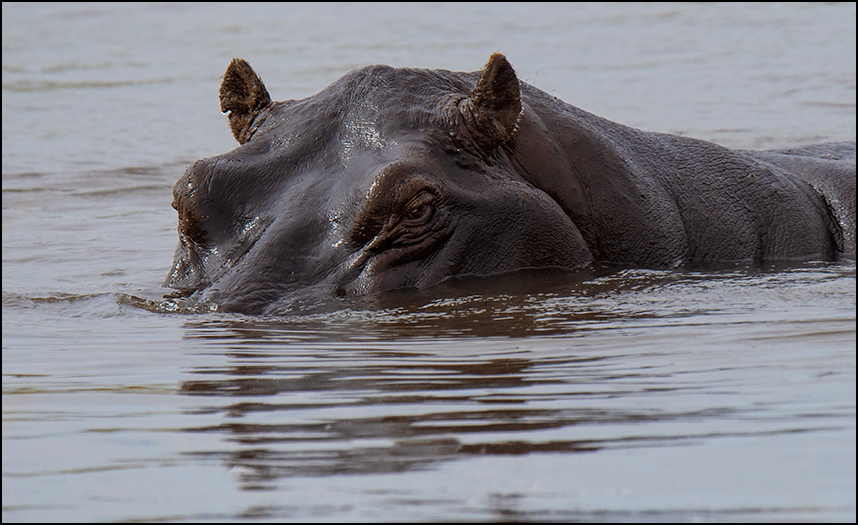
sandgrouse. A tawny eagle greeted the day from a treetop, and three greater striped swallows posed beautifully for us in the soft light. Hippos churned in the river, elephants blocked the road, and a lone old
dagga-boy buffalo stood with oxpeckers fussing over his back. It was like Khwai was giving us a final farewell parade.
We drove through the town of Khwai, a small, spread-out community whose people own and operate the Concession we’d spent the last three days exploring. We passed houses, a few small shops, even the school. There are more buildings than when we first came ten years ago, but still modest by American standards. The village is scattered among the trees near the river - simple homes and thatched huts, tin roofs and wooden frames, a few concrete walls here and there. One little round building was made entirely of Coke bottles plastered together. Goats wandered freely, along with a few stray dogs, and most people got around on foot. We stopped at a tiny store to buy more tonic water - apparently our G&T consumption had outpaced expectations. Gee just shook his head and laughed - he knew his group well by now.
Crossing the log bridge over the river, we reached the Khwai gate. While Gee handled the paperwork to move from one park to another, we had a tea break and a few precious minutes of Wi-Fi to check messages from home. It felt oddly jarring to dip back into the outside world for a few moments, and then just as quickly let it go again. Then we continued toward Moremi.
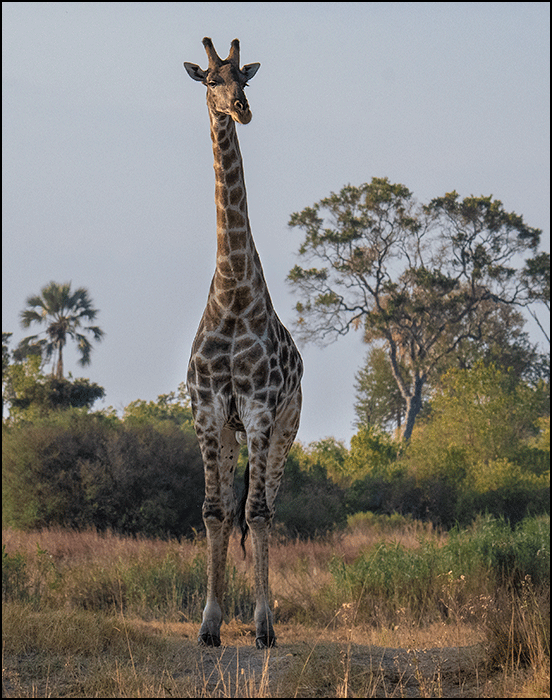
We passed Baboon Bridge, still decorated with the colorful handprints the mischievous baboons had left in the wet paint. Swallows perched along the railings, and the view over the river was superb. As we left Khwai and entered Moremi, we were greeted by familiar friends - impalas, zebras, kori bustards. We paused only briefly for each; we had a long way to go. A male ostrich lay in the road with his neck sticking up like a periscope, and several groups of giraffes browsed nearby. We were seeing so many giraffes on this trip, way more than ever before. They seemed to be everywhere - serene moving statues, across the plains.
Our first afternoon in Moremi began quietly enough, though we had no idea of the unusual and wonderful things that were in store. We stopped for lunch under a sausage tree overlooking the plain. When we pulled the camp chairs off the roof, two of them were full of ants. We conducted a hasty eviction. We collected more feathers and flowers for Jineen’s centerpiece, as a new camp would require a new arrangement.
By mid-afternoon we were deep in Moremi, completely on our own. Hooded vultures circled overhead, and several kori bustards strutted through the grass with the air of birds who know exactly how stylish they are. Ahead on the plain we spotted three dark, round shapes - ostriches. A female and two males.
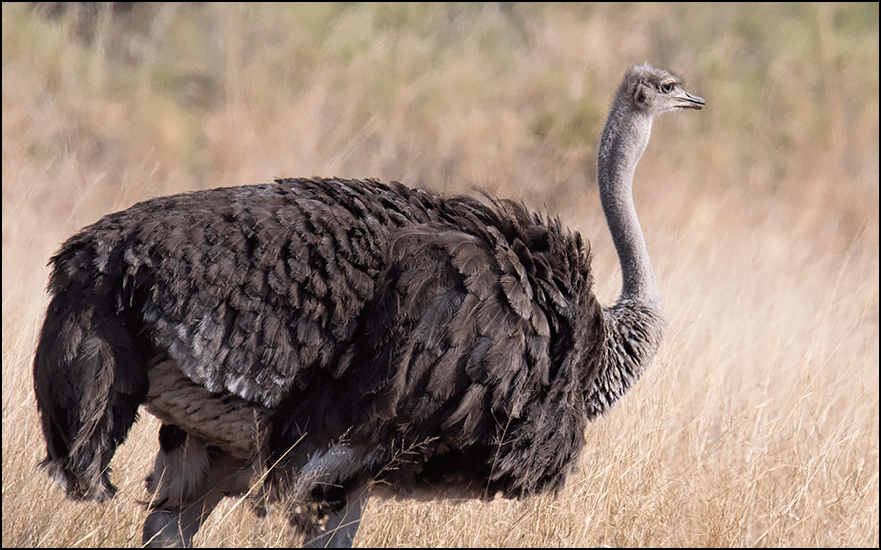
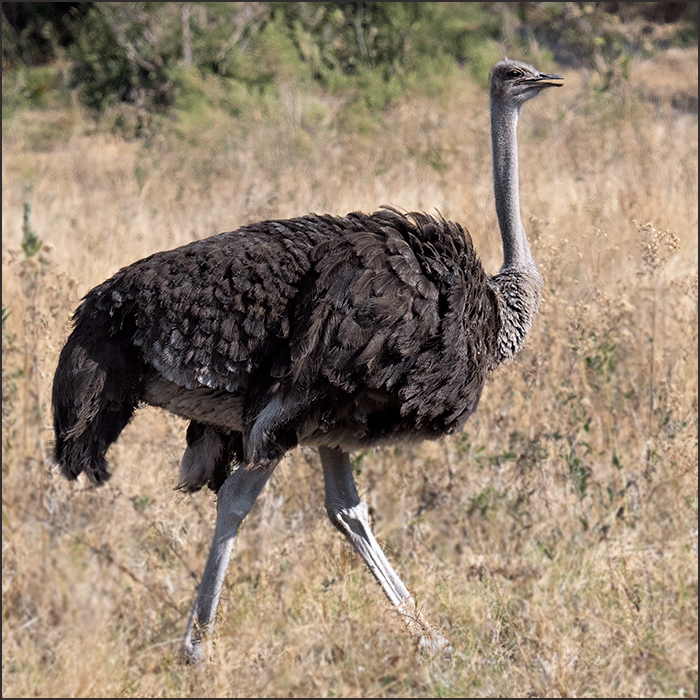
We drew closer, and followed the female for a while, admiring her soft
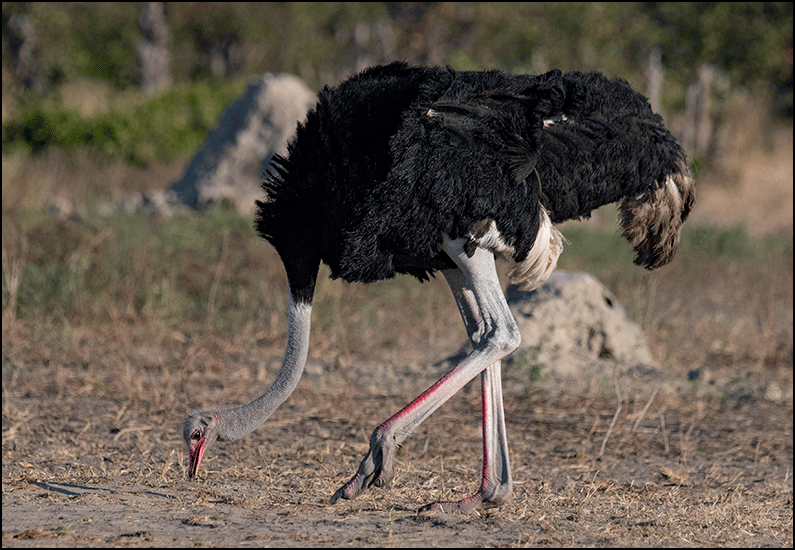
grey-brown feathers and her strong, exotic beauty. One of the males, dressed in his showy black and white, trailed after her with great purpose, while the other kept a more respectful distance. Up close, we could see their enormous eyes framed by ridiculously long eyelashes, giving them a surprisingly coquettish look. For the first time I had a lens powerful enough to focus on their faces. The female sauntered along with her neck stretched forward, and we could see the lump of something large she had swallowed, slowly moving down. It was quite fascinating - ostrich anatomy in real time.
The female moved ahead and one of the males kept pace with her, clearly intent on courting. We followed right behind as she sashayed up the road like a runway coquette, swaying side to side, her fluffy wings puffing up and out with each seductive step. She looked absurdly over‑dramatic and completely ridiculous, yet somehow irresistible - quite the temptress. She seemed oblivious to us as we trailed behind, laughing as she waggled her tail feathers. Then, suddenly aware of our presence, she bolted up the road,
zig-zagging, leaning and dipping wildly from side to side before finally pulling ahead and racing across the field to rejoin her mate. The whole thing looked like something straight out of a cartoon - we
half-expected Wile E. Coyote to appear. We managed to get a decent video of the entire ludicrous performance. It remains one of the most memorable things we saw all trip.
We could still see the ostriches, now far ahead of us. The male was running in circles, dipping, swerving in a strange, exotic dance. The female joined him, and both were bobbing and waving their stubby wings in a wonderfully bizarre ritual. The male’s black‑and‑white wings tilted wildly back and forth as he regaled her with his elaborate display, looking utterly ludicrous. This was the closest, best look we’ve ever had of these enormous birds.
Later, Lindsey summed it up perfectly:
Oh, the handsomest ostrich am I
For though I'm unable to fly
I can sing, I can dance
All without wearing pants
And I run like I’m both drunk and high
We were in a remote area now, and hadn’t seen another vehicle since turning south toward
Xini, our camp destination. Gee had spotted lion tracks and was determined to find their owners, so he explored every little side track into the thickets. A twisting vine wound around a tree trunk like a giant snake - Gee told us it was called a python climber. At one point we thought we’d found a male lion resting, but it turned out to be a rock that looked uncannily lion‑like in silhouette - even Gee was fooled for a moment.
Our track eventually dead-ended at a baobab tree, and we realized we were looping back on ourselves when we passed ‘Lion Rock’ a second time. A single giraffe browsed on low bushes, his neck arched downward in a graceful curve. Paula thought she saw a lioness in the distance, but after scanning with binoculars she discovered it was just an impala. The bush was playing tricks on us.
We came out onto a vast open floodplain crossed by a wide, flat riverbed - really just an indentation in the savannah, dry for most of the year. But now water was trickling down it, the first hint of the floodwaters from the rains in Angola, a thousand miles to the north, finally reaching the far edges of the Delta. The Okavango is one of the few great rivers whose waters never reach the sea.
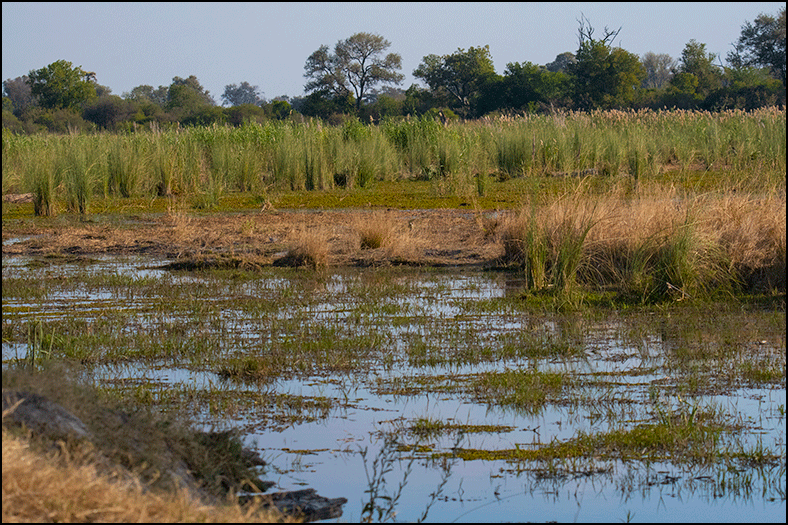
Much of the Delta had already filled, and now the water was advancing slowly toward the outer reaches. Little by little it widened into the floodplain, branching into channels, lagoons, and shallow pans, waking the reeds and dry grasses as it spread outward before eventually disappearing into the Kalahari sands. Fish appeared as if by magic, frogs began calling, and the whole landscape transformed into a lush paradise. The Delta doesn’t flood all at once - it fills in stages, each new reach of water extending farther into the plains and bringing life back to places that have waited for this all year.
Now we were watching the very tip of that advancing water as it crept across the dry plain, filling empty channels and bringing new life to the desert sands. Gee told us this is known as the ‘Head of the Flood,’ or the ‘Tongue of the River.’ Watching the first trickles arrive felt like witnessing the beginning of a quiet miracle. A faint smell of wet earth drifted on the breeze - the first breath of the season’s renewal. Gee pointed out the end of the channel and told us to remember its position; by tomorrow it would be farther along. A buffalo skull lay near the tip of the water, so we used that as our marker.
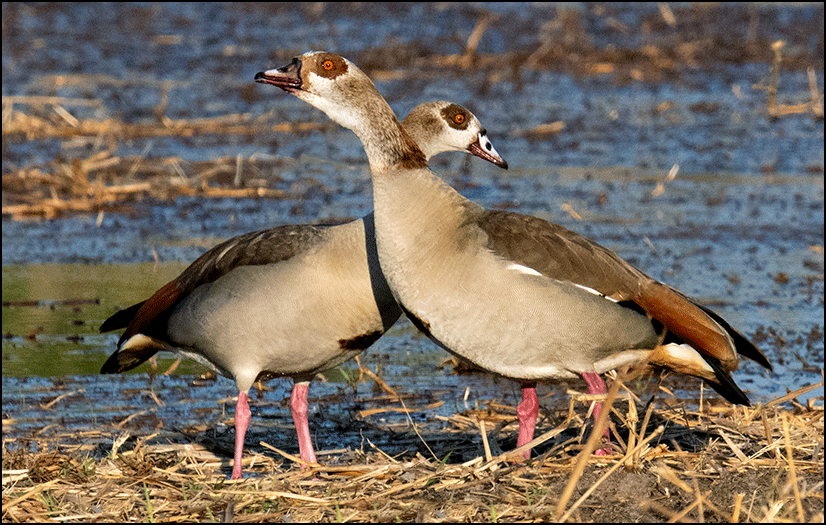
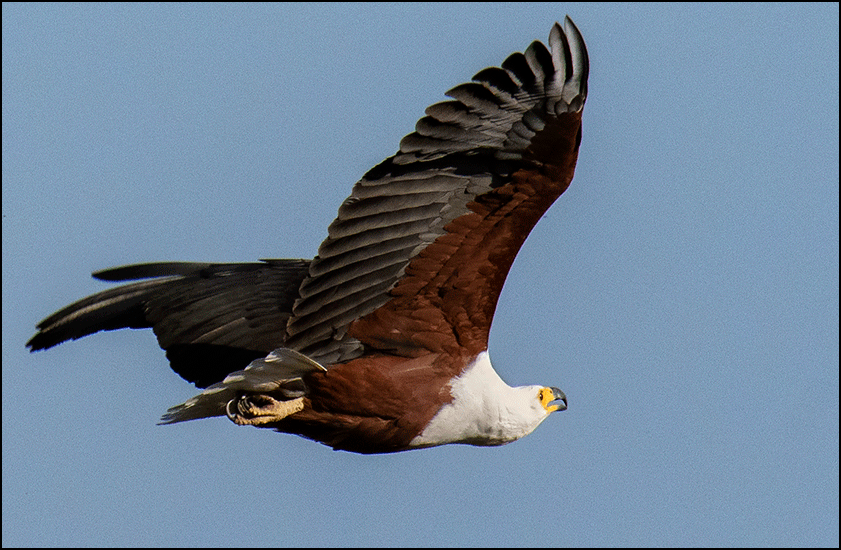
Birds worked the margins of the new river by the hundreds - Egyptian geese, egrets, herons, lapwings, and just about every other water bird we’d seen so far. White‑faced whistling ducks flew past us again and again, while I tried to improve my birds-in-flight photography skills - getting those little suckers in focus is nearly impossible. Three fish eagles circled overhead, and we watched one tilt its head back at that impossible angle and let out its piercing cry.
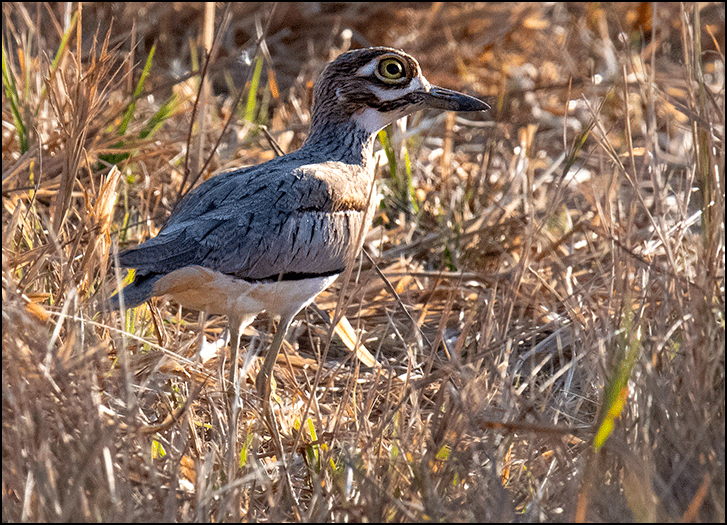
We saw new birds too. A glossy ibis waded in the shallows, his grey‑brown body accented with shimmering iridescent wings that flashed green, purple, and rose when the light was right. A Cape wagtail and a water thick-knee foraged along the shore.
Farther along the water’s edge, the mood shifted dramatically. Marabou storks stood along the water’s edge — huge, unapologetically ugly birds with spindly legs, scruffy feathers, bald pink heads far too small for their bodies, and sagging throat pouches that look vaguely obscene. They have a prehistoric look to them, though when they open their massive wings to fly they are much more impressive. But all in all, these storks are some of the most spectacularly unattractive creatures in the Delta. They are proof that evolution has a sense of humor.
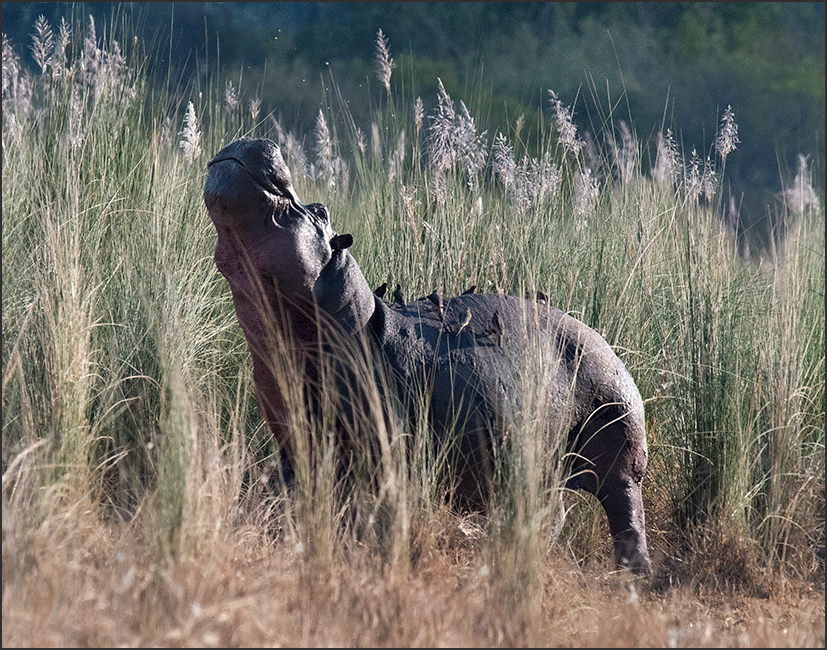
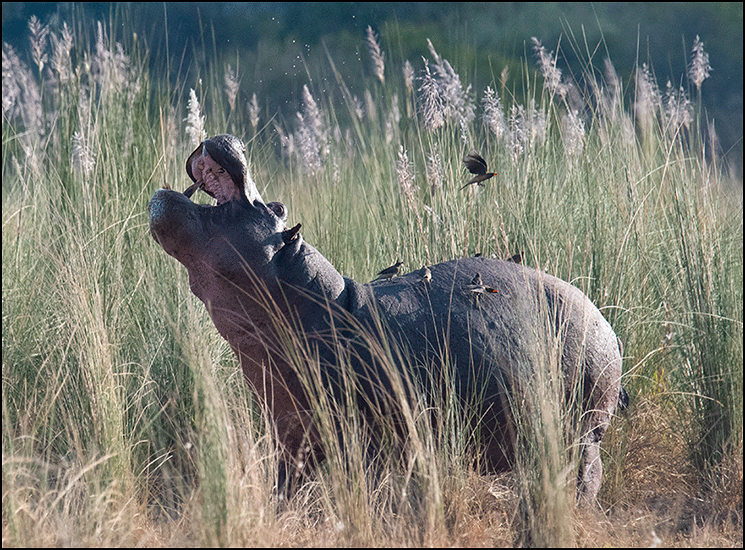
We drove along the river’s edge. A big hippo bull stood near the water in tall marsh grass far above his head, oxpeckers fluttering on his back. He rose up on his tiptoes, stretching his head and neck straight upward as far as he could reach, in a most
un-hippolike pose. Then he opened his mouth in a huge yawn, displaying his tusks to the sky, shook his head vigorously, sending the oxpeckers flying, and shuffled off into the grass. He managed to look both dangerous and faintly ridiculous at the same time. Hippos excel at that combination.
Gee was still searching for lions, checking tracks while we scanned the plain. Several times we thought we saw one, but each flash of tawny brown turned out to be an antelope. The false alarms inspired another bad verse:
We were out for an evening ride
Trying to find the Pride
Gee was
a-tryin’
To find us a lion
But it was only an impala’s backside
Passing another hippo pool, we began hearing the most astonishing noises. Gee told us it was hippos mating, and it was unlike anything we’d ever heard - roaring squeals, harsh bellows, long undulating moans. The sheer volume and intensity left us wondering whether the encounter was consensual. We sat there listening, half‑horrified, half‑delighted, and totally amazed. It prompted an even worse limerick:
The hippos’ cries are hard to miss
A groaning roar, a laugh and a hiss
With their voices from hell
It’s so hard to tell
If they are in agony or sexual bliss
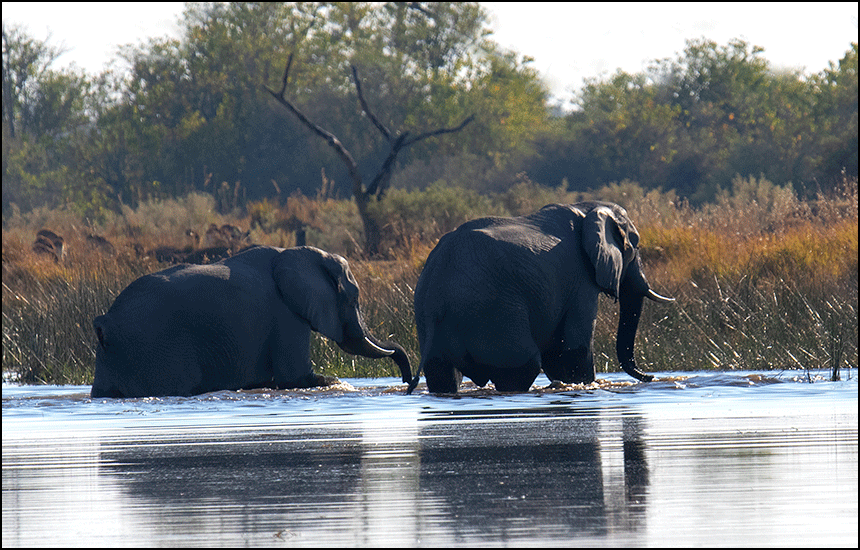
A lone giraffe stood serenely nearby, magnificent in the fading light. Several tsessebes were playing, running back and forth and pronking across the plain. We came across a small group of elephants at sunset, two adolescent males,
mock-fighting as the sky turned gold. Two
stately bulls calmly waited through the belly- deep water of the
river.
We watched the sun sink over the plain as we approached camp. Set in the trees at the edge of a vast plain, our camp was beautiful. Our tents stood right along the sand road where the woods met the open fields, with a large termite mound rising in the center of camp. The air smelled of dust and cooling grass, and a faint breeze stirred the leaves above our tents. A scops owl called softly during dinner, its tiny voice carrying surprisingly far in the stillness.
As we ate, another guide and his tourist arrived, looking for their camp. Gee spoke with them and discovered they were supposed to be in Xakanaxa, which was about six hours away - and it was already nine o’clock. We did not envy them; they were in for a very long night.
The night settled around us, the plain stretching out silver in the moonlight. After a day of dancing ostriches, rising waters, and some of the strangest noises we’d ever hear in the bush, we fell asleep to the soft call of the scops owl - grateful, once again, to be here. It had been a day of wonders, both ridiculous and profound - the Delta felt endless and intimate all at once.
~
Continued
on next page ~
Africa 2025 Journal Pages:
1
2
3
4
5
6
7
8
9
10
11
12
13
14
15
16
|