|
Africa 2025 Journal Pages:
1
2
3
4
5
6
7
8
9
10
11
12
13
14
15
16
July
4
We woke to a clear, cool morning, the pearly light of dawn spreading through the camp. All was quiet, the sounds of hyenas, jackals, zebras, and roaring lions having finally faded, leaving only the gentle rustle of the breeze moving through the trees. It felt like the kind of morning where anything might happen.
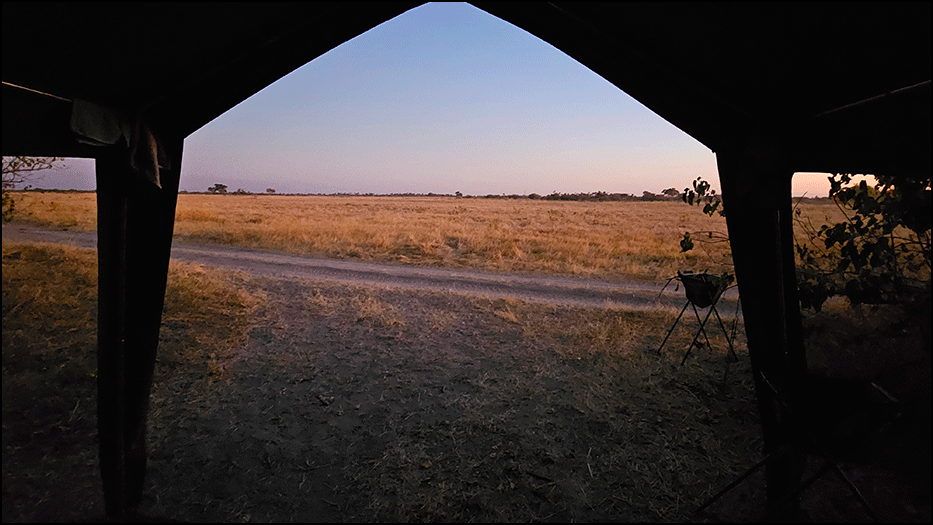
We unzipped the tent cautiously, half expecting to find the ground outside of Natalie and Amanda’s tent torn up by the tracks of marauding lions or pillaging hyenas. Instead, the world looked pristine – the camp was quiet and peaceful.
Our first task was to check on Amanda and Natalie, from whose tent had come those most alarming noises in the night. They emerged alive - wide‑eyed, disheveled, and full of stories - which was a relief, because from the sounds we’d heard, we hadn't been entirely sure they’d make it till dawn.
Once we confirmed no one had been eaten, breakfast became the next priority. Hot jungle oats, toast, and the comforting smell of coffee brewed on the fire. Tree squirrels chattered overhead, plotting their next raid on anything edible or decorative. The lizard from yesterday was back on his tree trunk, warming himself in the early sun. Everything about the morning seemed normal, belying the drama the night had held.
Over breakfast, Amanda recounted her near‑death experience. A large rat had entered the tent, climbed onto her bed, walked across her body, and then threatened to crawl under the covers with her. Naturally, we demanded more detail.
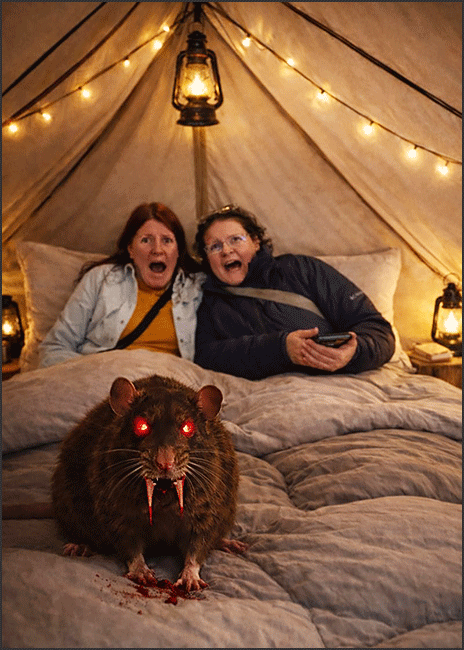
She described waking to the unmistakable weight of something moving across her blankets. When she switched on her headlamp, she found herself face‑to‑face with a huge rat sitting squarely on her chest. It weighed at least twenty pounds, Amanda told us, and it had glowing red eyes, and sported long, bloody fangs dripping with venom. She could clearly see that it was vicious, as it loomed over her like a demonic woodland beast, before launching itself off the bed and disappearing into the shadows - thus leaving Natalie, the designated rat wrangler, to hunt down the fanged demon and remove it from the tent. Amanda's retelling grew more dramatic with every sentence. She insisted, with great conviction, that she had survived a near‑fatal encounter. She was still shaken; the rest of us were wiping tears of laughter from our eyes.
Later, Natalie found a picture of the culprit in her wildlife book: the African giant pouched rat. Well over a foot long (not counting the tail) and weighing about three pounds. To give Amanda credit, that was a pretty big rat.
After returning home, and conducting a detailed review of various
witness accounts (Amanda and Natalie) and consulting with an
investigative sketch artist, we were able to generate this visual
reconstruction of the tent-invading rat:**
However, further research after returning home painted a very different picture from Amanda’s description:
'African giant pouched rats are surprisingly
sweet-looking creatures - soft-furred, with oversized ears and expressive faces. Their bright eyes and twitching whiskers give them a curious, almost endearing look. They carry food in their cheek pouches, sit upright on their haunches, and move with a light, springy gait. They’re gentle, nocturnal, shy, and frankly rather cuddly.'
Not exactly the stuff of horror films. Still, waking up to a
three-pound rat sitting on your chest would be disconcerting. Amanda maintains she is still suffering from PTSD - or possibly
PTRD.
I expanded my research at home and found the following clinical description:
'PTRD (Post-Traumatic Rat Disorder) is a rare but dramatic condition that develops after waking to find an African giant pouched rat strolling across your sleeping bag. Symptoms include sudden flashlight‑grabbing, exaggerated estimates of rodent size, and vivid recollections of glowing red eyes and fangs that may or may not exist. Recovery is possible, but only through repeated retellings to a sympathetic audience who laughs in all the right places.'
Amanda meets all diagnostic criteria, and may require lifelong storytelling therapy.
By the time we climbed into the vehicle, the sun was rising steadily, casting long shadows across the floodplain. Another beautiful day in Moremi was beginning - there was a sense of promise in the air, the feeling that anything could happen. The morning was wide open and full of potential.
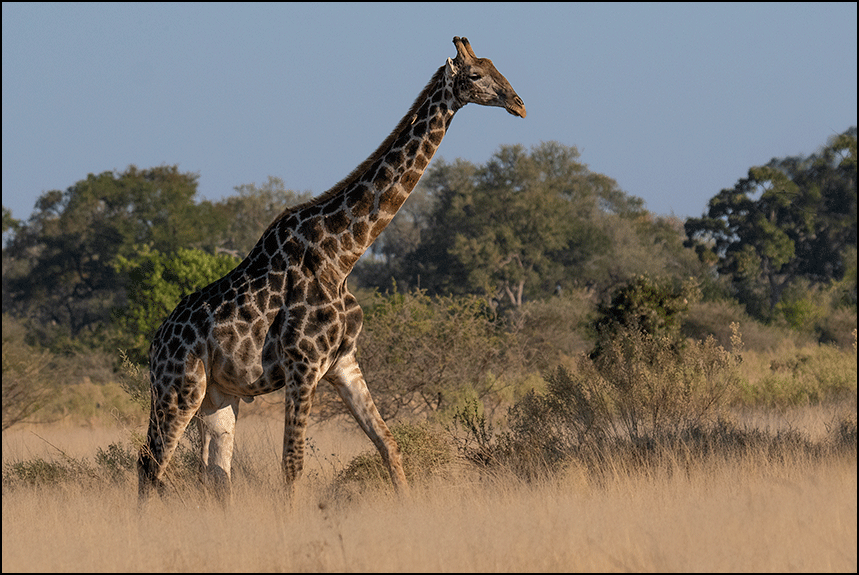
A baobab stood on a rise, silhouetted against a pastel sky, its massive trunk glowing warmly in the early light. Zebras grazed nearby, and a lone giraffe moved slowly across the plain.
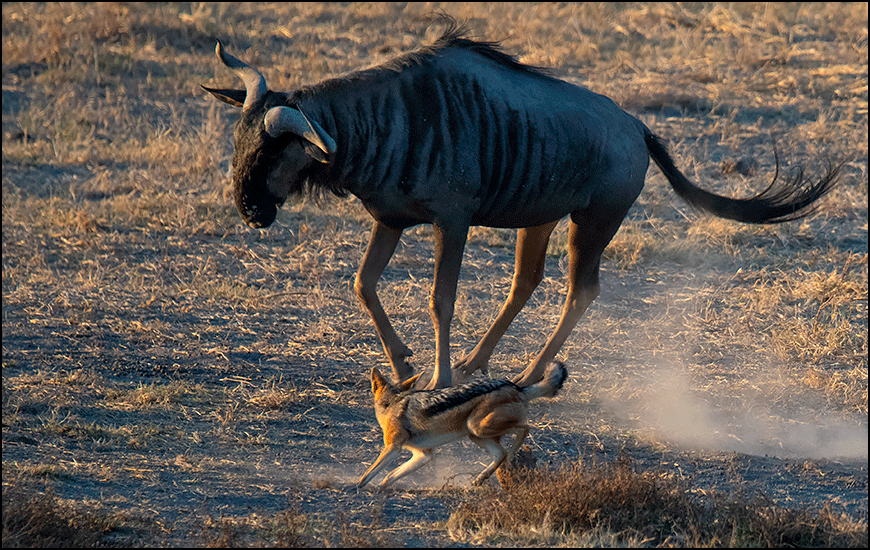
A group of impalas grazed in the golden morning light, their coats unusually vibrant. Three jackals trotted straight through the middle of the herd, then past a pair of muddy tsessebes who barely glanced at them. One jackal picked up a large piece of elephant dung - bigger than his own head - and carried it proudly. When they passed a small herd of wildebeest, the bull took offense and lunged at the jackal, bucking and kicking his hind legs high in the air. Dust puffed up around them as the wildebeest lunged. The jackal dodged neatly, never relinquishing his elephant dung prize. It was a bit of slapstick comedy performed by wildlife.
We could see giraffes and zebras running in the distance, kicking up plumes of dust. Gee found lion tracks and followed them - he was still searching for the Pride.
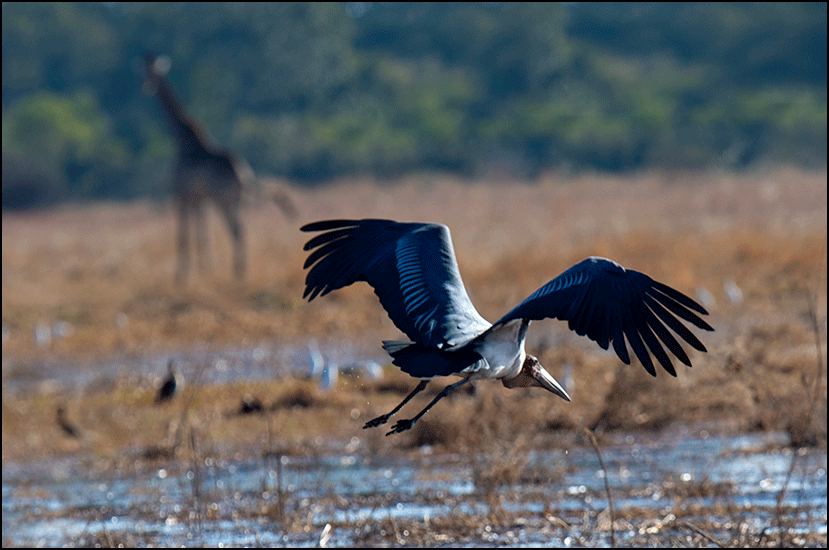
We passed the skull that had marked the tongue of the river the day before; the water had advanced much further now. All the usual large waterbirds were gathered along the new channels and lagoons — marabou storks, ibis, geese, and ducks.
A pair of saddle-billed storks brightened the floodplain. One performed an enthusiastic dance - leaping, cavorting, and flapping his wings - no doubt trying to impress his mate. Nearby, a group of spur‑winged geese fed quietly, seemingly oblivious to a crocodile that lurked in the marshy grass with a dead goose in his clutches. The floodplain is full of beauty, but never without its shadows, and life and death are always going on.
It was astonishing how much aquatic life had appeared overnight at the tip of the river - which had been dry floodplain the day before. The birds could fly in, of course, and the crocodile had clearly wasted no time in arriving, but the fish and frogs seemed to magically appear with the first water. The Delta comes alive the moment the water touches it.
Suddenly Gee stopped. “A lion walked here.” He pointed out fresh tracks in the dusty road. There were new leopard tracks as well. He read the spoor like a book. We followed the lion tracks a long way: first just a couple, and then the whole pride.
Gee did it again. From the tracks and his searching the night before and this morning, he knew the area they had to be in. He drove back and forth, narrowing the search (and occasionally inventing his own roads), until he found the Xini Pride.
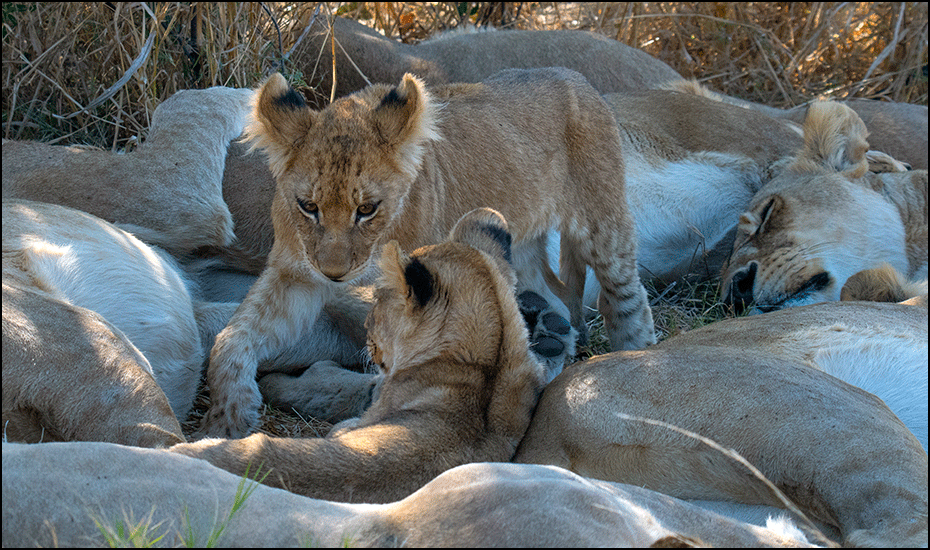
There were twelve adults, including one big male, and six cubs about two months old. Finding them felt like solving a mystery the Delta had set for us. Our lion count rose to
sixty-four – there were eighteen here now, but three didn’t count because they were repeats from the night before. The tally was becoming impressive.
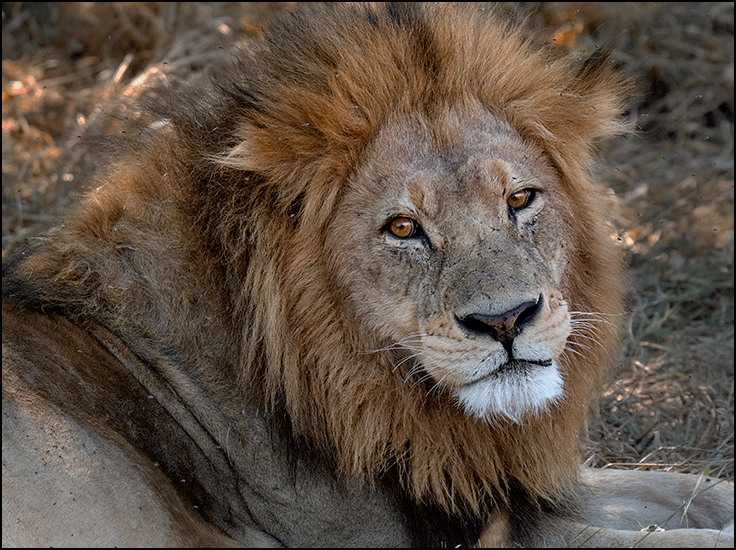
The big male lay a little apart from the group, keeping an eye on the lionesses so they didn’t sneak off. His steely gaze made it clear he was not to be trifled with, though he was so sleepy he snarled at us between yawns. Gee explained that the Xini Pride usually has three big males; two must be out patrolling.
When we arrived, the pride was loosely spread out. One lioness groomed the face of a
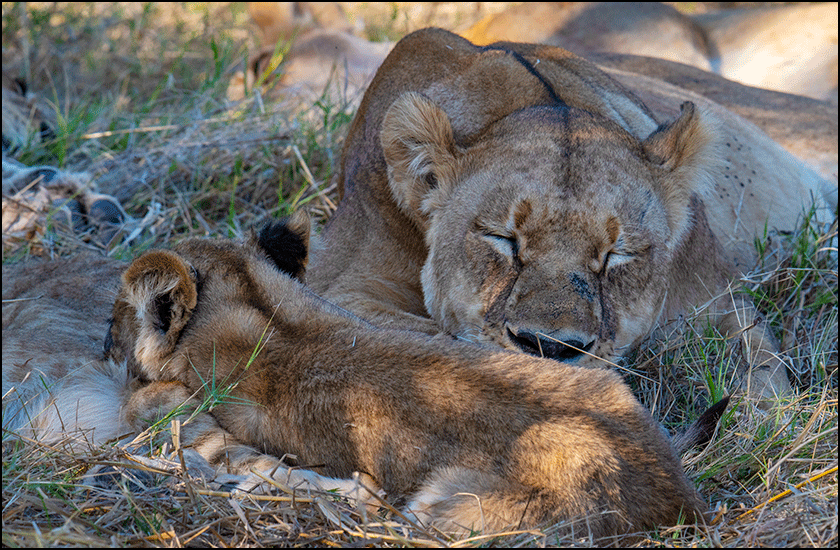
half-grown male. Several of the young cubs wrestled quietly while others slept cheek‑to‑cheek with their mothers. One adolescent male had enormous paws; he looked every bit a future pride leader. His paws alone hinted at the lion he would become.
As the sun warmed, they all rose and moved to a patch of shade under a tree. There were a lot of lions for a small patch of shade, so they piled closely together. Cubs climbed over each other and over their mothers - wildness wrapped in innocence. Three of them suckled for a while, their tiny paws kneading the air, then fell asleep still latched on. Others sprawled belly‑up, legs stretched behind them. One lioness was heavily pregnant.
The pride made a surprising amount of noise - deep purring from the mothers, growls, and the cubs’
high-pitched snarls and cries. The sounds were mesmerizing, as if we were inside the pride.
After watching them for a long time, we drove a short distance away for tea. When we continued on, we headed toward a tributary of the Gomoti River - Gee’s favorite.
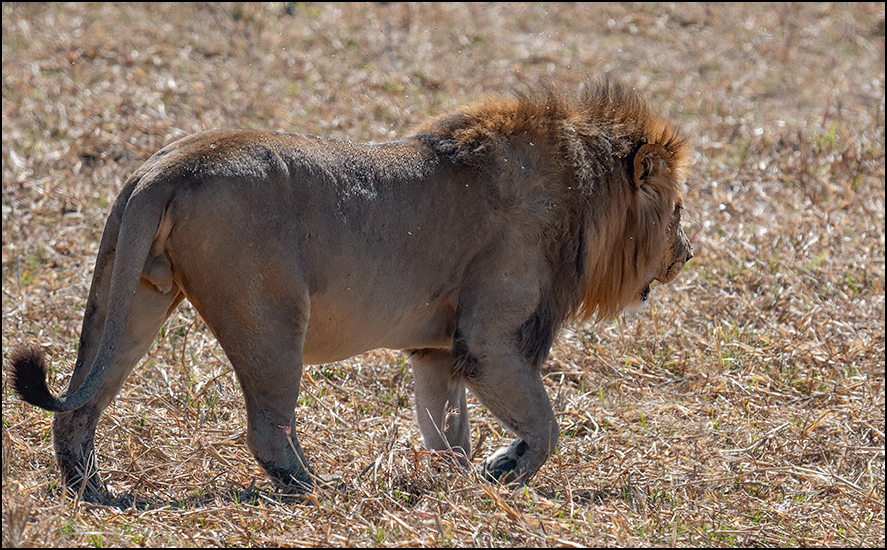
We were driving near the river and watching birds when suddenly Lindey said casually, “Oh, hey guys - a lion!” A magnificent male walked out from the brush behind us, strolling across the plain. Gee maneuvered to get in front of him, and we photographed him as he approached. A sense of awe preceded him, as he stalked across the plain with silent authority. He moved like he owned the world.
A second male lion was lying in the shade under a bush. He looked at us with a grumpy expression, lips curled back in what seemed to be a snarl - but then he opened his mouth in a dismissive yawn. We were not worth the effort.
This second lion rose and joined the first. They walked slowly across the floodplain, then lay down together in the shade. Gee said these were the two missing males from the Xini Pride. The reunion was oddly touching – like the wild dogs, lions affectionately greet their pride members each time they are reunited after being apart. The pride was complete again.
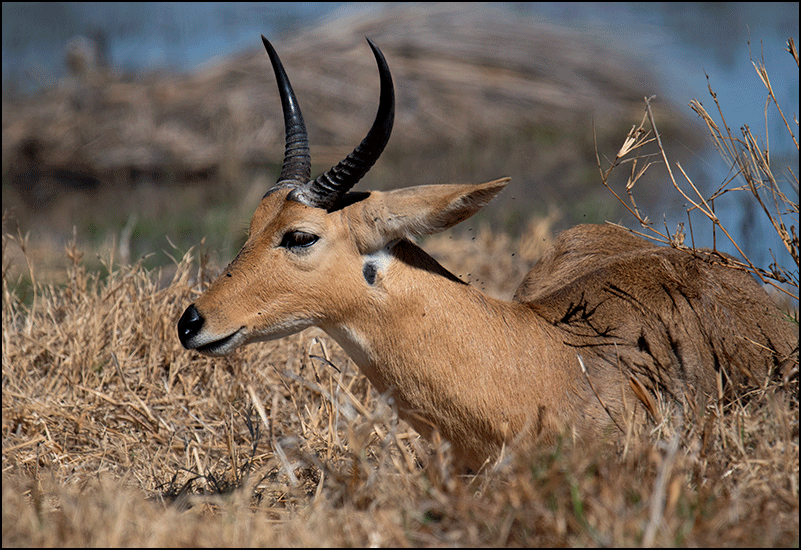
Back along the river, two reedbucks moved out of the thick underbrush - a lovely sighting, as these
less-common antelope are usually quite shy. Today, though, they lingered just long enough for us to admire them properly. Under the trees, we had some wonderfully close zebra viewing, their stripes luminous in the shade. Egyptian geese glowed in the soft warm light, their chestnut and cream plumage radiant. Everything seemed dipped in gold.
We were doing an all-day drive, which I considered a real treat. Gee had packed our lunch, and we stopped beneath a sausage tree for a long, lazy break. It was actually the same place we had stopped for lunch on the day we arrived at Moremi. We ate, stretched our legs, and enjoyed the stillness of the midday sun. There was something luxurious about having nowhere to be except exactly right here.
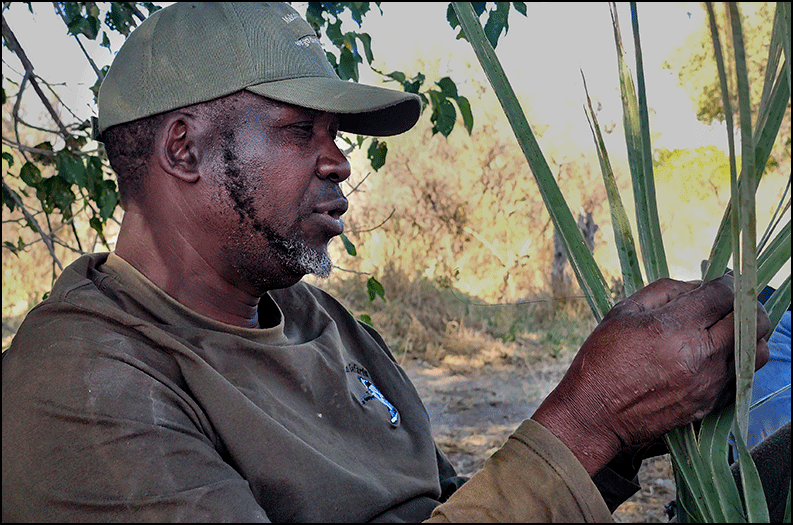
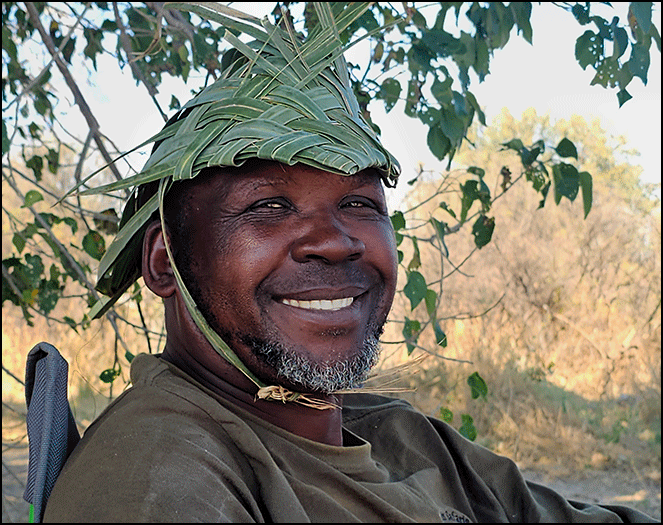
Gee cut a large palm frond and, with practiced ease, wove it into a basket - a skill he learned growing up in the Delta.
It was really fun to watch how quickly he created a usable basket
from leaves and fronds. The basket doubled as a hat, so naturally we all tried it on.
Meanwhile, Amber and Jineen invented a game they called bushball: one pitched a piece of giraffe dung, while the other swung wildly at it with one of the baseball bat-sized fruits from the sausage tree. It was ridiculous and hilarious, the sort of thing that happens when you give us too much free time in the bush. At least there was no impala dung spitting contest this time. Progress comes in many forms. We decided it was probably best not to invent any more sports here in the bush.
As we relaxed, conversation drifted back to
Amanda’s nighttime ordeal. Paula, inspired, composed a limerick:
It was
venomous and a vampire, so I froze
Red eyes
and huge teeth were exposed
But just a
wee mouse
Had snuck
into the house
No Fear
Factor for Amanda, I suppose
Later I reflected that the newbies - Lindey, Amber,
and Amanda - seemed to attract more than their fair share of
dangerous insects, arachnids, and rodents. It prompted me to write
this truly terrible limerick:
Of lions or
leopards so near
The newbies
showed no signs of fear
But
venomous rats
And wasps
big as bats
Plus
spiders, and driver ants in the beer
We were back on the road around 3:30, and soon the
afternoon shifted from comedy to wonder. Almost immediately we saw
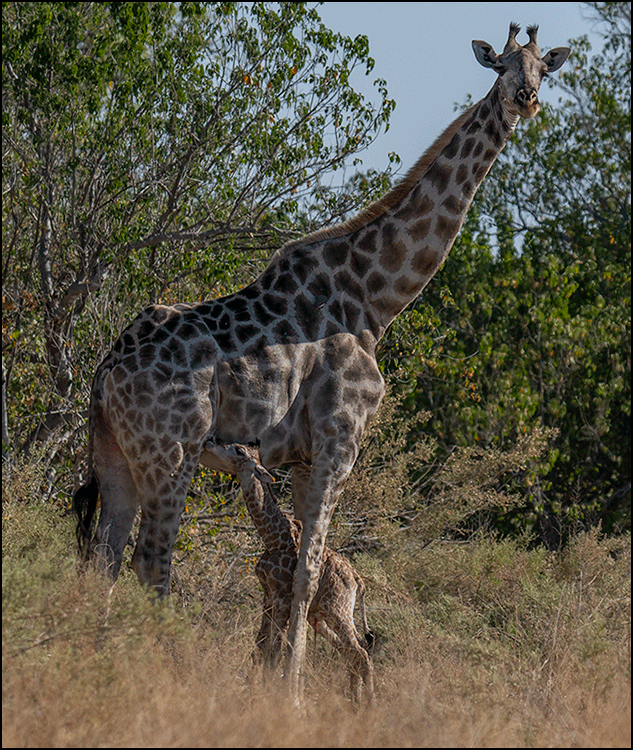
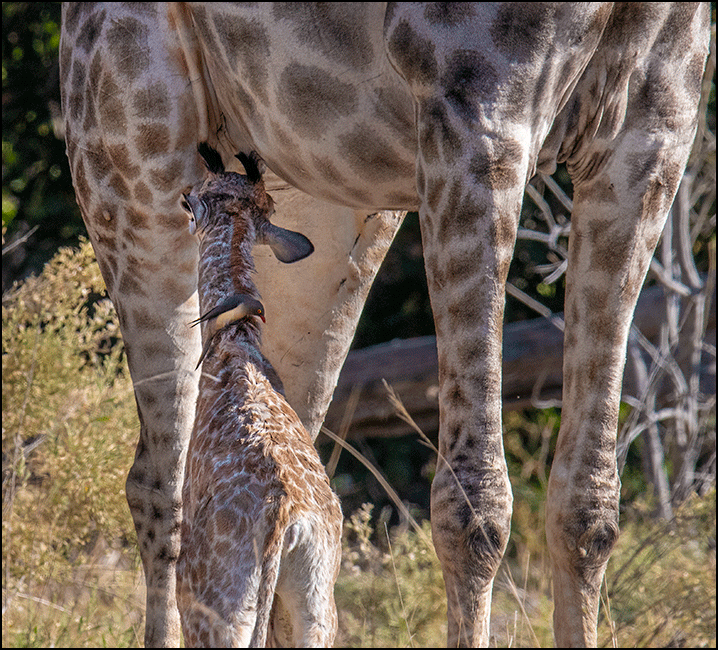
something miraculous: a newborn giraffe. Amanda spotted her first.
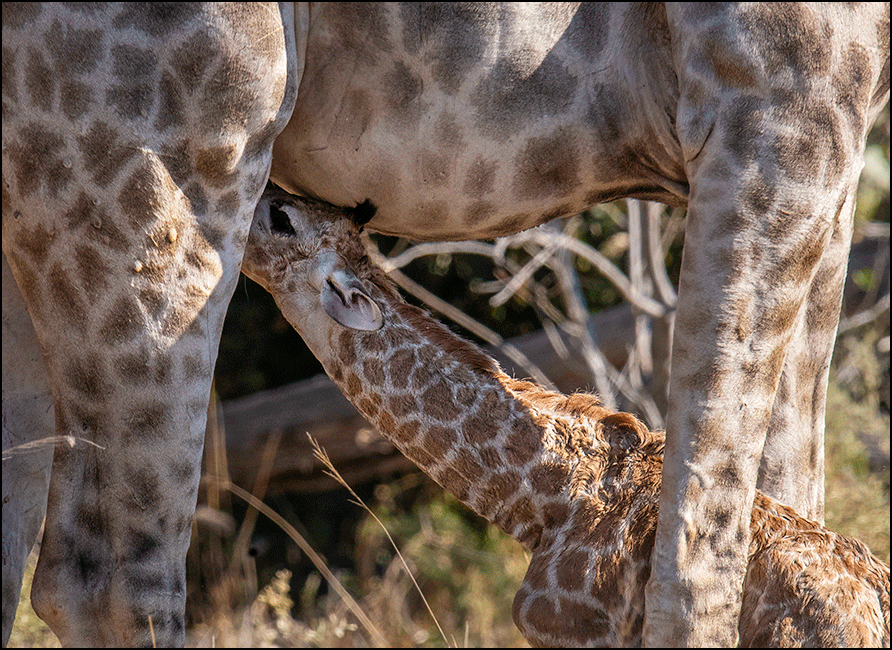
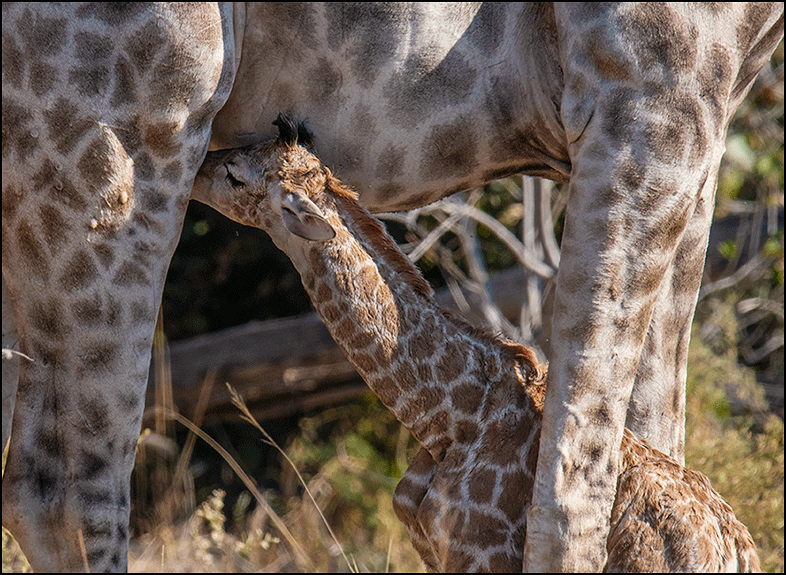
The calf was tiny, and still wet - she stood precariously on
wobbly legs and nursed, her movements uncertain and new. Gee said
she couldn’t have been more than twenty minutes old. We watched
her take her first steps - hesitant, trembling, utterly beautiful.
It felt like we were witnessing the very beginning of a story.
The baby giraffe’s tiny umbilical cord was still hanging from her belly. Her mother had just finished passing the afterbirth - she tried to coax the calf to move away from it, as the scent would attract predators, but the baby didn’t yet know how to work those impossibly long legs. After a while she managed a few more shaky steps, bending and straightening her knees in slow, uncertain attempts.
She was exquisite - petite, fragile. Gee said it was unusual for a giraffe to be born this time of year – most of them were born several months earlier. Since it was the Fourth of July, we named her Independence. The name felt perfect - small, brave, and
brand-new to the world. We hoped she would be safe.
It felt like a privilege beyond words – we witnessed something that has happened a thousand times a day for ten thousand years, yet so few people ever get to see. It was the highlight of the trip for me. We didn’t stay long, not wanting to stress the mother giraffe. We drove slowly away, quietly giddy from this incredible encounter. “My God,” I breathed. “That was amazing!”
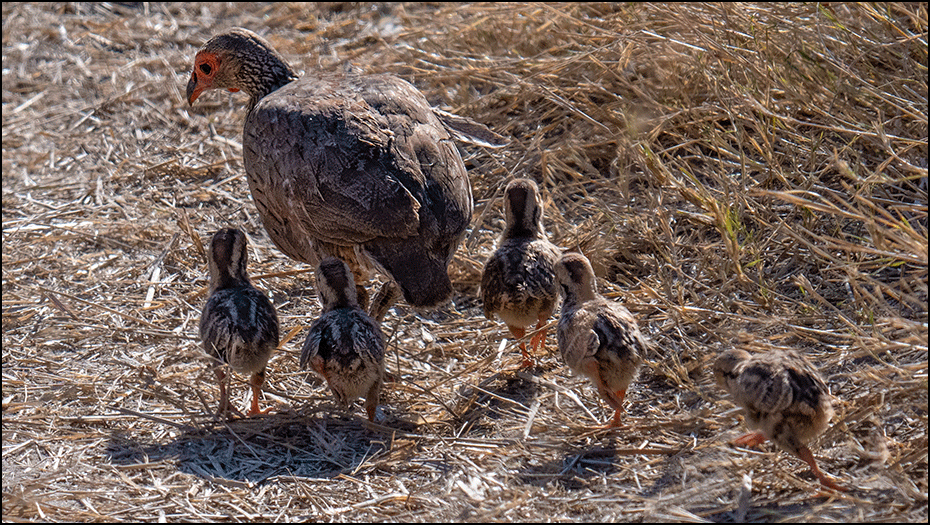
A mother francolin walked down the road with five tiny chicks scurrying behind her, and we followed her for a little way. Yet more giraffes appeared, three of them running in that slow‑motion,
awkward-yet-graceful gait. A water mongoose darted through the reeds – this was a first for me. The afternoon felt charmed.
An amorous - and possibly incestuous - warthog male was pursuing two
half-grown females across a field, sniffing their hind ends with great enthusiasm. We joked that he ought to check their IDs, as they looked decidedly underage. He remained undeterred by our moral objections, utterly committed to his questionable life choices.
Then Gee heard alarm calls from impalas and francolins. He was certain a leopard was nearby. He searched the copse of trees where the calls originated, but leopards are elusive, and this one wasn’t going to reveal itself. We find scores of lions on every trip, but a leopard sighting is always rare and special. I had always assumed they were far less common than lions, but to my surprise Gee told us that isn’t necessarily true. Leopards are present everywhere in the Delta, but their solitary, secretive nature makes them hard to find. You are likely to see lions every day on safari; you will only see leopards when they choose to let you.
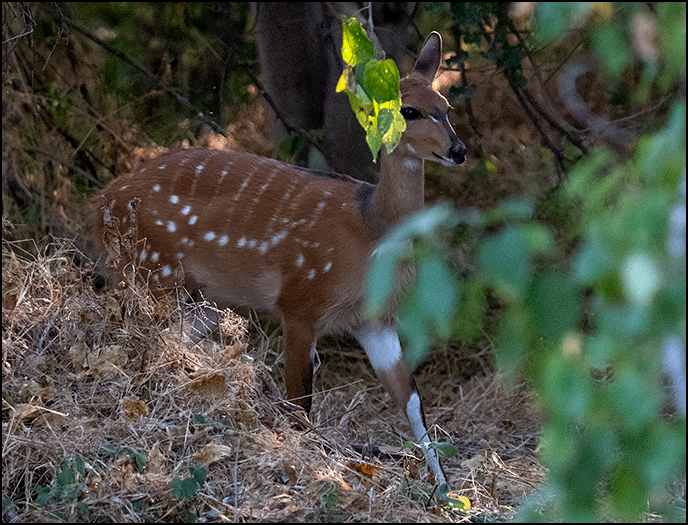
Instead, Lindey spotted movement in the shadows - a brown shape with thin white markings. A bushbuck emerged, and then another - a male and a female. They were beautifully camouflaged, their rich chestnut coats marked with delicate white stripes and spots. They moved with a quiet, careful elegance. We’d seen bushbucks at lodges before, but never out in the wild like this. They stepped into view like they knew they were giving us a special show.
We realized we hadn’t seen a single elephant or hippo all day - unusual for Moremi - though giraffes had been plentiful. We paused to watch a pair of jackals hunting, then headed back to check on the lions.
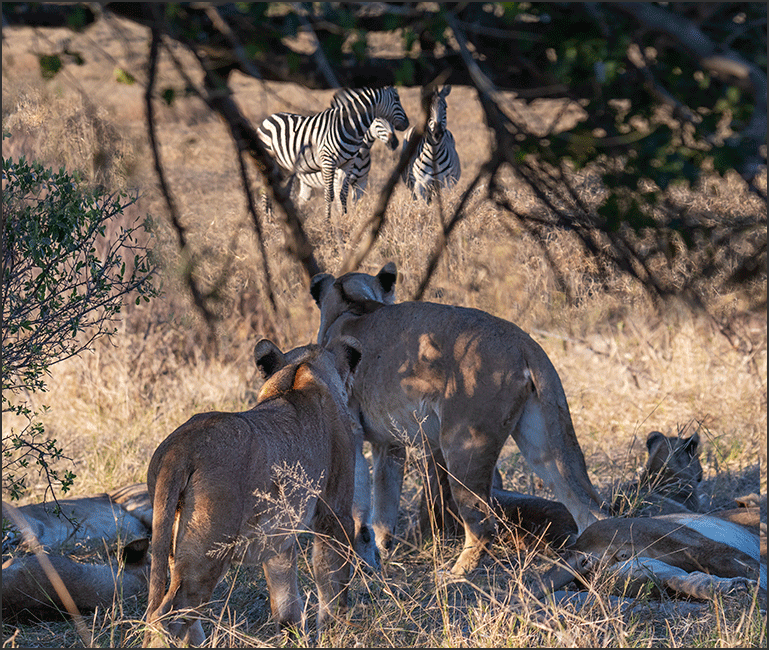
The pride was still sleeping under the same tree, even the male now nestled close. A few yawns and stretches, but no real sign of movement. Several lionesses watched a group of zebras from the shade; the zebras had no idea they were being observed. Gee said the lions would hunt them later.
The sky was darkening, and we watched the sun set on our way back to camp. Zebras faded into the half-light, and a jackal crossed the plain.
Back at camp, Jineen hurried to retrieve her trail camera from the washbasin where we’d fastened it the night before. We were eager to see what might have passed by. Lions? Zebras? Or perhaps a twenty pound red-eyed venomous rat? The anticipation was almost as good as the sightings themselves. The photos showed a lioness walking right past our tent, as well as hyenas and a honey badger.
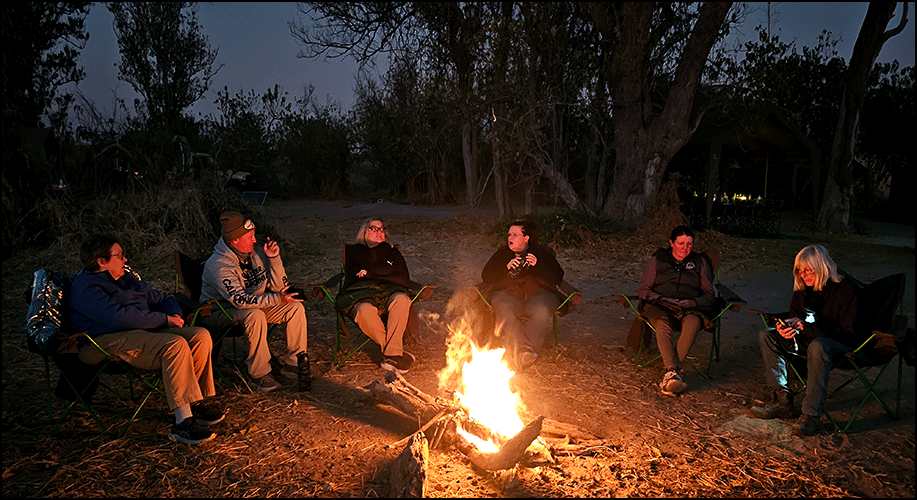
We sat around the fire as usual, sipping our drinks and recounting the day’s best sightings. There was no debate about the highlight -- Independence, the newborn giraffe, had captured all our hearts. The glow of the flames, the soft night sounds, and the shared wonder of what we’d witnessed made the evening extra special. It felt like the kind of night we’d remember forever.
Soon Mosa appeared to announce dinner - yep, yep, yep, - and we made our way to the table. The guys had outdone themselves: our napkins had been folded into elaborate bird shapes - elegant cranes with pointed beaks and outstretched wings, poised to take flight. Another quiet reminder of how much care and creativity went into this camp.
Mosa served a wonderful soup, and we ate by lantern light. During dinner we heard a Scops owl calling and jackals yipping. Then a harsh, fierce cry echoed across the plain - something that sounded like a new and terrifying predator. Gee explained it was the impalas’ rutting call. We agreed it was unnecessarily dramatic for an antelope - it sounded like something that should belong to a creature with fangs.
When I returned to my tent, I scanned the plain with my high‑beam flashlight. Pale whitish‑green eyes moved up and down - zebras grazing. Then several pairs of bright green eyes flickered - surely hyenas. I looked for the telltale yellow eyes of lions but saw none.
In the night, I heard hyenas, lions, and zebras again. In the early hours, something small but loud shuffled around outside our tent flap. A honey badger? A civet? Or perhaps Amanda’s rat, returning to finish what it had started. I pulled the blankets up to my chin, just in case.
**
No rodents were harmed during the making
or reenactment of this safari experience.
~
Continued
on next page ~
Africa 2025 Journal Pages:
1
2
3
4
5
6
7
8
9
10
11
12
13
14
15
16
|