|
Africa 2025 Journal Pages:
1
2
3
4
5
6
7
8
9
10
11
12
13
14
15
16
July 5
Our last full day began with a sad awareness that time was running short, even as the bush felt full of promise. The morning light spread softly across the Xini wetlands, touching the palms, the grasses, and the distant shapes of grazing animals as if to remind us to savor every moment. After all we had seen - lions, leopards, newborn giraffes, and even Amanda’s infamous rat - it was hard to imagine what more the bush could offer. But this is Africa, and anything can happen - the place has a way of surprising you just when you think you’ve seen it all.
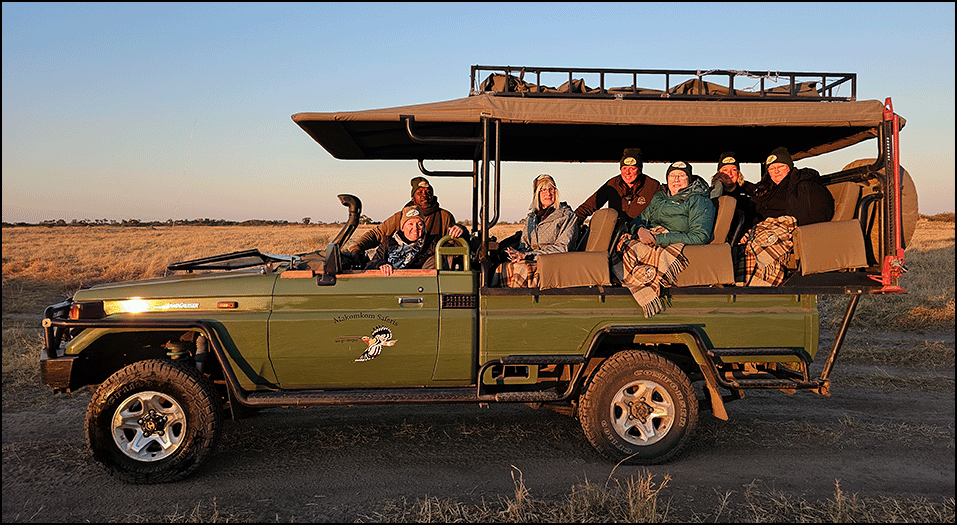
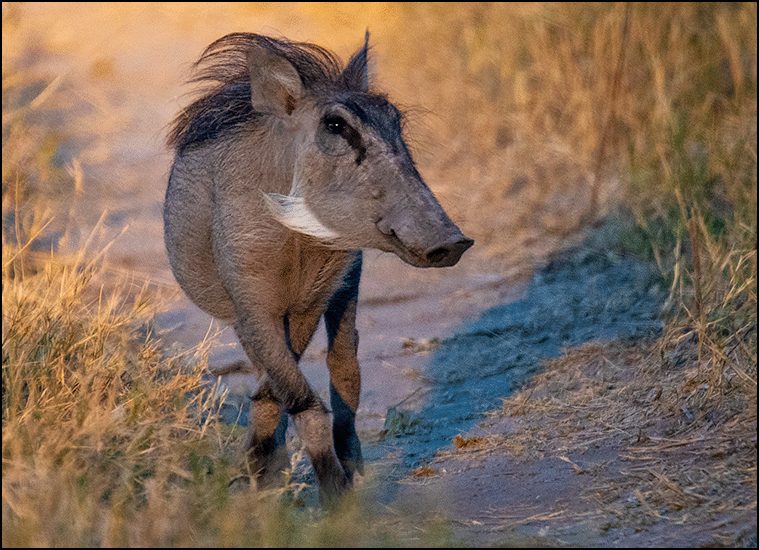
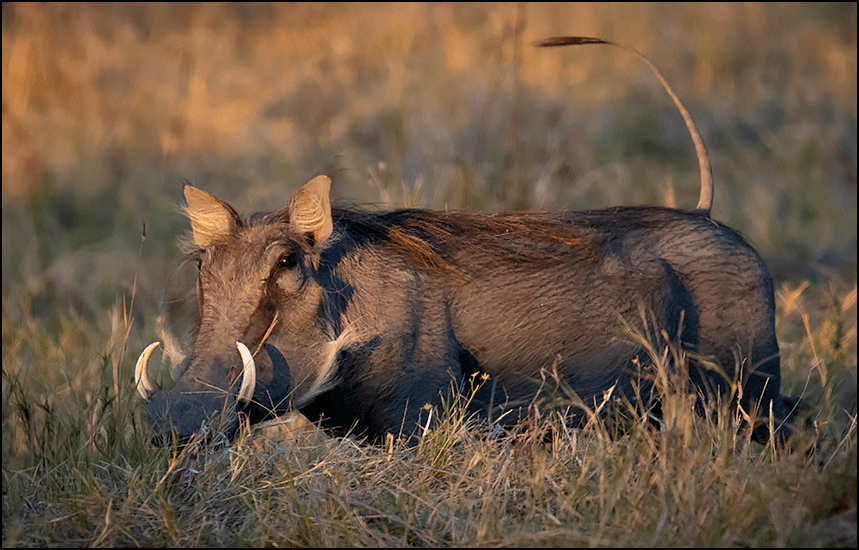
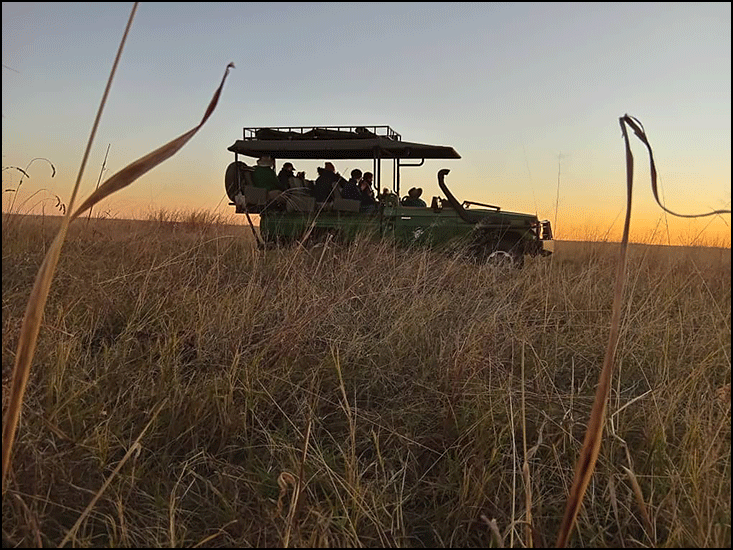
We were out again at seven. The early dawn light was soft and cool, and we stopped on the plain just outside camp to take a photo of all of us in the vehicle. A warthog stood alone on the plain. He looked mildly offended that we’d interrupted his morning.
Then he started moving, nimbly side-stepping down the path like a
dressage horse doing a half-pass.
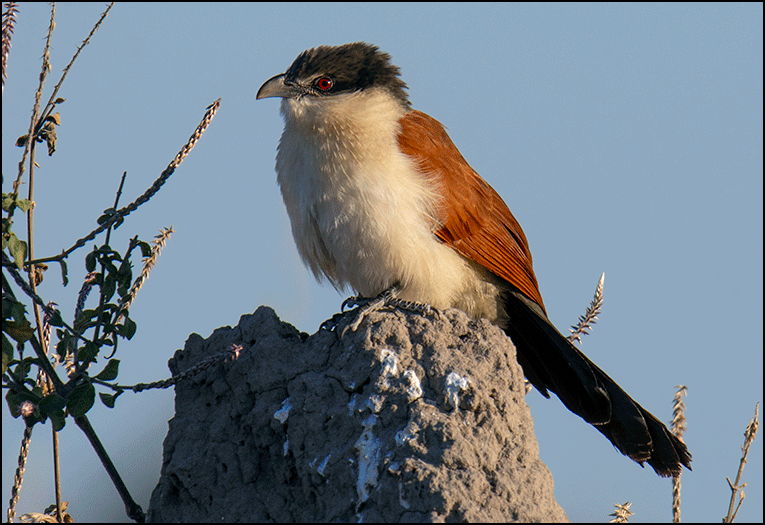
The plain was waking up around us. The morning felt like a parade of birds, each taking its turn onstage. A Senegal coucal sat atop a termite mound, his chestnut wings gleaming in the sun. Gee pointed out a tiny bird in the road - a quail finch - which looked exactly like its name suggested: a miniature finch with the coloring of a quail. Moments later we saw an actual quail, a beautifully patterned Harlequin quail. A hooded vulture watched us from the top of a dead tree, watchful and darkly dignified.
Another mother francolin appeared with her brood of chicks - we had never seen so many francolin families on any trip before. These babies seemed cold; they kept trying to wedge themselves beneath their mother’s wings for warmth.
As we moved through the woodlands, an elephant mother and her calf hurried across the road in front of us. Their footsteps thudded softly across the sand, and the calf’s ears flapped in quick, uneven bursts. These elephants were a welcome sight after seeing none the day before.
Gee spotted fresh leopard tracks, a female, superimposed over elephant prints. He pointed out the side‑to‑side marks where the elephant had dragged its trunk while walking. He explained that elephants sometimes drag their trunks when they’re sleeping on the move, and if the trunk brushes against bushes, it wakes them and keeps them on the road. I wasn’t entirely convinced - every now and then I suspect Gee tosses out something outrageous just to see if we’ll swallow it whole. His talent for delivering improbable information with absolute authority remains unmatched. (I am still not sure if that was a hippo or a rock, all those years ago in Savuti . . .)
He tracked the leopardess along the road, following her prints as they wandered off into the grass and then returned to the track again. Many animals prefer walking on the vehicle roads - far easier than pushing through tall grass and brush.
We never found the leopard, but we did come across a long, stringy piece of antelope hide hanging from a high branch - the remains of some leopard’s earlier meal. The grisly strip swayed slightly in the breeze, as though recalling the cat who left it behind. It was a small reminder of how much happens unseen in the bush. Eventually we gave up on the leopardess and headed out across the plain to see what else the morning held.
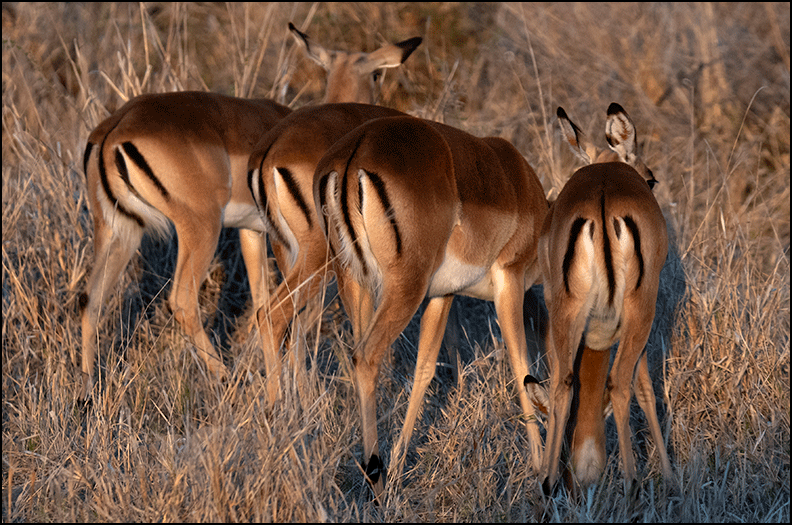
Impalas of course, their black and white markings vivid against their
two-tone chestnut coats. Wildebeests were there too, their dark bodies shining in the morning sun. Everything looked freshly painted. I had been noticing that all the animals’ colors seemed more vibrant in Xini - as if even the light itself was richer here. Even the shadows seemed edged with gold.
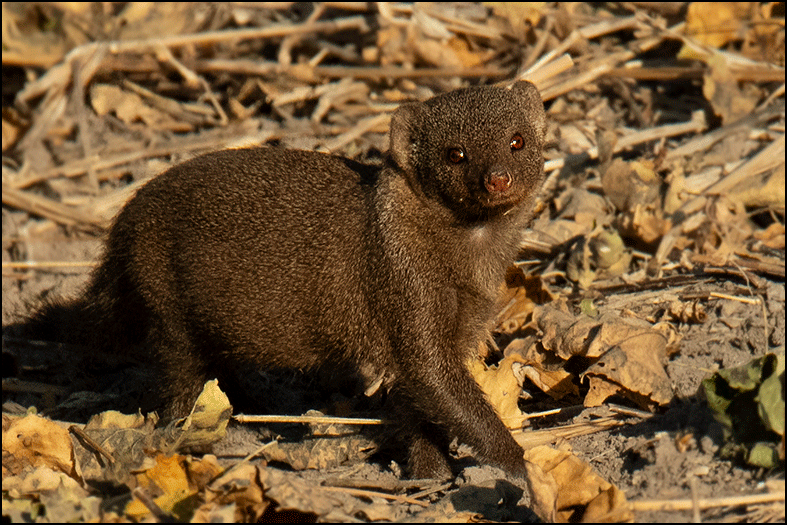
A slender mongoose darted across the road, a streak of russet shadow. He paused just long enough to give us a bold, appraising stare - bright eyes, sharp little face - as if weighing whether we were worth his time. Then, with a flick of his tail, he vanished into the underbrush.
A tawny eagle perched atop a tree, looking out over his domain. His feathers glowed bronze in the morning light. His only motion was the slow, deliberate swivel of his head as he scanned for movement below.
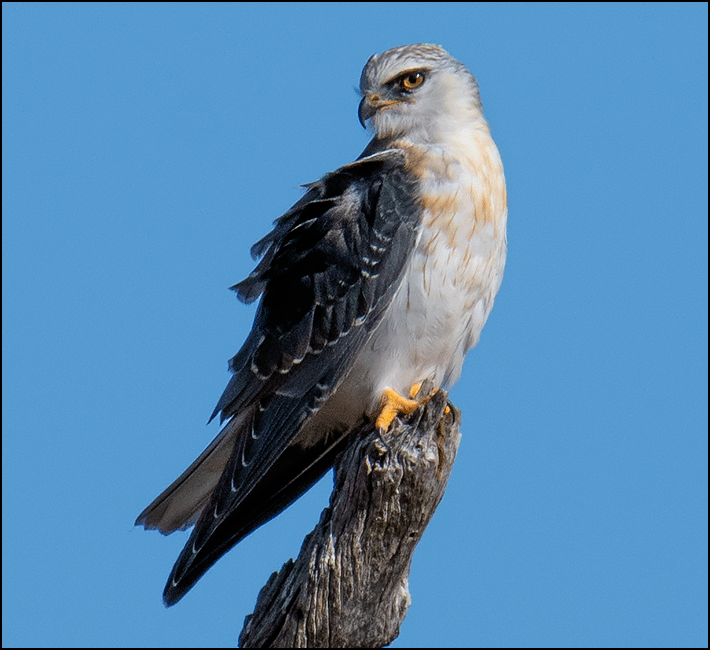
A few minutes later, a black-shouldered kite appeared on a treetop. He was absolutely stunning: dark grey barred wings, a pale head and chest with faint chestnut markings, and clear amber eyes that seemed almost too bright for such a small raptor. It was as if he were carved from porcelain and fire - delicate, fierce, and impossibly beautiful.
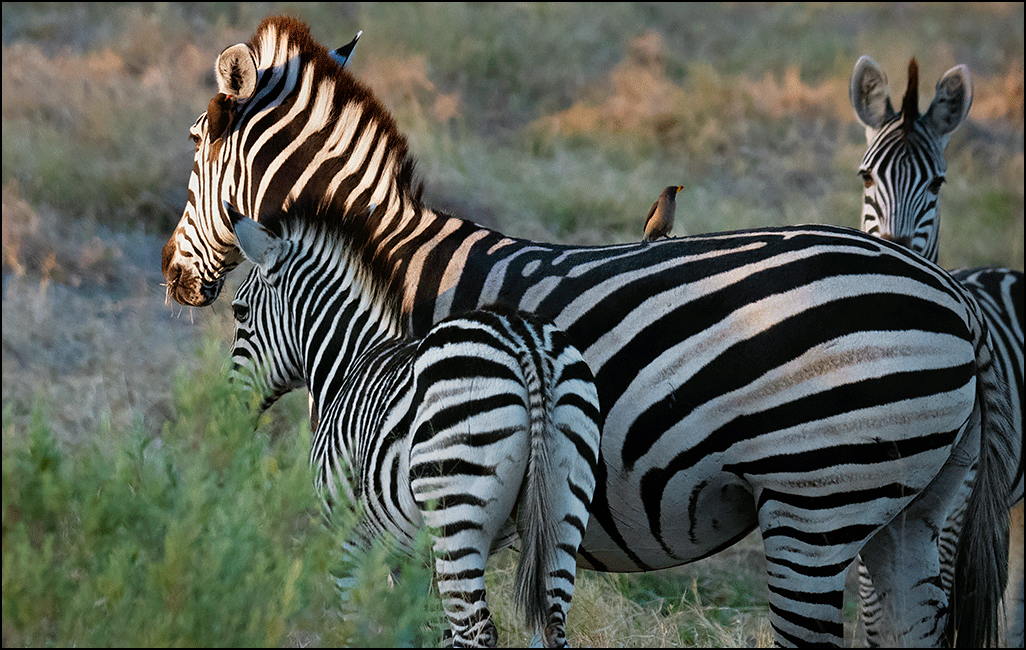
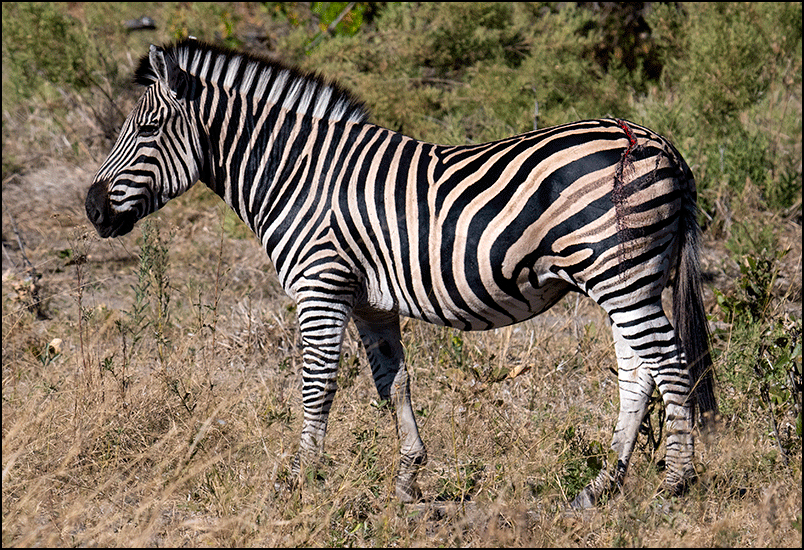
A small herd of zebras were grazing in the morning sun; one mare had a long, nasty wound on her hindquarters, likely from a lion’s claws. She’d had a narrow escape, but the
wound would heal and she would be fine; we’d seen worse scars on other zebras - survival stories were written on every hide.
Gee paused to pick up a hippo tusk lying in the road and passed it around for us to see and touch. It felt heavy with the weight of the animal it once belonged to. It was like holding a small piece of the Delta’s history. I wished I could smuggle it home, but of course that was impossible.
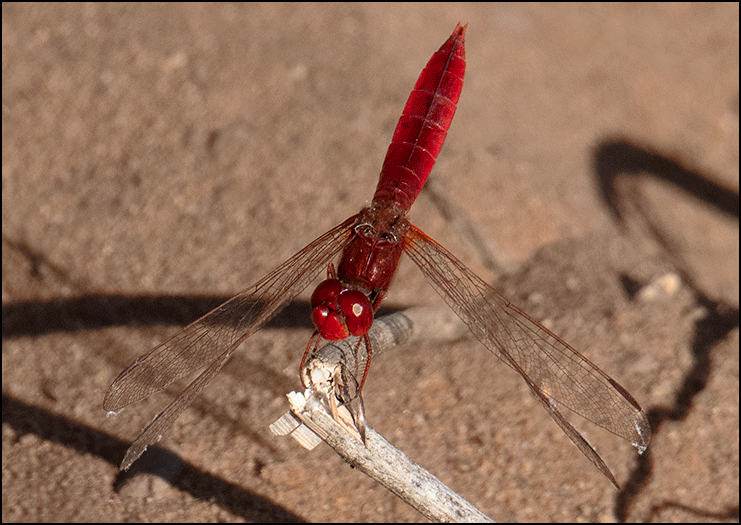
Our morning tea break was under the trees at the edge of the plain, near the Xini Lagoon. Dragonflies flickered in and out of the sunlight - bright red bodies with transparent red wings like lace. The guidebook identified them as red-veined dropwings. They hovered like tiny fairies, magical in their own way.
Just beyond our tea spot stood a large sausage tree with a sign reading Harab #14, which I assumed was a location marker. Beneath it there lay huge vertebrae from some long‑dead creature - we went over to investigate, trying to decide if the bones were giraffe or elephant.
When we looked up, we noticed a brass memorial plaque fastened high on the trunk, close to twenty feet up. With binoculars we could read it:
Boundless Explorer
Through wild lands
From flood to dust
Forever chasing
Jim Haskins
1979–2020
What a beautiful tribute. There was something profoundly moving about finding his name here, in the quiet shade of the tree he must have loved. I wanted to know more. I also wanted to live like that.
Later I learned that Jim Haskins was a much‑loved safari guide and tour operator who passed away in 2020. His friends and family placed the plaque here, in the area he loved most. It felt right that his memory lived here, in a place that still belonged to the wild.
“Let’s get to the river,” Gee said.
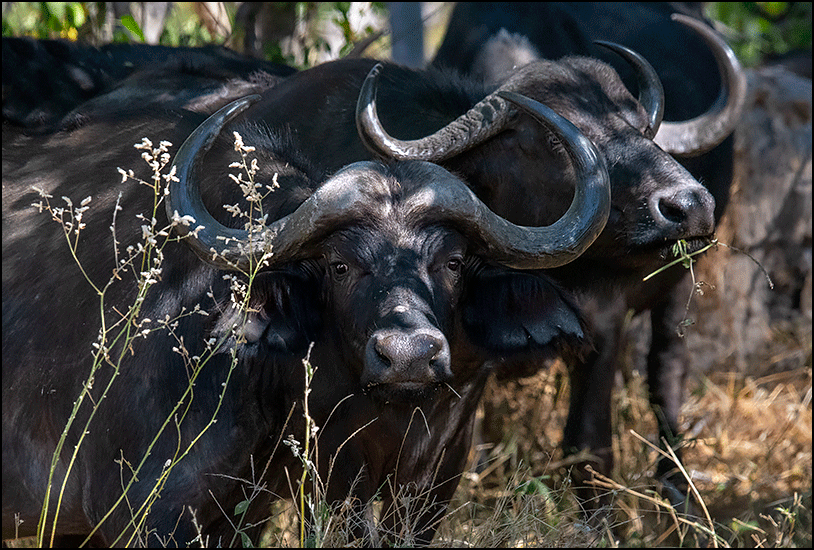
As we entered the woodlands, we came upon a massive buffalo herd among the trees — many hundreds of them. When we emerged from the woods into the open field of tall yellow grass, we saw that the herd kept going, stretching across the plain and toward the river. A quick count put at least 250 near the water, and that was just a small part of the strung out herd we had passed - we estimated that altogether there were more than 700 of them. I was astonished; I had never seen buffalo in such numbers. They were quiet, with some grazing, some lying down, and some simply milling about. We watched a calf walking behind its mother, nursing from her as they moved. The low rumble of their movements carried across the plain like distant thunder, the warm dusty scent of them drifting on the air.
We left the herd behind and followed the track toward the river, the landscape shifting again as we approached the water. It felt like stepping into a different world. Water, green grass, lush plants, waterfowl everywhere. Just days ago this had been dry savannah, but now, with the Delta spreading, the land had transformed. The whole scene shimmered with new life.
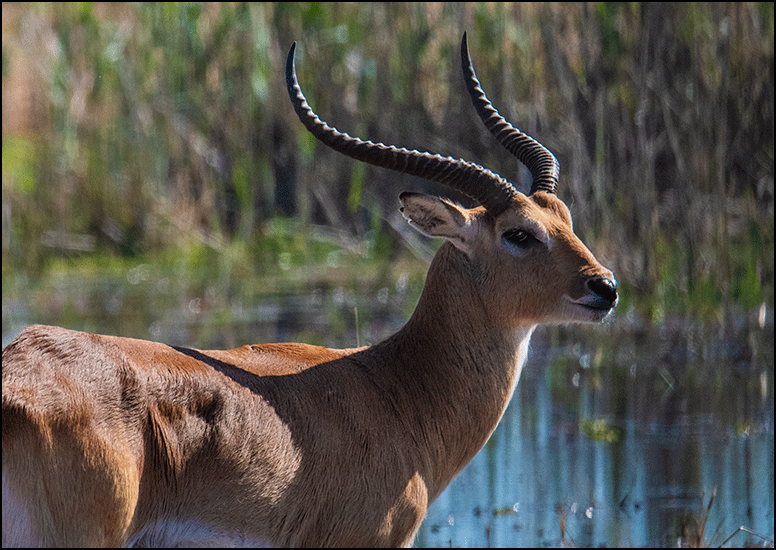
The whole riverbank was alive with movement. Grey herons, a slaty egret, blacksmith plovers, Egyptian geese – they were all feeding along the bright new water channels. Sacred ibis with snowy wings edged in black lace, glossy ibis shimmering with iridescent colors, black‑winged stilts wading delicately, tiny Hottentot teals paddling like toy ducks. A handsome lechwe buck stood in the reeds, his spiraling horns catching the light.
We went back to camp for lunch. Once again, the squirrels had wreaked havoc on Jineen’s lovely table centerpiece - the one she’d made with guineafowl feathers and dagga balls. Those little vandals had no respect for art.
After lunch we gathered to sing Happy Birthday to Dawson, Amber and Lindey’s young son. Amber recorded it so she could email it home once we had Wi-Fi again. Lindey and Amber were sad to have missed his birthday, so they were happy to be able to send a piece of the Delta back across the world to him - a small bridge between two very different worlds.
In the afternoon, we drove toward the tongue of the river, which had continued to creep farther each day. On the way we passed a fairly new aardvark hole - we see a lot of these holes, though never the aardvark itself, as they are nocturnal and very shy. Gee explained that if wild dogs chase an aardvark, it can dig down astonishingly fast and seal the tunnel behind itself. If a dog follows it underground, the aardvark can seal the tunnel behind the dog as well - not a pleasant fate. Nature is full of surprises. Gee has a knack for making aardvark survival tactics sound like bush folklore.
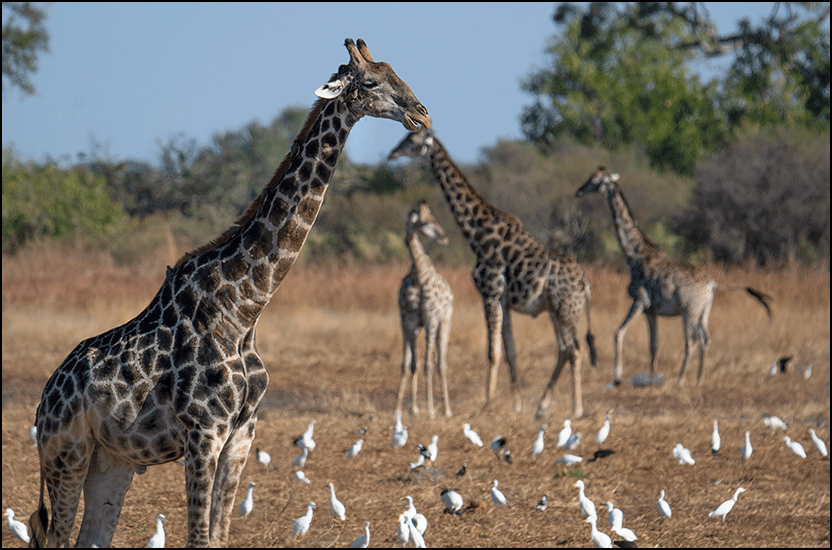
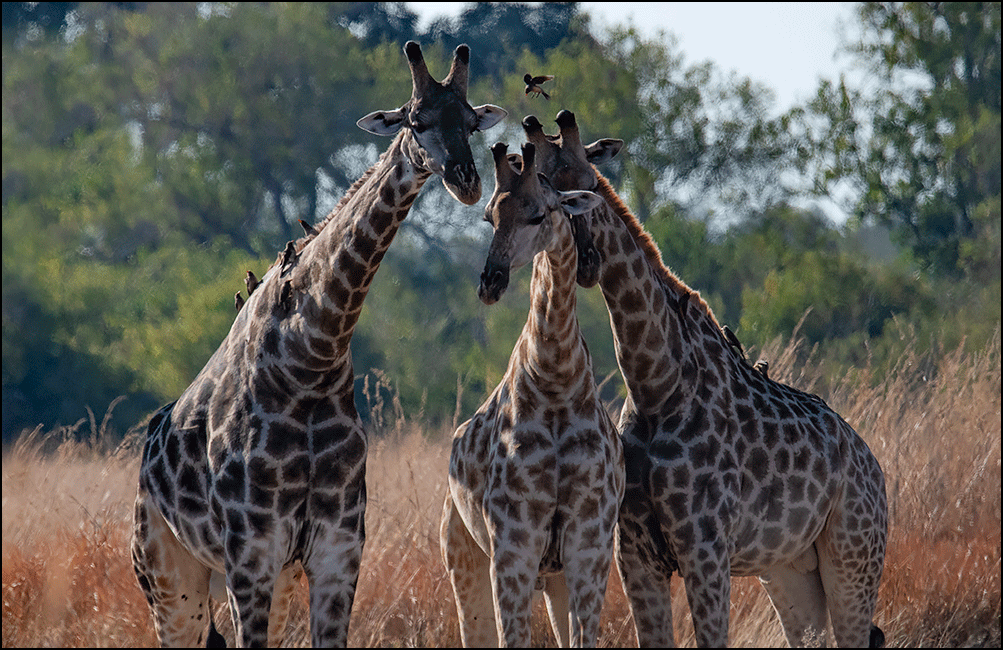
Near the river, a journey of giraffes walked among the egrets and geese. Hundreds of
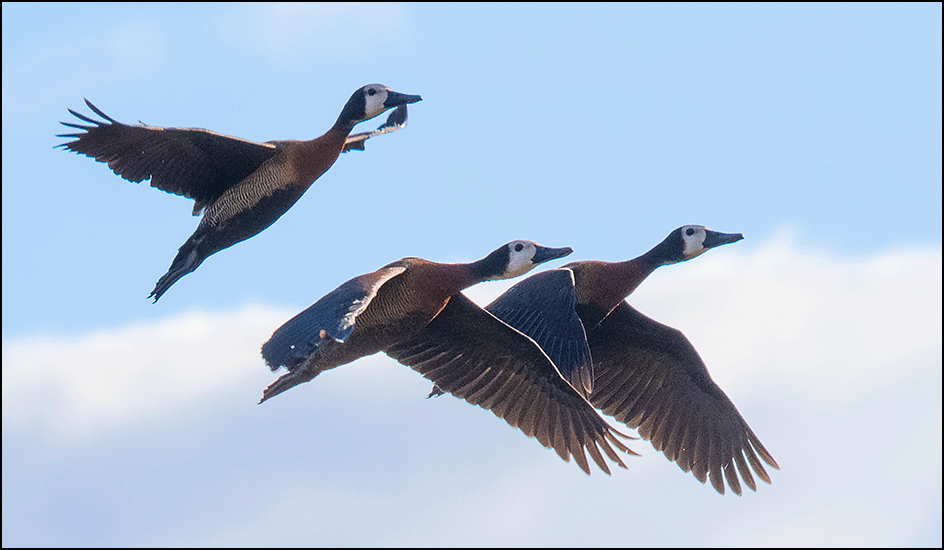
white-faced whistling ducks flew overhead, taunting me as I tried - and mostly failed - to get sharp photos of them in flight. An
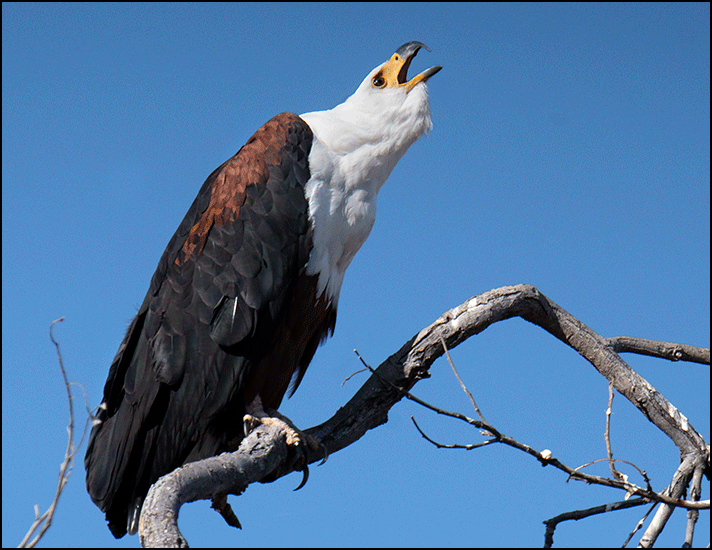
emerald-spotted wood dove perched nearby, its iridescent green patch flashing in the sun. Marabou storks stood like undertakers, and a fish eagle tilted its head back, twisted its neck, and then snapped forward to unleash its mournful cry across the water. It echoed like a call from another age.
As we followed the track along the river, a honey badger hurried across the road in front of us, moving with a purposeful, rolling gait, as if he was on his way to settle a score. His coarse fur rippled as he moved, and he glanced at us with brief, disdainful interest - a master of the dramatic exit. This was our best honey badger sighting yet. Lindey finally got to see one; she had missed all the others. This brought our honey badger trip total up to seven, though none had lingered long.
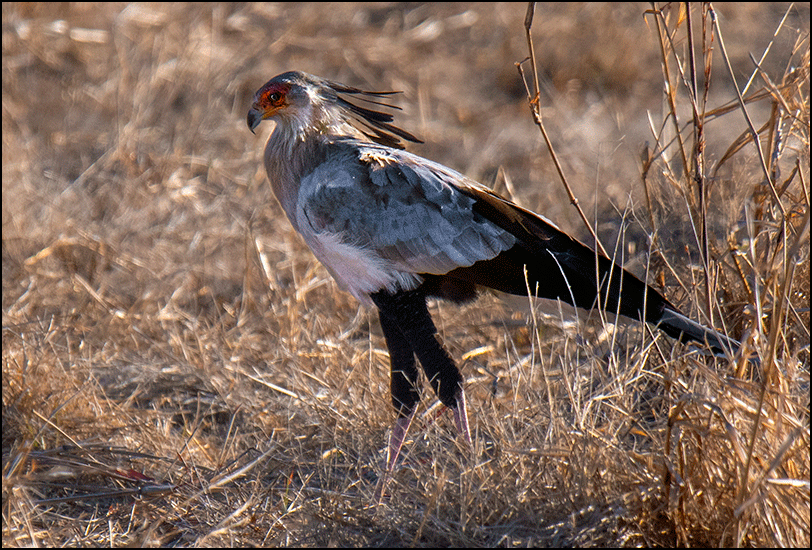
We watched hippos close to the bank, only their broad faces visible above the water, and a few shy, squat warthogs grazing nearby. A secretary bird strode through the grass, its long quills fanned out behind its head - part eagle, part chicken, entirely improbable, as if evolution had been in a playful mood.
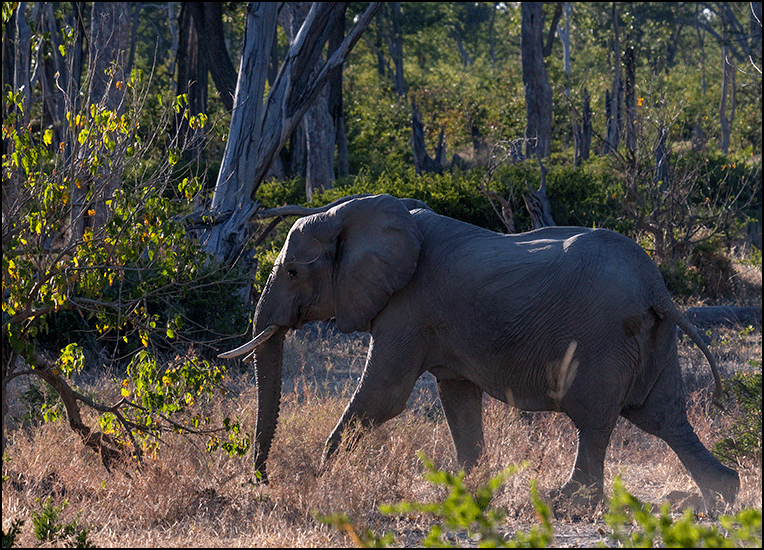
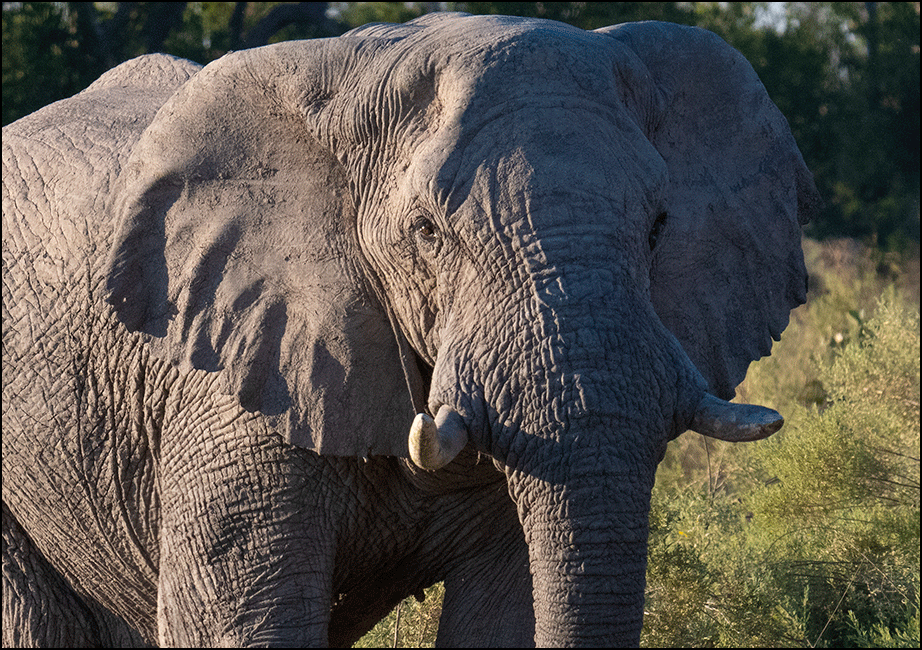
Then two magnificent bull elephants appeared, walking across the plain. As they got near, they walked straight toward us. Gee waited, ready to move quickly out of the way if needed, but the bulls went by calmly, within feet of us. They passed so close that every wrinkle, every eyelash, every crease of their trunks stood out in the golden light. Gee explained that elephants become aggressive when you encroach on their space - but if you’re there first, they usually walk around you peacefully. Unless they’re in a bad mood. These two, thankfully, were in excellent spirits.
A dwarf mongoose darted across the road. Gee stopped and waited, and sure enough, four or five more appeared. They scurried everywhere, climbing logs, popping in and out of cover. A mongoose party - we were glad we’d attended. They seemed to be having a better social life than we were.
Suddenly we heard elephants screaming and trumpeting. At first we weren’t sure what was happening, but Gee said a male must be in
musth, chasing a female. This surge of hormones makes bulls far more aggressive, and they’ll pursue a female in estrus for miles. Several males would be pursuing her, he said, ‘with their fifth leg out.’ Lindey asked, with feigned innocence, if that made them faster. Gee just laughed and said the losers get very aggressive. Even from afar, it was clear the elephants were having a very dramatic afternoon.
We saw a pair of double-banded sandgrouse, several kori bustards, and five or six ground hornbills striding through the grass. We had a good warthog photo op - one facing us in the evening light. We could see every wiry bristle, every curve of his tusks, the pale whiskers jutting from his cheeks. He held perfectly still, confident that the light was working in his favor.
Tsessebes, zebras, and a male ostrich rounded out the day. All of them seemed to richly reflect the glow of the evening light, especially vibrant and beautiful. It was as if the animals themselves had come out to pay their respects on our last evening. We watched the sunset as we drove back to camp. The sky burned orange and gold, a last blaze before night took over.
The stars and the Milky Way shone brilliant overhead, competing with the moonlight. Dinner was wonderful as always, but bittersweet. I couldn’t help feeling a bit emotional - it had been such an amazing trip, and I wasn’t ready for it to end. We had grown close to the staff, and closer still to Gee. It struck me how rare it is to feel so completely at home so far from home.
And our group of seven had been such fun; they were all great traveling companions, each with a deep love of animals and a terrific sense of humor. Together we’d shared exciting adventures, amazing wildlife, incredible beauty, and moments of pure wonder. The Delta had woven us together in ways we hadn’t expected. We’d created so many memories - and had so many laughs.
Oh yes, and so many limericks!
We thanked Mosa, More, and Chenaman for taking such good care of us, and gave them gifts of appreciation. And then, most of all, we thanked Gee. Over the years he has become far more than a guide - he is a friend, a teacher, and the steady center of all our African journeys.
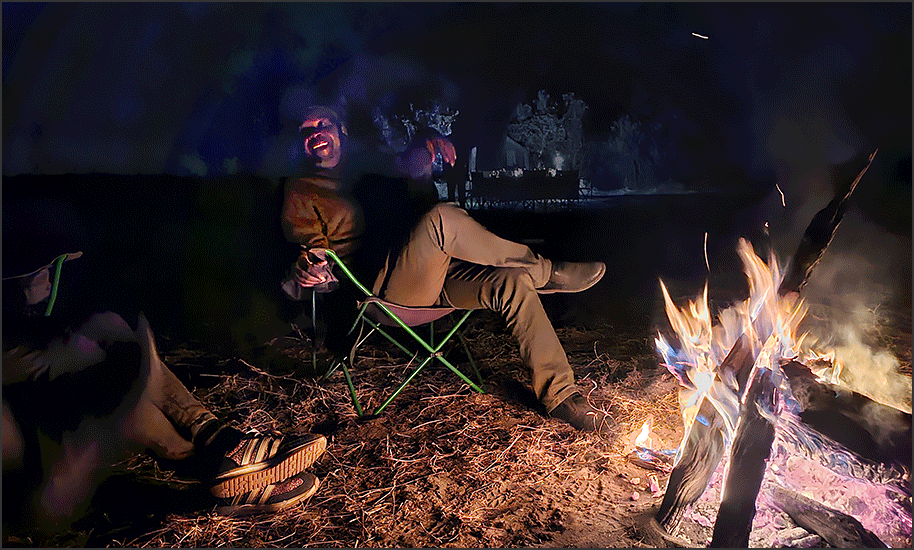
To honor Gee, it was time for one last round of limericks - this time, hopefully, good ones. After dinner, I read them aloud:
Our safari is an amazing endeavor
We are lucky our guide is so clever
He showed us wide open spaces
And secret hidden places
And the journey will change us forever
Gee showed us Botswana at
her best
We saw wildlife and nature as his guest
So much more than just a guide
We call him a friend with pride
And to know him we all are so blessed
Our journey with Gee’s near the end
The days have gone by like the wind
We are sorry to be going
But we go home knowing
That in Botswana we have a friend
It was the perfect ending to a perfect day - and to a safari we would carry with us always. Botswana had given us memories we would carry long after we left.
~
Continued
on next page ~
Africa 2025 Journal Pages:
1
2
3
4
5
6
7
8
9
10
11
12
13
14
15
16
|