|
Africa 2025 Journal Pages:
1
2
3
4
5
6
7
8
9
10
11
12
13
14
15
16
July 3
Our first full day in Moremi dawned quietly, the Xini plain shimmering in the early light. A faint chill clung to the air, and a soft haze hovered over the grasses, catching the first hints of color.
There had been a stampede in the night - we’d heard the unmistakable thunder of zebras galloping by, very close to the tents. The hoofbeats echoed across the plain, loud enough to jolt us awake. Sleep vanished instantly; nothing clears the mind like a herd of panicked zebras at full speed. For a moment we lay there listening, wondering what had sent them running.
When we climbed in the Land Cruiser and headed out to the plain, Gee pointed out fresh lion tracks stamped right over hundreds of zebra hoofprints on the road in front of camp. The lions had chased the zebras straight past us in the dark - closer than we’d realized. It was a thrilling feeling, knowing how much had happened just outside the canvas walls.
There’s a commonly used saying in medicine: “When you hear
hoofbeats, think horses, not zebras.” It’s meant to remind students to look for the common explanation before jumping to the exotic. Well… it doesn’t really apply in Africa. Here, the hoofbeats are zebras - and the explanation is usually lions. In Africa, the exotic explanation is usually the correct one.
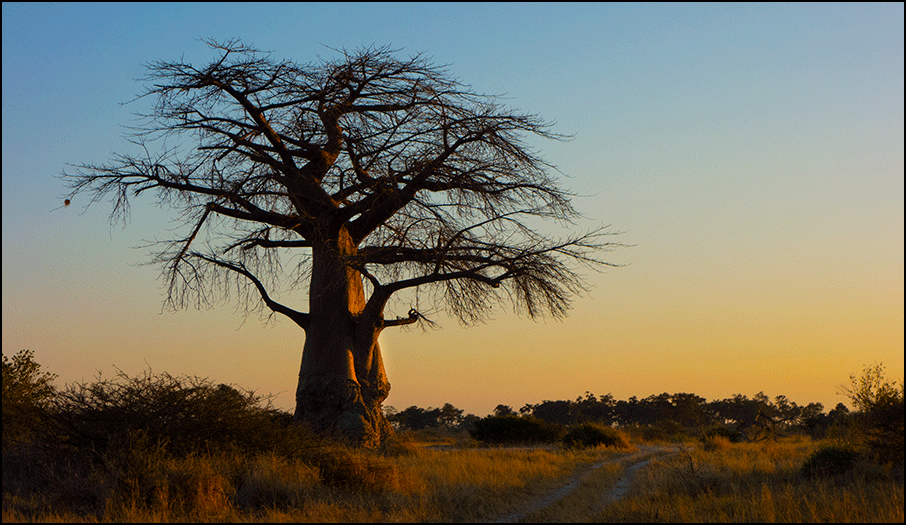
The sunrise over the open plain was soft and luminous - the horizon washed in purples, pinks, and
golds. A lone baobab stood like a sentinel, its dark silhouette rising against the pastel sky. The air warmed by the minute as the sky shifted through its palette. The whole landscape felt fresh and waiting.
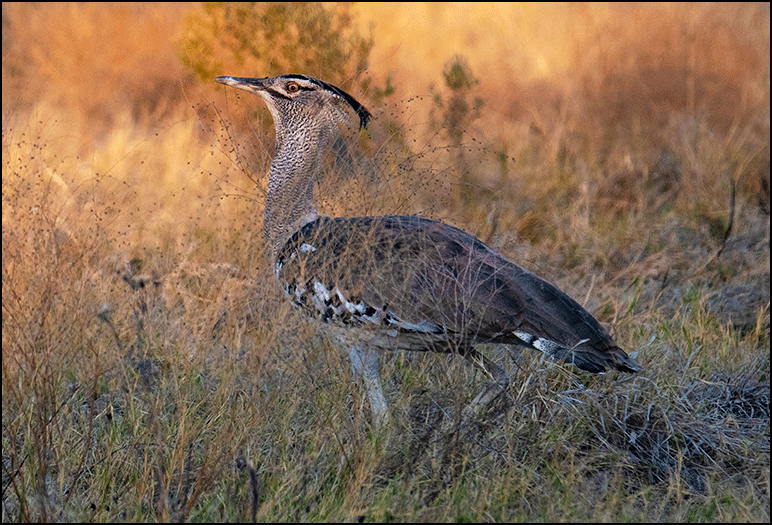
Almost immediately we came upon two kori bustards. The male was in full display, jumping, twirling, and flapping his wings in a proud, slightly ridiculous mating dance. Shafts of early light caught his feathers, warming him in a golden glow. He looked both magnificent and faintly absurd.
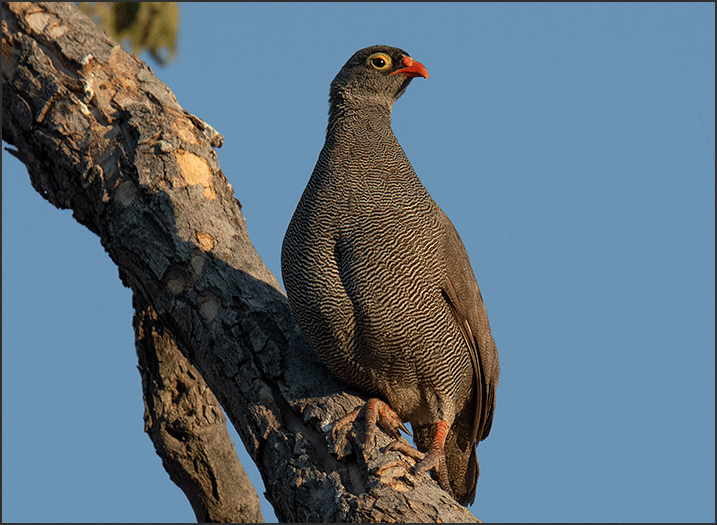
A pair of red-billed francolins perched in a tree - a rare chance to see them sitting still instead of scurrying across the road. In the good light we could appreciate how appealing they really are, like compact,
bright-eyed little hens. They seemed quite pleased with themselves.
There were impala, of course, and an ostrich moving in the distance.
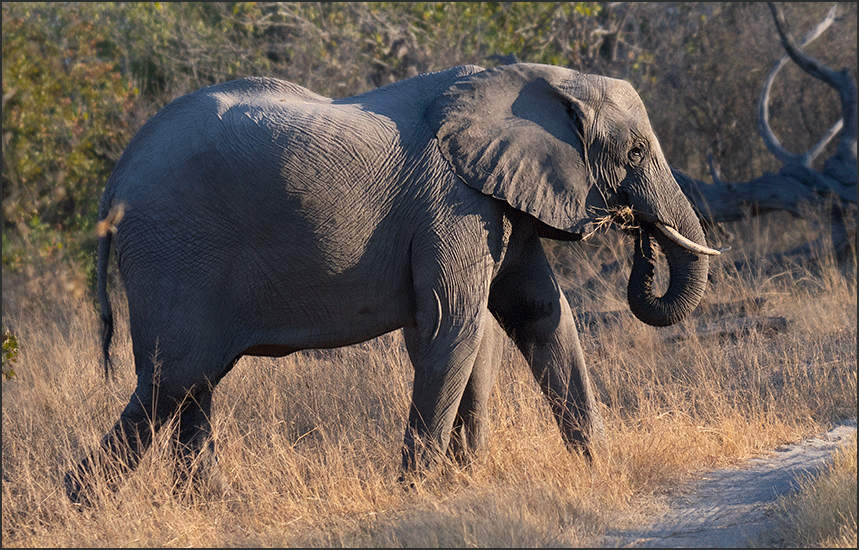
Then we came upon elephants blocking the way - a small breeding herd with two tiny calves. One of the littlest had no trunk or tail, injuries almost certainly caused by lions. Gee explained that they can manage without their trunk while they’re still nursing, but life becomes much harder once they need to feed on trees. It was hard not to feel a pang of helplessness watching him. We’d seen young elephants before who had survived losing a trunk, but none that had made it to adulthood. The herd moved protectively around the little one, shielding him from our view.
We waited quietly for the herd to move off the road. Gee reminded us that elephants in this area can be more aggressive simply because they don’t encounter many vehicles. The mothers appraised us with wary eyes.
The morning was alive with birdlife. A Dickinson’s kestrel watched us from a dead branch - a small, elegant grey raptor. A harlequin quail darted through the underbrush with a soft flutter, and Gee identified the call of a
black-crowned tchagra somewhere unseen. The air was filled with birdsong.
At the river, red lechwes splashed through the marsh, and a fish eagle perched proudly in a treetop, his white head bright in the sunshine, and a gleam of light in his eye. Gee was tracking the lions from the night before, following their prints along the water’s edge.
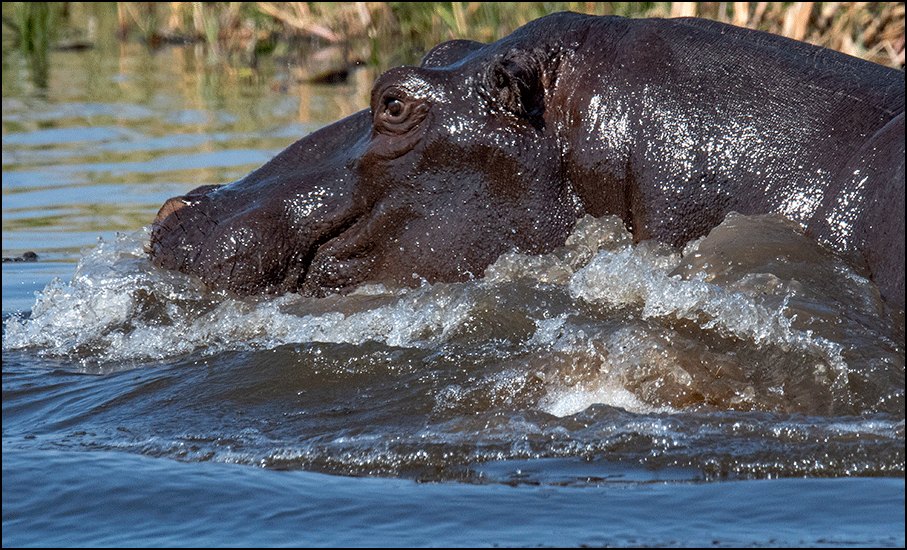
A raft of hippos - at least two dozen - clustered together in the water. Two big males were putting on a show as we arrived, plunging and splashing, pushing up great waves of water, with spray going everywhere amid deep honks and chortles. The air smelled faintly of churned mud and riverweed. The rest of the pod rested quietly, just eyes and nostrils above the surface. We could feel the vibration of their bellows across the water. It was hippo theater at its finest.
As we followed the newly arrived river, we watched the dry plain transform into a lush sanctuary. The brown grasses seemed to turn green before our eyes. We passed the spot we’d named Pelican Pond on a previous adventure - dry for now, the water having not yet reached it. We drove through a thick stand of
cotton-wool grass, its stiff red stalks glowing in the sun. Gee noted it would be a perfect place for lions to hide. We all sat up a little straighter.
The river opened into a wide lagoon. Hippos bobbed in the distance, and crocodiles drifted past silently - sinister shadows, sudden death for the unwary.
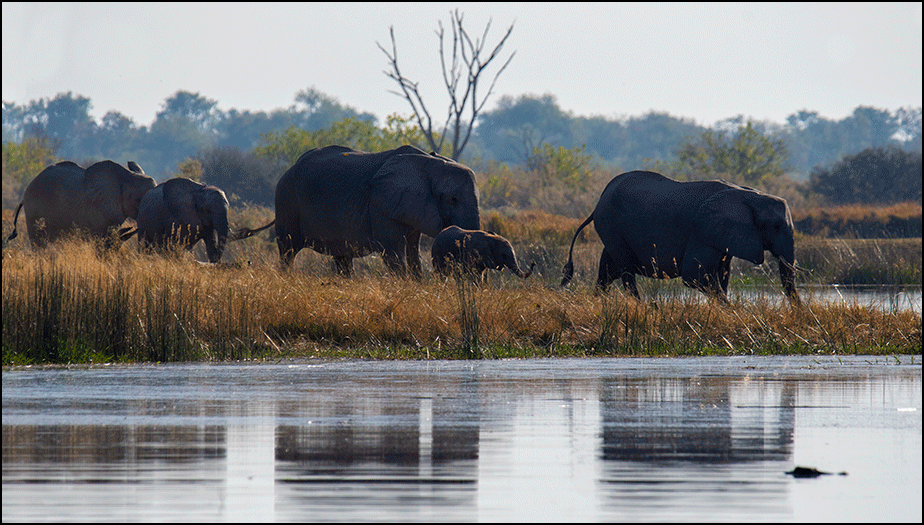
Ahead, a long chain of elephants crossed the river, silhouetted against the sun. They descended, single file, to a narrow spit of land, then waded through belly‑deep water, the mothers guiding their calves. Their movements were careful and deliberate, almost ceremonial. Watching them felt like witnessing an ancient ritual.
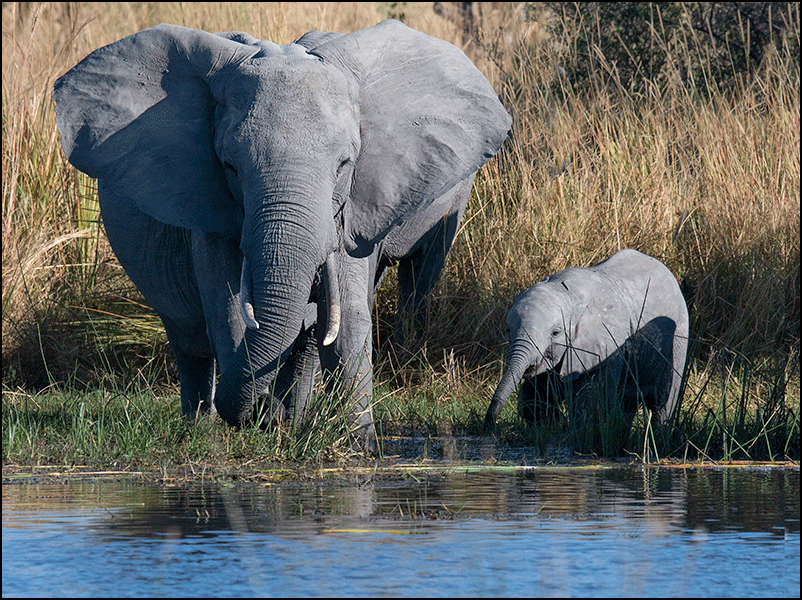
No sooner had they disappeared than another breeding herd appeared on the opposite bank. They came down quietly to drink - six adults and two small babies - standing side by side at the water’s edge. We watched them for a long time, hoping they might cross toward us, but when they’d had their fill they turned and melted silently back into the trees. The forest swallowed them without a sound.
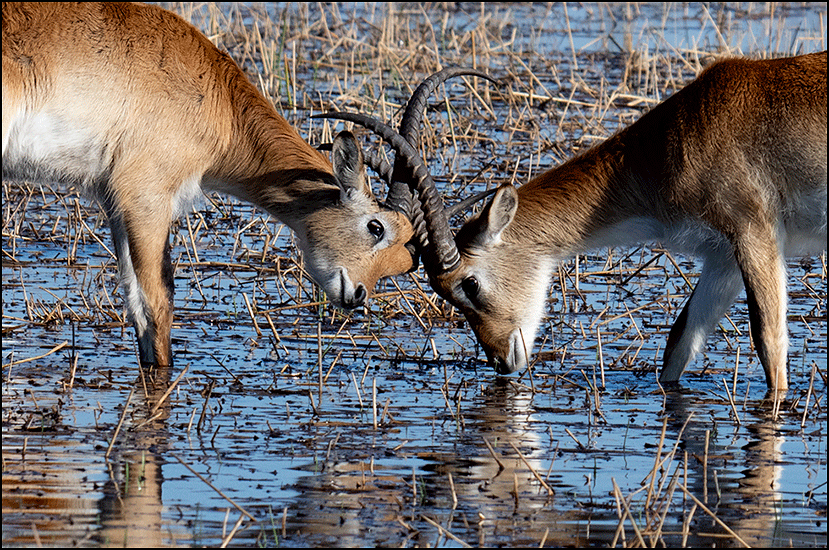
We had tea with the lechwes on a wide open stretch of floodplain. The water-loving antelopes grazed in the shallow new lagoons, and a few younger males were
mock-fighting in the water. The air smelled of wet grass and sunlight.
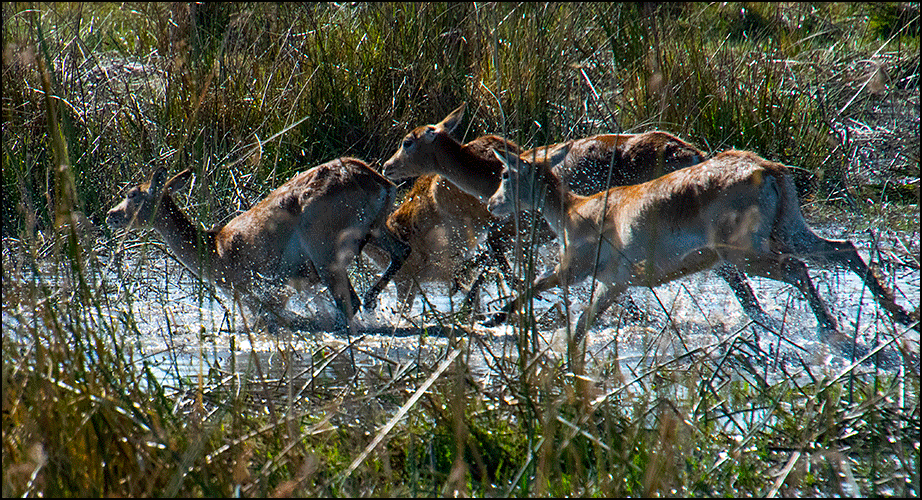
As we were ready to leave, a small group of the lechwes took off running through the water, their hindquarters kicking up higher than their shoulders as they crossed the channels, silver water droplets flying up around them, glistening in the sun. The breeze carried the splashing sound as they bounded through the water. They looked like creatures invented for this landscape - which indeed, I reckon they were.
This was paradise. We loved the Xini wetlands - quiet, remote, and full of possibility. Anything could be living here. It was the Delta at its most generous and secretive.
A shiny, wet hippo hurried across a spit of land, moving from one pool to another. An old bull elephant walked through the marsh, framed in a beautiful scene of reeds and water. Then suddenly there were over sixty elephants in the road ahead. We didn’t argue - we detoured. Some traffic jams are
non-negotiable.
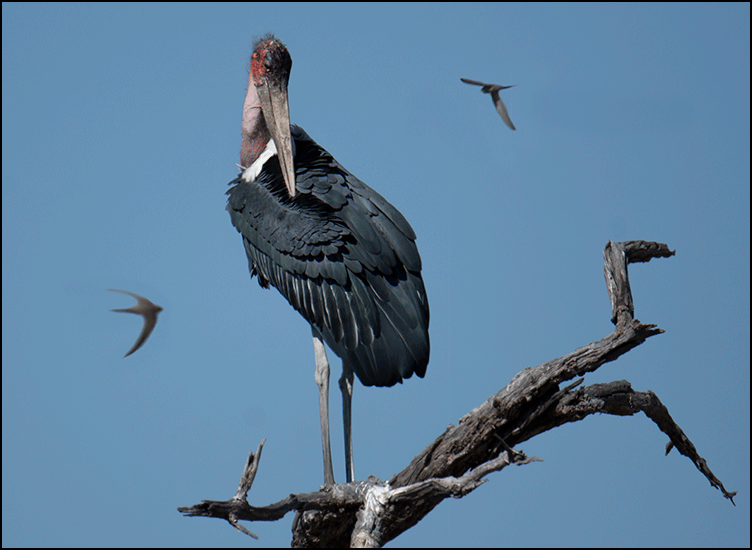
A marabou stork hunched in a treetop, looking every bit the undertaker bird, as they are nicknamed.
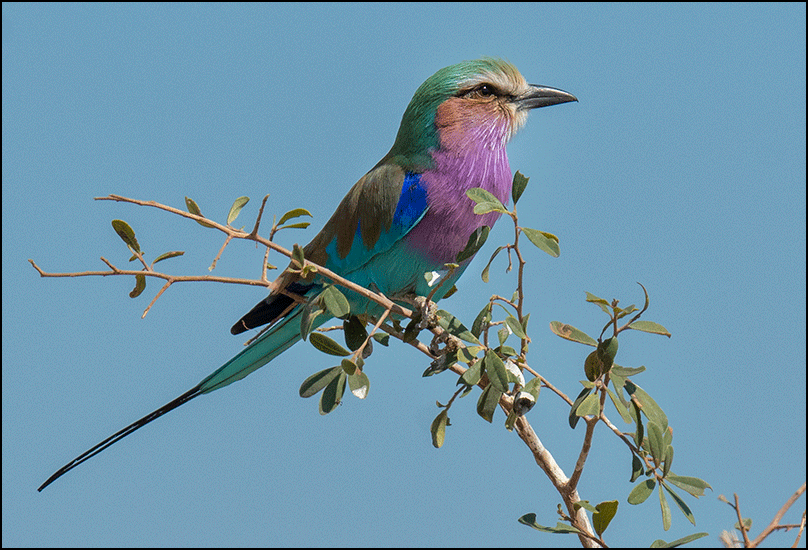
A lilac-breasted roller posed beautifully for us - perfect for sitting photos, though he declined to fly.
It was quite a comparison of contrasts - Africa's ugliest bird,
alongside arguably one of the most beautiful.
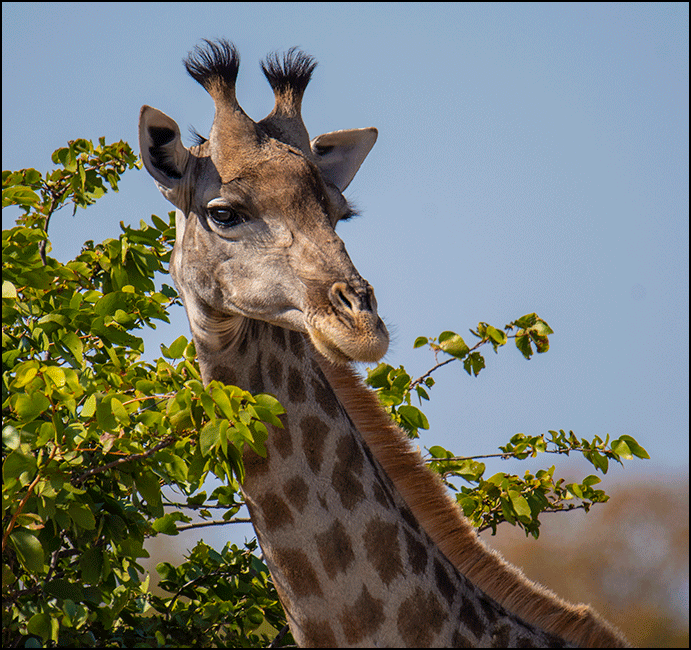
Six giraffes appeared- they watched us with mild curiosity. They allowed us to get quite close – in fact a young female wandered right up to the vehicle, browsing leaves just a few feet away, her face refined and gentle. We could hear her chewing, slow and deliberate, the soft crackle of leaves surprisingly loud at such close range. Up close she felt almost otherworldly - all long lashes and quiet grace. She gave us a long, thoughtful look, as if deciding whether we were worth noticing at all, then went right back to her lunch. It felt like a blessing, being allowed into her close circle.
We continued to see more of everything - more impalas, kudus, elephants, and giraffes. There were warthogs in the distance and zebras close by. But no lions.
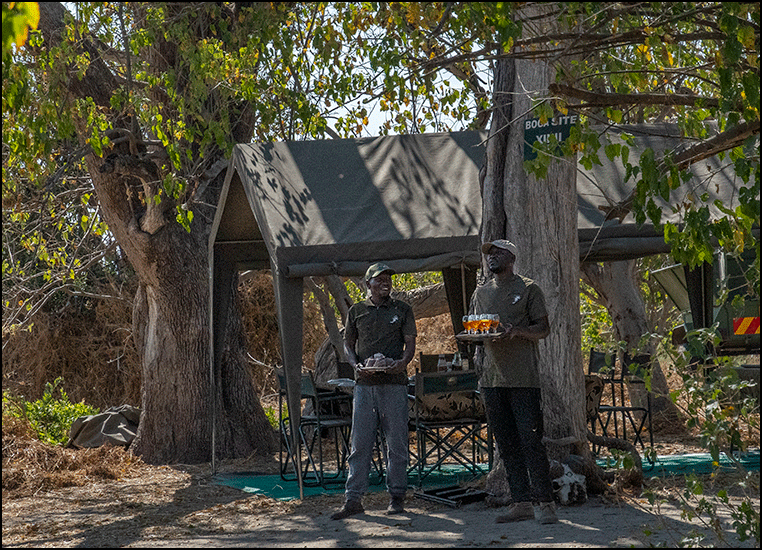
Gee had circled around and crisscrossed the plain searching for the lions. We had covered a lot of distance, and frankly did not have any idea where we were or how to get back. Eventually we crossed a wide plain toward a small island of trees, with a tall palm rising above them. And there, we suddenly realized, was our camp, tents stretched along the grove’s edge. Gee, of course, had known exactly where we were the whole time. More and Chenaman were waiting for us with the cool washcloths and drinks. It was like an oasis in paradise.
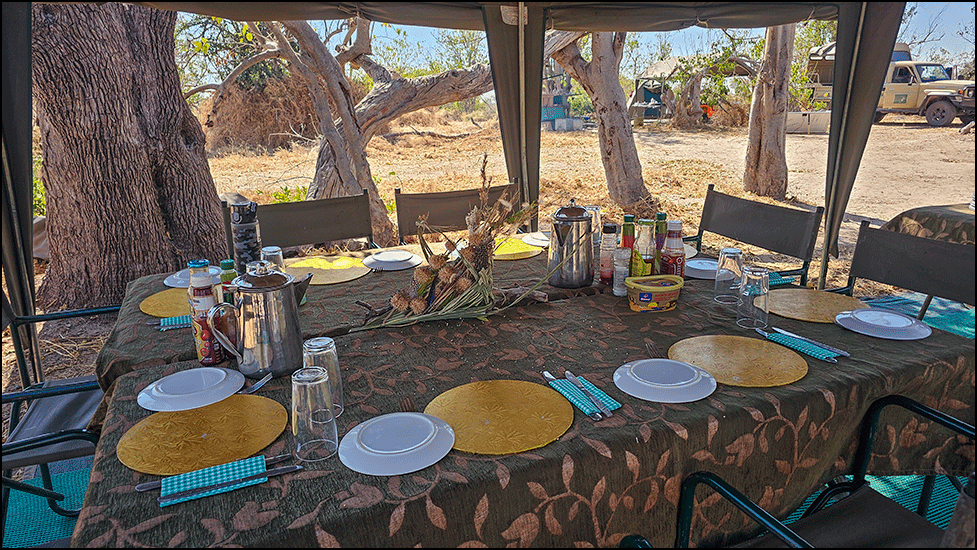
We relaxed before lunch. Tree squirrels had decimated Jineen’s centerpiece, so she set about rebuilding it. We watched a lizard climbing the big tree beside the dining tent. Camp life had its own quiet rhythm, in its own way just as captivating as the drives.
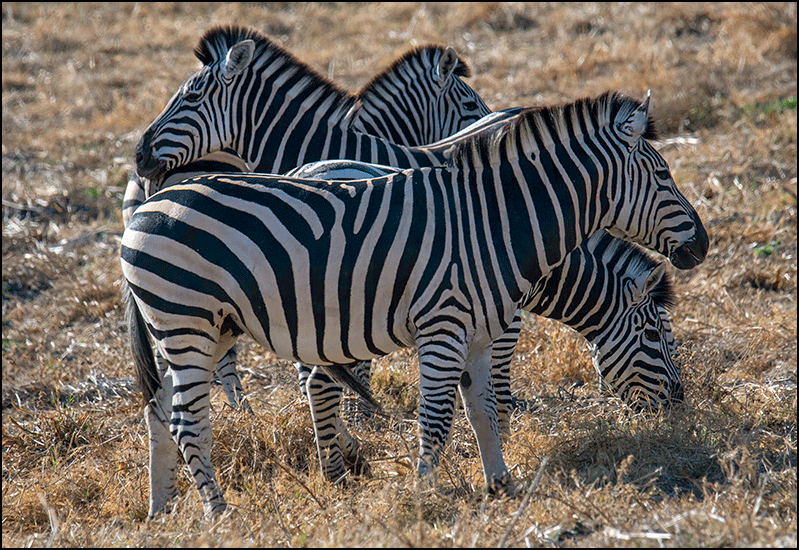
We headed back out around three and came across a lovely giraffe almost immediately, standing in the warm light as if waiting to welcome us back to the plain. Not far beyond, a large herd of zebras grazed together - the biggest group we’d seen. More zebras trotted in to join them - soon there were
twenty-seven in all. We felt sure these were the same animals whose thundering hoofbeats had raced past our tents in the night. They looked none the worse for their midnight panic.
We were still looking for the lions. From the spoor, Gee knew a pride had to be close, and he had a good sense of the general area. He drove up every little track - and several that probably didn’t quite qualify as tracks - searching for them. They remained elusive. The cats were winning this round of
hide-and-seek.
A large breeding herd of elephants moved through the tall grass. The big female seemed uneasy; she must have been the matriarch. We remembered Gee’s warning that elephants here, being so secluded, were not very accustomed to vehicles. We waited respectfully as they passed. Their low rumbles vibrated faintly through the ground.
Gee found more lion tracks and felt certain he had narrowed down the area where the pride was resting – it was not far from camp. Still, despite us circling and backtracking, the lions remained hidden. It was almost like they were ghost lions, and had melted away into the landscape with eerie precision.
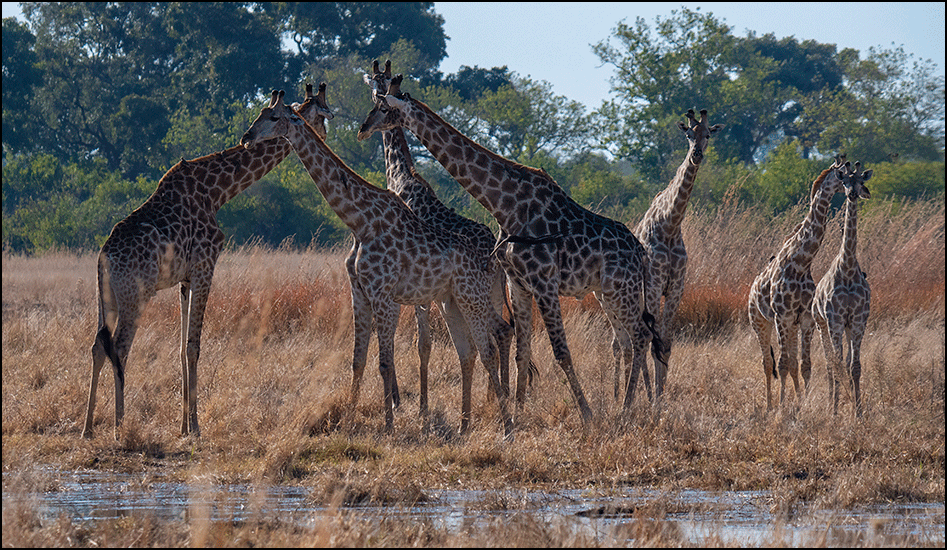
A journey of giraffes strolled gracefully through the grass. There were eight or ten of them, and they didn’t seem to mind our presence at all. We watched, mesmerized, as they moved around us in slow, choreographed arcs, crossing necks and striking graceful poses, gleaming in the sunlight. They looked exactly like those wood carvings sold in every African market: three giraffes standing in a circle, necks intertwined in perfect symmetry. It felt like watching living sculpture.
I don’t know if it was the light or the background, but I thought everything seemed especially beautiful today. Bronze and gold giraffes striding through the grass in slow motion, zebras’ black‑and‑white stripes glowing in the sun - even the impalas seemed more vibrant than usual. The whole plain shimmered as if freshly polished.
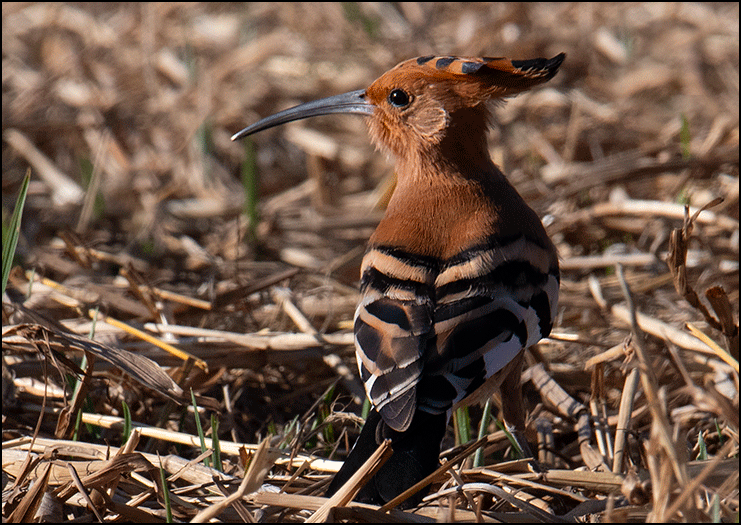
An African hoopoe probed the ground nearby, its reddish plumage and
black-and-white barred wings glowing in the afternoon light. This is the bird on the Makomkom Safaris logo, and seeing it felt like spotting a familiar friend. He obliged us with a perfect profile pose.
A young giraffe stood beneath an African ebony tree - the same wood used for mokoros - creating a picture‑perfect scene. Soon we entered an area thick with palm trees, fifty or more of them clustered together like a miniature oasis. Then it was back to the river.
We reached the skull we’d seen yesterday marking the tongue of the river. The water had advanced dramatically – five hundred yards at least - the delta pushing forward day by day. It was astonishing how quickly the landscape could change.
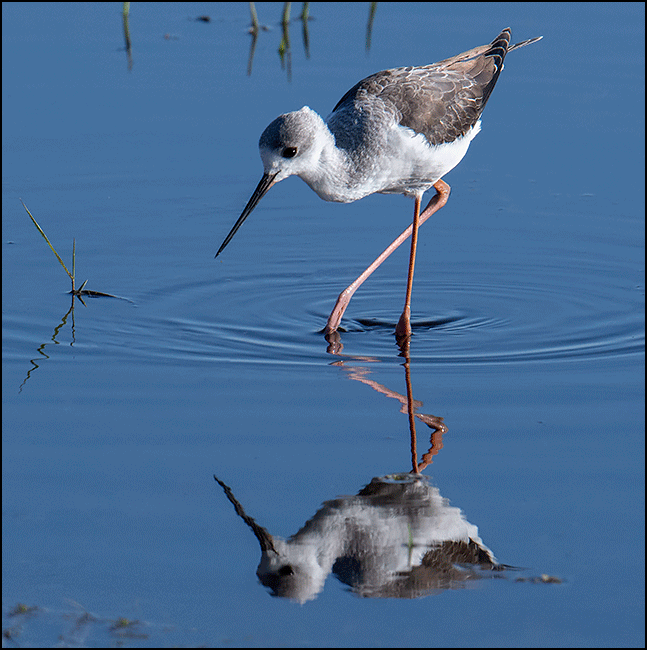
Along the water’s edge, birds were gathered again: stilts, herons, egrets, and the elegant sacred ibis, with their white wings delicately edged in black. And everywhere we looked there were white‑faced ducks. The air was alive with wings and whistling calls.
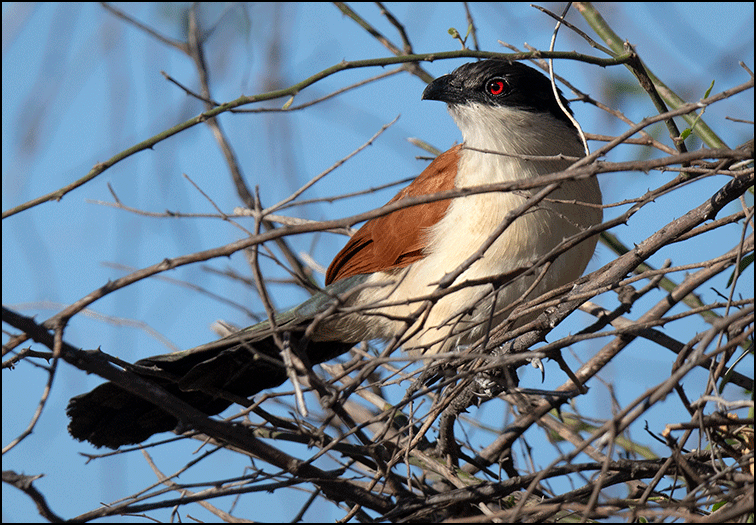
We passed a strangler fig vine that had completely overtaken its host tree, the entire green crown now belonging to the vine. A Senegal coucal perched nearby, his copper, white, and black plumage shining, bright red eyes watching us. He looked mildly offended that we’d noticed him.
Gee was determined to find those lions, so we went back to the plain, to the area where he was convinced they were hiding. He kept checking tracks, doubling back, and following questionable paths to cover every possibility. His persistence was impressive.
It was a magnificent afternoon, and as the day waned, the beauty did not. Giraffes drafted across the plain with long, unhurried strides, their elongated shadows matching each step. Little groups of zebras and impala grazed in the warm evening light, probably starting to think about safe places to bed down for the night.
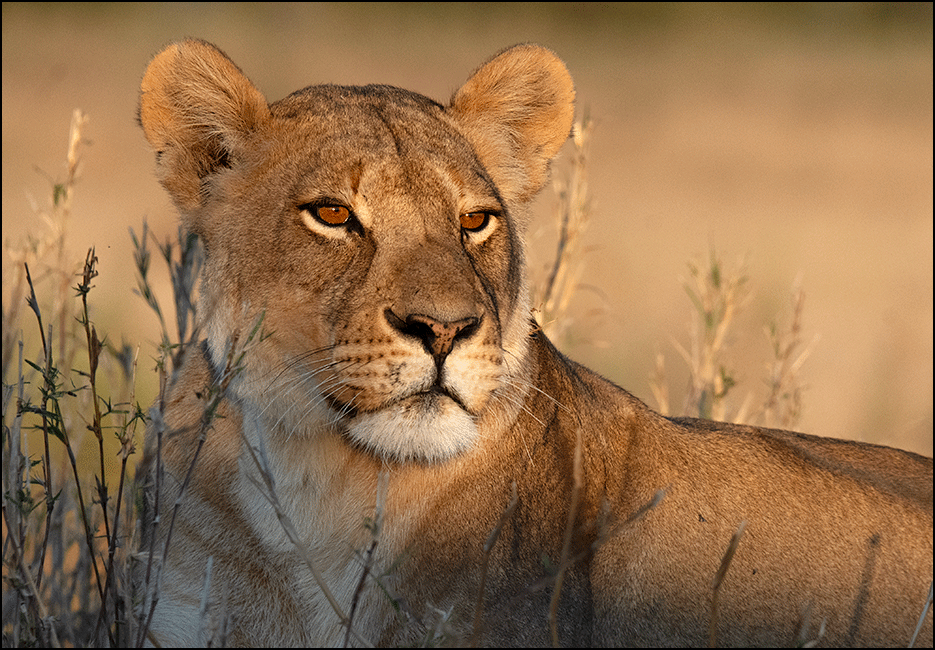
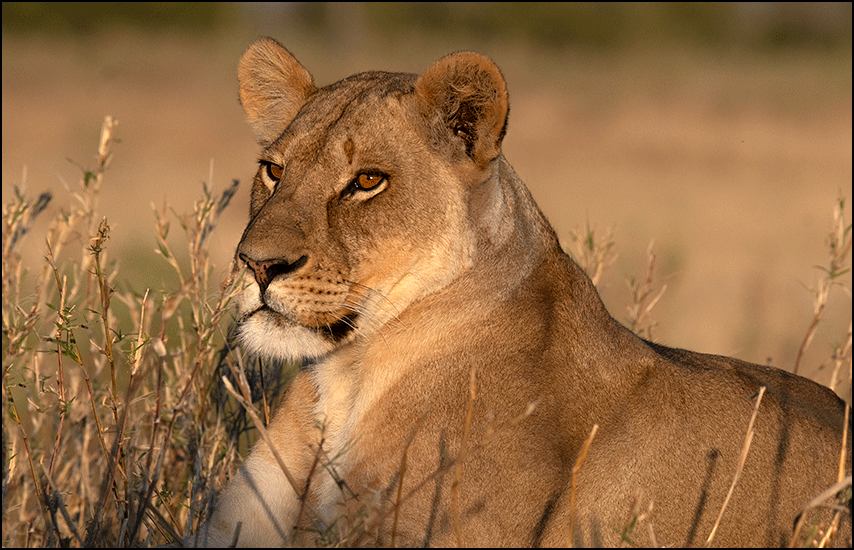
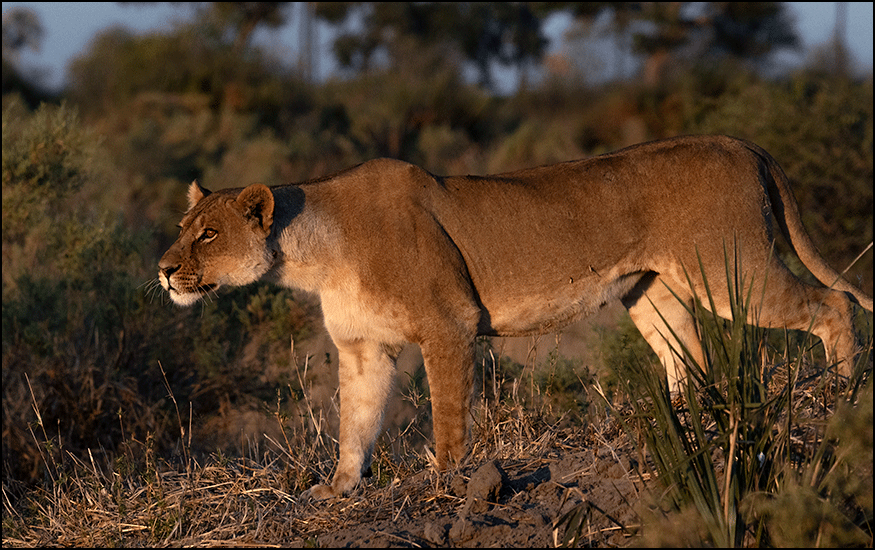
It was close to five-thirty when Paula spotted the lioness. Then two more. As we drew close, Gee could tell one had cubs hidden nearby, and another was pregnant. They appeared to be sleeping - but with lions, that means one eye open, always alert. Soon they were sitting up, scanning the plain, and beginning to hunt. The shift from rest to readiness was instantaneous.
The lionesses were lean and sinewy, with not an ounce of unnecessary fat. Their muscles were sculpted, their movements efficient. They were strength and wildness personified. One seemed clearly in charge; she radiated authority without moving a muscle. She sat upright, staring across the plain intently, with dark amber eyes that looked far beyond anything we could see.
We waited with them as the light faded. Camp was close, and down here the rules about returning before dark seemed a bit more relaxed. Out on the plain, a huge dust cloud rose - a herd of elephants moving quickly across the road. Elephants don’t really run; they simply walk faster and faster until the ground seems to move out of their way. But these were definitely in a hurry. Even the lions paused to watch.
Looking back to the lionesses, we saw what had caught their attention: a small group of zebras. The big cats waited, poised and intent. One began to move, slowly, pausing between each step. Another circled wide, trying to flank the herd. The third stayed put, ready if the zebras bolted her way. They inched closer, patient and silent. The tension was electric.
But before they could strike, the zebras must have sensed something. In an instant they exploded into a panicked gallop, dust flying. One lioness gave chase for a moment, but it was too far - lions need surprise on their side. The hunt would have to wait. The night was young.
Natalie announced that this brought our lion count to forty‑nine.
It was getting dark, and we headed back toward camp, passing a herd of very nervous zebras - with good reason.
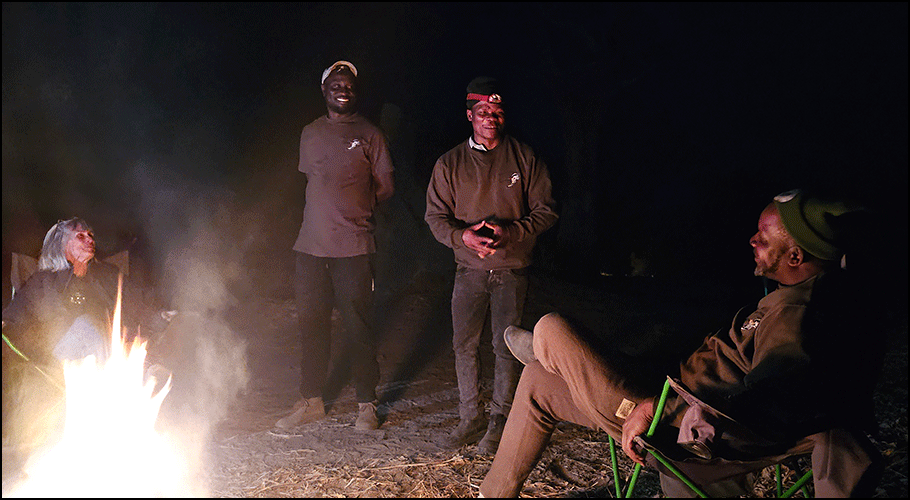
A pearl-spotted owlet gave its soft whistling call as we gathered around the fire, listing our favorite sightings and reliving the day. The firelight made the whole scene feel timeless. Even an unsuccessful lion hunt was thrilling to witness, and we eagerly recounted it until Mosa came to announce dinner.
We were served a delicious stew made with vegetables, meat, and some mysterious spices. Mosa called it Chakalaka. Amanda immediately launched into a chorus of BOOM-SHAKALAKA! BOOM-SHAKALAKA! and soon we were all jiving along to the lively beat. Dessert was a rich chocolate mousse‑type creation he called Chocolate Moo-sa. Both dishes were instant classics.
Before bed, Jineen set up her trail camera on the roadway in front of our tent, fastening it to our little portable canvas washbasin. If the lions and zebras came through again, we wanted photos. It felt like setting a trap for ghosts.
The night was full of sound. Hyenas were very close by - their inquisitive whoop, whoop calls were somehow almost comforting, at least when compared to their eerie cackling laughter. The high-pitched yipping of jackals carried through the still night air, and zebras conversed with their funny barking brays. The darkness felt alive with voices.
Later, we heard lions roaring somewhere out on the floodplain. The calls began with deep moaning grunts and rose into powerful roars that vibrated through the tent. Another lion answered from farther away, the two of them calling back and forth across the darkness. It was a primal, powerful sound, yet a little mournful as well, and impossible to ignore. No other sound captures the essence of wild Africa in quite the same way.
But perhaps the most notable sounds of the night came from Amanda and Natalie’s tent, next door to ours. In the early hours we heard frightened shrieks and panicked voices that went on for quite a while. Clearly some sort of animal attack was underway, but we dared not leave our own tent to investigate. We could only hope they would still be alive in the morning.
~
Continued
on next page ~
Africa 2025 Journal Pages:
1
2
3
4
5
6
7
8
9
10
11
12
13
14
15
16
|