|
Africa 2025 Journal Pages:
1
2
3
4
5
6
7
8
9
10
11
12
13
14
15
16
July 6
Our last morning in camp arrived too quickly. The air was cool and still, and the sky just beginning to lighten as the sounds of the Delta eased into another day.
We packed our duffels reluctantly, folding away clothes that still smelled faintly of woodsmoke and dust. Outside, the squirrels were already up to their usual mischief, chattering from the trees as if to remind us that camp life would go on just fine without us.
Breakfast was quieter than usual, as we all felt that bittersweet mix of gratitude and sadness that comes with the final morning. We lingered over our coffee, not quite ready to let go. Then we said goodbye to Mosa, More, and Chenaman, thanking them again for everything, and prepared for our last game drive.
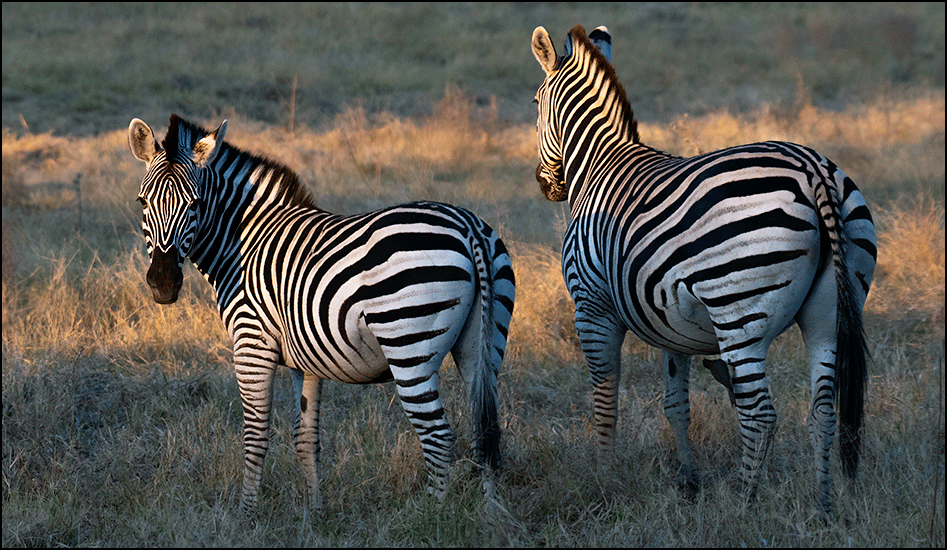
Gee loaded the vehicle, and we climbed in for the final time. The drive out of Xini was beautiful, soft and golden, as if the bush were offering us a gentle farewell. Impalas stood in the golden light, ears flicking. A pair of zebras watched us pass.
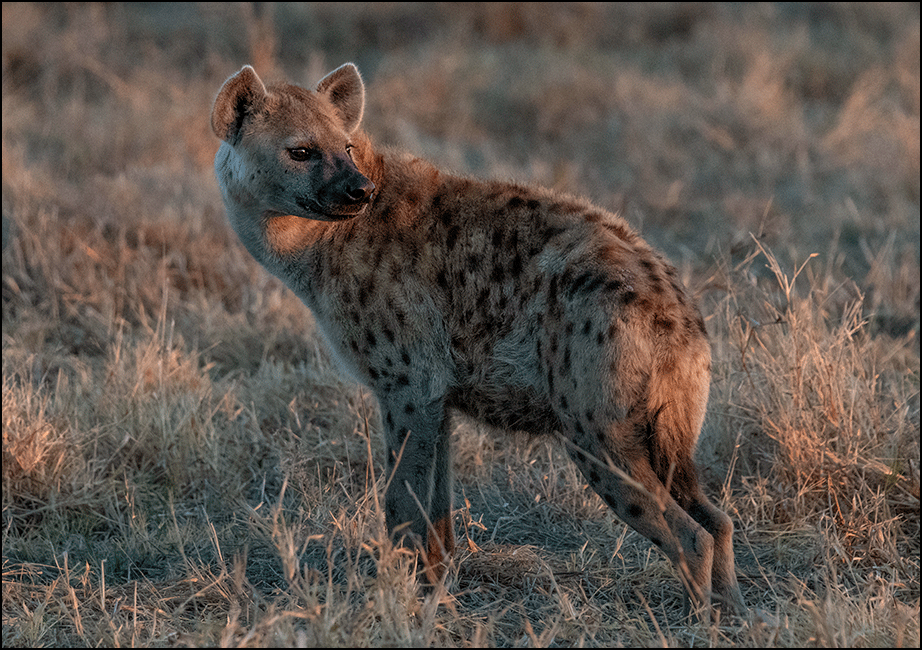
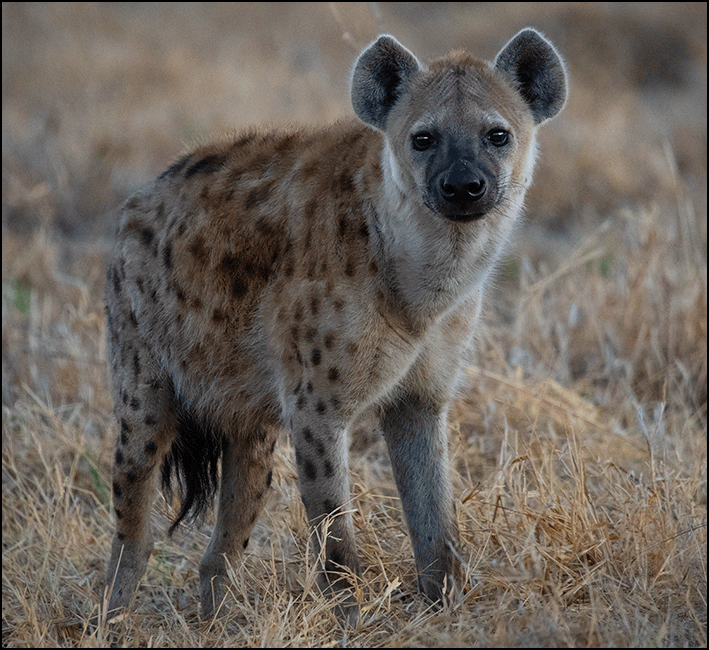
A hyena was resting on the plain, and we drew close. She rose and walked toward us, and then stopped and gazed at us for a long moment, as interested in us as we were in her. She was lovely - alert and curious. I know most people do not consider hyenas attractive and they are said to be part of the ‘ugly five,’ but with her standing there in the first warm rays of morning light, I thought she looked beautiful. Presently she walked on across the plain, stopping every so often to look back at us over her shoulder, as if checking whether we were still following her story.
Everything we saw that morning felt heightened, as if the bush knew we were leaving. We went on to the tongue of the river; it was now even farther than the day before, easily a quarter of a mile beyond the skull that had marked its reach on our first evening. Gee told us the birds and animals all come to celebrate the water at the tongue of the river - it is a gift from God. Indeed, it felt as though a million birds had gathered along the water’s edge. A fish eagle called from somewhere nearby, his mournful cries wafting over the floodplain.
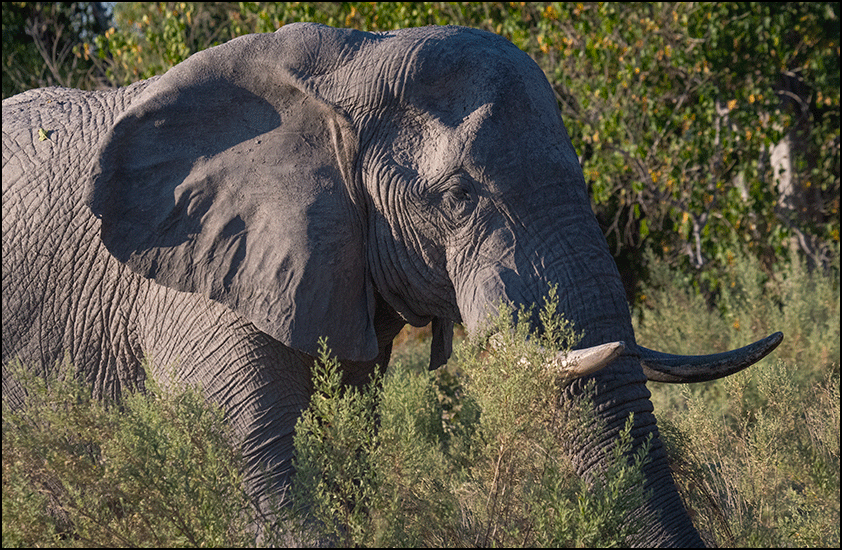
Three ground hornbills strutted along the bank, then took off in flight - always ungainly, always improbable. Zebras were everywhere - I never tire of them. We followed a male ostrich for a while and waved goodbye to a pair of tsessebes. A big bull elephant stood calmly by the road, as if he had come to see us off with quiet dignity
I already felt the pull to come back, even as we drove out for the last time. All too soon we left the bush and reached the main road toward Maun. We stopped in a pasture by the river for a tea break. A tall man rode past on a very short donkey, a sight so perfectly unexpected it felt like the bush giving us one last laugh.
We arrived in Maun around midday, and Gee took us to his house. His wife and daughters were there, and his little son, Enock, now a bit over a year old. Gee’s brother Sam was also there - he looks after the Makomkom Safaris office, and it was great to see him again.
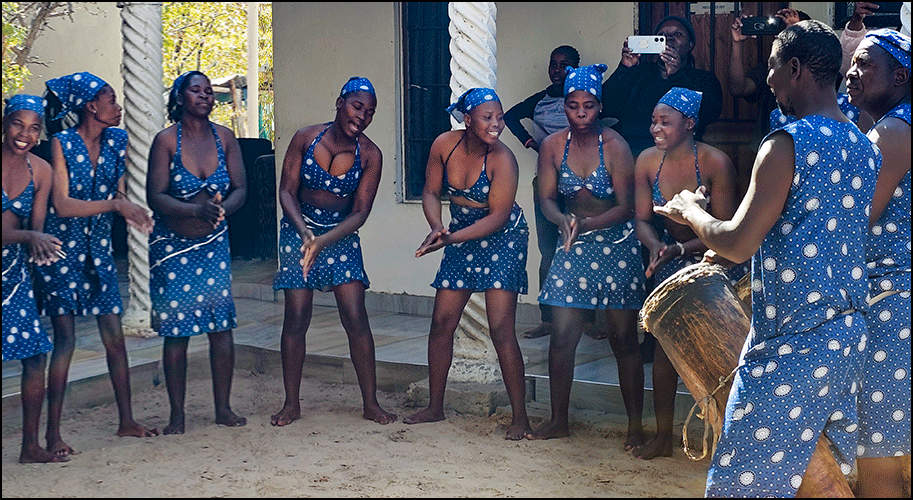
Gee had arranged a special surprise: a group of singers and dancers from the Bambukusu tribe. They performed traditional music and dance for us - lively, rhythmic, and full of energy. Drums, whistles, and chanting enhanced the deep pulse of the dance. Some wore
warrior-style costumes adorned with beads, feathers, and fur. Several had zebra manes on their shoulders, standing stiff and wild, swinging with each shake of their bodies. The performance felt authentic and powerful, a vivid reminder that Botswana’s richness is not only in its wildlife, but in its people and traditions.
Afterward, Gee and Sam dropped us off at the guesthouse where we would spend the night. It felt strange to have a real shower with unlimited water, and electric lights bright enough to repack by. The comforts felt almost decadent after so many nights in the bush. We would fly to Johannesburg in the morning, then after a bit of shopping, begin the long journey home.
July 7
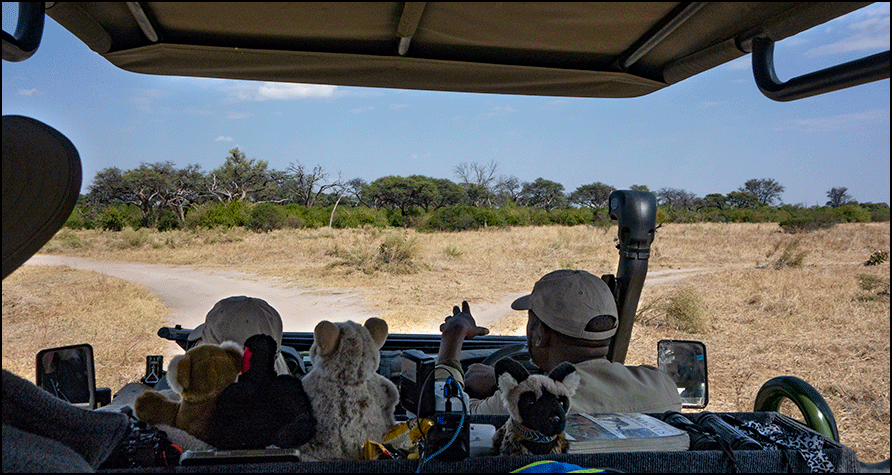
Gee and Sam drove us to the airport for our flight to Johannesburg. At the gift shop, Amanda bought a small stuffed baby giraffe - a mascot for the trip. She named her Independence, of course.
Then came the hardest goodbye: Gee. Our guide, our teacher, our friend. We promised to return, and we will. When you spend two weeks sharing an experience as extraordinary as this safari, you form a bond that distance and time can’t undo. And among our group, we were already talking about when we could come back.
As the plane lifted off, I thought back to an earlier trip, and of something a lodge host had said to me. As we’d been preparing to depart, I’d made the typical comment: “Well, I guess it’s time to get back to the real world.” He had looked at me seriously and said with conviction, “This
is the real world.”
He was right. Africa, the Bush - this is the real world - as it has always been, as it is meant to be.
EPILOGUE:
A safari doesn’t end when you go home - it lingers in the dust on your boots, the smell of woodsmoke in your clothes, the echo of lion calls that still seems to vibrate somewhere in your chest. Even after the plane lifts off and the Delta shrinks behind you, some part of you remains there, wandering the floodplains with the elephants and the wind.
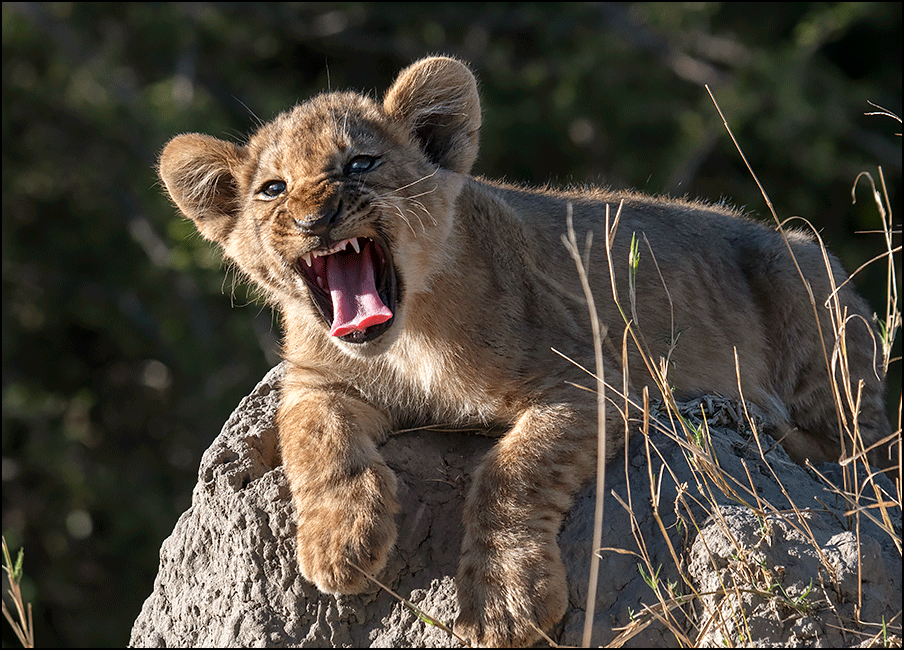
This journey was no different, and yet entirely its own. It was two weeks of early mornings and golden light, of laughter around the fire, of shared wonder and quiet awe. We watched lion cubs in the early light, tracked leopards across the sand, and witnessed a newborn giraffe take her first trembling steps. Each day brought something new, something unforgettable. We saw buffalo herds in their hundreds, honey badgers on determined missions, and birds so beautiful they hardly seemed real. We lived in the rhythms of the bush - the way the light changes, the way the animals move, the way the rising water brings new life to the Kalahari sands.
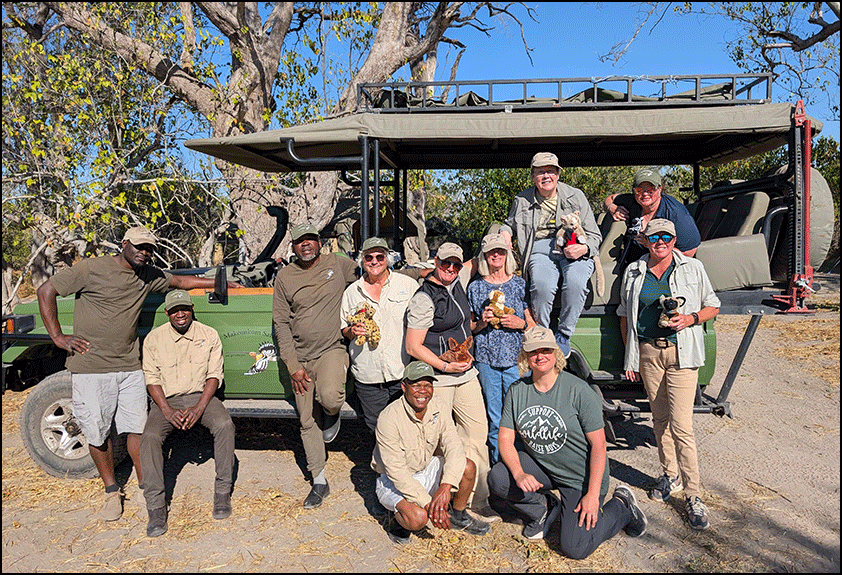
But more than the wildlife, it was the people who shaped this journey. Mosa, More, and Chenaman, who cared for us with such warmth. Our little group of seven, who became a family in the back of a safari vehicle. And Gee - guide, teacher, friend - whose deep knowledge and deeper heart opened Botswana to us in ways we could never have found on our own. He gave us not just sightings, but understanding - not just stories, but a sense of belonging.
There is no way you can adequately describe to someone who has never been on a safari exactly what it is like. Nothing in these pages can fully capture the depth of that experience. But I hope it carries a little of the magic, a little of the truth, and a little of the gratitude I feel for every moment spent in this remarkable place.
There is a moment when you realize that the wild places are not something you visit; they are something you return to. They become part of you. They remind you of who you are, and they show you the world as it has always been.
So as I close this journal, I have the quiet certainty that the journey has not ended. The Delta will wait. The lions will hunt. The waters will rise and fall. And we will find ourselves back on those sandy tracks, watching the sun lift over the plains, listening for the first call of a francolin in the morning.
Until then, I carry this journey with me - every sighting, every laugh, every moment of stillness - knowing that Botswana has changed me in ways I barely understand. And I know, without question, that I will return.
|
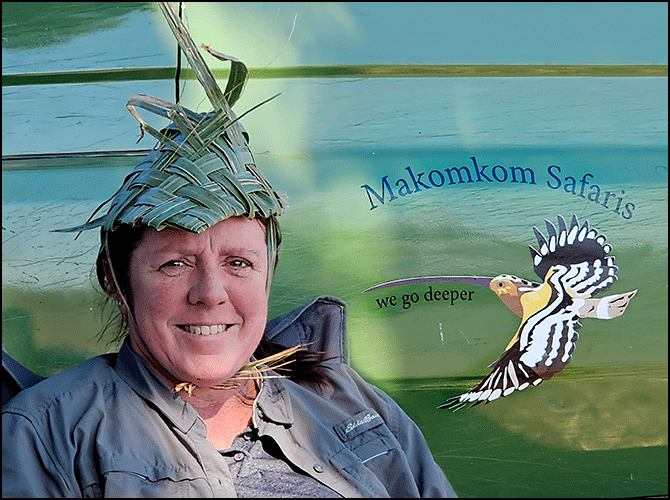
Natalie
|
|
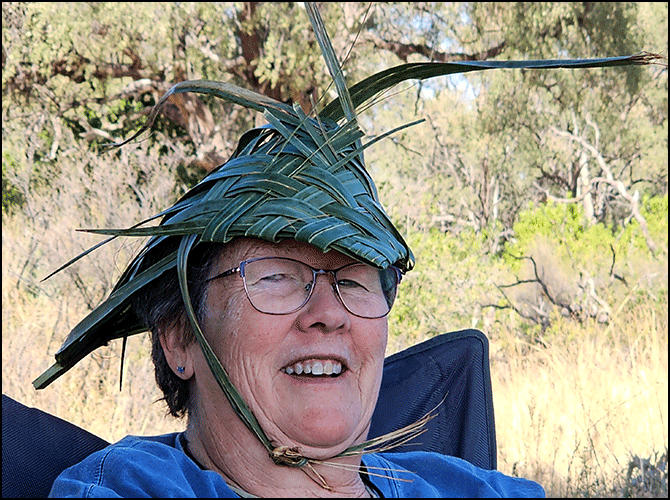
Paula
|
|
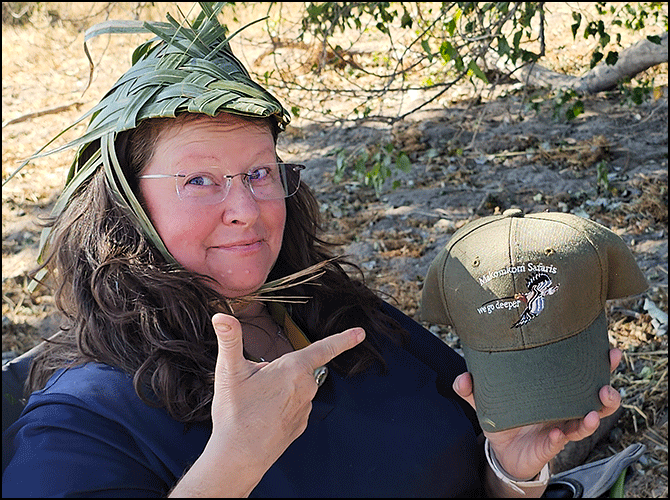
Amanda
|
|
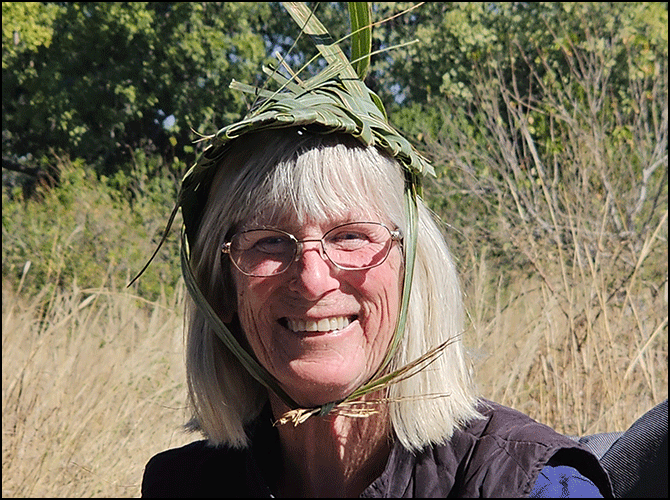
Jineen
|
|
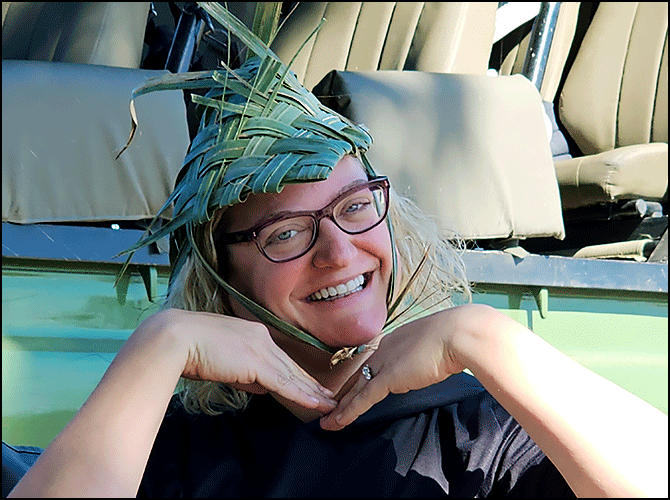
Lindey
|
|
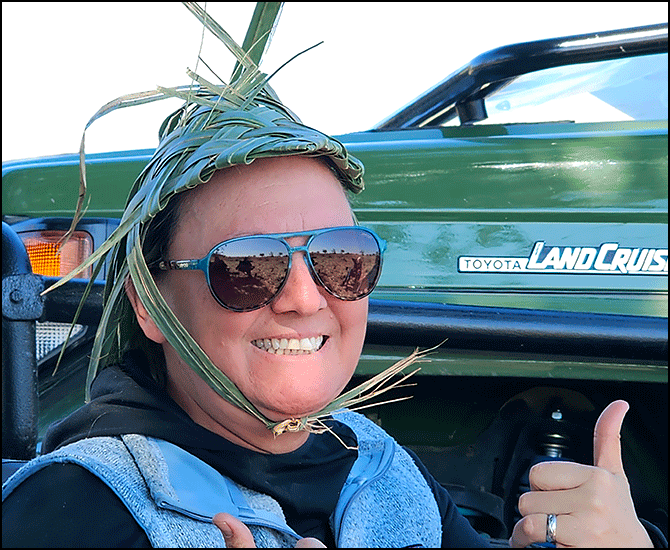
Amber
|
|
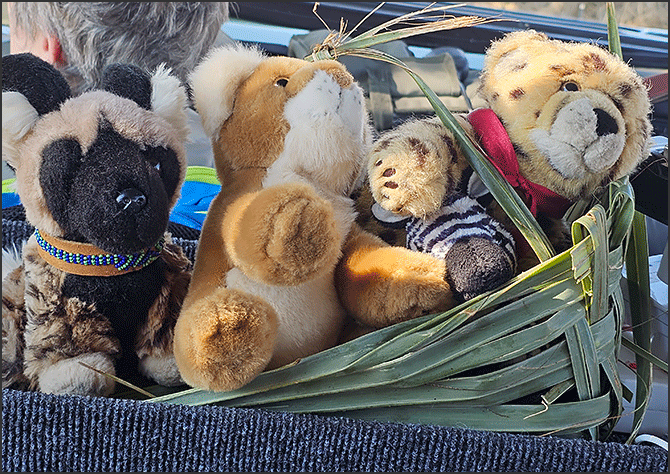
Duma and Friends
|
|
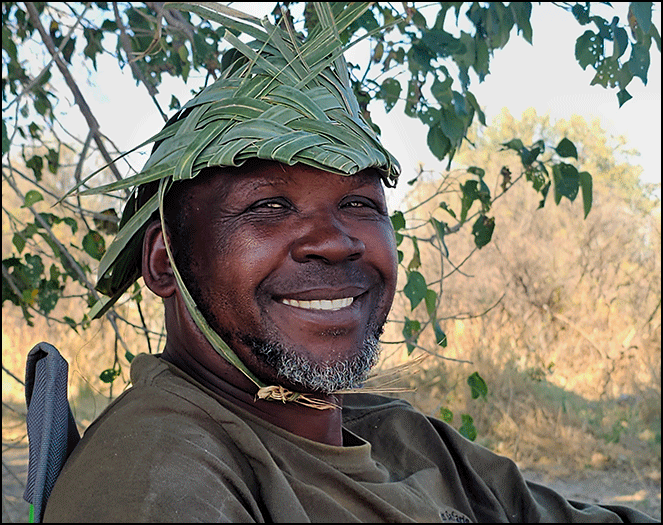
Gee
|
~ The End ~
Africa 2025 Journal Pages:
1
2
3
4
5
6
7
8
9
10
11
12
13
14
15
16
|