|
Africa 2025 Journal Pages:
1
2
3
4
5
6
7
8
9
10
11
12
13
14
15
16
June 22
Our
wake-up call was at six a.m. The air was chilly, the sky just beginning to lighten, and the camp crew already had the fire going and the coffee ready. We had a quick breakfast - jungle oats (aka oatmeal) and toast with peanut butter for a little protein - and were on the road before seven, heading out on our first proper game drive of the trip.
We headed down to the river, the early light turning the floodplain gold. The sun was moving upward in a clear cobalt sky. Fresh lion tracks crossed the road, unmistakable in the fine sand, and we all leaned out for a better look.
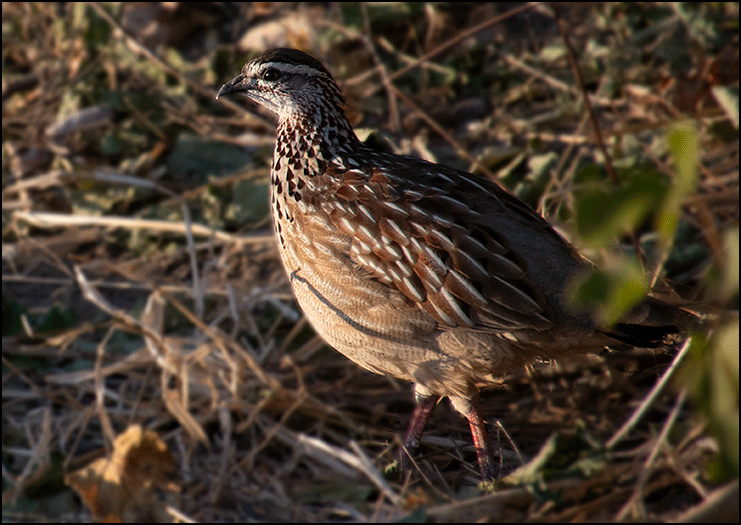
We started the morning with birds. A red-billed francolin pecked among the leaves, followed by a clutch of babies scurrying after her. Soon we saw a crested francolin, far more elegant than her plainer cousin. Gee identified a hidden cisticola shrike by just hearing its song.
A flock of Egyptian geese glowed in the early light, their colors on full display. They took off as a group and flew away in unison toward the morning sun.
Today would be the first test for my new camera lens - the 200–600 mm I’d bought shortly before this trip. I’d always shot with a 70–300 and gotten good photos, but I’d wanted more reach for years. I had not used the new lens yet other than a few practice shots at home. It’s large and heavy, and awkward to handhold for long. I’d brought a monopod, but that made me slower, and I wasn’t sure if the extra reach would be worth the inconvenience of lugging around the heavy equipment. Time to find out.
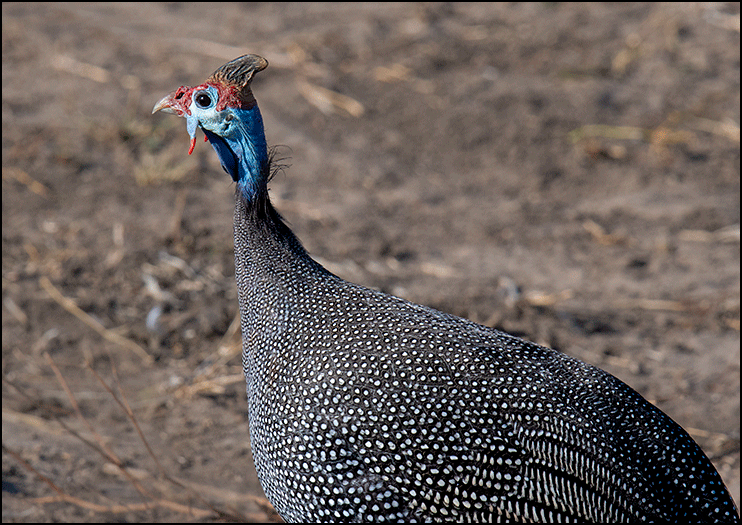
A flock of helmeted Guineafowl were
walking along the water’s edge, their fine black-and-white
speckled feathers always a challenge for my camera to focus on. To
my delight, the new lens locked onto them beautifully. A very
encouraging start.
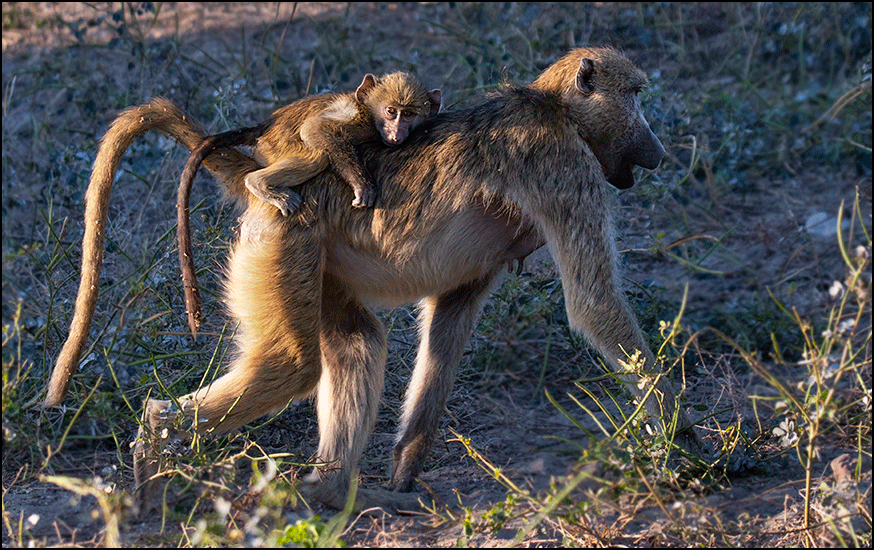
A troop of half a dozen baboons loped gracefully along the
riverbank, tails arched, their fur backlit by the golden sunlight.
One baby rode on his mother’s back like a tiny jockey, clutching
her flanks and turning to stare curiously at us as they glided by.
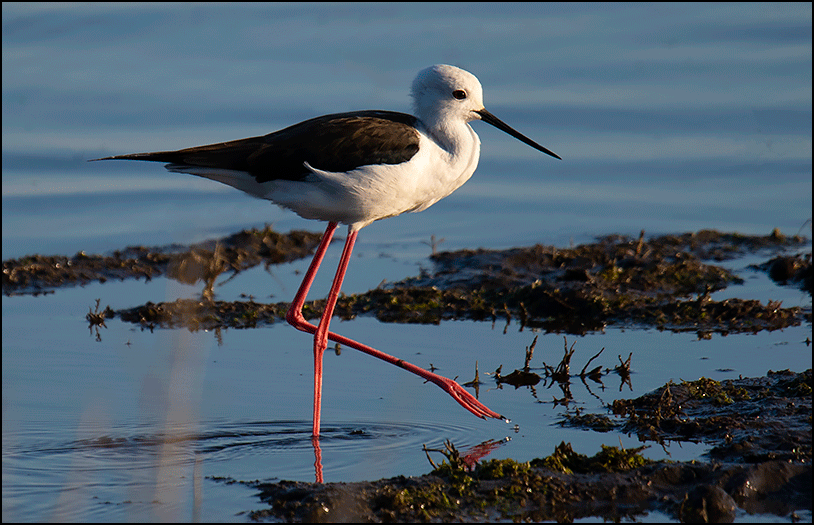
A
black-winged stilt waded delicately along the river’s edge, my new camera lens capturing him in perfect focus. A pied kingfisher hovered above the water like a tiny helicopter before plunging straight down in a perfect dive. Cape turtle doves cooed from the trees, and two pied crows passed overhead. A flock of
white-faced whistling ducks flew in and landed on a little sandbar. Paula, ever the
sharp-eyed spotter, pointed out a tiny flash of green - a little
bee-eater perched on a reed.
It was our first visit to Ihaha, and so far we really liked it. There were more visitors than some of the areas we’d been in, but the landscape was new and beautiful, and we loved spending so much time along the river. The whole place felt fresh and full of possibility.
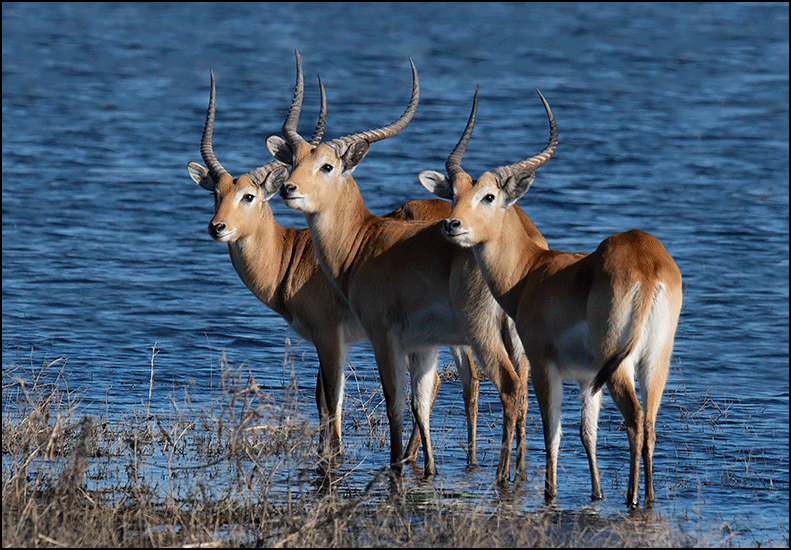
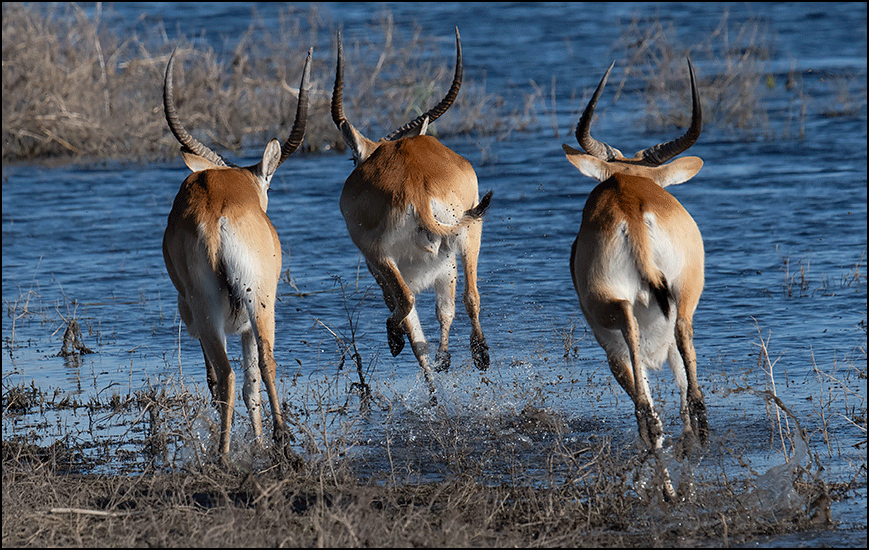
Three red lechwes stood by the water, gazing at us curiously before turning and bounding off through the shallows with their odd downhill gait, water spraying behind them. Lechwes are
mid-sized antelopes perfectly adapted to the floodplains. They have long hind legs and splayed hooves that let them bound easily through marshes. The males have elegant, swept‑back horns. When startled or chased, they dash into deeper water to escape predators - a strategy that has served them well.
Around nine o'clock we spotted three black-backed jackals trotting furtively along the floodplain. Jackals have been given a bum rap; they are far prettier than their reputation as sneaky scavengers suggests. Their coats glowed russet in the morning light, and the signature black saddle across their backs looked almost brushed on. They moved with a surprisingly graceful gait as they crossed the floodplain. Their refined, foxlike faces show intelligent expressions.
More Guineafowl appeared along the edge of the river, and by now I was thoroughly enjoying the new lens. For the first time ever I could get their faces in sharp focus, capturing the powder blue and red skin and the glint in their eyes. I was still a little slow with the weight of the lens, but I was getting quicker.
A big male baboon sat high on a tree branch, surveying his kingdom. A big male giraffe strolled along the riverside, passing close to us without concern. He was regal and beautiful. Oddly, we hadn’t seen any elephants yet this morning; it seemed strange, since there had been so many the evening before. Maybe they’d all crossed to Namibia overnight.
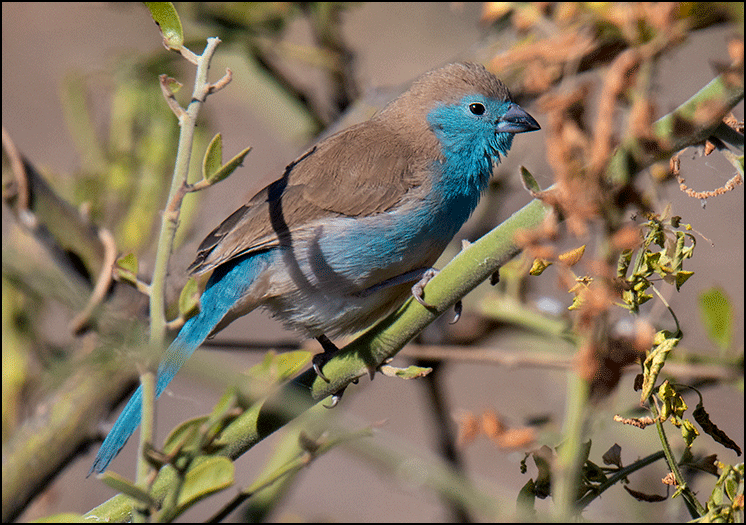
We noticed a blue waxbill in the bushes beside the road, a lovely small bird with a
robin’s-egg-blue face, breast and tail. This was another bird I had seen before but had never been able to get my camera focus locked onto, but the new 600 mm lens made it easy. A greater
blue-eared starling shimmered nearby, iridescent in the sun, a dark shiny blue with hints of purple and green, and expressive orange eyes. We saw a baobab tree adorned with a dozen red-billed buffalo weaver nests.
A self-driving park visitor flagged us down and told us where he had seen dozens of
white-backed vultures gathered in two trees, with a giraffe carcass and a dead hyena nearby. We went to look. Sure enough, there was a dead giraffe on the ground, and several hyenas lurked in the shadows. High in a tree, the vultures waited patiently for their turn at the table. Nature’s cleanup crew was assembled and ready.
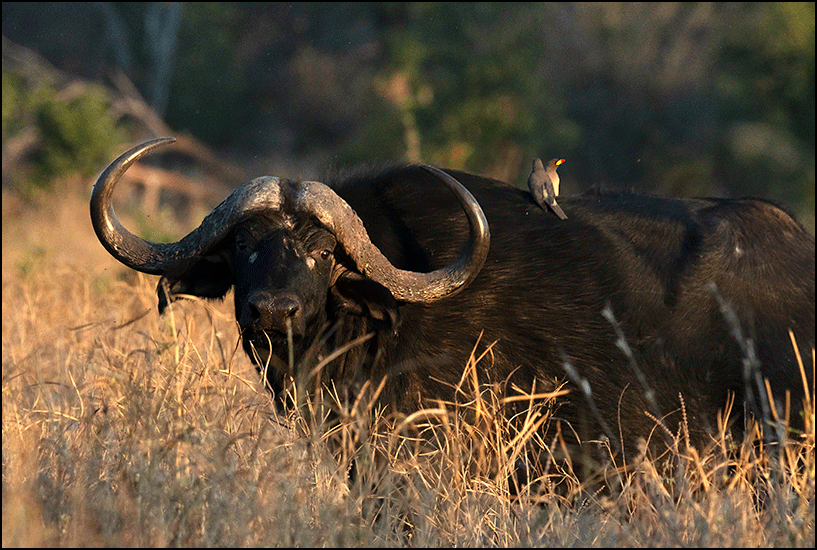
A big African buffalo walked along the road --- one of the grumpy old dagga boys, no doubt. Buffalo are part of the Big Five, along with the elephant, lion, leopard and rhino; the animals in colonial times considered the most dangerous to hunt - and with good reason. You do not want to cross one of these lone bulls!
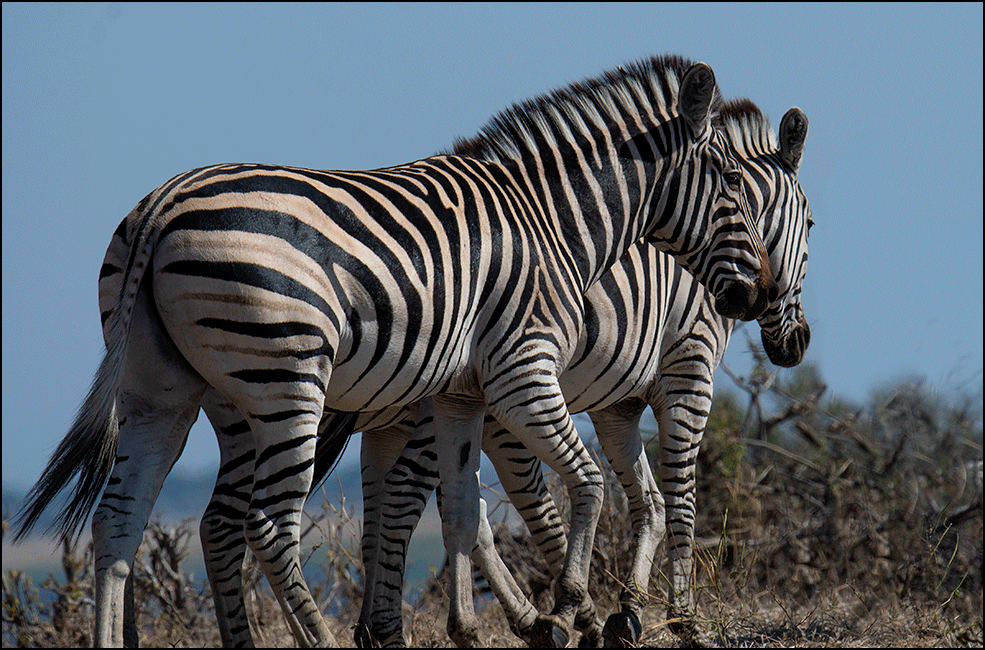
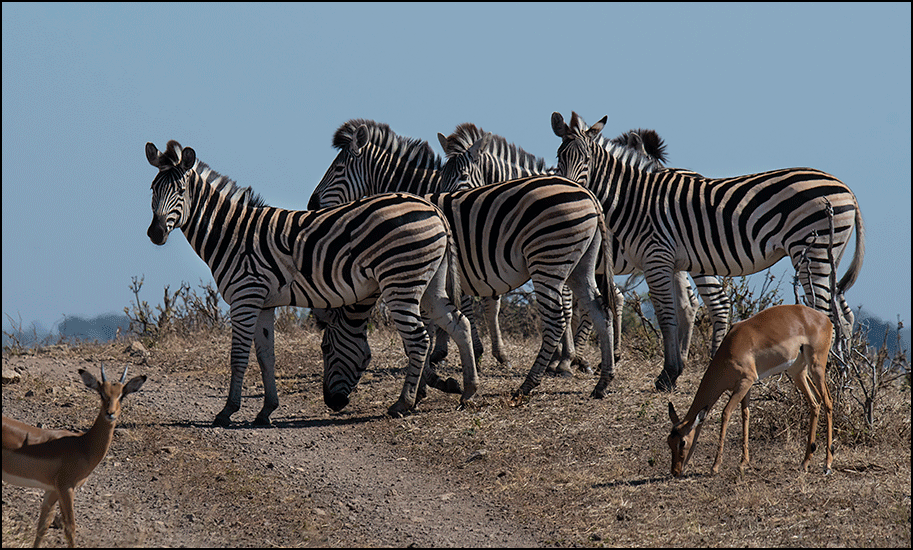
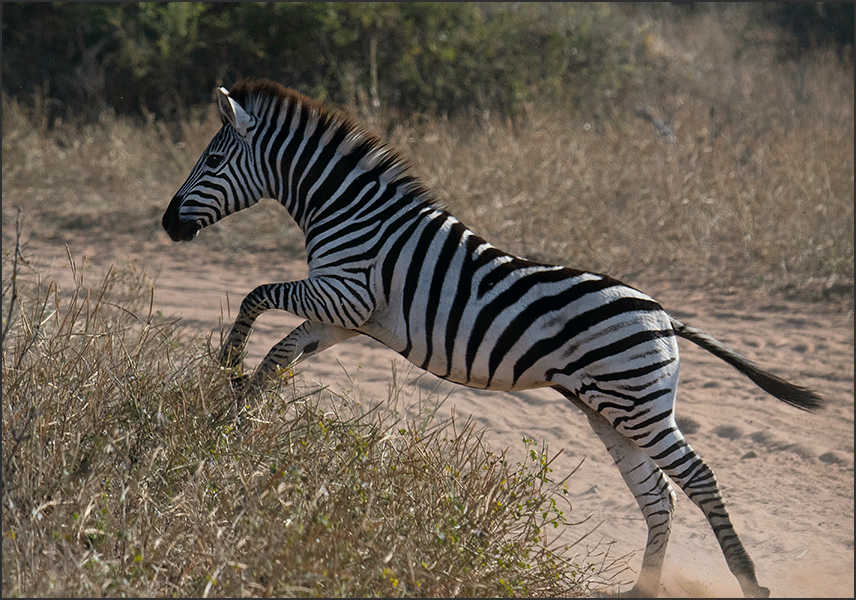
A zebra crossed the road in front of us, and then another. Looking to our right, we were surprised to see a herd of about twenty zebras moving through the brush parallel to us, joined by a dozen or so impala. They kept pace with us for a few minutes, then pulled ahead when we stopped for photos. They climbed the ridge and paused in the road in front of us, standing silhouetted against the sky. When they drifted back toward the river, we followed, and the scene grew even more beautiful. Three or four zebras lined up side by side, their brilliant
black-and-white stripes contrasting with the deep blue of the Chobe River behind them. Then, as if remembering an appointment elsewhere, they trotted off with sudden purpose.
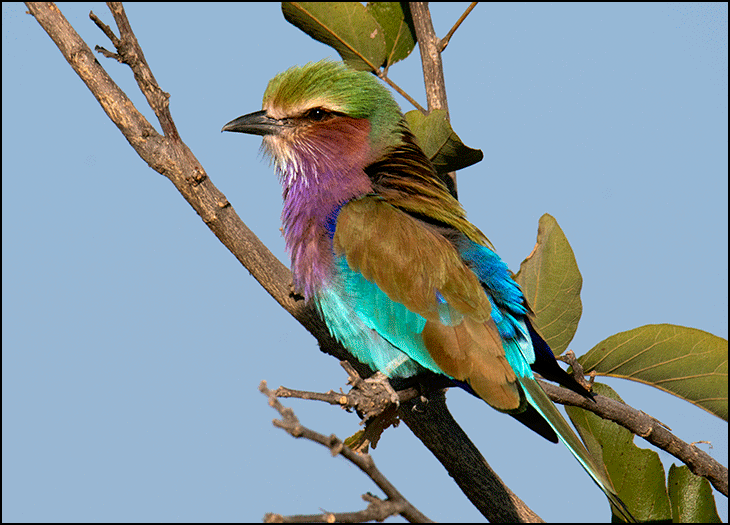
A lilac-breasted roller (LBR) flew in with a brilliant flash of color and lit on a bush beside the road. These birds have unreal coloring; green heads with accents of rust and cream, bright sky-blue bellies, rosy lilac breast that give them their name, and long blue streamers on their tails. Their wings are deep cobalt and turquoise with flashes of navy, but these vibrant blues show up best when they are in flight.
Our roller was perched on a low bush, perfectly framed in the morning light. We waited with cameras ready, hoping for a takeoff shot - always a fun challenge with these incredible birds. But after a few moments I realized that trying to hold my 600mm lens steady for so long would be quite the learning curve.
We went back past where we had seen the lions the day before, and sure enough, the lioness was still nearby. We caught a glimpse of her in the bushes, dozing peacefully. Gee said her cubs would be nearby, but they were out of sight at the moment.
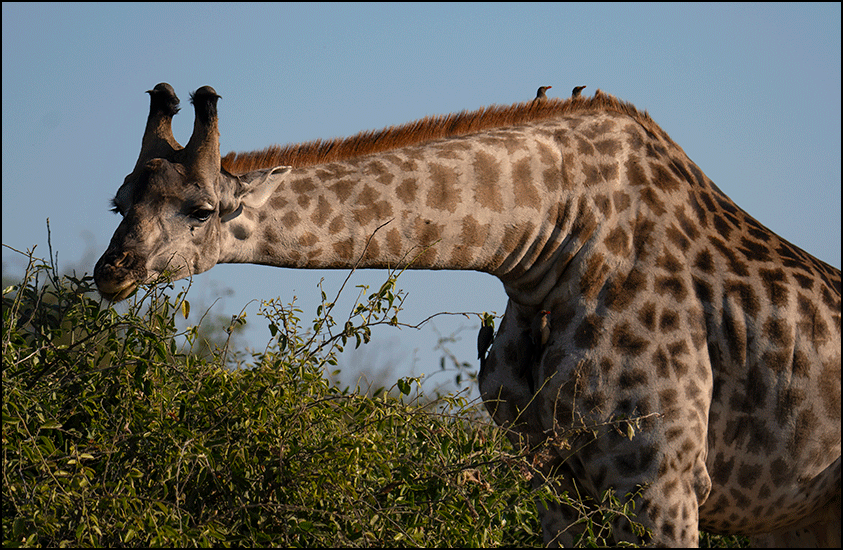
We watched a giraffe eating leaves from a bush, squinting into the sun as he lowered his head to take a bite at our level. He chewed slowly, thoughtfully, as if savoring every leaf, unfazed by the flies buzzing around his face. There seemed to be giraffes everywhere we looked that morning - scattered along the riverbank, tucked between the trees, and casually strolling across the floodplain as if they owned the place (which in a sense I guess they did). But still no elephants. After seeing so many the afternoon before, their absence was almost comical. Maybe they all really had taken a day trip to Namibia, and left the giraffes in charge.
Paula summed it up with a somewhat questionable limerick:
In Africa the animals all queue
It is something they all learn to do
Elephants on one day
Then giraffes on Sunday
On other days we’d see very few
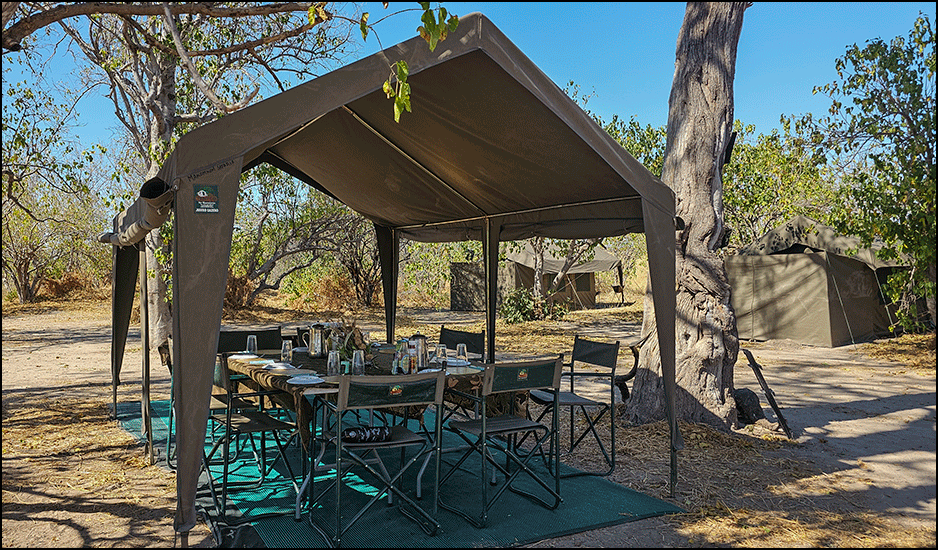
We went back to camp for lunch around 1:00. This was one of the many things we love about our safaris with Gee - the long, generous game‑driving hours. At many lodges you head out early, return by 11 for brunch, and then lounge around camp until the afternoon drive at 4:00. But we didn’t come to Africa to sit around camp; we wanted to be out seeing animals. Makomkom Safaris understood that perfectly. Most days we were out nearly the whole time, with just a couple hours’ break in the early afternoon for lunch, showers, and a quick rest before heading back out around three. And on the days we moved to a new camp, we were out all day, with a packed lunch in the bush.
We took showers after lunch. Bucket showers are wonderfully straightforward: a canvas enclosure at the back of each tent, open to the sky, with a warm bucket of water the staff heat over the fire. They hoist the metal bucket onto the frame, fitted with a simple showerhead and valve, and you get a lovely warm rinse. If you’re careful, there’s enough water for two people. It’s basic, but it feels oddly luxurious after a dusty day in the bush. Paula had a full bucket to herself, so she used the extra water to do a bit of laundry and hung it on the line behind her tent to dry.
We headed out again at three o'clock for our afternoon drive. Just as we left camp, a big baboon strolled through as if he owned the place. He seemed particularly interested in Paula’s underwear (the ones hanging on her clothesline, not the ones she was wearing, thankfully).
|
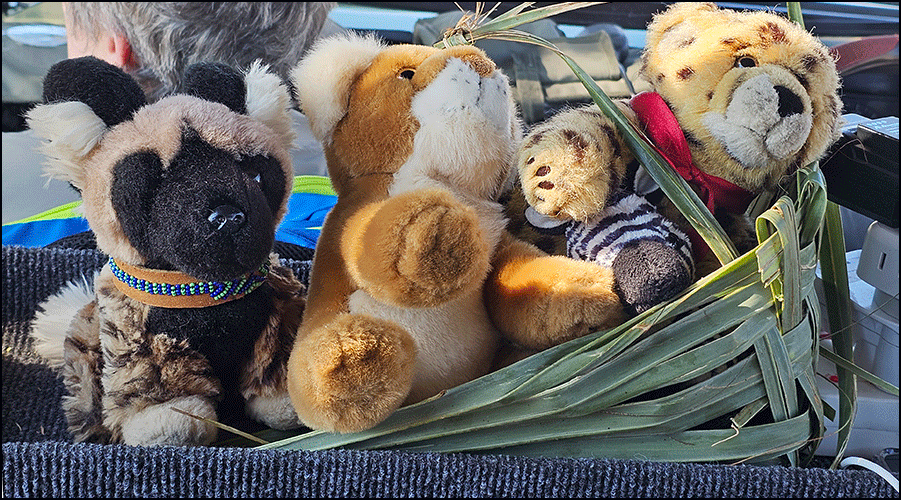
Left to right: Solo, Tuffy and Duma
|
Duma, my little stuffed cheetah, rode in the shelf behind the
driver’s seat with the rest of the mascots. Jineen had brought
Tuffy the Lion, Natalie had Solo the wild dog, and Paula had Merle
the bush baby. These veterans had all traveled with us before, and
since every trip had been blessed, we weren’t about to mess with
karma. Lindey and Amber had added a warthog they picked up at the
airport, and I’m pretty sure a bat and a zebra joined the
collection as well.
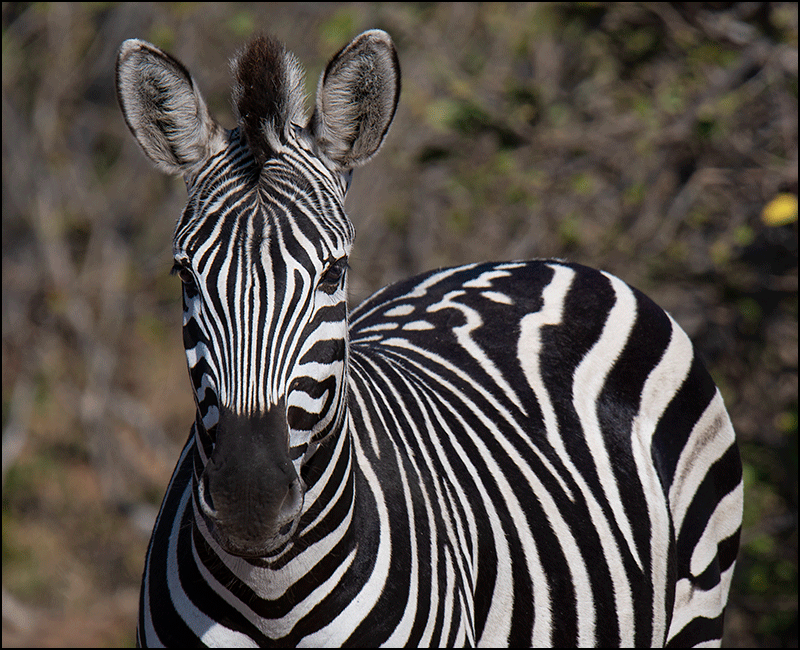
The first thing we encountered was a lone giraffe hanging out with half a dozen zebras. The zebras seemed unbothered by our approach, gazing at us with mild curiosity. Photographing them from the front was a refreshing change from my usual zebra photos - I have an impressive portfolio of retreating zebra butts.
We returned to the river and finally found the elephants: a small breeding herd, mothers with youngsters, crossing the Chobe and heading - of course - toward Namibia. They waded through the shallow water, their footsteps making a soft, rushing sound like a distant waterfall.
A huge crocodile was sunning himself on the riverbank. We had a clear view of the sharp ridged scales on his tail and his toothy, serpentine smile. He looked deceptively lethargic, but we knew how quickly he could launch himself after prey if a good opportunity arose.
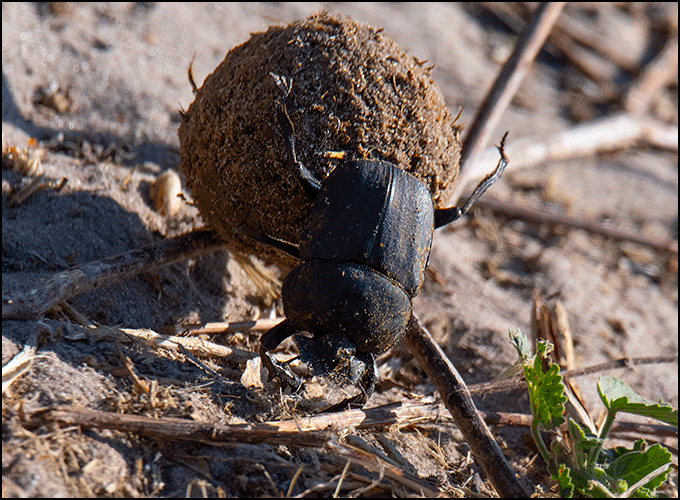
Safaris aren’t just about the big animals and predators; we enjoy every creature we’re lucky enough to see. So when we came upon a dung beetle wrestling a dung ball three times his size, we instantly became his cheering squad. He was trying to push it up the slope out of the tire tracks, and every time he almost made it, the ball slipped away and rolled right back. Undeterred, our beetle marched down after it and started over, legs pumping with heroic determination. Gee explained that once the ball was big enough, the female would lay her eggs inside, which made us root for him even more. This was important work, after all - the entire savannah depends on these tiny engineers.
We watched a pair of wattled lapwings wading along the water’s edge, and a slender mongoose crossed the road in front of us, pausing to stand upright like a tiny meerkat to check that the world was safe.
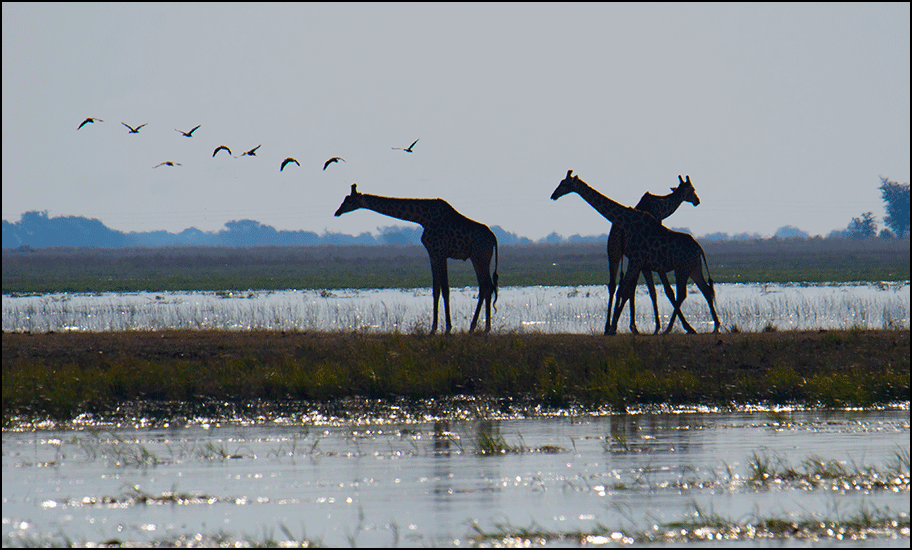
We could see giraffes in the distance, posing like living sculptures on the long narrow spit of land in the middle of the river. It was giraffe abstract art - dark silhouettes against the pale sky, the water glinting silver behind them. They moved with slow, easy grace; intertwining necks, bowing down to drink, stepping around each other as if in a choreographed slow-dance.
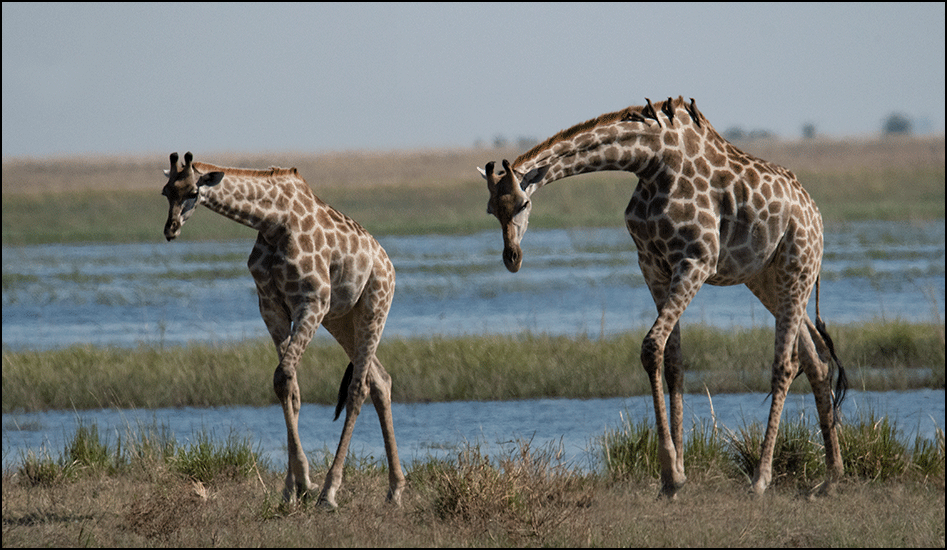
Gee drove us along the riverfront and we were able to get closer to the giraffes. We watched as one splayed his legs out to reach the ground - a reminder that as long as their necks are, their front legs are still longer. When giraffes lower their heads to drink is when they are most vulnerable to lions, so this one spent a long time scanning, listening, and making absolutely sure the coast was clear.
A water monitor lizard appeared along the edge of the trees - three or four feet long, patterned in intricate black and yellow scales. Soon we spotted a second one right beside the water. We followed him as he moved surprisingly quickly for something so close to the ground, tongue flicking like a snake’s as he tested the air.
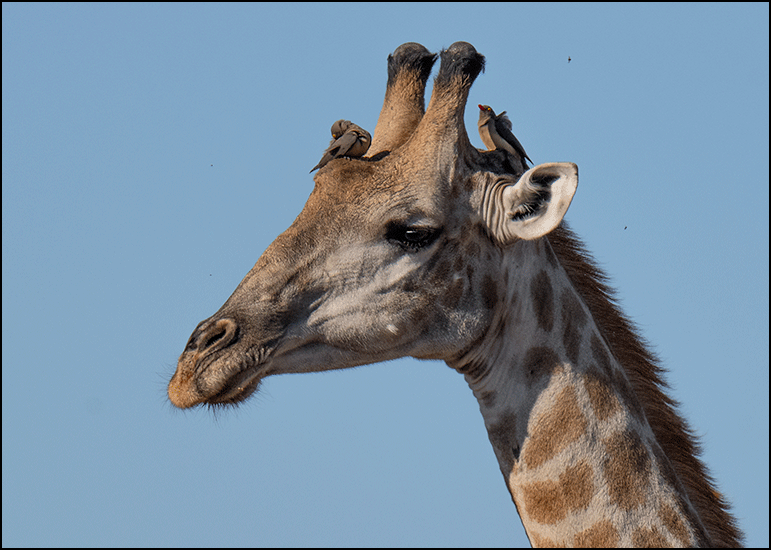
We headed up the hill away from the river, and soon stopped for a big male giraffe browsing right beside the road. He towered above us as we watched him strip leaves with his long, flexible lips, neatly avoiding the thorns.
Several oxpeckers perched jauntily on his head. As we lingered, a herd of impala meandered past, and then a magnificent pair of kudus, soon followed by three more. We watched in awe as they strolled by us.
Greater kudus are the
second-largest antelope in Africa, surpassed only by the eland. In my opinion, they’re also the most beautiful. They are tall, elegant and beautifully marked, with grey‑brown coats and thin white stripes for camouflage, as well as white markings on their faces. Their manes run from behind their large ears all the way down their spine to their tails, and the males have an additional mane hanging along the underside of their necks. The males’ spiraling horns - up to six feet long - are magnificent. The females do not have horns, but they are just as beautiful, and perhaps even more graceful. Despite their size, kudus are shy and can vanish into the brush with astonishing ease. We were lucky to have such a good sighting; they walked slowly and silently past the Land Cruiser, moving with casual dignity.
Our giraffe moved on, and was joined by several more. The collective noun for a group of giraffes is a tower if they are standing still, or a journey if they are moving. Soon we had a whole journey of giraffes, kudus, and impala walking by together. We made a few terrible giraffe puns about Giraffic Park and
giraffiti.
As we headed back down the hill toward the river, we came across even more kudus – this time several mothers with calves. One youngster stood staring at us, his enormous ears almost comically large on his delicate face. So many kudus. I don’t think I’ve ever seen so many in one area before; we had already seen more in a single afternoon than we usually see in an entire trip.
We started back down the hill toward the river. Two kori bustards were strutting along;
turkey-sized, handsome, and Africa’s heaviest flying birds. We spotted yet another water monitor lizard, making its way toward the water. Gee identified the call of a common fiscal shrike - a mechanical, rusty‑hinge sort of sound. We never saw this bird, only heard it.
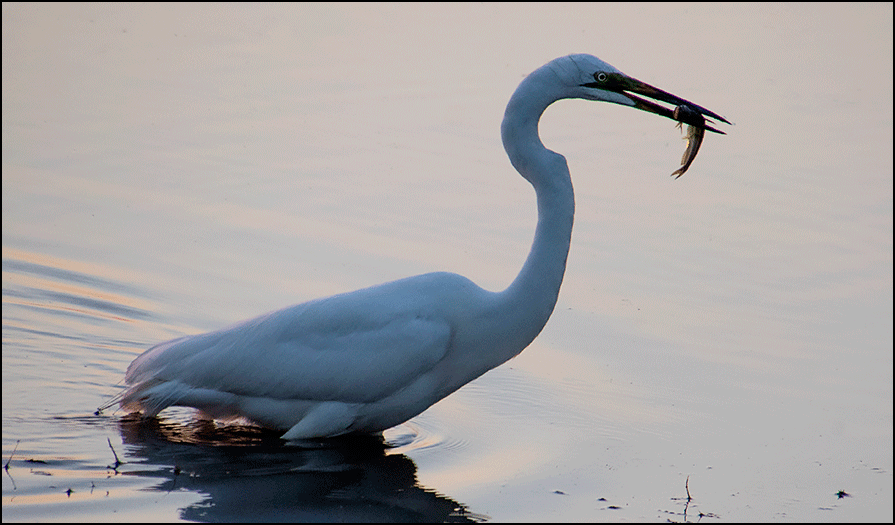
Back by the water’s edge, we watched an egret catch a small fish. He was silhouetted against the water, his white feathers almost blue in the fading light as he shook the fish in his long sharp beak, his neck arched in an elegant S-shape. A blacksmith lapwing stood on the edge of the shore, his crisp black, white, and grey plumage bathed in the golden sunset light, highlighting the glint in its eye. Two crocodiles floated in the water with only their snouts showing.
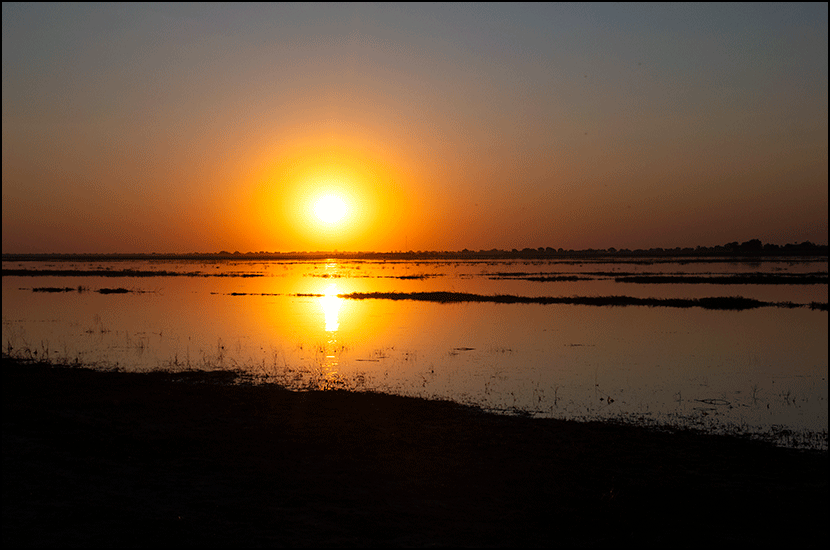
The sunset was spectacular: fiery orange and red reflected in the river. Two fishermen in a mokoro - the flat dugout canoes used in Botswana - were silhouetted against the crimson sky, their poles dipping rhythmically into the glowing water.
Heading back up the ridge once more, we passed a herd of African buffalo grazing in tall grass. Most had half a dozen oxpeckers on their backs. A pale giraffe crossed behind them, glowing softly in the half‑light.
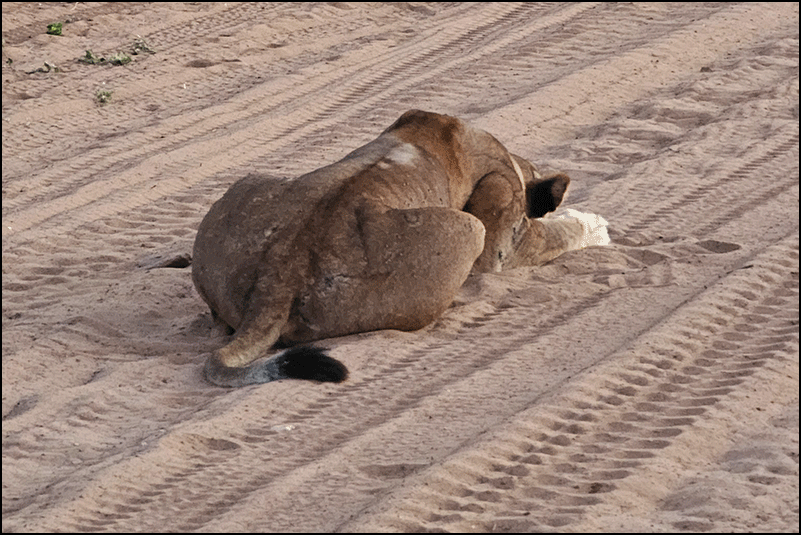
On the road back to camp, we found a lioness crouched in the sand, watching a group of buffalo moving her way. She was thin and looked old, and we felt sorry for her. She was in full hunting mode, waiting with incredible patience for the buffalo to come nearer. She stayed pressed flat down in the road, poised to spring. The air felt charged with suspense, the whole landscape holding its breath. We waited, with cameras poised, as the light faded. And waited, and waited. And waited some more. After what seemed like an hour but was probably five minutes, our lioness suddenly exploded upward and charged - but the buffalo were too far, and they bolted in a cloud of dust. She likely wouldn’t have been strong enough to take down a
full-grown buffalo by herself anyway. Still, I had hoped she’d get a meal.
We drove back to camp, watching the sun sinking into the Chobe behind us. We gathered around the fire, enjoying the warmth and camaraderie, contemplating our place in the circle of life as countless travelers before us have done since time began.
As I watched the stars come out one by one, I was struck by the fact that they had been there all along, but I needed the darkness to see them. The constellations were waiting like old friends - Scorpius, the Southern Cross, Sagittarius, and the Milky Way strewn across the sky.
|

Scorpius
|
One of my favorite things about camping in Africa is listening to the night noises. We were close enough to the river to hear hippos honking in the distance. They make a remarkable variety of deep, resonant sounds that carry across the water and through the night. Their loud grunting voices were raised in what sounded like sinister, secretive laughter. Do they know something we don’t? They always seem to be in on a joke we’ll never quite understand.
Later, in the early hours, a lion called somewhere far away. It sounded more mournful than menacing. Hearing the low moans of the lion drifting across the savannah while you are on safari always sends a shiver down your spine - part thrill, part wonder, and maybe just a tiny bit of unease. It’s a reminder that out here, the night belongs to them.
~
Continued
on next page ~
Africa 2025 Journal Pages:
1
2
3
4
5
6
7
8
9
10
11
12
13
14
15
16
|