|
Africa 2025 Journal Pages:
1
2
3
4
5
6
7
8
9
10
11
12
13
14
15
16
June 26
Our wakeup call was at six. The sun was just beginning to rise, and the day already felt full of possibility.
Over breakfast, Gee told us that the guys had seen a honey badger behind camp late the previous night, and soon after, a civet had wandered among the tents. Hyenas had roamed through as well. We wished we had seen these nocturnal visitors ourselves. We planned to check the trail camera later to see if any had been caught on it.
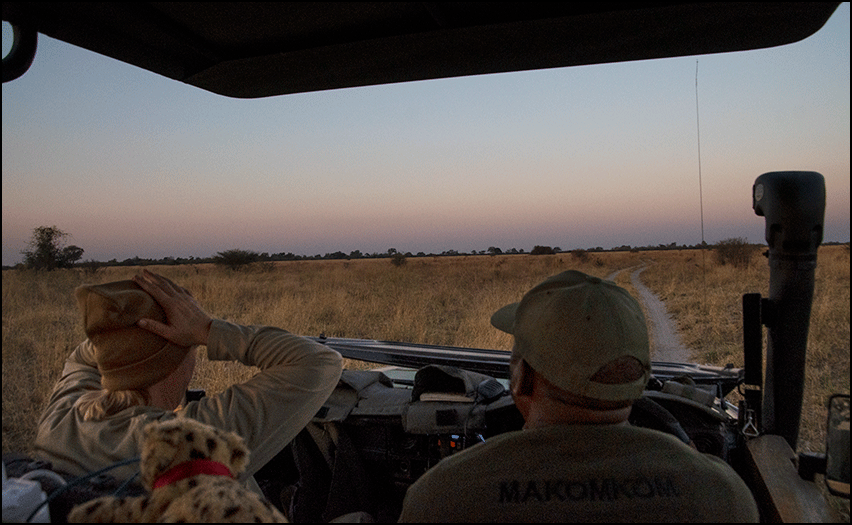
We headed out at seven. It was much colder this morning; we huddled together in the vehicle, bundled in layers with blankets over our laps. The air had a crisp,
early-morning bite, and everything felt sharp and clear. People often think of Africa as being hot, but it can be surprisingly cold at night in the winter.
Gee drove slowly around the sand track that circles Leopard Rock, scanning the outcrop for any sign of movement - a flick of a tail, the glint of spotted fur. No luck. Gee said a female leopard makes her home there, but with all the caves, ledges, and thickets, there were a million places for her to hide. And at this hour, she was likely out hunting anyway.
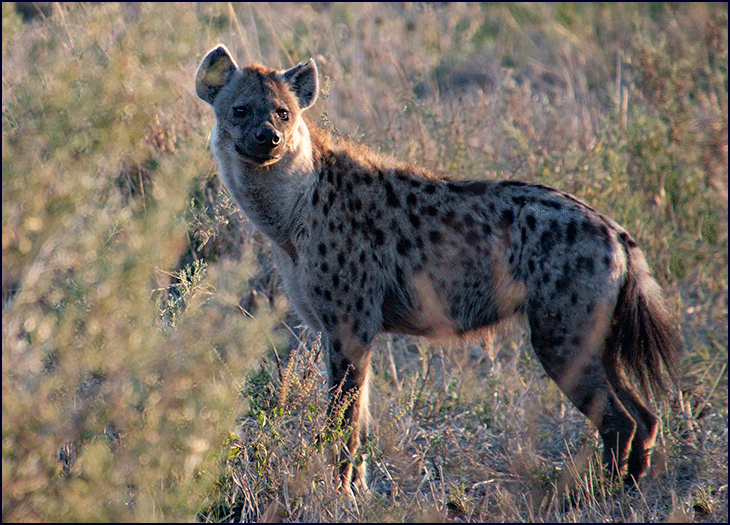
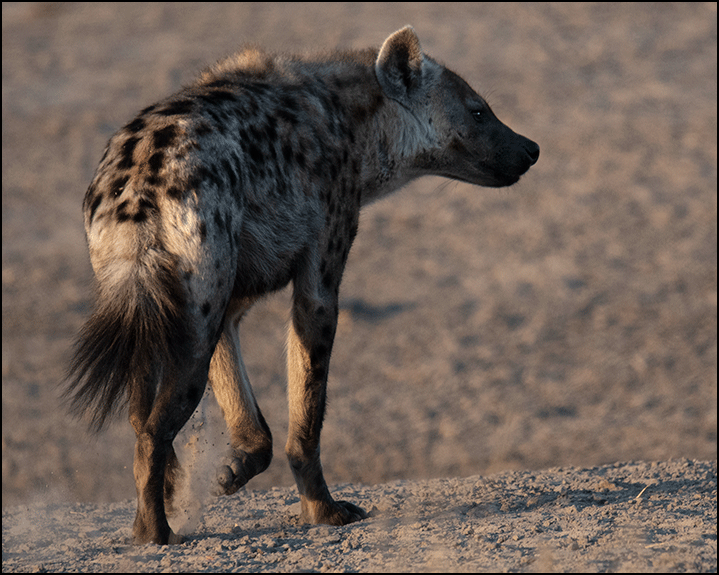
A lone hyena appeared then, moving through the scrubby grass toward us with that unmistakable sloping gait - shoulders high, hindquarters low. Her coat was a blend of tawny brown and shadowy spots, her muzzle dark, her tail bushy. There was a keen intensity about her, a kind of self-aware confidence. She moved deliberately, pausing often to listen, lifting her head to test the breeze, trotting a few steps before stopping again. She seemed both self‑assured and slightly restless. She finally stopped and looked straight at us, sunlight catching her shoulder. Her eyes were bright and intelligent, assessing rather than fearful. After a long, quiet moment, she decided we were unimportant, and turned and walked away across the empty plain.
Spotted hyenas are the ultimate scavengers, with jaws powerful enough to crack elephant bones. Though they will happily steal a kill from a lion or leopard, they are also skilled hunters in their own right. They’re much maligned - and The Lion King certainly didn’t help their reputation - but I find them fascinating creatures. Hyenas have a complex social structure; clans are matriarchal, and the mothers collaborate closely to raise their young. And truly, few things are cuter than a baby hyena.
An African harrier-hawk perched atop a dead tree as we passed, then took off with broad, outstretched wings. We reached a waterhole - or pan, as they are called - the first of several that sit close together in this part of Savuti. Cape turtle doves were drinking, their reflections perfectly mirrored in the still surface.
It was a beautiful morning, and we saw many of the usual residents. Several kudus and a herd of impalas grazed across the plain, and a lone wildebeest patrolled the perimeter. Gee spotted a tiny button quail in the road - so small it was almost comical to see it darting ahead of us.
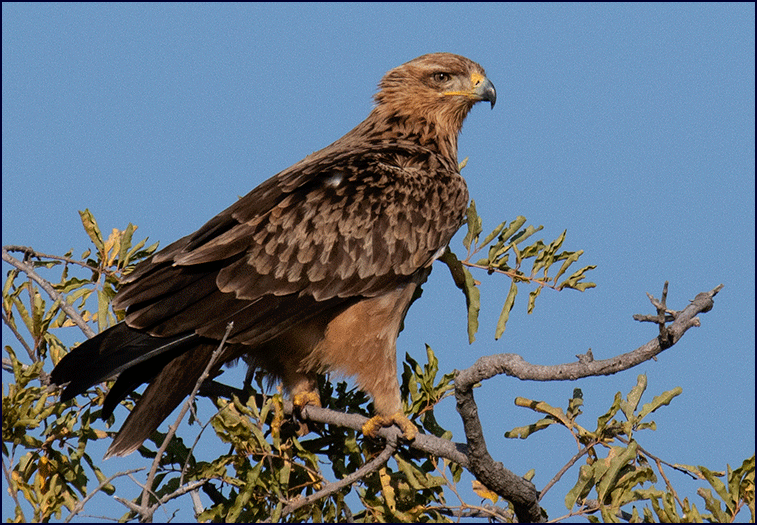
A tawny eagle sat high in a treetop with a commanding presence, surveying his kingdom with calm confidence. His feathers were a warm mix of chestnut browns and golds, and a sharp light gleamed in his eye as he scanned the ground below for movement.
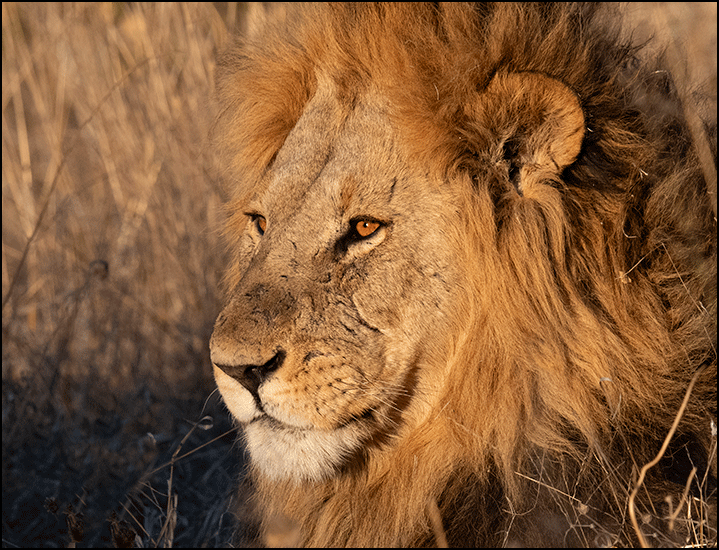
A flicker of motion near the treeline caught our attention. At first we thought it was an impala, but no - this time it really was a lion. Two of them, in fact. Two large male lions lay in the underbrush where they had been feeding on a baby impala. One was stretched out, resting, while the other paced a few steps before flopping down beside him. Gee told us they were the dominant males of the Northern Pride. There had been three, but one had died last year, likely from a snake bite. Natalie had been counting up the total of the lions we had seen – we were now up to
twenty-one different lions for the trip.
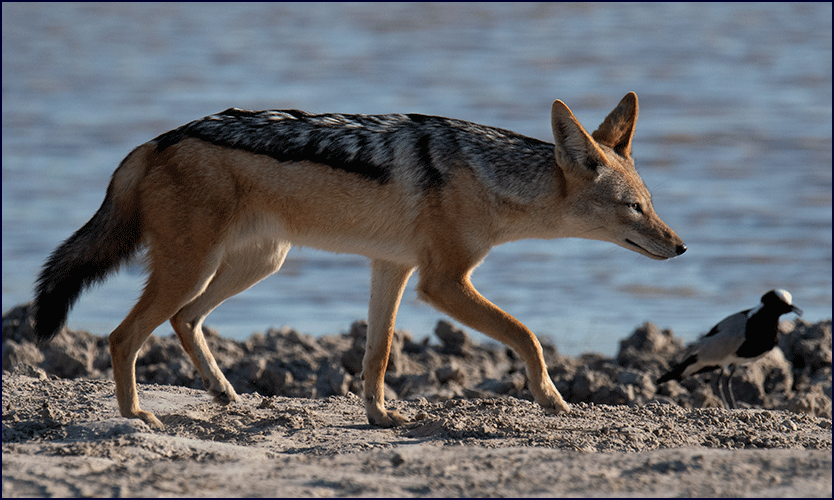
Five black-backed jackals were hanging out by the next pan - a family group of two adults and three youngsters. They trotted back and forth, digging in the dirt, drinking from the pan, checking out the bushes. One of the young ones gnawed enthusiastically on a bone. They were lovely in the morning light, close enough that we could see every detail of their refined, foxlike faces - so beautiful and inquisitive. The negative associations with the name “jackal” seem entirely undeserved; they were a joy to watch.
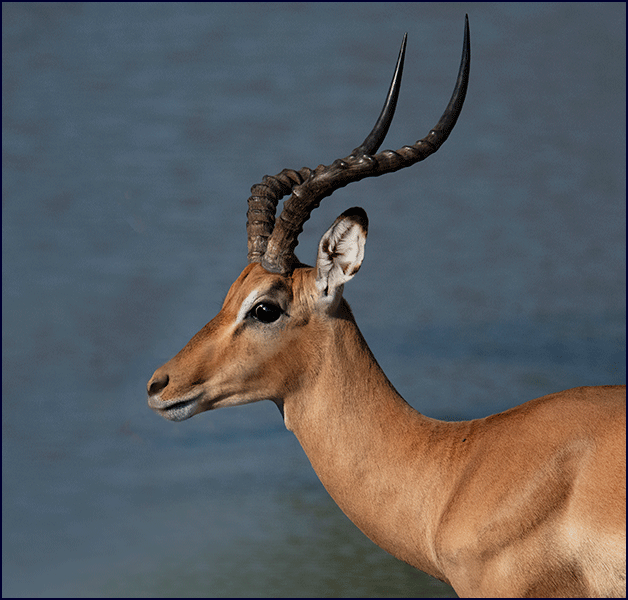
At the following waterhole, a striking male impala stood against the blue water, the sun glinting off his long, curved, spiraling horns. Even though we see impala on every drive, I still appreciate their delicate beauty.
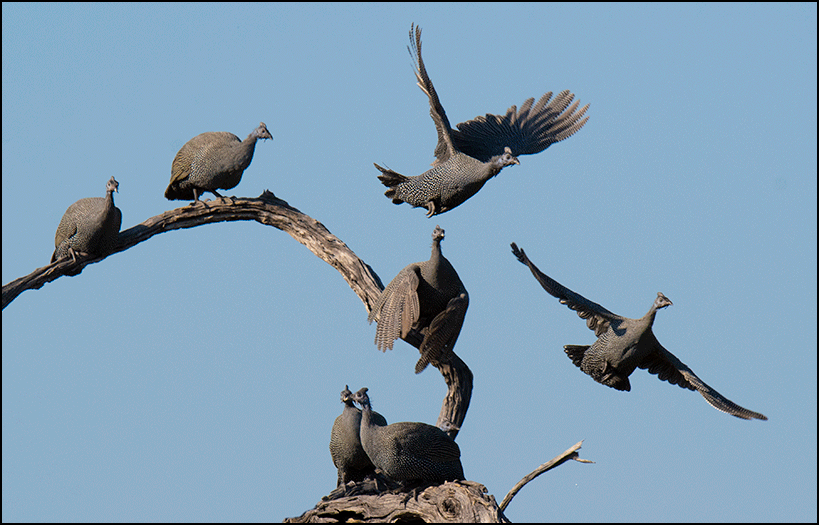
A whole flock of guineafowl clustered around the water, with more perched in a nearby tree, crowded together on a curved branch. With much squawking and flapping, they took off a few at a time, their wings beating frantically as they became airborne.
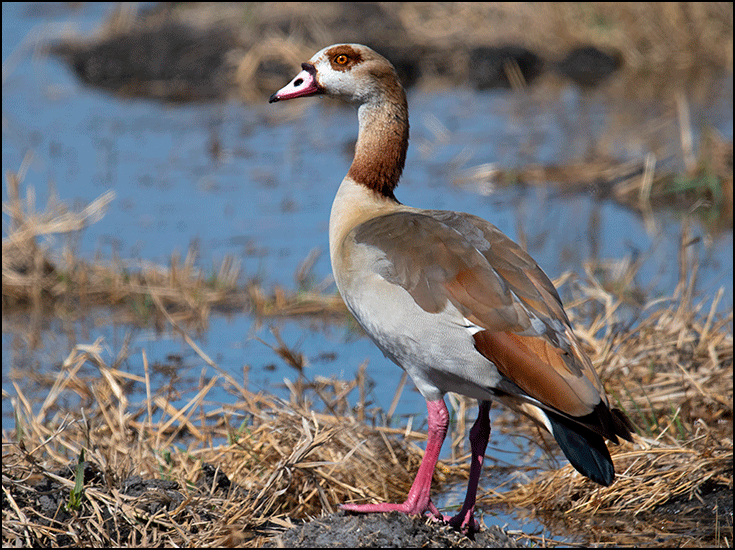
A pair of handsome blacksmith lapwings stood at the water’s edge, and to our delight, they had two half-grown, charmingly scruffy chicks with them. Several Egyptian geese stood nearby, distinctive with their grey breasts, chestnut bodies and necks, and fiery red eyes.
We left the pans and headed across the plain toward the Savuti Channel. Another solitary wildebeest grazed near the road; you usually see them in herds, but this was the fourth lone individual we’d spotted that morning.
The Savuti Channel is sometimes a river, but at the moment it is a dry channel. It’s believed that seismic shifts in underground tectonic plates determine when it will flow, though no one is completely sure. The water can run full for years and then vanish into dry sand for decades without any clear climatic cause. When I first visited Savuti in 2015, there was still some water in the channel, but it has been dry ever since. Without hippos, crocs, or waterbirds, the riverbed has a different feel - but it’s far from empty. The dry channel is home to a host of other animals, and driving down it has given us many an adventure over the years.
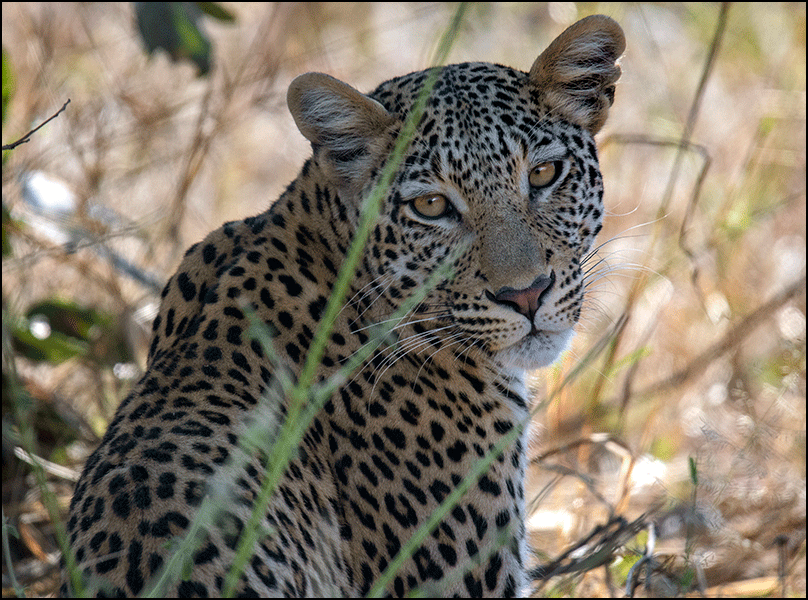
Gee stopped the Land Cruiser and pointed to the dust. Cat tracks - the three‑lobed paw prints of a leopard. Petite, he said, so likely a female. We drove slowly, scanning the bushes for movement and listening for alarm calls; you can often locate predators by following the warnings of birds and impalas.
And suddenly there she was, sitting in the shade on a narrow path about
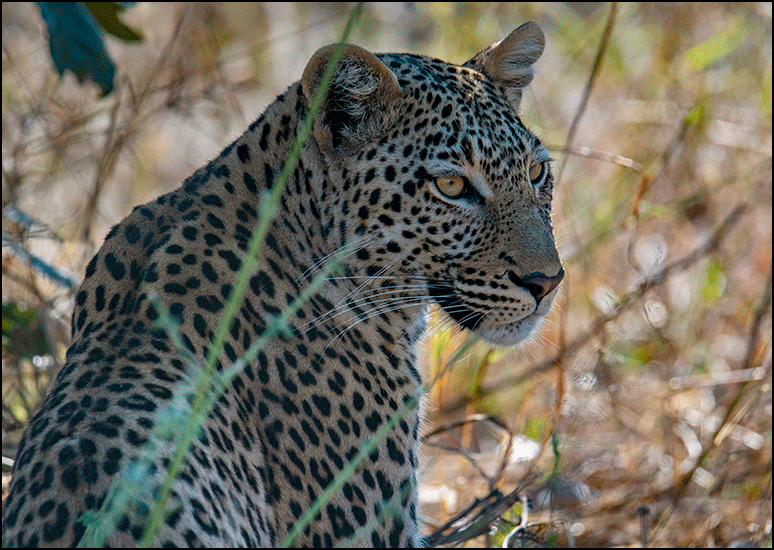
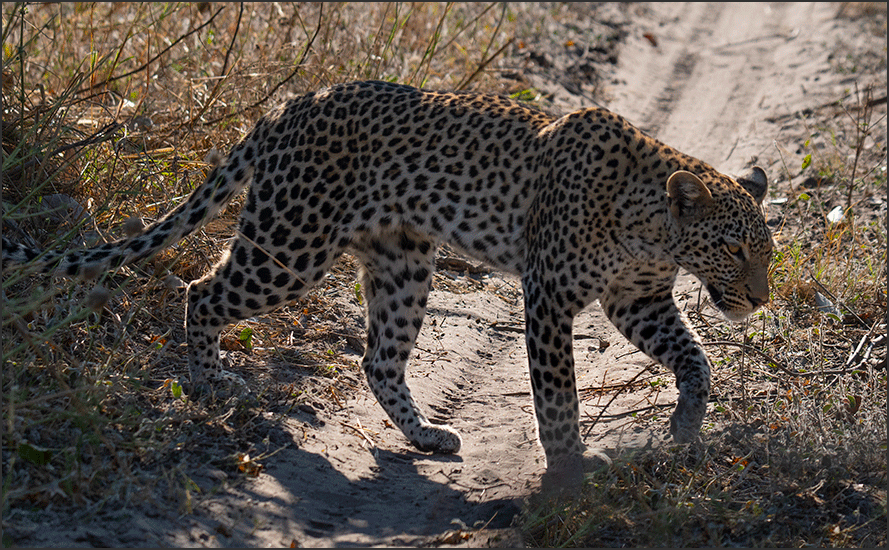
seventy-five feet from us. Jineen spotted her first. The leopardess turned her head and gazed at us. She was beautiful — female leopards often seem more refined to me than the males. She was on the smaller side; Gee said she was young, probably only recently out on her own.
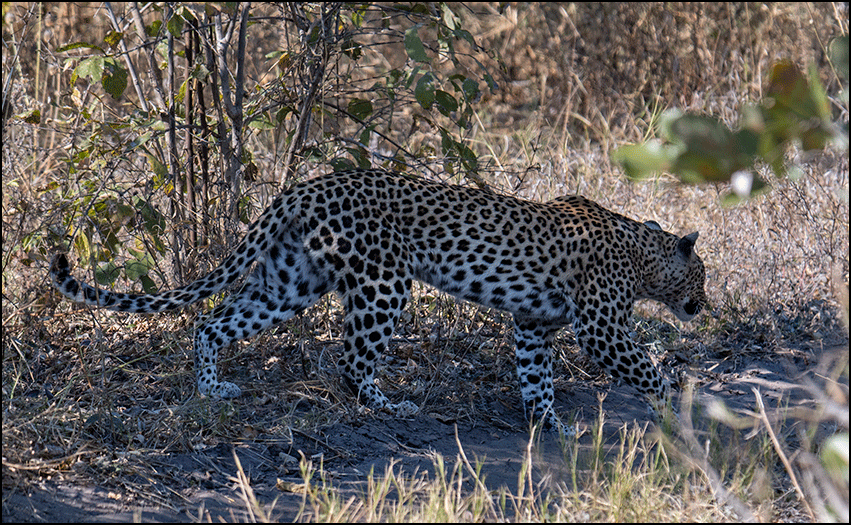
She sat for a while, undecided about us. Eventually, determining we were no threat, she stepped out of the cover and walked down the path toward us. Her spotted coat blended beautifully into the mix of shadows and dappled sunlight, her fabulously long tail flowing behind her in an effortless sweet. She passed not far from the vehicle and slipped into a trail through the trees ahead. We eased forward after her.
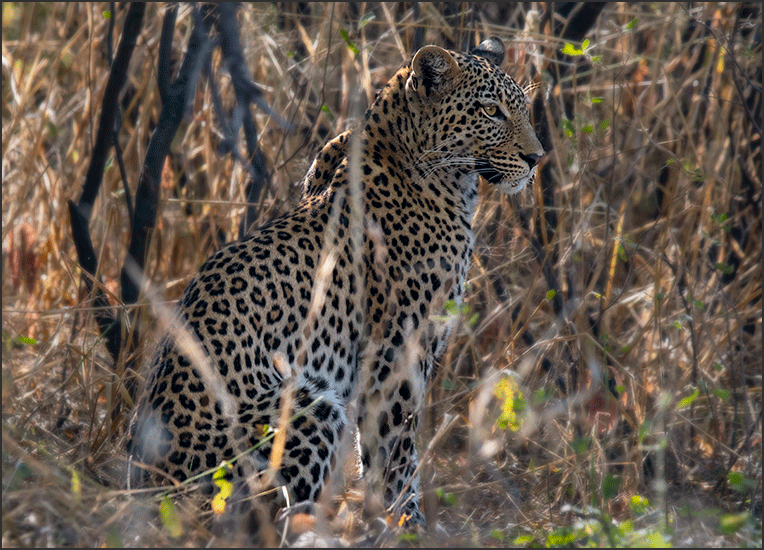
When we caught up with her, she was sitting in some stalky brush, looking back at us. She probably thought we were the paparazzi, but she didn’t seem to mind too much. She could easily have vanished and left us behind - or avoided being found in the first place. Leopards are solitary creatures, living mostly alone. They are shrouded in mystery, the keepers of solitude. Maybe, just for a moment, our young leopardess didn’t mind a little company.
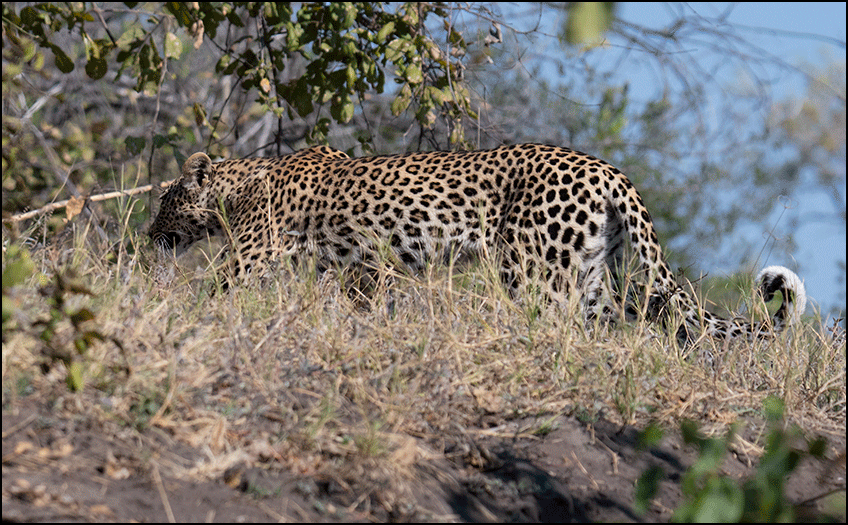
She moved off again, this time covering more distance, clearly setting out to hunt. We followed, but she slipped ahead of us, unseen. Just when we thought we had lost her, she climbed the steep bank of the dry river in front of us. She paused for an instant and looked down at us, then continued on. We drove along the bottom of the Savuti Channel while she stalked along the top of the bank, catching glimpses of her as she crossed open patches before disappearing again into the bushes. She glided silently through the thickets like a creature from a dream, her presence lingering even after she had passed out of sight.
Then our leopard stepped into the sunlight and paused to mark her territory. She sat quietly in a stray sunbeam for a few moments, perfectly still. Her golden coat merged with the
yellow-brown dried grasses, and her black spots formed a flawless pattern across her body. Her camouflage was perfect - her only giveaway was the white underside of the tip of her tail, curled in a tight circle, twitching softly. And then, as silently as she had appeared, she turned and melted back into the underbrush, her outline dissolving into the golden light, leaving only the knowledge that something wild had passed this way.
Any leopard sighting is special, but this one was exceptional. I wanted to shout, “Oh my god, that was AMAZING!” It was especially thrilling because Gee had tracked her, and we had found her on our own. After we’d had those precious few minutes with her privately, Gee radioed the other guides to let them know she was there.
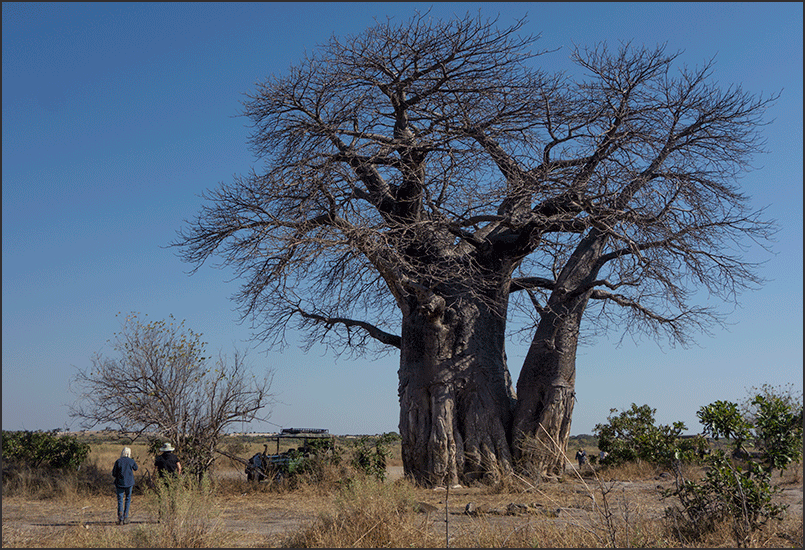
We drove past Bushman’s Rock, another of the large granite hills of Savuti. High up on this outcropping are rock paintings made by the San people - the local indigenous people also known as Bushmen - said to be more than three thousand years old. At the foot of the Rock sits Bushman’s Baobab, where we stopped for tea.
This huge, iconic tree is a Savuti landmark, a true presence on the plain. With a diameter of more than
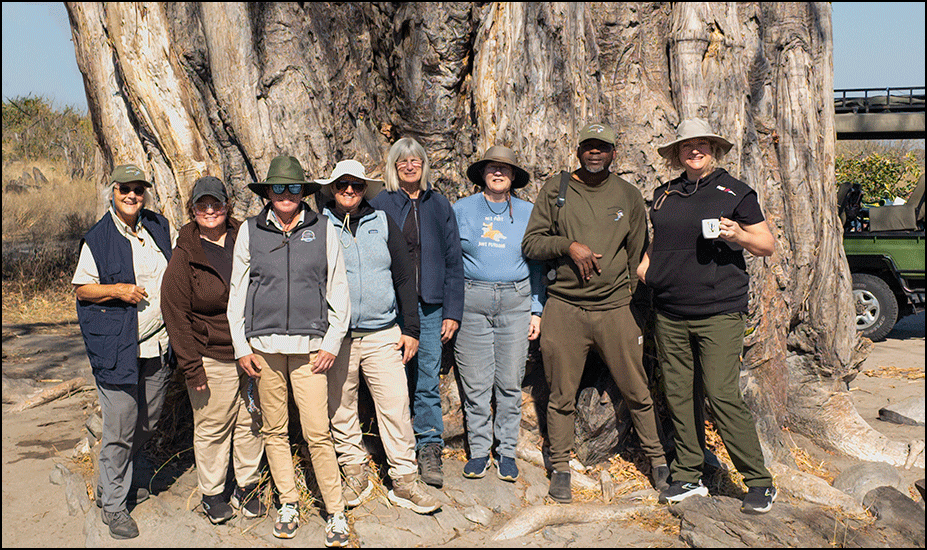
twenty-five feet, it’s estimated to be over a thousand years old. We took a group photo in front of it - far more successful than the attempt on our last trip, when we were attacked by bees.
The Bushman’s Baobab doesn’t just grow in the landscape; it anchors it. A
time-worn giant, rooted in centuries of sun, wind, and passing footsteps. It’s a reminder that some living things have been watching over the savanna for generations, quietly holding the memory of everyone who has passed by. Oh, the things that tree must have seen.
The San people, inhabitants of these plains for many thousands of years, believed that baobabs held special powers and considered them sacred - places where spirits dwell and ancestors could be reached. Standing beneath this mighty tree, I felt sure they were right.
Presently we continued across the plain, and past some woodlands. A tree monitor lizard lay stretched out on a high limb, so still that only the shape of his reptilian head gave him away; the rest of his long body camouflaged among the dappled leaves. This was another sharp spot by Gee - we would never have noticed him on our own. These impressive lizards are cousins to the water monitors we’d seen in
Ihaha, though far better at blending into the trees.
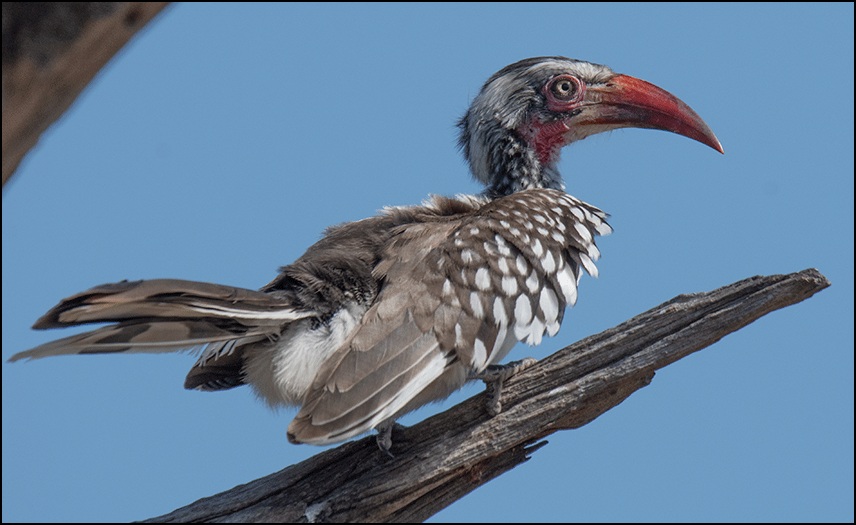
A little farther on, a red-billed hornbill seemed to
be waiting for us. He stood on a stump right beside the road, then
flitted up to a bare branch on a dead tree as we approached. He
watched us with bright curiosity, tilting his head from side to
side, his yellow eye catching the light.
These medium-sized birds are smartly dressed in grey, black, and white. The feathers over their shoulders and wings are white delicately edged in dark grey, giving them a lovely scalloped pattern, and their long tails are dark. Their oversized curved red bills - almost too big for their faces - give them a slightly comical look.
Red-billed hornbills are the species that inspired Zazu in The Lion King, and the film captured their essence just right. These birds are everywhere in the bush; they move with jaunty confidence, hopping about, flicking their tails, and darting after insects. They fly in big swooping curves, and their bright, chattering calls carry across the savanna. One could just imagine them admonishing Simba the lion cub and reporting back to
Mufasa.
We drove out across the Savuti Marsh, a wide, flat expanse of grassland. On my first visit I assumed a marsh required water - or at least mud - but in Savuti that isn’t the case. When the Savuti Channel is flowing strongly, the water spills out across this floodplain and creates a true marsh. But when the channel is dry, as it is now, the whole area becomes a vast, treeless plain. It stretched out before us in every direction, the brown‑gold grass making a soft, even covering. The sky felt enormous, hemmed around the horizon with that darker haze that seems unique to this place.
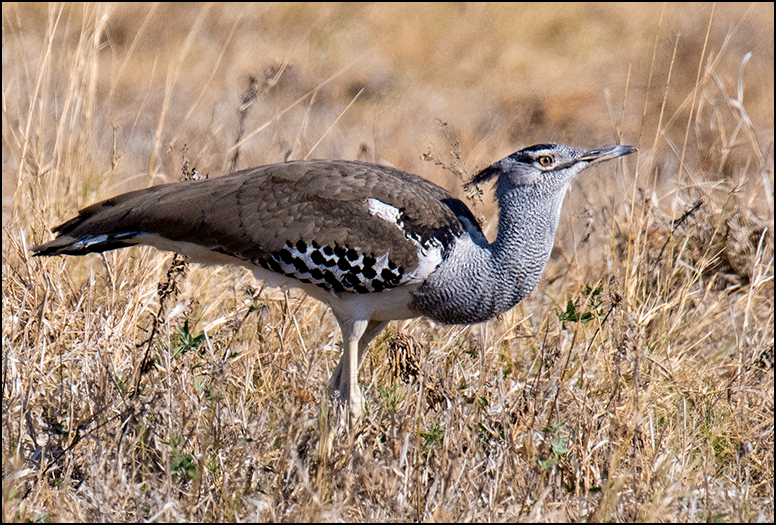
A kori bustard was walking through the grass, and a mole snake slid across the road in front of us, but otherwise the Marsh was quiet. We noticed fewer antelopes than on past trips; Gee explained that because we were a little earlier in the season, the larger herds were still grazing in other parts of the park.
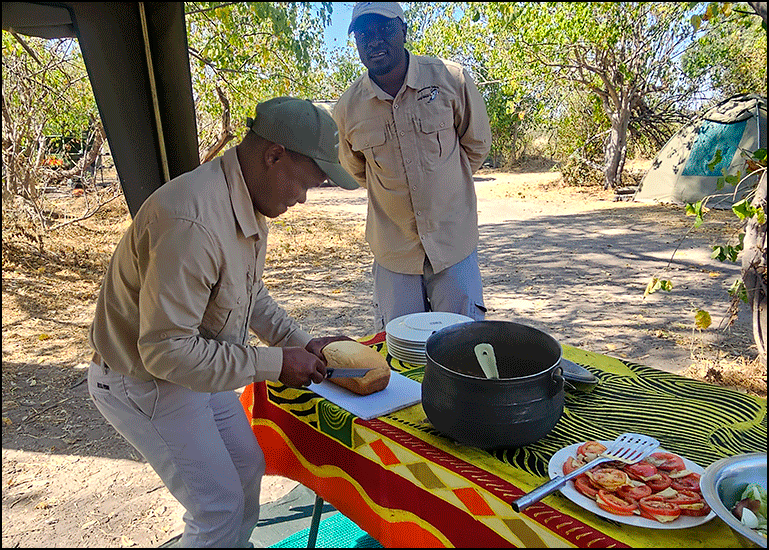
Gee brought us back to camp just before noon. Lunch was, as always, far nicer than one would expect in the bush - a fresh salad, a warm main course, and a delicious loaf of bread baked right in the camp stove over the fire. Afterward we took bucket showers and had a little time to relax.
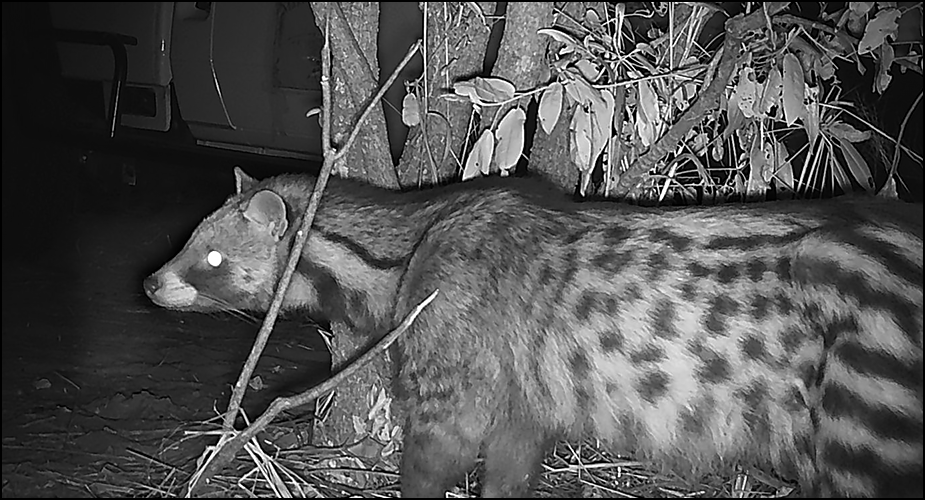
Then came a highlight: looking through Jineen’s
trail-cam photos. We were delighted to find clear images of the civet from the night before. His greyish fur was patterned with dark spots and stripes, his long tail neatly ringed, and that black mask across his face gave him a
bandit-like look and a slightly mischievous expression. A civet resembles a cross between a cat and a raccoon, though it’s actually in the mongoose family. They’re nocturnal, and aside from the occasional fleeting glimpse in camp, we had never really seen one. Getting such a good photo felt like a small triumph.
When we went out for the afternoon game drive, almost immediately we came upon three lions - a female and her two sons, about two to three years old. They had been feeding on a giraffe carcass, but by the time we arrived they were sprawled on their backs and sides in a deep food‑induced coma. They had killed a full‑grown male giraffe, which Gee said was very unusual – he speculated that it may already have been injured. These lions were part of the Marsh Pride, and this sighting brought Natalie’s lion total up to twenty‑four.
A little farther on we spotted a pair of steenboks, the male with his sharp little horns. These tiny antelopes can survive in very dry areas because they get all the moisture they need from the plants they eat; they don’t need to drink at all.
Out on the open plain a dark round shape appeared, almost blending into the
heat-haze. Then a second, more grey and drab. As we drew closer the outlines sharpened, and we realized it was a pair of ostriches.
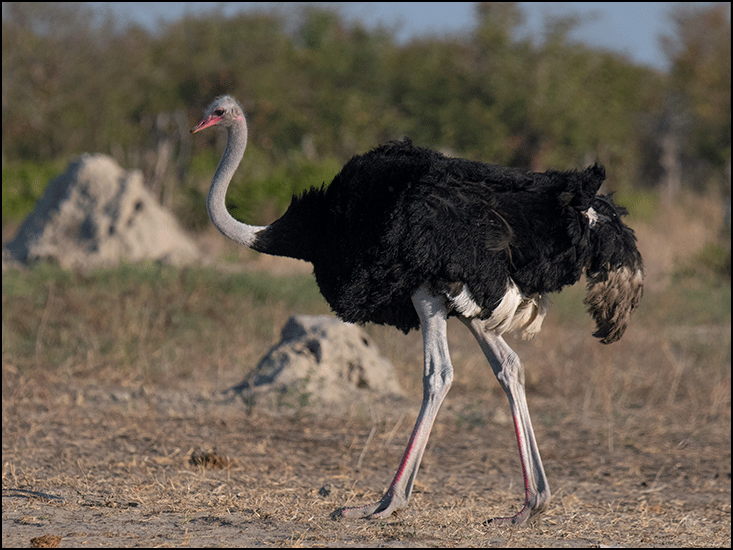
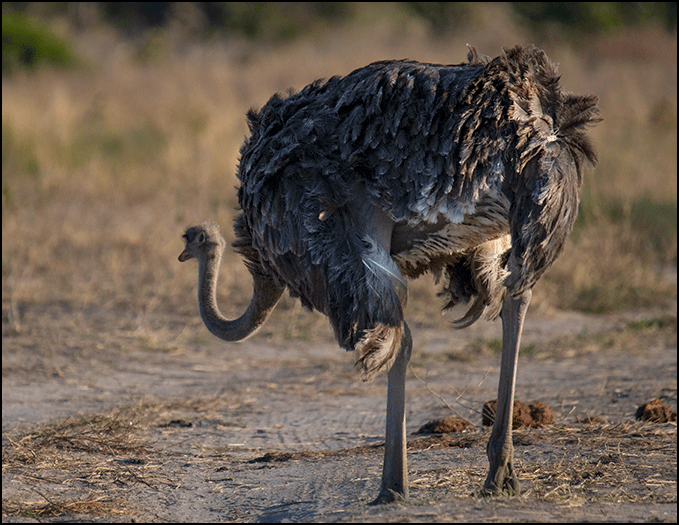
Ostriches are among the more improbable residents of the savanna. Everyone knows they’re big, but until you’re close to one you don’t grasp just how enormous they truly are — males can stand eight or nine feet tall. We watched this pair with awe. There’s something wonderfully prehistoric about them, as if they never quite got the memo about modern evolution.
The male’s large round body was clad in flashy black feathers with a few white accents, while the female was more camouflaged in
greyish‑brown. Both had long, powerful legs - the lower leg as thick as a horse’s - and huge muscular thighs like giant drumsticks. Their long, slim pale‑grey necks rose to tiny heads with enormous eyes nearly two inches across, about the size of a billiard ball. Fun fact: an ostrich’s eyes are bigger than its brain.
The male took a few slow, deliberate steps, pausing to look our way as if posing, his big eyes framed by fabulously long eyelashes. He looked both regal and faintly comical, and it seemed he enjoyed being the center of attention. His beak and the fronts of his shins were a bright pinkish‑red — their breeding‑season colors, designed to attract a mate. The female was more modest but just as captivating, pecking at grass near the road while the male strutted off across the plain, his feathers ruffling in the breeze.
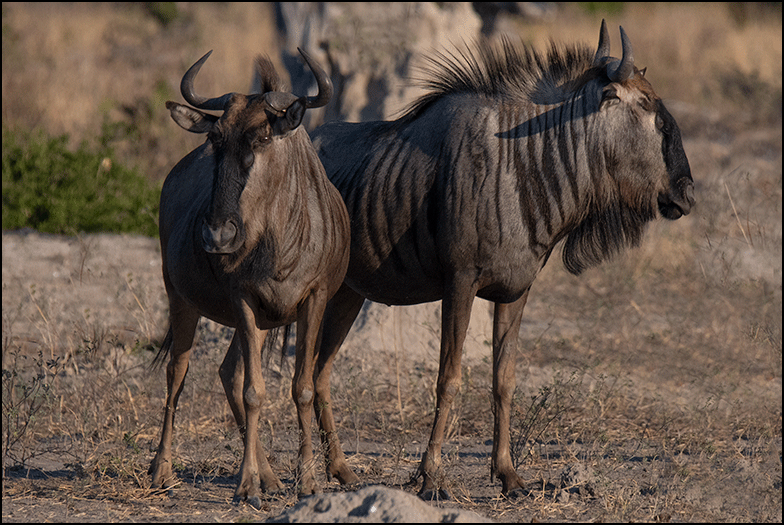
Nearby was a herd of about twenty blue wildebeests, and we were able to spend some time watching them. We had seen them here and there over the past few days, but this was our first chance to get really close. They drifted across the plain in a single-file line, walking in that typical wildebeest gait - shoulders high, head low - giving them a distinctive triangular silhouette even from a distance. They stopped beside a waterhole, and we could see several half‑grown calves among them, their coats a much lighter brown than the adults.
Wildebeests have large, heavy shoulders, skinny hindquarters, and shaggy beards, with a pair of curved horns sweeping up from the sides of their heads. Their coats are a deep
greyish‑brown with faint black vertical stripes on the neck and shoulders. They’re not usually considered the most beautiful of the savanna’s inhabitants - it’s often joked that God assembled them from leftover parts after he made the other animals - but I find them really interesting.
A lone zebra stood in the tall grass; he looked very old and lame. Gee said he would be food for tonight. Sad to think about, but the lions have to eat too.
As we drove across the Savuti Marsh, we watched the shadow of the Land Cruiser glide across the flat ground beside us. The grass was noticeably higher than on previous winter visits, but we were there a little earlier this time, and the animals hadn’t yet eaten it down. It was nice to see so much forage waiting for them.
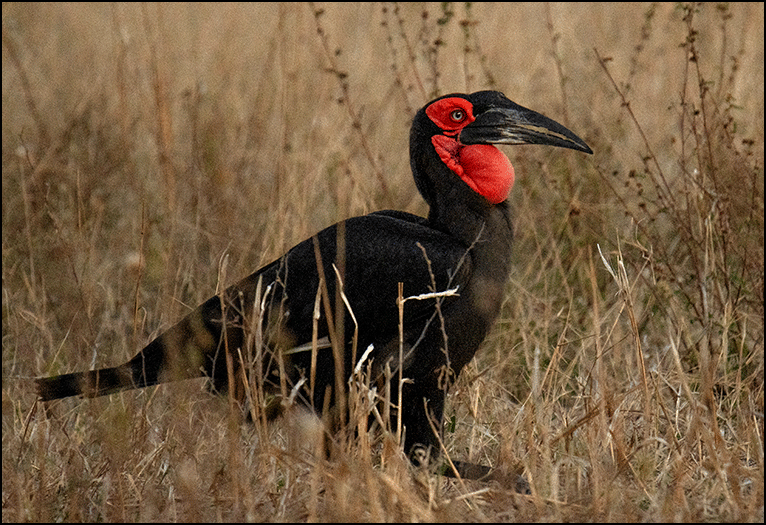
Several ground hornbills were walking solemnly through the tall grass in the fading light. After a while they took flight, their black wings in stark contrast to their bright red faces and pale bluish eyes. These huge birds feel as if they’re not related at all to their quick, chatty red‑ and
yellow-billed cousins.
Crossing the dry marsh, we saw a white‑crowned shrike, a black‑bellied bustard striding through the tall grass, and a bateleur eagle sailing overhead. We passed a wide, trampled path cutting through the grass and across the road, created by enormous round feet. Gee said such paths were known as elephant highways.
The sun slipped below the far treeline in a blaze of glory, turning the horizon a fiery red. As the blue sky faded to dark, the Savuti haze deepened into shades of rose, orangey-gold, and purple. The stars were already coming out by the time we reached camp.
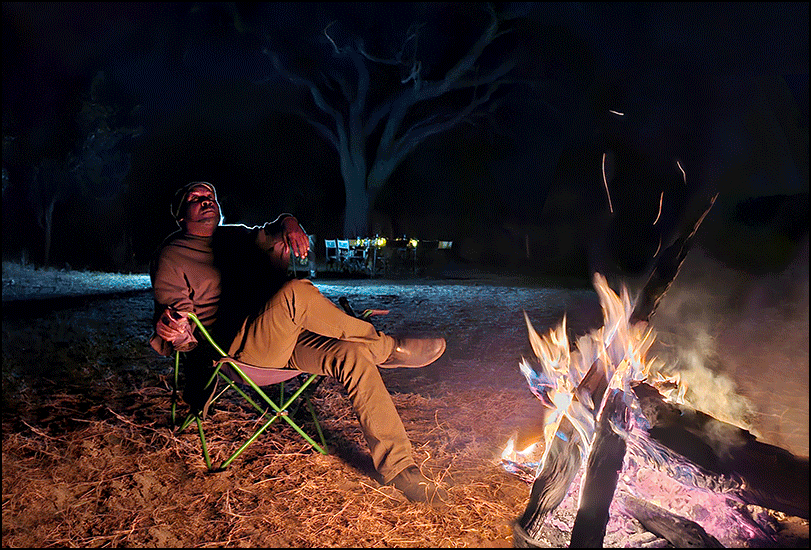
After dinner we lingered around the campfire, watching the stars, seeing fiery animal shapes in the glowing embers, telling stories, and reliving the day’s best sightings. The leopardess topped the list - though there had been so many excellent animals. The lone hyena and the jackals in the morning - was that really just this morning? We had seen so much it was hard to keep track. The ostriches, Bushman’s Baobab - I could go on and on.
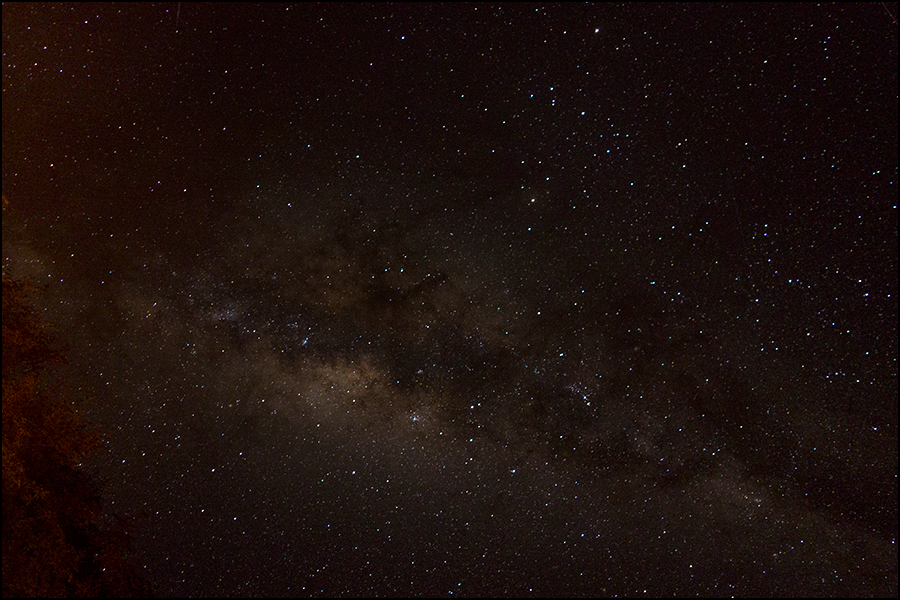
The Milky Way arched overhead. Scorpius stretched across the horizon, and the two Pointer Stars showed us the way to the Southern Cross. Brilliant. Magnificent.
Looking at this night sky reminded me of when I was a kid, when the stars seemed so much brighter and you could see the Milky Way from Virginia. What had changed, I wondered. Surely not the stars. Maybe light pollution, air pollution, my eyesight, or my imagination - or all of these. Back then I had the willingness to lie on my back in a dark field for hours with my best childhood friend, watching the heavens and pondering the mysteries of the universe. Did space go on forever? If not, what was beyond? And what about time - what came before it started, and what comes after it ends? I don’t understand it any more now than I did then.
I had moved my camp chair away from the fire and out into the darkness to try some more star photos, and Gee joined me. We sat there a while, talking softly and comparing photography notes.
And then the hyena noises began.
They were loud, they were close, and judging by the sound there was a fair‑sized group of them. Not just the inquisitive whoop‑whoop call we hear so often - this time it was the loud, raucous laughing and giggling that earned them the name ‘laughing hyena.’ A series of high‑pitched, cackling yelps, sharp and loud, full of electric energy, punctuated by occasional squeals and strangled gasps. They kept up the boisterous chatter for a long time. It was chaotic, wild, and oddly gleeful - and when you’re sitting out in the open at night on the Botswana plain, a little terrifying. With Gee beside me I wasn’t afraid, though without him I would have been.
Then we saw motion at the edge of camp. To our delight, a honey badger hurried by, soon followed by a second. They scuttled across camp just beyond the firelight. We shone our flashlights and got a quick but decent look at them.
A honey badger has short legs, a sturdy low‑slung body, and long claws built for digging. Less than a foot tall, he weighs in at around twenty to twenty‑five pounds. He is black, with a silver‑grey mantle running from the top of his head down his back, giving him a skunk‑like appearance - though he’s not closely related to skunks at all, but is much more like a wolverine. He has powerful teeth with a forceful bite, and wears a no‑nonsense expression, as if perpetually unimpressed by the world.
Honey badgers are known for being fearless to the point of audacity. Their skin is thick and loose, allowing them to twist and fight even when grabbed, and they are incredibly difficult to kill. They’re remarkably strong for their size and have an astonishing pain tolerance. They fight with efficient aggression, using both their teeth and their claws - no bluffing, no theatrics, just pure intent.
Their fierceness isn’t loud or showy - it’s the quiet certainty that nothing is going to stop them from doing whatever they’ve decided to do. They don’t back down, even from much larger adversaries. Gee saw one chase a leopard up a tree and keep him there all day, and we once watched two honey badgers face off twenty‑one lions.
Not long after the honey badgers passed by, we saw the dark, furtive shapes of several hyenas lurking just beyond the firelight. Hyenas are often drawn to campsites, hoping to raid the kitchens and steal anything remotely edible - pots, pans, boots - anything not tied down.
Suddenly we heard another burst of sound - a furious tangle of growling, snarling, hissing, and screeching. Gee said it was a honey badger fighting with either a lion or a leopard. The noise sounded like a clash far larger than just the animals involved. It reminded me of that hilarious video that made the rounds a few years ago on social media: “Honey badger don’t care… honey badger don’t give a shit.”
Wow, what an evening, I thought, as we headed for our tents. One of my favorite things about mobile safaris is the animal noises in the night. As I was getting ready for bed, more hyena ruckus erupted - loud chattering and laughing, very close. I stepped out onto the tent’s front porch and shone my flashlight into the trees - and saw green eyes staring back at me. I hurried inside, then slipped out the back into the bathroom enclosure. When I pointed the flashlight over the canvas wall, the green eyes were closer now - and as they moved into the beam, I saw it was the honey badger, just behind my tent. Very cool.
We heard the hyenas several more times, but farther away now. Later we heard the sharp cough of a leopard, just once, but unmistakable - a sound like someone sawing wood. A strong wind came up suddenly and blew for half an hour, the gusts drowning out all the other sounds. Then as the wind died down, the high‑pitched yapping of jackals drifted through camp.
In the early hours lions called - those deep, rhythmic grunts rolling across the night. A lonely, mournful sound, and one of my abiding memories of Africa.
~
Continued
on next page ~
Africa 2025 Journal Pages:
1
2
3
4
5
6
7
8
9
10
11
12
13
14
15
16
|