|
Africa 2025 Journal Pages:
1
2
3
4
5
6
7
8
9
10
11
12
13
14
15
16
July 1
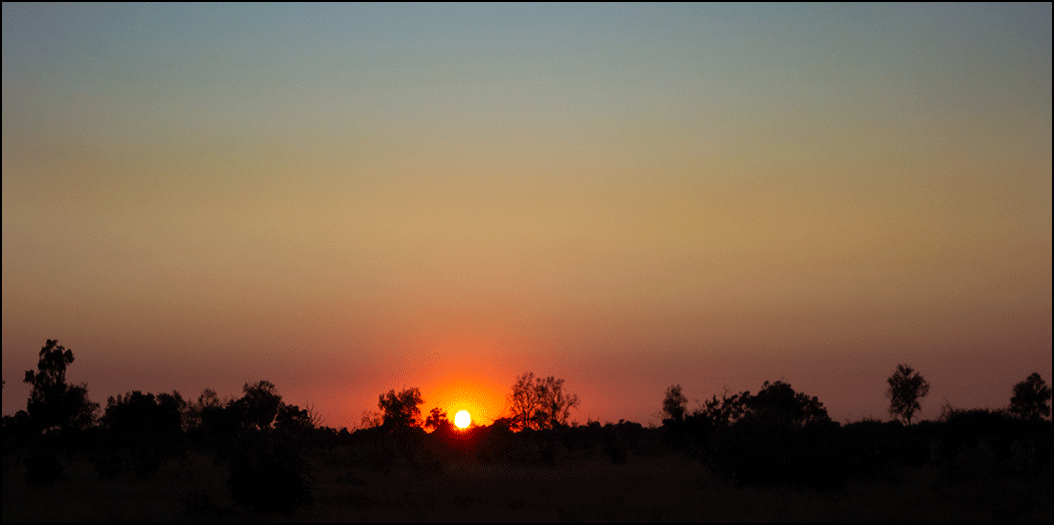
Morning came quietly, long before the sun appeared. The whistling call of the pearl-spotted owlet greeted us again, and the shrill call of an annoyed elephant carried across the river. The sky brightened gradually, the stars fading, leaving only a thin moon hanging above the treetops. The air had that cool, damp edge that comes just before sunrise. We greeted the new day with eagerness - anything might be waiting out there.
We headed out at seven - not terribly early by safari standards, but it was a starting time that was sustainable for a two week journey. Our goal was simple: reach the wild dog den before anyone else and wait. As we were heading for the den, Gee heard on the radio that the dogs were hunting; we scanned the plain and dead tree forest for them, but no luck. The morning was expectant, as if holding its breath.
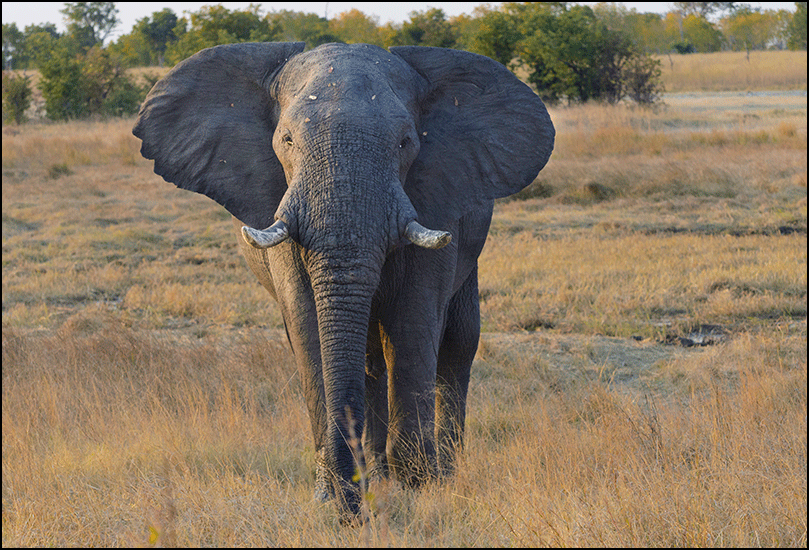
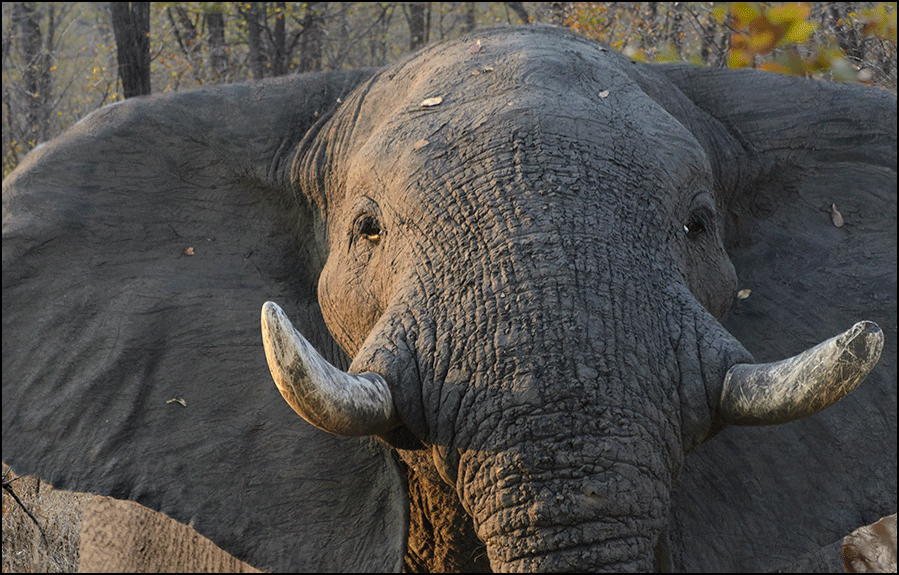
As we approached the den, we saw a safari vehicle stuck in the deep sand. Its driver was trying to dig out the wheel, while his guests were standing outside the vehicle looking helpless. A bull elephant was nearby, and he was clearly unhappy about people being on foot. His agitation was obvious - ears out, head high, moving with a stiff, angry gait that means trouble. The stuck group seemed to expect us to help, but Gee took one look at the situation and shook his head. It wasn’t safe.
The elephant gave an angry shriek and a short, sharp charge in our direction. Gee reacted instantly, swinging the vehicle out of his path with a quick burst of evasive driving. He wasn’t about to put us between an angry bull and the stranded vehicle, so he looped around to approach the den from the opposite side. Other vehicles were arriving to assist the stuck one, so we left the scene behind. My heart was still pounding, but Gee looked as calm as if he’d avoided a pothole.
We reached the wild dog den and found ourselves the first ones there, as we had hoped. Gee turned the Land Cruiser around so it was pointing outward toward the road, and we had a good view of the den. No dogs or pups yet - just cool dappled sunlight through the trees, and the faint rustle of wind in the grass, and the rhythmic chant of the Cape turtle doves. We settled in to wait.
We had no sooner gotten comfortable when the quiet of the morning was disturbed by shouting, an engine revving hard, wheels spinning, and then the unmistakable shriek of a furious elephant. Several guides were trying to extricate that stuck vehicle, and the bull elephant had taken serious offence. Moments later he came storming through the trees, still enraged from the commotion - and then he saw us.
He flapped his ears, raised his trunk, trumpeted, and then charged straight at us. Branches snapped beneath his feet as he barreled through the trees, the ground seeming to vibrate under his charge. Thank goodness Gee had parked our vehicle so we had a clear escape route; he floored it and we shot forward, the elephant chasing us for a short distance before veering off and crashing away into the bush. It was our second elephant charge before morning tea – not quite the morning we’d planned, but exciting nonetheless. Moments like this make you feel vividly, unmistakably alive.
Still no dogs. The adults were out hunting, and the pups were down in the burrow. We waited, hoping our
early-morning gamble would pay off. The stillness settled around us.
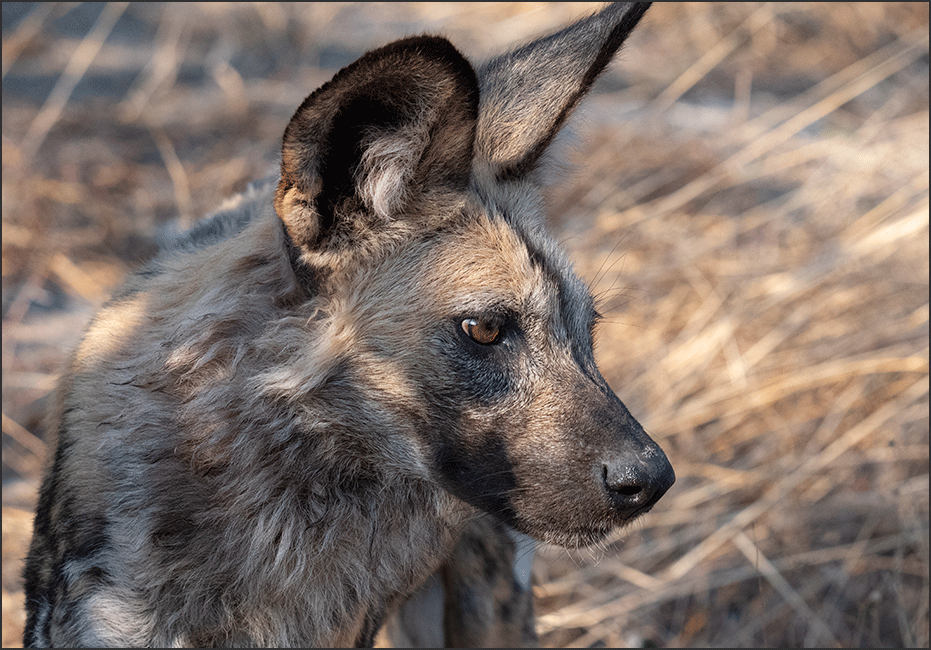
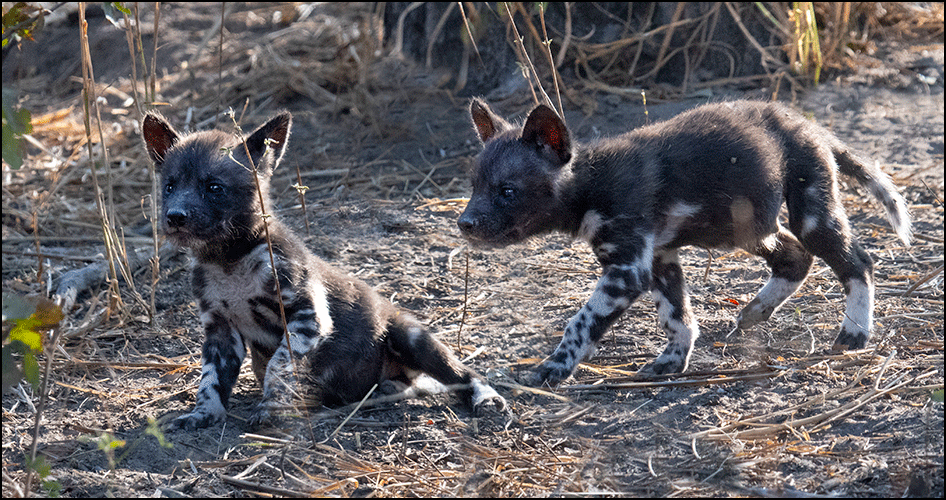
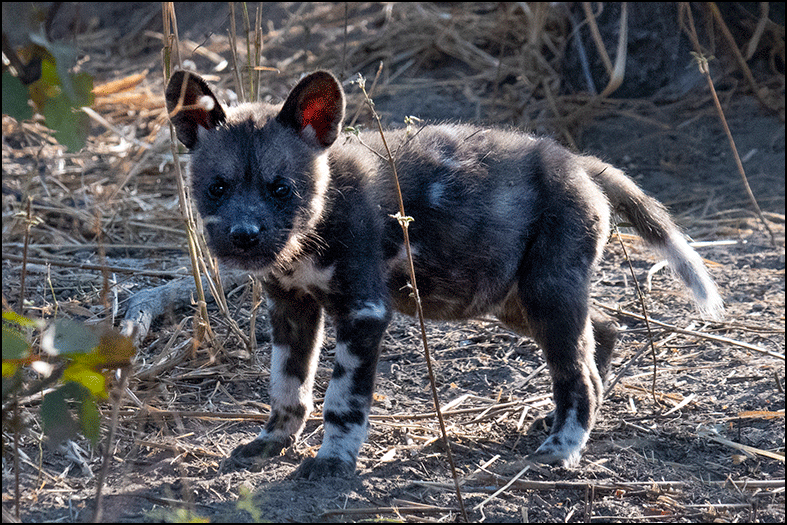
And it did. After about half an hour, several dogs trotted back to the den, returning from the hunt. The moment they arrived, the puppies came spilling out of the burrow to greet them with a joyous explosion of chirps, squeaks, and frantic tail‑wagging. Each dog arriving back to the den is cause for celebration.
More adults appeared, and the pups went wild - climbing over each other, begging for food, trying to nurse, following the adults back and forth in a chaotic, adorable swarm. The energy was pure, unfiltered happiness. It reminded me of the Puppy Challenge we used to do with our lurcher pups at home: lie on your back and let the little hooligans climb all over you, licking and nipping with uncontainable enthusiasm.
Some of the adults flopped down to sleep. Others dutifully regurgitated meat from the morning’s kill, and the pups devoured it with astonishing speed, squabbling over scraps and trying to run off with the best pieces, still with much chittering and chirping. The whole pack participates in feeding and caring for the youngsters.
Photographing them was nearly impossible. They were in the shadows, constantly moving, half‑hidden behind grass and leaves. I focused on video instead, trying to capture them in motion - the mock wrestling, the ear‑chewing, the pouncing on anything that twitched. We got a more accurate head count today; with eight adults and eight puppies, it was nonstop action. It felt like watching a tiny, joyful circus.
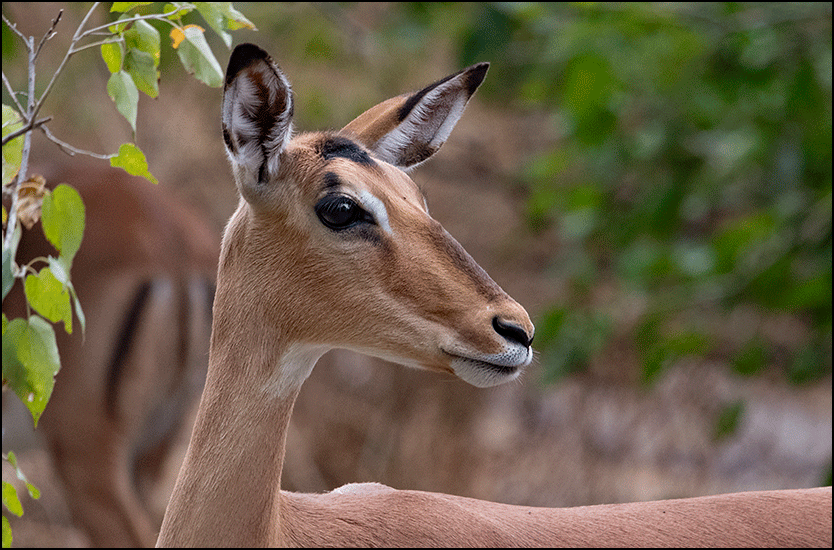
Eventually it was time to leave the den and continue our drive. Guineafowl and warthogs scurried across the road, often at the most inconvenient curves. We paused to admire a group of female impala in the morning light – such clear dainty faces and gentle expressions. Impala are so numerous that it would be easy to take them for granted, but I try not to. Their elegance deserves attention.
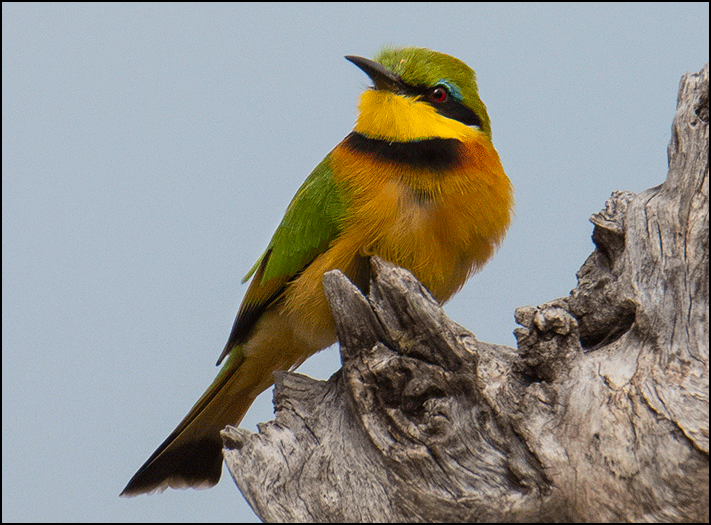
A grey go-away bird greeted us with its nasal admonishment, his topknot fluffed in the morning breeze. A little bee‑eater flashed past - I’d been trying to photograph one for days, but they were too quick.
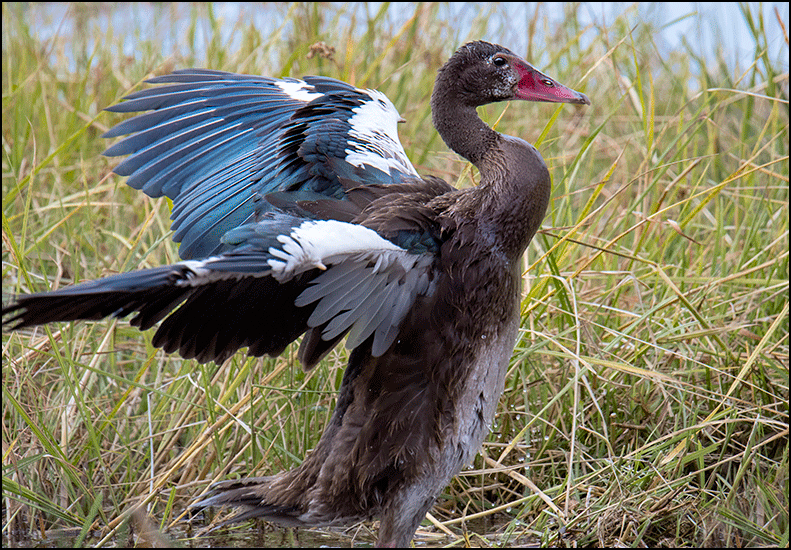
Waterfowl were everywhere. Egyptian geese puttered along the riverbank, and a white egret stalked the shallows. A family of spur‑winged geese by the shore; one of their adolescent youngsters was flapping his wings enthusiastically as he tried to figure out the mechanics of flight. He looked both determined and baffled.
A pod of hippos were in the river, quite close to the bank; we parked and spent some time with them. One big bull had been napping on the riverbank long enough to be quite dry, and several yellow-billed oxpeckers seemed to have taken up residence on his back. The hippos in the water appeared to be floating with just the tops of their heads and backs showing above the surface, but we knew that they were actually walking along the river bottom. Their grunts echoed across the water like slow‑motion laughter.
We stopped at one of Gee’s favorite tea spots in all of Khwai, a quiet place beside a lagoon formed by the Okavango floods. The water lay still and glassy, and the birdlife was spectacular. Greater striped swallows were busy under a fallen log, ferrying
beak-fulls of mud to build their nest. Little bee-eaters perched nearby, flashing their colors in the sun – they are beautiful
green-and-yellow birds with black masks and sky-blue eye shadow. I finally managed to get the elusive bee‑eater photo I’d been chasing for days.
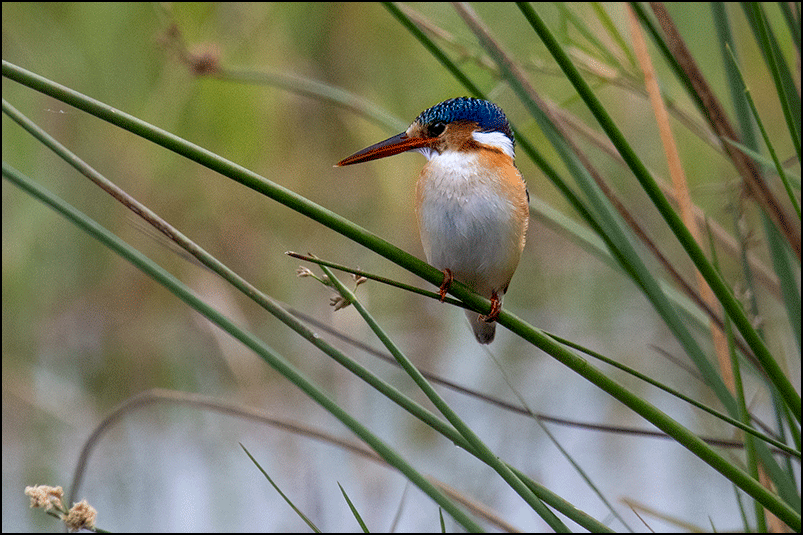
Then Paula spotted a malachite kingfisher sitting on a reed not far out in the water. A tiny little bird, he was a mixture of electric, iridescent blue and orangey chestnut, with a bright red bill. He glowed against the background of reeds and water like something out of a painting. The new 600 mm lens earned its keep yet again.
In a quick trip behind a bush, Jineen had another ‘tire‑checking’ adventure. This time she acquired a visitor - a large spider, which may or may not have perished in the process. Lindey immortalized the moment with a limerick of questionable merit:
Poor Jineen just can’t catch a break
She had another bathroom mistake
When a big spider
Came and sat down beside her
And drowned itself in her lake
It was terrible - and perfect.
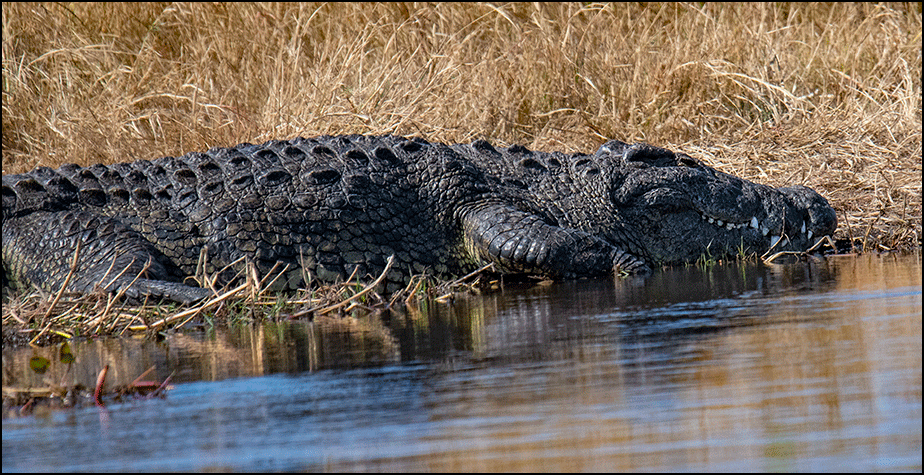
We continued along the river, passing a reedbuck grazing in the tall grass. These mid-sized antelope look a bit like an impala, but are far less common. They remind me a lot of our white-tailed deer at home in Virginia. Several large crocodiles were sunning themselves along the bank. They lay so still they looked carved from stone.
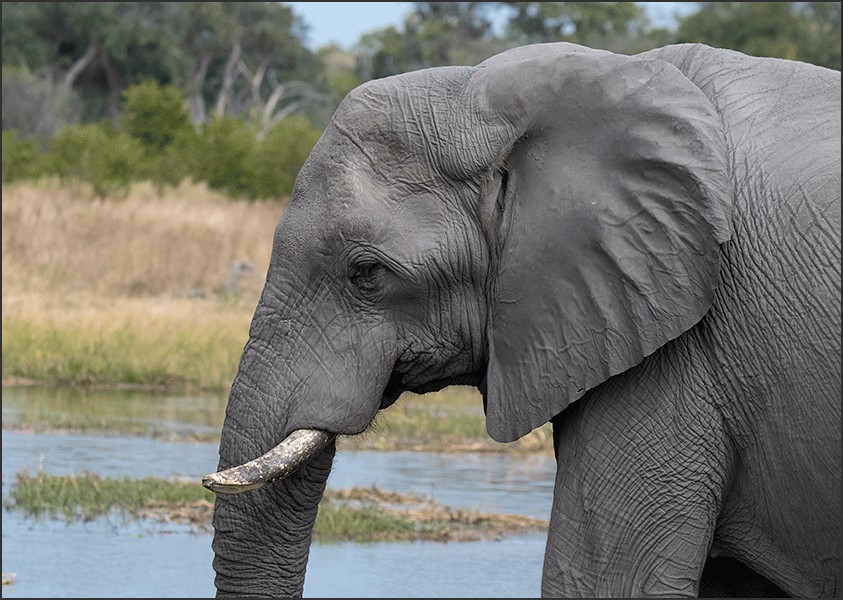
A lovely bull elephant stood knee-deep in the water, drinking, spraying himself, and generally enjoying the day. Soon a few more bulls joined him, a small bachelor group content in each other’s company. We were very close to them, and we could study every detail - the delicate veins on the underside of their ears, the intricate patterns of wrinkles in their slightly baggy skin, their long thick eyelashes, and sparse hair on the tips of their tails. We watched them for a while, moved by their quiet, unhurried wisdom. There is something grounding about elephants - as if they carry the pace of the world with them.
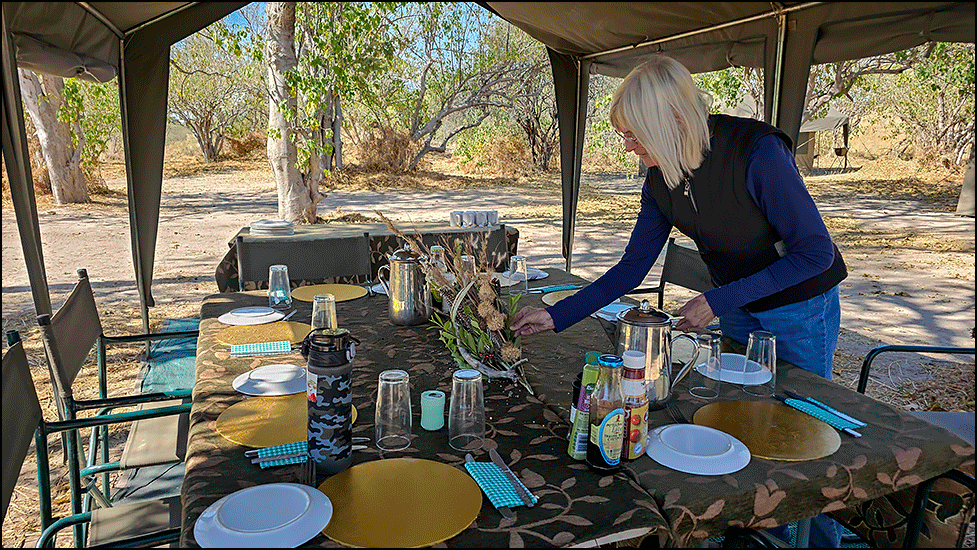
We arrived back in camp around 12:30. Jineen rebuilt her table centerpiece - her daily ritual - with fresh supplies she had collected. Guineafowl feathers, red berries, some dried seed pods, and some little purple flowers graced today’s masterpiece. An elephant strolled right past the dining tent during lunch, as if checking on the menu. He gave us a long, appraising look before moving on, unimpressed.
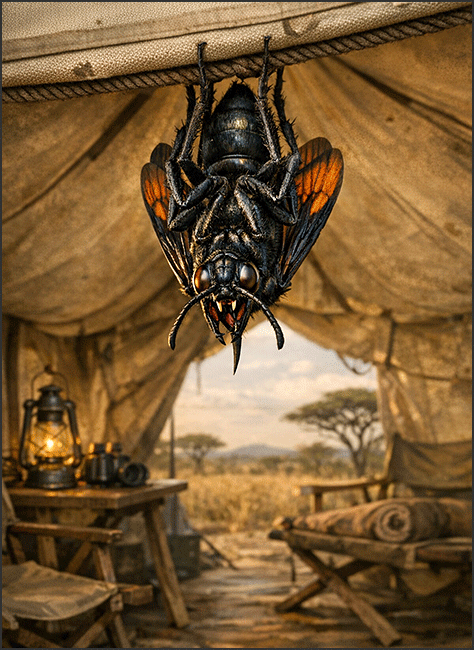
Amber and Lindey had an unexpected guest. Amber described it as, ‘a Hulk-sized wasp that looked like a bat hanging from the ceiling of our tent.’ Amber quickly exited, telling Lindy it was her job to make sure the wasp was out of the tent before she returned. Lindy quickly captured the bush-jacker in a Ziploc bag, and they took it to Gee – who handed it to
Mosa.
Mosa opened the bag and freed the wasp, then said, "Done, he went back to where he came from."
“Where is that?” Amber asked, hoping to learn the origins of these fearsome creatures.
"Your tent," Mosa replied, with a very matter-of-fact delivery.
Amber dubbed it an African Vampire Wasp, but when we looked them up, we identified it as a Tarantula Hawk, somehow not any more comforting. And it was interesting how all of these exceptional and sinister insects (wasps, spiders, driver ants) seemed to be most attracted to Amber, Lindey, and Amanda, our three Africa newbies. Very suspicious.
After returning home, carefully weighing
witness testimony and forensic evidence, and consulting police
artists, a rendition was made of the vampire tarantula wasp in
Lindey and Amber's tent. They were not doubt very grateful to Mosa
for encouraging it to return to its roost.**
We were back out for the afternoon drive at three. Not far from camp, Gee got out of the vehicle and picked us some ‘magic grass,’ handing each of us a single blade. The trick, he said, was to wet it and watch which way it curved - it would point toward the animal you most wanted to see. We all tried it with great seriousness. Paula’s blade, however, pointed straight up. Gee didn’t miss a beat: “Ah,” he said, “you must ask God.”
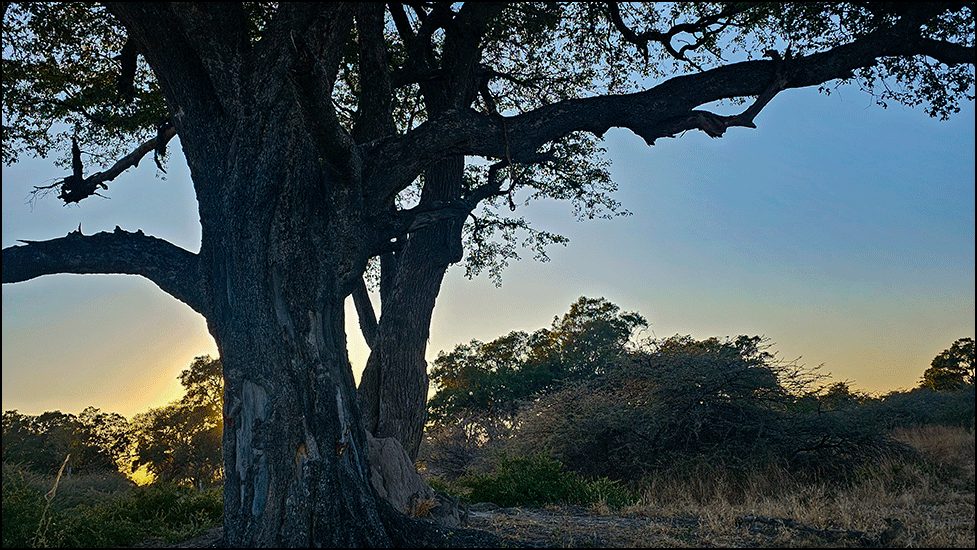
As we drove deeper into the floodplains, the trees began to tell their own story. The landscape changed subtly, and Gee began pointing out the trees that define this part of the Delta. Camelthorn acacias are iconic shapes across the savannah, much loved by the giraffes. Jackalberries grow tall along the riverine edges, their deep shade sheltering many creatures. Rain trees are one of my favorites - elegant, wide‑spreading silhouettes filled with birdsong, dappled light, and whole ecosystems in their branches.
Farther out on the floodplains, sausage trees stand like sculpted guardians, their heavy, dangling fruits swaying in the breeze. The fruits, shaped like huge hanging sausages, are so dense they can injure anything beneath them, but once they soften, they become a buffet for half the Delta - elephants, baboons, monkeys, antelope, porcupines, warthogs, birds, and insects all feast on them.
Leadwoods are ancient, silver-grey giants that can stand for centuries even after they die, their twisted trunks forming the ghostly ‘dead tree forests’ we pass. African ebony trees have a quiet magic — dark, dense, and solid, giving the landscape a sense of age and permanence. Paperbark acacias glow pale in the sun, their bark peeling in soft curls; elephants browse some heavily while leaving others untouched. Gee pointed out one that had been left undisturbed for reasons known only to the elephants.
Across the woodlands, mopane trees shimmer in the heat, their butterfly-shaped leaves rustling softly in the breeze – that is, unless the elephants have eaten them down. Mopane are one of their staple foods, but the trees fight back by raising tannin levels when they are browsed, making the leaves bitter and so encouraging elephants to move on.
Together, these trees shape the Delta’s character - providing shade, quiet groves, open spaces, and that unmistakable sense that the whole place is alive. They shape the light, hold the soil, shelter birds and animals, and make the Delta feel both ancient and endlessly new. They are the architecture of the landscape, the framework on which everything else depends.
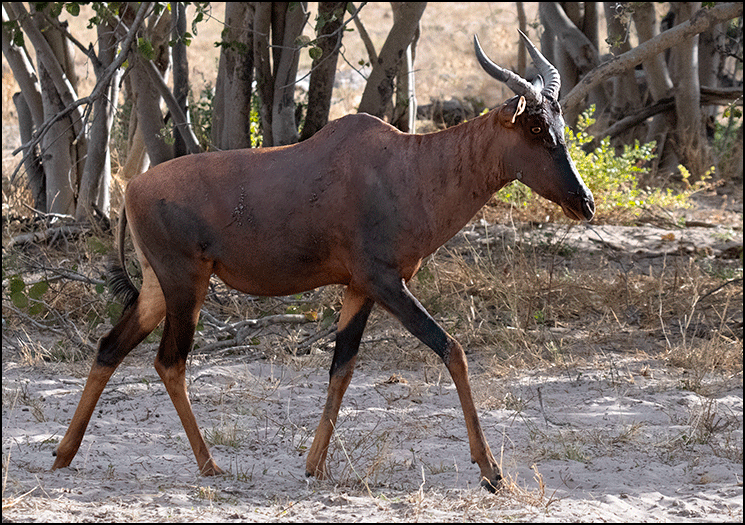
The afternoon was full of familiar Khwai faces. A group of female waterbucks stood watching us with their soft, gentle expressions and even softer coats - with all that fluff they always look somewhat cuddly to me. Several tsessebes went striding past with their usual purposeful gait, and small herds of wildebeests and zebras grazed in the open, flicking their tails at flies. We paused near an elephant mineral lick where a couple of big bulls were working the soil with practiced enthusiasm. And of course, there were always hippos in the river, impressive but also slightly preposterous.
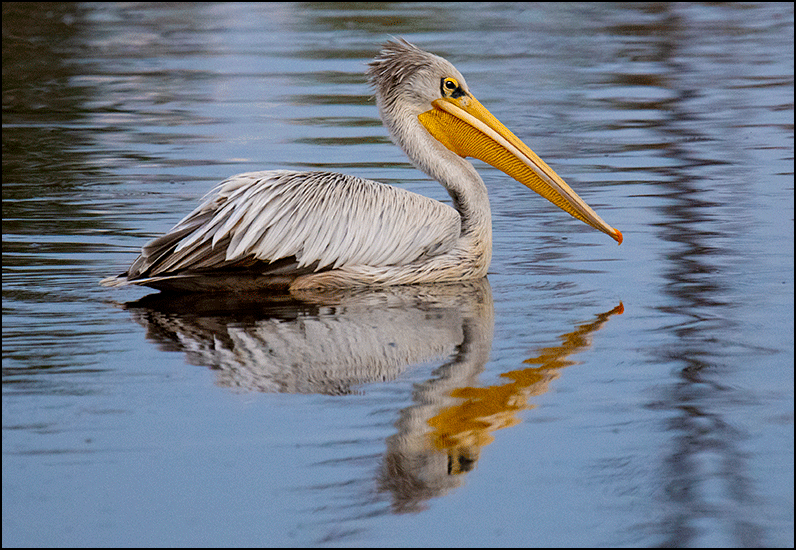
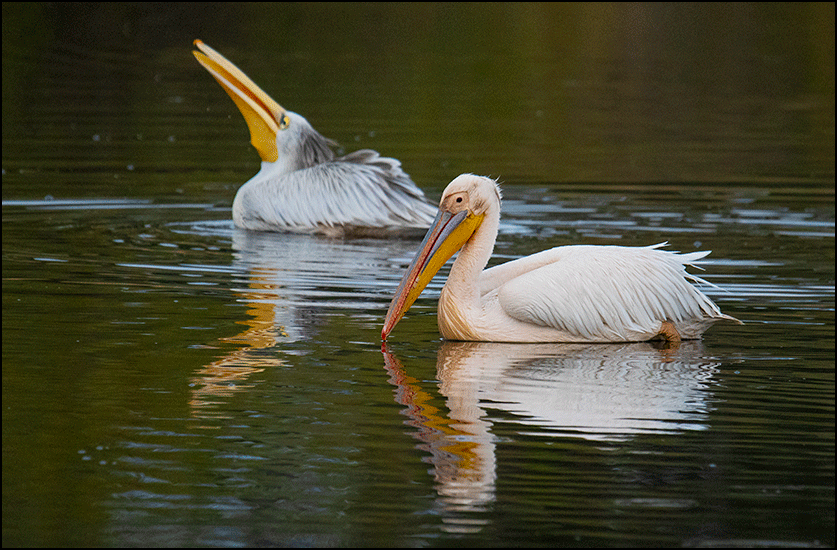
The birds were out in force too. A half dozen pelicans drifted on a quiet pond, their big bills dipping now and then. A rufous-bellied heron stalked the shallows with slow, deliberate steps, while a red‑crested korhaan scurried through the grass, looking slightly offended by our presence. A Cape turtle dove sat calmly on her nest, feathers fluffed, and above it all a fish eagle surveyed the world with regal stillness. There were many more, of course - the Delta is always full of wings and calls - but I won’t try to list them all.
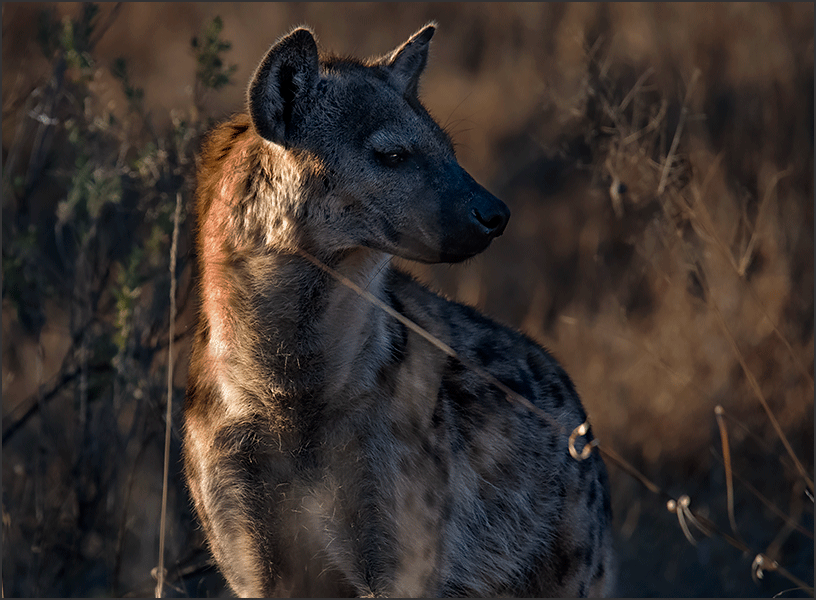
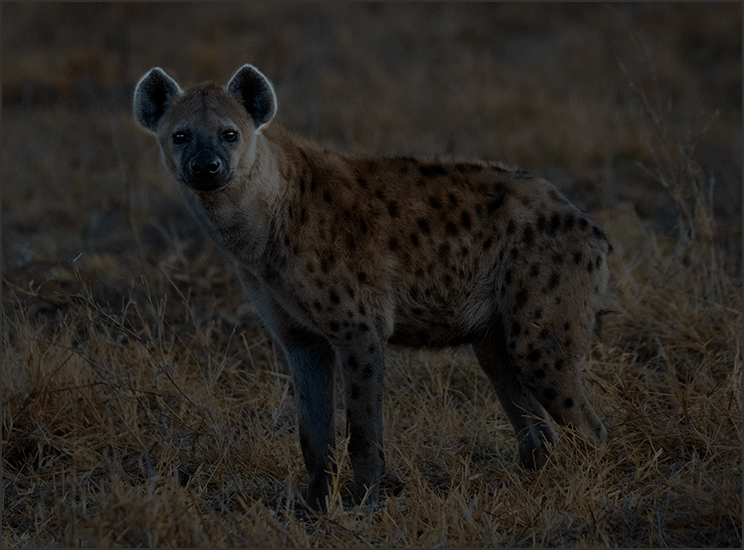
As the sun dropped lower, we found a quiet spot by a flooded lagoon for sundowners – we got out of the Land Cruiser and enjoyed a glass of wine. As the light faded several hyenas appeared, circling us at a distance. In the dusk they looked almost ghostlike, slipping silently between the trees. They watched us with that unsettling mix of curiosity and calculation. They seemed to be waiting for their own sundowners.
Then we drove on through the dark. We caught the green flash of impala eyes in the spotlight, and glimpsed nightjars alongside the track. To our delight, we also saw springhares - Africa’s tiny kangaroos and one of Botswana’s best‑kept secrets. They were hopping along the roadside grass in effortless bounds, sitting upright on their powerful hind legs with their little front paws tucked in, looking for all the world like rabbit‑sized kangaroos. It turns out they belong to neither the rabbit nor the kangaroo families at all - they are rodents, and have a family entirely their own. In a savannah full of iconic giants and fierce predators, finding springhares feels like discovering a small, hidden treasure. They’re the kind of animal you can visit Africa ten times and never see.
Back in camp, we gathered around the fire with Gee. With the partial moon up, the night was brighter, the shadows softer. A hyena skulked around the edge of camp, circling us with a guilty, sidelong look. Stars and constellations drifted between scudding clouds while we talked with our usual easy camaraderie, reviewing the day’s best sightings. For me, it was definitely the puppies. And getting charged by that angry elephant. But the malachite kingfisher was special too… and the springhares… really, there were almost too many moments to hold onto. Which, of course, is exactly why I write this journal.
At dinner, the hyena joined us again - this time coming in very close, maybe twenty feet from the fire. She stood there watching us with bold curiosity, and every so often paced in a slow circle, her eyes catching the firelight, her posture
half-hopeful, half-sly. (It is very difficult to determine the sex of a hyena visually, so I can’t be sure if it was a she or a he, but since the females are dominant in the hyena clans, I’m choosing to assume it was she.) The fire popped and flickered as we ate and talked, and our uninvited guest lingered just beyond the glow, keeping us company from the edge of camp.
The fire burned low and the camp settled into silence, broken only by the soft shuffle of the hyena slipping away. Clouds drifted across the partial moon, and the stars blinked in and out. Eventually we turned in, the night alive around us. Lions roared often in the dark, faint and far beyond the river - a low, steady reminder that the bush never really sleeps. It simply shifts into a different rhythm.
**
No insects were harmed during the making
or reenactment of this safari experience.
~
Continued
on next page ~
Africa 2025 Journal Pages:
1
2
3
4
5
6
7
8
9
10
11
12
13
14
15
16
|